GE
RFQ Ready
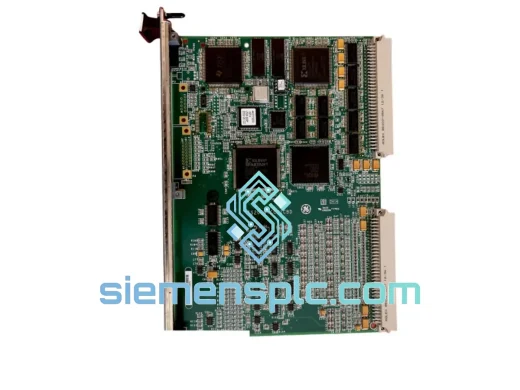
GE IS200VTCCH1CBD Thermocouple Processor Board – Mark VI IS200 Series
Mark VI
Origin US
Thermocouple Processor Board
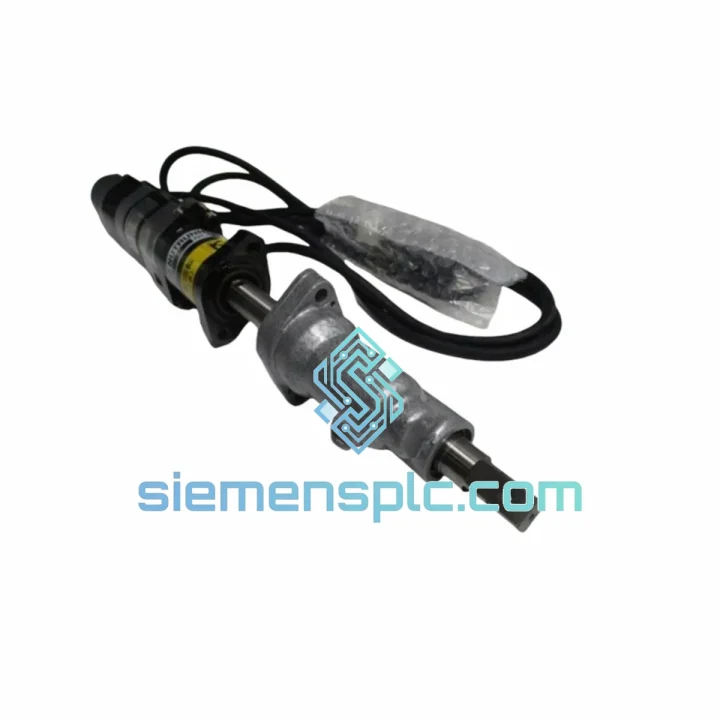
Request verified availability, condition, replacement risk review, packing options and courier lead time for TS4617N1920E203.
Click Request Quote and the part number is inserted into the inquiry form automatically.
Core fields for model confirmation and RFQ routing. Detailed product narrative remains below.
The TS4617N1920E203 is a production-grade AC servo nutrunner manufactured by TORQUE (Japan), designed for assembly environments where fastening accuracy, process traceability, and cycle repeatability are non-negotiable engineering constraints. Unlike pneumatic or DC electric tools that rely on stall-torque cutoff, this unit employs a fully closed-loop servo architecture: torque and rotation angle are monitored in real time throughout the entire fastening cycle, and the drive shuts off precisely at the programmed target — not after it. This distinction is fundamental in applications governed by IATF 16949, ISO 9001, or internal SPC audit requirements.
The model designation encodes key configuration parameters: the TS46 platform defines the servo spindle class, 17N indicates the nominal torque capacity tier, 1920 references the encoder resolution and control board generation, E203 specifies the end-effector and output shaft geometry. Each suffix segment maps directly to a hardware assembly, which means cross-series substitution is not interchangeable without controller re-parameterization.
Real-time Stock & RFQ: [email protected] | WhatsApp: +86 18359268345
| Parameter | Specification |
|---|---|
| Model / SKU | TS4617N1920E203 |
| Brand | TORQUE (Japan) |
| Drive Technology | AC Servo Motor with encoder feedback |
| Control Mode | Closed-loop torque control + angle monitoring |
| Torque Class | 17 N·m nominal (TS46 platform) |
| Encoder Resolution | 1920-pulse/rev incremental encoder (1920 series board) |
| Shut-off Method | Electronic torque cutoff at target value — no mechanical clutch |
| Angle Monitoring | Integrated; programmable angle window for joint acceptance |
| Communication Interface | Serial RS-232 / RS-485; optional fieldbus per controller variant |
| Power Supply | AC 100–240 V, 50/60 Hz (via servo controller unit) |
| Output Shaft Geometry | E203 end-effector configuration (square drive / hex adapter) |
| Operating Temperature | 0 °C to +50 °C |
| Protection Class | IP20 (standard); consult datasheet for variant options |
| Country of Origin | Japan |
| Unit Weight | Approx. 200 g (spindle assembly only) |
| Condition | New / Surplus New — original manufacturer packaging |
| Warranty | 12 months from date of shipment |
The TS4617N1920E203 is built around a three-layer servo control architecture that separates torque generation, measurement, and decision logic into discrete hardware domains — a design philosophy that directly improves both accuracy and fault isolation.
Servo Drive Layer: The AC servo drive receives a torque setpoint from the controller board and translates it into a precise current command to the spindle motor. Because current is directly proportional to motor torque in a permanent-magnet AC servo, the drive can regulate output torque with sub-millisecond response latency. This eliminates the torque overshoot characteristic of pneumatic tools, where inertia in the air column causes the fastener to receive torque beyond the cutoff threshold before the valve closes.
Encoder Feedback Layer: The 1920-pulse incremental encoder mounted on the motor shaft provides angular position data at a resolution sufficient to detect micro-slip events during the fastening cycle. The controller compares the torque-vs-angle gradient in real time against a programmed acceptance window. A joint that tightens too quickly (indicating a stripped thread or incorrect fastener) or too slowly (indicating a cross-threaded condition) will trigger a NG (not-good) output before the target torque is reached — preventing false-accept errors that a torque-only system would miss.
EMC Design Considerations: Industrial assembly environments generate significant electromagnetic interference from welding equipment, variable-frequency drives, and high-current bus bars. The TS4617N1920E203 controller board incorporates differential signal transmission on the encoder feedback lines, common-mode chokes on the power input stage, and optocoupler isolation on all digital I/O interfaces. These measures ensure that transient EMI events do not corrupt the torque measurement register or trigger spurious NG outputs — a critical requirement in automotive body-in-white assembly cells where welding robots operate in close proximity to fastening stations.
Thermal Management: The servo motor winding is rated for continuous duty at the nominal torque class. The controller board includes a thermal protection register that monitors winding temperature via a PTC thermistor embedded in the stator. If winding temperature exceeds the protection threshold, the controller reduces the current limit progressively rather than executing a hard shutdown — preserving the fastening cycle in progress and flagging a thermal warning to the PLC without interrupting production.
Every TORQUE TS4617N1920E203 unit stocked at siemensplc.com is sourced through verified industrial distribution channels with full supply-chain traceability. Units are inspected upon receipt for physical integrity, label authenticity, and original packaging condition. Functional verification is performed prior to shipment using a calibrated torque reference fixture where applicable.
Shipments originate from our warehouse in Xiamen, China — a major export hub with direct access to international freight carriers including DHL Express, FedEx International Priority, and SF Express International. Standard export documentation is prepared for every cross-border order: commercial invoice, packing list, and certificate of origin. For orders requiring customs pre-clearance documentation or HS code declarations, our logistics team prepares the complete export file set within one business day of order confirmation.
Transit times to major industrial markets: Europe 3–5 business days (DHL Express), North America 3–5 business days (FedEx IP), Southeast Asia 2–3 business days (SF Express). All shipments include full tracking and are insured against transit loss or damage. Anti-static packaging and shock-absorbing foam inserts are used for all servo and electronic components to prevent handling damage during air freight.
The 12-month warranty covers manufacturing defects and component failures under normal operating conditions. Warranty claims are processed with a replacement-first policy: a replacement unit is dispatched upon receipt of the defective item, minimizing production downtime for the customer.
Email: [email protected]
WhatsApp: +86 18359268345
Web: siemensplc.com
Location: Xiamen, China
© 2026 siemensplc.com. All rights reserved.
We check the full part number, brand, series and visible nameplate information before quotation.
Sales confirms stock path, condition option, quantity and realistic lead time for export dispatch.
DHL, FedEx, UPS or buyer courier arrangements can be reviewed with packing requirements.
Similar brand or category products for fast comparison and multi-item RFQ lists.