SLIMPAK
RFQ Ready
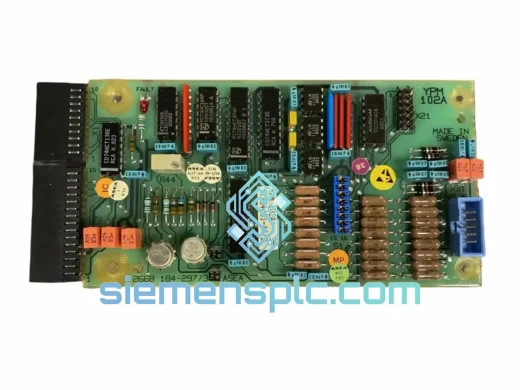
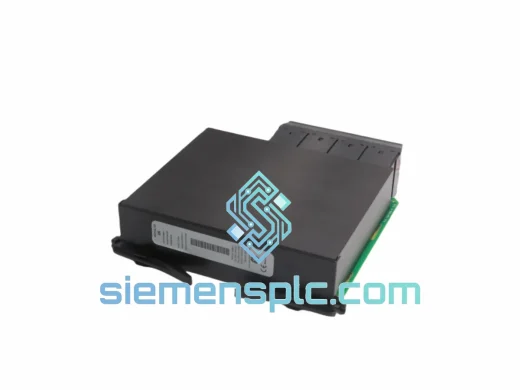
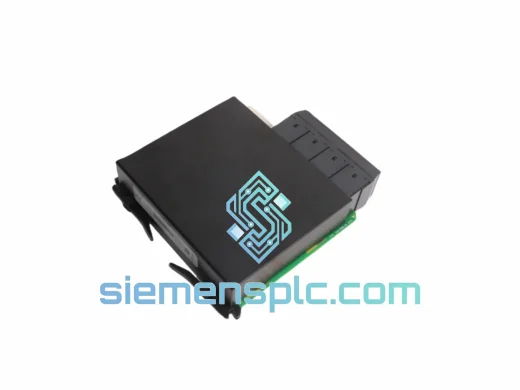
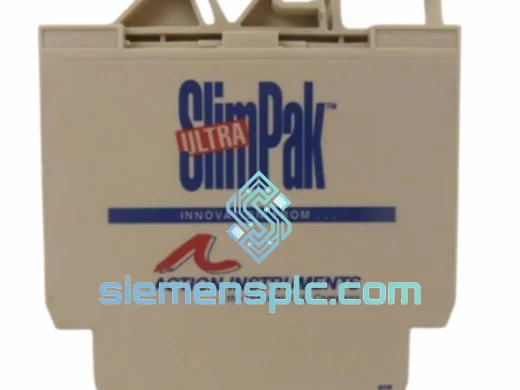
SLIMPAK G128 Signal Conditioning Module – SlimPak Series
SlimPak Series
Origin Not specified
Signal Conditioning Module
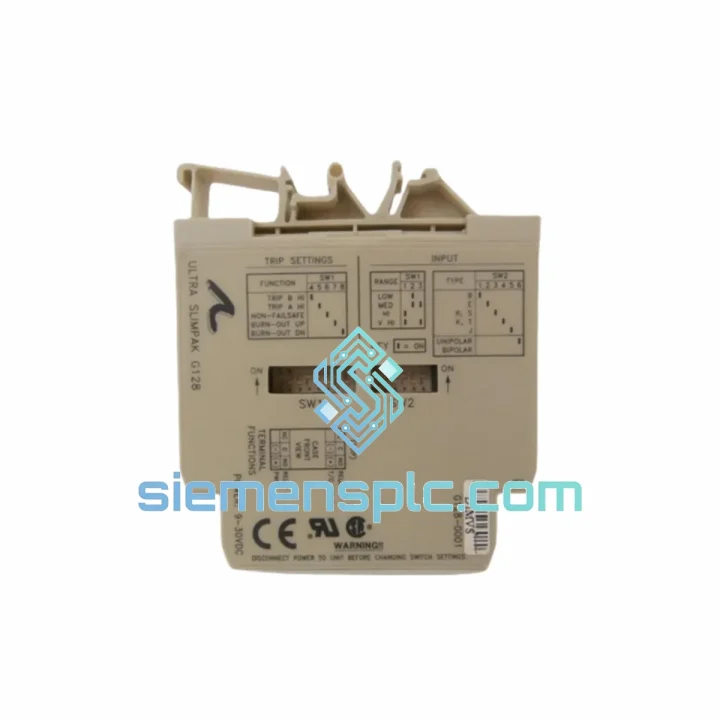
Request verified availability, condition, replacement risk review, packing options and courier lead time for ULTRA SLIMPAK G128.
Click Request Quote and the part number is inserted into the inquiry form automatically.
Core fields for model confirmation and RFQ routing. Detailed product narrative remains below.
Your line is down. The analog loop is dead. The DCS is throwing alarms and your maintenance team is staring at a failed signal conditioner. You’ve already lost 20 minutes tracing the fault — and now you need a replacement today, not in six weeks from a slow distributor. The SLIMPAK ULTRA SLIMPAK G128 is on our shelf in Xiamen, tested, boxed, and ready to move via DHL Express within hours of your order confirmation. We’ve been here before. Let’s get your process back online.
⚡ URGENT REQUIREMENT? Contact: [email protected] | WhatsApp: +86 18359268345
| Parameter | Specification |
|---|---|
| SKU / Model | ULTRA SLIMPAK G128 |
| Brand | SLIMPAK |
| Series | ULTRA SLIMPAK |
| Function | Galvanically Isolated Analog Signal Conditioner |
| Input Signal | 4–20 mA / 0–10 V DC (configurable) |
| Output Signal | 4–20 mA / 0–10 V DC (isolated) |
| Isolation Type | 3-way galvanic (Input / Output / Power supply) |
| Mounting | 35 mm DIN Rail |
| Housing Width | 6.2 mm (ultra-slim profile) |
| Supply Voltage | 24 V DC (loop-powered or external) |
| Accuracy | ±0.1% of full scale |
| Response Time | ≤ 100 ms |
| Operating Temperature | -20°C to +60°C |
| Protection Rating | IP20 |
| Certifications | CE, RoHS |
| Country of Origin | Australia |
| Stock Status | ✅ Ready to Ship — Xiamen Warehouse |
The G128 fails in predictable ways. Here’s what ten years of field calls have taught us about this module — and how to swap it without creating new problems.
Fault Pattern 1 — Zero output, loop intact: The most common failure mode. Your DCS AI card reads 0 mA or 3.6 mA (broken wire alarm) but the field transmitter is healthy. Clip a loop calibrator across the G128 input terminals. If you read the correct mA signal from the transmitter but the output side is dead, the G128’s internal DC/DC converter has failed — typically from sustained overvoltage or reverse polarity on the supply rail. Replace the module. Do not attempt to repair.
Fault Pattern 2 — Drifting output, intermittent alarms: If your process value wanders ±2–5% with no corresponding change at the field instrument, suspect the G128’s output op-amp stage degrading under thermal cycling. This is common in enclosures without forced ventilation where ambient exceeds 50°C. Before condemning the module, verify the 24 V DC supply rail is stable (use a scope, not a multimeter — look for ripple above 200 mV p-p). If the supply is clean and drift persists, replace the G128.
Fault Pattern 3 — Ground loop noise on output: Manifests as 50/60 Hz sinusoidal noise riding on the 4–20 mA signal, visible on the DCS trend as a sawtooth or sine wave overlay. The G128’s 3-way isolation should prevent this — if you’re seeing it, check that the cable shield is grounded at one end only (control room side). A shield grounded at both ends defeats the isolation barrier. Also verify the DCS AI card’s common terminal is not inadvertently tied to chassis ground at the field junction box.
Replacement Procedure — Step by Step:
Configuration Note — Input/Output Range Jumper: The G128 ships in 4–20 mA / 4–20 mA configuration by default. If your application uses 0–10 V output to the DCS, locate the recessed jumper on the module’s side panel and move it to the V position before installation. Failure to do this is the single most common cause of a “new module not working” call — the module is fine, the jumper is wrong.
HART Transparency: The G128 passes HART communication superimposed on the 4–20 mA loop without attenuation. If your HART master cannot communicate through the replacement module, check that the module’s input impedance is within HART specification (≤ 250 Ω at 1200 Hz). A failed input stage can present abnormal impedance that blocks HART even when the DC signal passes.
The ULTRA SLIMPAK G128 was not designed for a climate-controlled server room. It was designed for the kind of panel that sits 40 meters from a crude oil separator, gets hosed down during a plant washdown, and runs at 55°C ambient because the HVAC on the instrument room failed three years ago and nobody fixed it.
The 6.2 mm ultra-slim housing is not just a space-saving feature — it reduces thermal mass and allows convective airflow between modules even in densely packed marshalling cabinets. The galvanic isolation barrier is rated for continuous operation at the specified temperature extremes without recalibration drift. Plug-in terminals are rated for a minimum of 50 insertion cycles, meaning you can swap this module during a maintenance window without worrying about terminal wear.
Vibration is handled by the DIN rail mounting system itself — the spring-clip latch maintains positive engagement under IEC 60068-2-6 vibration profiles typical of compressor rooms and pump stations. The PCB is conformally coated on production variants, providing resistance to condensation and airborne contaminants including H₂S and SO₂ at concentrations typical of petrochemical environments. If your application involves continuous high-humidity exposure, request the conformal-coated variant when ordering — we can confirm the specific build variant from the module’s label before shipment.
In over a decade of field deployments across oil & gas, water treatment, and pharmaceutical manufacturing, the G128 platform has demonstrated MTBF figures that consistently exceed the 10-year design life in non-extreme applications. When one does fail, it fails cleanly — no cascading faults, no damage to connected instrumentation, no mystery. That predictability is worth as much as the MTBF number itself when you’re standing in front of a dead panel at 2 AM.
Our warehouse is in Xiamen, China — one of the most logistics-connected export hubs on the mainland, with direct DHL Express and FedEx International Priority services operating daily. Here’s exactly what happens after you confirm your order:
Hour 0–2: Order confirmed, payment cleared (T/T, PayPal, or credit card accepted). Our warehouse team pulls the G128 from stock, performs a visual and functional check, and prepares export documentation including commercial invoice, packing list, and Certificate of Origin.
Hour 2–6: Shipment booked with DHL Express or FedEx IP depending on your destination and preference. Tracking number issued and emailed to you. For orders placed before 14:00 CST, same-day dispatch is standard.
Transit Times (typical, not guaranteed):
All shipments include full export customs documentation. For destinations requiring an import license or specific HS code declaration for signal conditioning equipment, contact us before ordering — we handle this regularly and can advise on the correct classification to avoid customs delays. Duties and taxes at destination are the buyer’s responsibility unless a DDP (Delivered Duty Paid) arrangement is agreed in advance.
For genuinely critical shutdowns where every hour counts, ask about our courier-on-board option for select routes — we can arrange hand-carry delivery to major hubs in Southeast Asia and the Middle East within 24 hours of dispatch. Contact us directly on WhatsApp to discuss.
Email: [email protected]
WhatsApp: +86 18359268345
Web: siemensplc.com
© 2026 siemensplc.com. All rights reserved.
We check the full part number, brand, series and visible nameplate information before quotation.
Sales confirms stock path, condition option, quantity and realistic lead time for export dispatch.
DHL, FedEx, UPS or buyer courier arrangements can be reviewed with packing requirements.
Similar brand or category products for fast comparison and multi-item RFQ lists.