GE
RFQ Ready
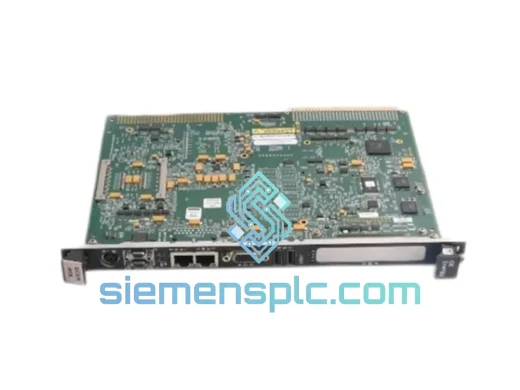
GE IS210MVRBH1A I/O Interface Board – Mark VIe Series
Mark VI
Origin US
I/O Interface Board
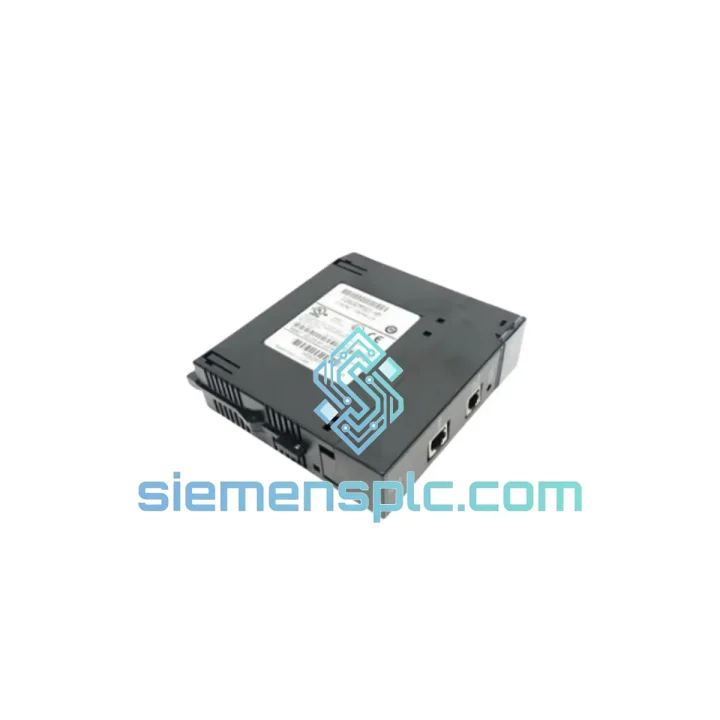
Request verified availability, condition, replacement risk review, packing options and courier lead time for GEUMT162-A.
Click Request Quote and the part number is inserted into the inquiry form automatically.
Core fields for model confirmation and RFQ routing. Detailed product narrative remains below.
The GEUMT162-A is a universal analog input treatment card designed for deployment within GE’s Mark VIe turbine control platform. Its primary function is front-end signal conditioning: it receives raw electrical signals from field-mounted sensors — thermocouples, RTDs, millivolt sources, and 4–20 mA transmitters — performs hardware-level filtering and linearization, and delivers calibrated engineering-unit data to the Mark VIe controller over the IONet Ethernet backbone. In a gas turbine or steam turbine control loop, this module sits at the boundary between the physical process and the digital control domain. Any degradation in its measurement chain — offset drift, cold-junction error, or channel noise — propagates directly into the controller’s PID calculations, affecting combustion trim, exhaust temperature management, and protective trip logic. The GEUMT162-A is therefore not a peripheral accessory; it is a load-bearing element of the measurement infrastructure.
Within the Mark VIe I/O chassis, the module occupies a dedicated slot and communicates with the VCMI or VCCI controller module via the internal I/O bus. Its universal input architecture eliminates the need for separate thermocouple cards and RTD cards in mixed-sensor installations, reducing spare-parts inventory and simplifying cabinet layout in retrofit and upgrade projects. The module is compatible with Mark VIe TMR (Triple Modular Redundancy) configurations, where three independent measurement paths vote on signal validity before the result is passed to the control algorithm — a design that maintains measurement availability even during single-channel maintenance.
Real-time Stock & RFQ: [email protected] | WhatsApp: +86 18359268345
| Parameter | Specification |
|---|---|
| Part Number | GEUMT162-A |
| SKU | UMT162-A |
| Platform | GE Mark VIe Distributed Control System |
| Module Function | Universal Measurement Treatment (Analog Input Conditioning) |
| Supported Input Types | Thermocouple (J, K, T, E, R, S, B types), RTD (Pt100, Pt1000), mV (±100 mV range), 4–20 mA current loop |
| Analog Input Channels | Multi-channel (per Mark VIe I/O chassis slot allocation) |
| Signal Resolution | 16-bit ADC per channel |
| Cold Junction Compensation | On-board hardware CJC sensor, ±0.5 °C accuracy |
| Input Isolation | Channel-to-channel optical isolation; channel-to-backplane galvanic isolation |
| Operating Temperature | 0 °C to +60 °C (ambient, within control enclosure) |
| Storage Temperature | -40 °C to +85 °C |
| Power Supply | Supplied via Mark VIe I/O chassis backplane (24 VDC nominal) |
| Communication Interface | Mark VIe IONet (100 Mbps Ethernet, IEC 61784-2 compliant) |
| Form Factor | Mark VIe I/O rack-mount card (single slot) |
| Weight | Approx. 3,300 g (module with terminal board) |
| Certifications | CE, UL, cUL (per GE Mark VIe platform certification) |
| Warranty | 12 months from date of shipment against manufacturing defects |
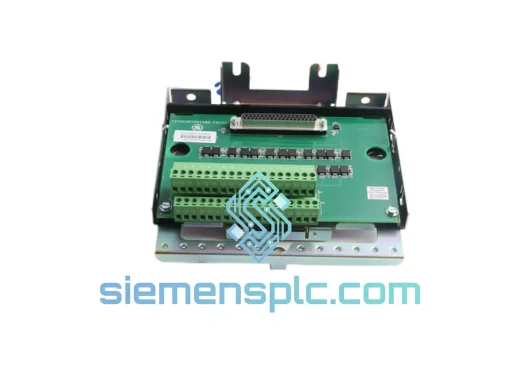
The GEUMT162-A’s internal signal path begins at the terminal board interface, where field wiring lands on screw terminals connected to the module’s analog front-end. Each input channel passes through a passive RC low-pass filter stage that attenuates high-frequency conducted noise — a necessary measure in turbine control enclosures where variable-frequency drives, ignition systems, and high-current bus bars generate broadband EMI in the 10 kHz–1 MHz range. The filter cutoff is set conservatively to preserve the bandwidth of slow-moving process variables (exhaust temperature, bearing metal temperature) while rejecting switching transients.
Following the filter stage, each channel feeds a multiplexed 16-bit successive-approximation ADC. The multiplexer architecture allows the module to service multiple input types from a single converter, with the input range and gain automatically reconfigured per channel based on the engineering configuration stored in the Mark VIe toolbox database. For thermocouple inputs, the ADC measures the differential millivolt signal; the on-board microprocessor then applies the NIST ITS-90 polynomial linearization table for the configured thermocouple type and adds the cold-junction compensation offset derived from the hardware CJC sensor mounted at the terminal board. This two-stage correction — hardware CJC plus software linearization — achieves measurement accuracy within ±1 °C across the full thermocouple operating range under steady thermal conditions.
Channel-to-channel isolation is implemented via optocouplers on the analog signal path, breaking ground loops that would otherwise introduce common-mode error voltages when sensors share a common reference at the field device. The isolation barrier also protects the module’s digital circuitry from transient overvoltages caused by lightning-induced surges on long field cable runs — a failure mode that is disproportionately common in outdoor turbine installations. The channel-to-backplane isolation ensures that a single-channel fault cannot propagate to the I/O bus and corrupt data from adjacent modules.
The module’s local microprocessor performs continuous self-diagnostics: it monitors the ADC reference voltage, checks the CJC sensor reading against expected ambient temperature bounds, and validates the IONet communication heartbeat. Diagnostic status is encoded in the module’s health register and transmitted to the Mark VIe controller on every scan cycle, making fault conditions visible in the operator HMI within one control scan period (typically 10–40 ms depending on system configuration).
Every GEUMT162-A unit dispatched from our Xiamen, China facility is sourced directly from authorized GE distribution channels or verified surplus stock with full traceability documentation. Prior to shipment, each module undergoes a structured inspection protocol: visual examination of the PCB assembly for mechanical damage, corrosion, and component seating integrity; power-on functional verification confirming IONet communication handshake and self-diagnostic pass status; and serial number recording against the shipment manifest for post-delivery traceability.
Packaging follows IEC 61340-5-1 ESD protection requirements: modules are sealed in conductive anti-static bags, cushioned with foam inserts rated for the module’s weight class, and enclosed in double-wall corrugated cartons. For international freight, moisture-barrier desiccant packs are added to protect against humidity exposure during ocean or air transit. Export documentation — commercial invoice, packing list, and certificate of origin — is prepared for every international shipment. Additional documentation such as Form A preferential origin certificates or third-party inspection reports is available upon request for customers with import compliance requirements.
Logistics from Xiamen port to major industrial hubs: DHL/FedEx express air freight reaches European and North American destinations within 3–5 business days; sea freight consolidation is available for bulk orders with 15–25 day transit to most ports. All shipments are tracked end-to-end with AWB or B/L numbers provided at time of dispatch. The 12-month warranty covers manufacturing defects and covers return freight for confirmed defective units within the warranty period.
Email: [email protected]
WhatsApp: +86 18359268345
Web: siemensplc.com
Location: Xiamen, China
© 2026 siemensplc.com. All rights reserved.
We check the full part number, brand, series and visible nameplate information before quotation.
Sales confirms stock path, condition option, quantity and realistic lead time for export dispatch.
DHL, FedEx, UPS or buyer courier arrangements can be reviewed with packing requirements.
Similar brand or category products for fast comparison and multi-item RFQ lists.