
GE Grid Solutions
In Stock OK
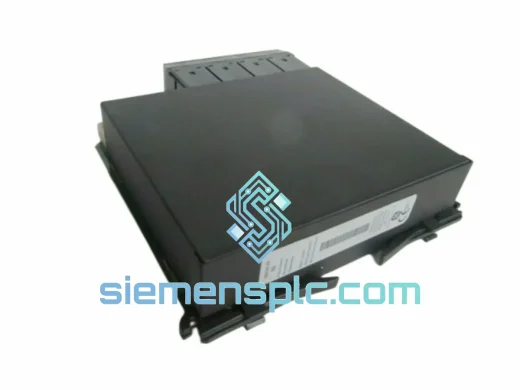
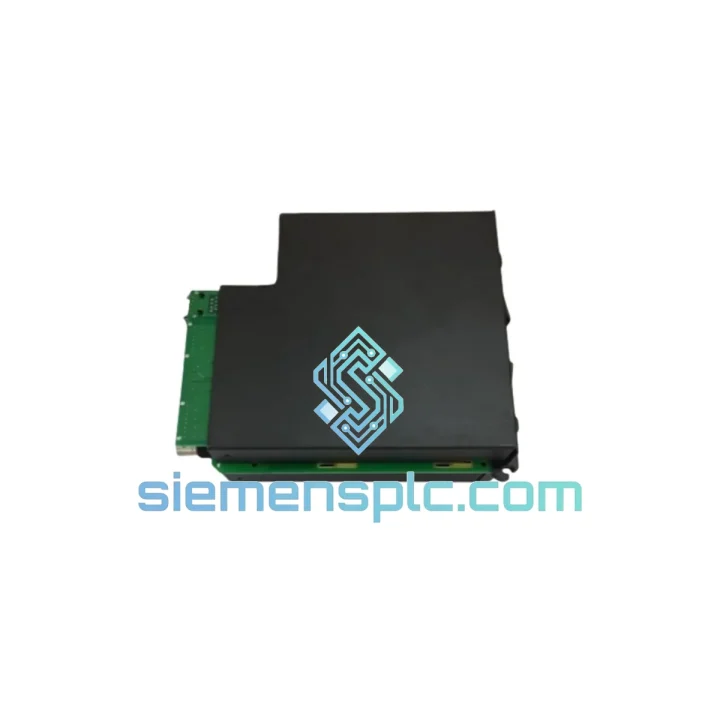
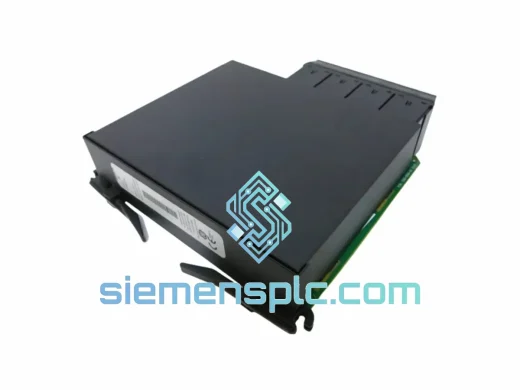
GE UR9NH Protection Relay CPU Module – Universal Relay Series
Request verified availability, condition, replacement risk review, packing options and courier lead time for UR9NH.
BrandGE Grid Solutions
Part NumberUR9NH
ConditionAvailability Check
Lead TimeRFQ Confirmation
DocumentsDatasheet / photos by RFQ
ShippingExport packing available
Auto-filled RFQ
UR9NH
Click Request Quote and the part number is inserted into the inquiry form automatically.
- Reply by email: [email protected]
- WhatsApp / Tel: +86 18359268345
- Mon-Sat 9:00-18:00 GMT+8
Procurement Data
Key Product Information
Core fields for model confirmation and RFQ routing. Detailed product narrative remains below.
- Brand
- GE Grid Solutions
- Primary Part Number
- UR9NH
- Product Type
- Protection Relay CPU Module
- Product Family
- Other series
- Manufacturer
- GE Grid Solutions
- Country of Origin
- US
- Catalog Category
- Relays & Protection
- Operating Temp.
- −20 °C to +60 °C
- Warranty
- 12 months from shipment date
Model confirmed for inquiry
UR9NH
Send quantity, destination and urgency. The RFQ form keeps this part number attached.
Request Quote
Product Overview
GE UR9NH: Deterministic Backplane Bus Master for Transmission-Class Numerical Protection
The GE Grid Solutions UR9NH occupies the CPU slot of the Universal Relay (UR) chassis and assumes full arbitration authority over the proprietary backplane bus. In a transmission-class protection system, the CPU module is not merely a computation node — it is the timing reference, the data aggregator, and the protocol gateway for every functional module installed in the same rack. The UR9NH fulfils all three roles through a hardware architecture that physically separates real-time protection execution from supervisory and communication tasks, preventing any interaction between the two domains that could introduce latency into protection element operate times.
The backplane bus operates at 10 Mbps using a deterministic token-passing arbitration protocol. Each installed module is assigned a fixed slot in the bus frame; the UR9NH holds the master token and issues slot grants on a fixed schedule. This architecture guarantees a bounded worst-case latency for any module’s sampled data to reach the CPU — a property that collision-based protocols such as CSMA/CD cannot provide. For current differential protection, where current samples from two or more I/O modules must be phase-aligned before the differential algorithm executes, this determinism is not optional: a single late sample can cause a spurious operate or a failure to operate at the margin of the pickup threshold.
The real-time processor — a fixed-point DSP — executes all protection and control algorithms on a hard 1 ms interrupt-driven cycle. The supervisory processor handles SCADA communication, HMI requests, file I/O, and firmware management. Inter-processor communication passes over a dedicated internal bus monitored by a hardware watchdog. If the supervisory processor fails to acknowledge within its watchdog window, it is reset autonomously; the real-time protection task continues without interruption. This isolation means that a DNP3 polling storm, an IEC 61850 MMS file transfer, or an EnerVista HMI session cannot introduce jitter into the protection task cycle.
Time synchronization is provided through two independent hardware paths. An onboard IRIG-B demodulator accepts both amplitude-modulated (AM) and DC-level-shifted (DC) signals from GPS receivers or master clocks. An IEEE 1588 Precision Time Protocol (PTP) engine supports Ordinary Clock and Boundary Clock modes on the Ethernet ports, enabling synchronization over the station LAN without a dedicated IRIG-B cable run to each relay. When both sources are active, the module cross-checks them; if they diverge beyond a configurable threshold, an alarm is raised and the higher-quality source is selected. Timestamp accuracy under synchronized conditions is below 1 µs, satisfying the requirements of IEC 61850-5 for time-critical GOOSE and Sampled Values applications.
The communication stack supports IEC 61850 Edition 1 and Edition 2 (GOOSE, MMS, Sampled Values), DNP3 Level 2 with secure authentication (SA), Modbus RTU and TCP, IEC 60870-5-103, and IEC 60870-5-104. Two independent 100BASE-TX Ethernet ports allow simultaneous connection to the station bus and a WAN or SCADA path without an external switch, eliminating a network device from the reliability calculation. GOOSE peer-to-peer messaging between UR9NH-equipped relays achieves end-to-end latency below 4 ms on a properly configured station LAN, replacing hardwired pilot tripping schemes in many bus protection and transformer differential applications.
Non-volatile flash memory stores 1,024 time-stamped event records and up to 64 oscillography records. Oscillography data is written in IEEE C37.111 COMTRADE format with configurable pre-fault and post-fault capture windows, directly importable into CAPE, ASPEN, and Doble F6150 without format conversion. The onboard real-time clock maintains ±1 ppm accuracy when unsynchronized, providing a usable fallback reference during GPS outages or network reconfiguration windows.
Auxiliary power input spans 24–250 V DC and 100–240 V AC through an internal wide-range switching supply with a 50 ms hold-up time at rated load. This single hardware variant covers all common substation DC battery bus voltages (48 V, 110 V, 125 V, 220 V) without requiring separate module SKUs, simplifying spare parts inventory management across a fleet of substations.
Real-time Stock & RFQ: [email protected] | WhatsApp: +86 18359268345
Technical Parameters
| Parameter | Specification |
|---|---|
| Part Number | UR9NH |
| Manufacturer | GE Grid Solutions |
| Platform | Universal Relay (UR) Series |
| Module Role | CPU / Backplane Bus Master |
| Backplane Bus Speed | 10 Mbps, token-passing, deterministic |
| Real-Time Task Cycle | 1 ms (hard interrupt, DSP) |
| Processor Architecture | Dual: fixed-point DSP (protection) + supervisory CPU (comms/HMI) |
| Time Sync — IRIG-B | AM and DC inputs, <1 µs accuracy |
| Time Sync — PTP | IEEE 1588 v2, Ordinary Clock & Boundary Clock |
| Communication Protocols | IEC 61850 Ed.1/2 (GOOSE, MMS, SV), DNP3 L2+SA, Modbus RTU/TCP, IEC 60870-5-103/104 |
| Ethernet Ports | 2 × 100BASE-TX, independent |
| GOOSE Latency | <4 ms (station LAN) |
| Event Records | 1,024 time-stamped, non-volatile flash |
| Oscillography Records | Up to 64, IEEE C37.111 COMTRADE format |
| Auxiliary Power Input | 24–250 V DC / 100–240 V AC |
| Power Supply Hold-Up | 50 ms at rated load |
| Operating Temperature | −20 °C to +60 °C |
| Relative Humidity | 5–95% RH, non-condensing |
| EFT Immunity | IEC 61000-4-4, 4 kV |
| Surge Immunity | IEC 61000-4-5, 2 kV / 4 kV |
| Magnetic Field Immunity | IEC 61000-4-8, 100 A/m |
| Chassis Compatibility | UR Series 19-inch rack chassis |
| Safety Certifications | UL 508, CSA C22.2 No. 14, CE (LVD + EMC Directive) |
| Country of Origin | United States |
| Warranty | 12 months from shipment date |
Hardware Logical Analysis
The dual-processor topology of the UR9NH is implemented with a hard physical boundary between the two processing domains. The DSP and supervisory CPU share no memory bus; data exchange occurs through a dual-port RAM interface with hardware semaphores that prevent simultaneous write access. This architecture eliminates the class of software faults where a runaway communication task overwrites a protection variable — a failure mode that has caused misoperations in relay designs that use a single shared-memory multiprocessor architecture.
The token-passing backplane bus assigns each module slot a fixed position in the 10 Mbps frame. The UR9NH issues the token on a fixed schedule derived from its real-time clock, not from software polling. If a module fails to respond within its token window, the CPU logs a module communication fault and continues the bus cycle without waiting, preventing a single failed I/O module from stalling the entire protection task. This fault-containment behavior is documented in GE’s UR Series Communications Guide and is a key differentiator from backplane designs that use a shared-bus arbitration scheme.
EMC hardening on the UR9NH PCB uses a four-layer stackup with dedicated power and ground planes on the inner layers, minimizing loop area for high-frequency return currents. All signal lines entering the backplane connector pass through ferrite bead filters with a 100 Ω impedance at 100 MHz, attenuating conducted interference from adjacent modules. Transient voltage suppression (TVS) diodes rated at 400 W peak pulse power are placed on each backplane pin, clamping voltage spikes generated by inductive switching in the substation DC distribution system. The combined result is compliance with IEC 61000-4-4 at 4 kV and IEC 61000-4-5 at 4 kV line-to-earth — the highest test levels specified for substation equipment in IEC 61850-3.
Flash memory wear leveling is managed by firmware that tracks erase cycle counts per block and redistributes writes to maintain uniform wear across the array. At the rated event logging rate of 10 events per second, the flash array is rated for a service life exceeding 10 years before any block reaches its endurance limit. The battery-backed real-time clock uses a lithium coin cell rated for a minimum 10-year calendar life at the module’s operating temperature range, with a low-battery alarm generated when cell voltage drops below the threshold for reliable timekeeping.
System Integration Benefits
- Fixed 1 ms protection task cycle: All overcurrent, distance, differential, and directional elements execute within a bounded time window that does not vary with communication load, preserving coordination margins across the protection scheme under all operating conditions.
- Dual-path time synchronization with cross-check: Concurrent IRIG-B and IEEE 1588 PTP inputs are compared in hardware; divergence triggers an alarm and automatic source selection, maintaining sub-microsecond timestamp accuracy even during GPS signal loss or network reconfiguration.
- Single-module protocol convergence: IEC 61850, DNP3, Modbus, and IEC 60870-5 operate simultaneously on the UR9NH without protocol converters or gateway hardware, reducing panel wiring density and eliminating protocol translation as a latency source.
- Sub-4 ms GOOSE inter-relay signaling: Peer-to-peer GOOSE messages replace hardwired pilot tripping and blocking schemes in bus protection and transformer differential applications, reducing copper wiring and associated maintenance while meeting IEC 61850-5 Performance Class P2 latency requirements.
- COMTRADE oscillography for direct tool import: Waveform records are stored in IEEE C37.111 format, eliminating format conversion steps when loading data into CAPE, ASPEN, or Doble F6150 for post-fault analysis, reducing investigation cycle time.
- Universal auxiliary power input: The 24–250 V DC / 100–240 V AC range covers all standard substation battery bus voltages in a single hardware variant, allowing one spare module to serve substations with 48 V, 110 V, 125 V, or 220 V DC systems.
- Independent dual Ethernet ports: Separate physical connections to station bus and WAN/SCADA paths eliminate the need for an external managed switch in many topologies, removing a network device from the availability calculation and reducing panel space requirements.
- Field-replaceable module without I/O rewiring: The UR9NH can be extracted and replaced while all I/O wiring and communication cabling remain connected to other modules in the chassis, limiting maintenance downtime to the module swap and configuration restore sequence.
- Continuous self-diagnostics with SCADA-visible health data: Internal power supply rails, processor watchdog status, memory CRC integrity, and backplane communication health are monitored continuously and reported via front-panel LEDs, DNP3 internal indications, and IEC 61850 LN health data objects, providing real-time fault visibility to the control room without requiring a local site visit.
- Ethernet-based firmware upgrade without service interruption: Protection logic, communication firmware, and OS components are updated via the Ethernet port using EnerVista UR Setup, eliminating the need to remove the module from service for software maintenance and reducing planned outage requirements.
Quality Assurance & Global Logistics
Every UR9NH unit dispatched from siemensplc.com is sourced as genuine GE Grid Solutions OEM hardware. Incoming inspection covers visual examination of the module body and connector pins, label verification against GE’s part numbering and date code schema, and a functional power-on test confirming that the module initializes correctly and reports no internal faults. Units are stored in an ESD-controlled warehouse in Xiamen, China, in original GE packaging with desiccant inserts maintaining relative humidity below 40% RH throughout the storage period.
Xiamen’s port and air freight infrastructure supports rapid international dispatch. Air freight transit times are typically 3–5 business days to European hubs (Frankfurt, Amsterdam, London Heathrow), 4–6 business days to North American gateways (Los Angeles, Chicago O’Hare, JFK), and 1–3 business days to Southeast Asian destinations (Singapore Changi, Bangkok Suvarnabhumi, Kuala Lumpur KLIA). All shipments are packed in double-wall corrugated cartons with foam-in-place cushioning, providing mechanical shock protection consistent with IEC 60068-2-27 (30 g, 11 ms half-sine pulse) and IEC 60068-2-64 (random vibration, 5–500 Hz).
Export documentation — commercial invoice, packing list, certificate of origin, and HS code classification — is prepared for each order to support customs clearance at the destination. DDP (Delivered Duty Paid) terms are available for select destinations on request. All units carry a 12-month warranty from the date of shipment, covering defects in materials and workmanship. Confirmed warranty claims are processed with a target replacement dispatch within 5 business days of fault diagnosis.
Contact Information
Email: [email protected]
WhatsApp: +86 18359268345
Web: siemensplc.com
Location: Xiamen, China
© 2026
Ready to quote
[email protected]
Send This Part Number to Sales
RFQ workflow
Quality workflow ->
Confirmation Process
01Model confirmation
We check the full part number, brand, series and visible nameplate information before quotation.
02Availability reply
Sales confirms stock path, condition option, quantity and realistic lead time for export dispatch.
03Packing & courier
DHL, FedEx, UPS or buyer courier arrangements can be reviewed with packing requirements.
Continue sourcing
Browse full catalog ->
Related Automation Parts
Similar brand or category products for fast comparison and multi-item RFQ lists.
GE Grid Solutions
RFQ Ready
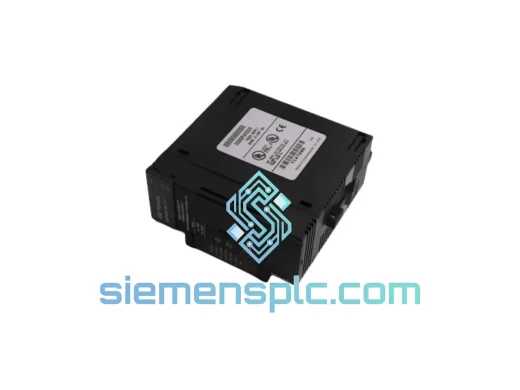
GE UR9WH CPU Module Protection Relay
UR Series
Origin US
Protection Relay CPU Module
GE Grid Solutions
RFQ Ready
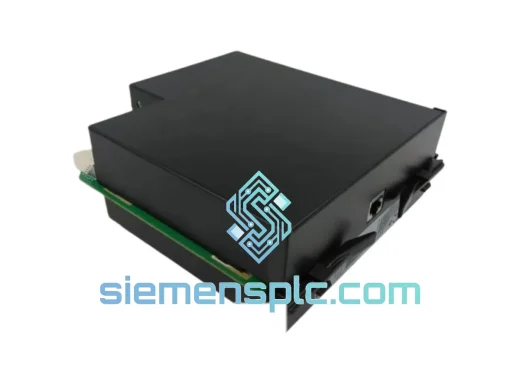
GE UR-9EH CPU Module Protection Relay
Origin US
Protection Relay CPU Module
GE Grid Solutions
RFQ Ready
GE UR 9DH Protective Relay CPU Module
Universal Relay Series
Origin US
Protective Relay CPU Module