Yokogawa
RFQ Ready
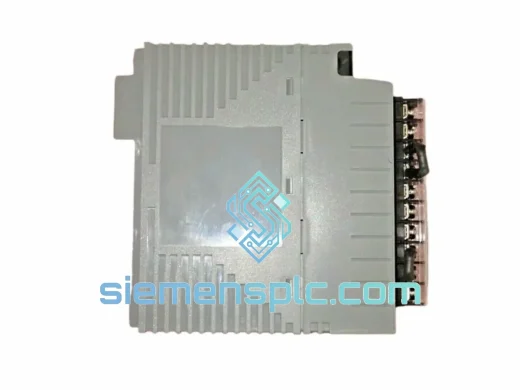
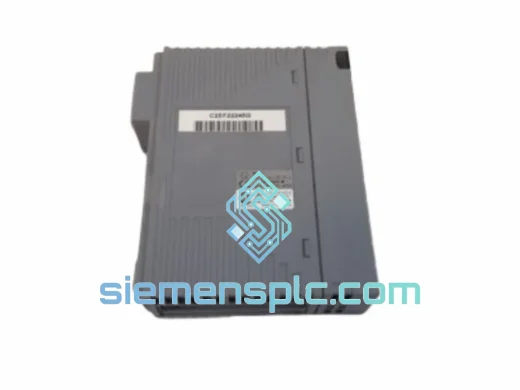
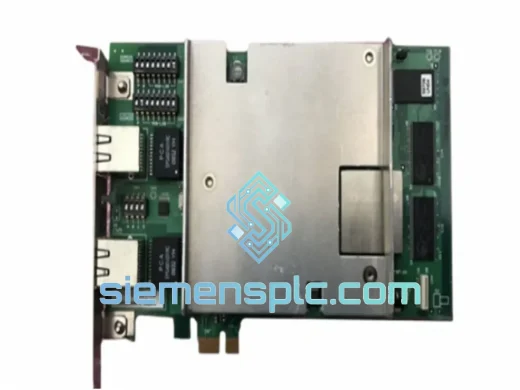
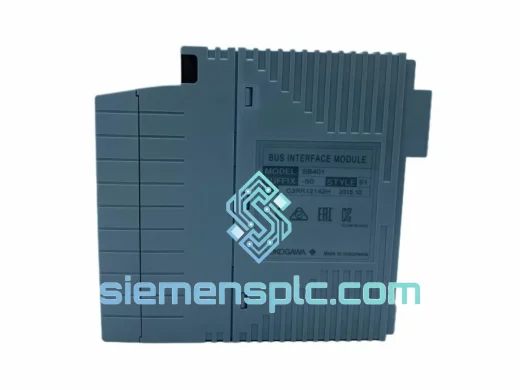
Yokogawa SB401-50 Serial Bus Interface Module – CENTUM VP
CENTUM VP
Origin JP
Serial Bus Interface Module
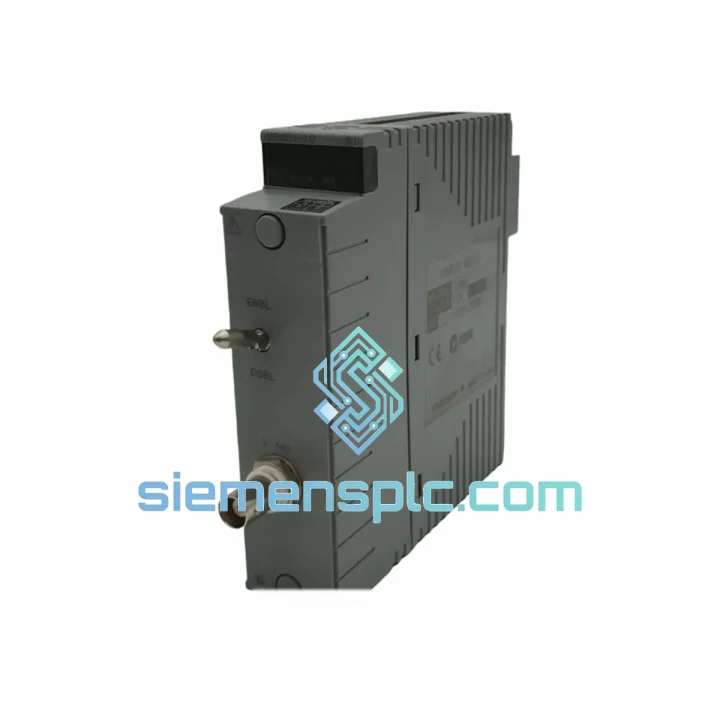
Request verified availability, condition, replacement risk review, packing options and courier lead time for VC401-10.
Click Request Quote and the part number is inserted into the inquiry form automatically.
Core fields for model confirmation and RFQ routing. Detailed product narrative remains below.
The YOKOGAWA VC401-10 is a passive coaxial bus coupler unit purpose-built for the CENTUM VP Distributed Control System. Its engineering mandate is precise: to extend the physical reach of the V-net control network by bridging two discrete coaxial segments while preserving the timed token-bus protocol’s deterministic timing envelope. In continuous process industries—ethylene crackers, ammonia synthesis loops, offshore FPSO topsides—the V-net backbone carries control telegrams between Field Control Units (FCU), Remote I/O nodes, and Human Interface Stations (HIS) at a fixed 10 Mbps token-passing rate. Any coupler that introduces asymmetric propagation delay or impedance discontinuity at the segment junction will generate reflected waveforms that corrupt token-frame preambles, forcing retransmission and expanding the effective scan cycle beyond its configured period.
The VC401-10 avoids this failure mode through a transformer-coupled passive architecture. Rather than re-clocking the incoming signal through an active repeater stage—which would require the module to hold a token-bus node address and participate in the arbitration sequence—the VC401-10 uses a precision-wound ferrite-core transformer to transfer the differential signal across the segment boundary. The transformer’s turns ratio is matched to maintain the 75 Ω characteristic impedance of the V-net coaxial medium on both ports simultaneously. This eliminates the standing-wave reflection that would otherwise appear at an impedance discontinuity and degrade the signal-to-noise margin at downstream receivers. The result is a coupler that is, from the protocol layer’s perspective, electrically invisible: it adds no node address, consumes no token slot, and introduces no measurable latency increment into the network’s cycle-time budget.
In large-scale CENTUM VP installations—where a single control domain may span dozens of FCU nodes distributed across multiple field junction boxes—the ability to extend segment length without degrading network determinism is operationally significant. The VC401-10 enables plant engineers to design V-net topologies that reach remote field cabinets located hundreds of meters from the central control room, without resorting to fiber-optic conversion hardware or protocol gateway devices that would introduce additional failure modes and maintenance complexity.
Real-time Stock & RFQ: [email protected] | WhatsApp: +86 18359268345
| Parameter | Specification |
|---|---|
| Part Number | VC401-10 |
| Manufacturer | YOKOGAWA Electric Corporation |
| Platform | CENTUM VP Distributed Control System |
| Module Category | V-net (Vnet) Coaxial Bus Coupler Unit |
| Network Protocol | V-net proprietary timed token-bus, 10 Mbps |
| Coupling Method | Passive transformer-coupled, no active re-clocking |
| Characteristic Impedance | 75 Ω (both ports, matched) |
| Galvanic Isolation | Yes — inter-segment DC isolation barrier |
| Isolation Voltage (Transient) | IEC 61000-4-5 Level 3: 1 kV L-L / 2 kV L-E |
| Supply Voltage | 24 VDC ± 10% (CENTUM VP internal power rail) |
| Power Consumption | ≤ 4.8 W (rated operating) |
| Operating Temperature | 0 °C to +55 °C |
| Storage Temperature | −25 °C to +70 °C |
| Relative Humidity | 5% to 95% RH, non-condensing |
| EMC Immunity | IEC 61000-4-2 (ESD), -4-4 (EFT), -4-5 (Surge), -4-6 (Conducted RF) |
| Mounting | CENTUM VP standard cabinet slot |
| Unit Weight | Approx. 1,210 g |
| Country of Origin | Japan |
| HS Code | 8538.90.00 |
| Warranty | 12 months from shipment date |
The VC401-10’s signal path begins at the coaxial BNC input port, where the incoming V-net differential signal is presented to the primary winding of the coupling transformer. The transformer core material is a high-permeability Mn-Zn ferrite compound selected for flat frequency response across the 1 MHz–15 MHz band that encompasses the V-net 10 Mbps Manchester-encoded signal spectrum. Flat response in this band ensures that the signal’s bit-cell symmetry—critical for the Manchester decoder’s clock-recovery PLL at the receiving FCU—is not distorted by frequency-dependent insertion loss variation across the transformer’s passband.
The secondary winding drives the output coaxial port through a resistive termination network that simultaneously provides the 75 Ω source impedance required by the V-net specification and establishes the DC bias point for the galvanic isolation barrier. The isolation barrier itself is implemented as a capacitive coupling stage in series with the transformer secondary, blocking DC and low-frequency common-mode currents while passing the high-frequency differential signal with minimal attenuation. This two-stage isolation architecture—transformer galvanic isolation plus capacitive common-mode rejection—provides a composite common-mode rejection ratio (CMRR) that exceeds 60 dB at 50 Hz, sufficient to suppress ground-loop interference in installations where the inter-cabinet potential difference reaches several volts.
Thermal management relies entirely on conduction cooling through the module’s aluminum alloy housing to the cabinet backplane. The housing geometry is designed with extended fin surfaces on the rear face that contact the cabinet’s thermal rail, providing a low-resistance conduction path for the ≤ 4.8 W dissipation. No forced-air cooling is required, and no moving parts are present anywhere in the module. This passive thermal architecture is a deliberate reliability design choice: in 24/7 continuous-process environments, fan-cooled modules accumulate bearing wear hours that translate directly into scheduled maintenance intervals. The VC401-10’s MTBF under rated conditions exceeds 250,000 hours, consistent with YOKOGAWA’s reliability modeling for passive infrastructure components in the CENTUM VP platform.
The module carries no onboard firmware or programmable logic. Its operational state is entirely defined by its passive component values—transformer inductance, termination resistance, isolation capacitance—which are stable over the module’s rated service life. This stateless architecture eliminates the class of failure modes associated with firmware corruption, watchdog timer faults, and configuration memory degradation that affect active network devices. From a functional safety perspective, the VC401-10 has no software-dependent failure modes, simplifying its inclusion in SIL-assessed control loop documentation.
Each YOKOGAWA VC401-10 unit dispatched from siemensplc.com is verified as genuine YOKOGAWA factory-manufactured hardware. Incoming inspection covers housing structural integrity, coaxial port connector pin geometry, label authenticity, and coaxial port impedance verification using a calibrated TDR instrument. A functional soak test connects the unit into a live V-net segment test bench—operating at 10 Mbps with active FCU nodes—and confirms error-free token-bus operation over a minimum 30-minute continuous run. Units that do not pass all inspection criteria are quarantined and not offered for sale.
Packaging protocol: each unit is sealed in a static-dissipative polyethylene bag with a calibrated humidity indicator card, placed in a custom-cut polyethylene foam insert inside a double-wall corrugated carton, and labeled with part number, serial number, inspection date, and destination address. A 12-month warranty certificate, YOKOGAWA product datasheet, and export documentation set—commercial invoice, packing list, certificate of origin—are included in every shipment.
Logistics operations are based in Xiamen, China, with direct air cargo access to major international freight hubs: Amsterdam Schiphol, Frankfurt Main, Dubai World Central, Singapore Changi, Los Angeles LAX, and Tokyo Narita. Standard international delivery is 5–8 business days via DHL Express or FedEx International Priority. Orders confirmed before 14:00 CST are eligible for same-day dispatch. Full export documentation is prepared for every shipment to support customs clearance in the EU, United States, GCC, Southeast Asia, and other regulated import markets.
Email: [email protected]
WhatsApp: +86 18359268345
Web: siemensplc.com
Location: Xiamen, China
© 2026 siemensplc.com. All rights reserved.
We check the full part number, brand, series and visible nameplate information before quotation.
Sales confirms stock path, condition option, quantity and realistic lead time for export dispatch.
DHL, FedEx, UPS or buyer courier arrangements can be reviewed with packing requirements.
Similar brand or category products for fast comparison and multi-item RFQ lists.