Bently Nevada
RFQ Ready
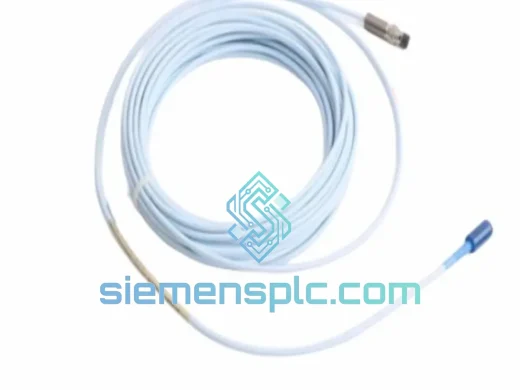
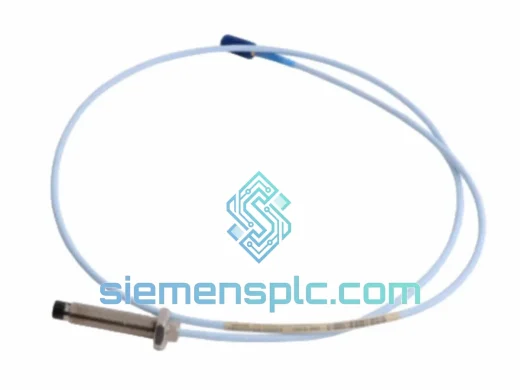
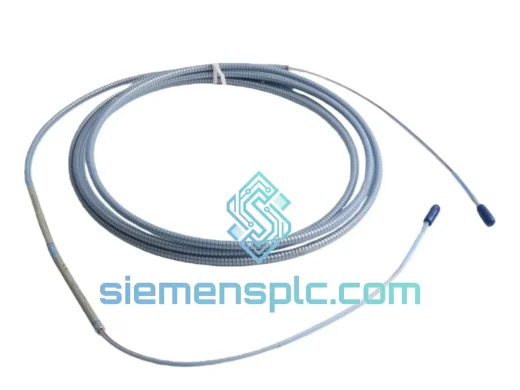
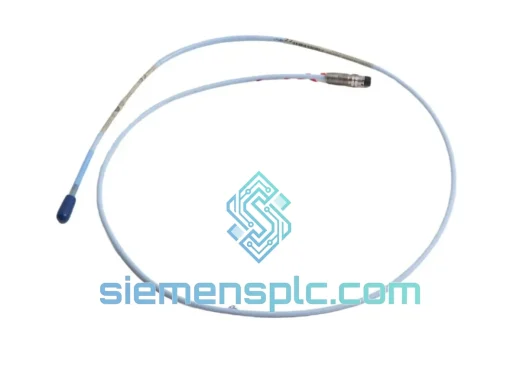
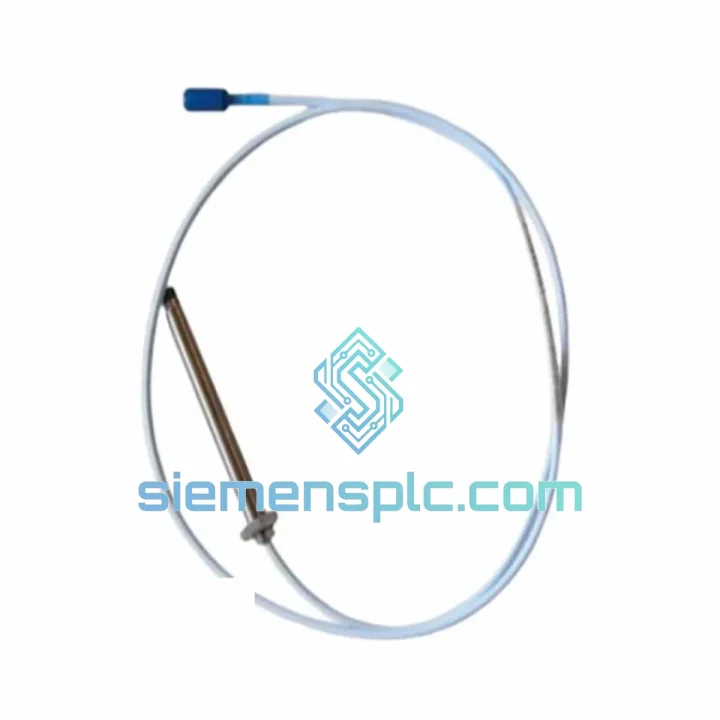
Bently Nevada 330196-05-30-10-00 Proximity Probe – 3300 XL ETR
3301
Origin US
Proximity Probe
Request verified availability, condition, replacement risk review, packing options and courier lead time for 330103-00-10-05-01-00.
Click Request Quote and the part number is inserted into the inquiry form automatically.
Core fields for model confirmation and RFQ routing. Detailed product narrative remains below.
You are not reading a product listing. You are looking at the part that gets your 3300 XL proximity transducer loop back online before the next shift handover. The Bently Nevada 330103-00-10-05-01-00 is an 8 mm eddy-current proximity probe — the sensing head of the most widely deployed shaft vibration monitoring system in rotating machinery. When this probe fails, your 3500 rack goes Not OK, your DCS throws a vibration channel fault, and your machinery protection system is flying blind. We stock verified OEM units in Xiamen and ship the same day orders are confirmed before 14:00 CST. That is the only number that matters when your compressor train is on hold.
URGENT REQUIREMENT? Contact: [email protected] | WhatsApp: +86 18359268345
| Parameter | Specification |
|---|---|
| Part Number | 330103-00-10-05-01-00 |
| Brand | Bently Nevada |
| Series | 3300 XL Proximity Transducer System |
| Sensing Technology | Eddy-current (non-contact) |
| Probe Tip Diameter | 8 mm |
| Integral Cable Length | 1.0 m (armored coaxial) |
| Matched Extension Cable | 5.0 m — 330130 series (total system: 6.0 m) |
| Linear Measurement Range | 0.25 mm – 2.26 mm gap |
| Nominal Gap Voltage | −10.0 VDC at 1.27 mm (center of range) |
| Scale Factor | 7.87 V/mm (200 mV/mil) |
| Frequency Response | DC to 10,000 Hz (−3 dB) |
| Supply Voltage | −24 VDC via 330180 Proximitor |
| Operating Temperature | −35 °C to +177 °C (probe body) |
| Target Material | Carbon steel / alloy steel (AISI 4140, 4340) |
| Thread | 3/8-24 UNF |
| Locknut Torque | 2.8 N·m |
| Body Material | 316 stainless steel |
| Tip Material | Ceramic-filled epoxy |
| Ingress Protection | IP67 (mated connector) |
| Certifications | CE, ATEX, IECEx |
| Weight | ~80 g |
| Origin | USA (OEM) — stocked Xiamen, China |
| Stock Status | ✅ Ready to Ship — Same-Day Dispatch Available |
The 3300 XL transducer chain has three components: probe, extension cable, and Proximitor. Most field failures are misdiagnosed at the probe when the actual fault sits in the extension cable or the Proximitor supply rail. Work through this sequence before you pull the probe.
Fault Pattern 1 — OK LED off, gap voltage absent (0 V at Proximitor output):
Check the −24 VDC supply rail first. A sagging supply (below −22.5 V) will cause the Proximitor to drop out entirely. If supply is good, disconnect the extension cable at the Proximitor junction box and measure resistance from the probe tip to the coaxial center conductor. Open circuit (>1 MΩ) confirms a broken coaxial center conductor — typically at the armored jacket entry point on the probe body. Replace the probe.
Fault Pattern 2 — OK LED off, gap voltage reads −18 V or higher:
Probe is too far from the target. The probe has backed out of its holder — check the locknut. Thread is 3/8-24 UNF; locknut torque spec is 2.8 N·m. Do not exceed this — the ceramic tip will crack. Re-gap to −10.0 V ± 0.5 V and re-torque before condemning the probe.
Fault Pattern 3 — OK LED off, gap voltage reads −10.5 V or lower:
Probe is too close. Shaft has migrated axially, or the probe has crept inward under vibration. Back the probe out until gap voltage returns to the −10.0 V nominal. If the probe cannot be re-gapped within the holder travel range, the bearing clearance has changed — that is a machinery issue, not a probe issue.
Fault Pattern 4 — Gap voltage stable, high broadband noise on vibration channel:
This is almost always the extension cable, not the probe. The 330130 extension cable shield is the highest-failure component in the chain. Swap the extension cable first. If noise persists with a known-good extension cable, the probe tip has developed a micro-crack in the ceramic that creates intermittent eddy-current coupling variation. Replace the probe.
Fault Pattern 5 — Monitor reports Not OK after probe replacement, gap voltage correct:
Verify total cable system length. The 330103-00-10-05-01-00 ships with a 1.0 m integral cable. It must be paired with a 5.0 m extension (330130-05-00-05-02-00 or equivalent) for a 6.0 m total system matched to the 330180 Proximitor calibration. Mixing cable lengths from different calibration groups shifts the scale factor and will cause the monitor to reject the channel. There are no DIP switches or firmware parameters on this probe or the 330180 Proximitor — the only variable is physical gap and cable system length.
Step-by-Step Replacement Procedure:
The 330103-00-10-05-01-00 is designed for the inside of bearing housings — not a controlled environment. It operates in lube oil mist, steam condensate, hydrocarbon vapor, and continuous vibration from the machine it is monitoring. The design choices reflect that operating reality, not a laboratory specification sheet.
The probe body is machined from 316 stainless steel, which resists the sulfur compounds and organic acids present in turbine lube oil systems. The ceramic-filled epoxy tip maintains dimensional stability across the full operating temperature range of −35 °C to +177 °C. Dimensional stability matters here: a 0.01 mm change in tip geometry at operating temperature produces a measurable gap voltage shift that can trigger nuisance Not OK alarms on a properly gapped probe. Cheaper aftermarket probes use filled polymer tips that creep at temperatures above 120 °C — the result is a probe that passes bench testing and fails in service within six months.
The armored coaxial cable jacket is rated for continuous flexing in hydrocarbon environments. Standard PVC jacketing — used on most non-OEM replacement probes — becomes brittle and cracks at temperatures above 105 °C, which is well within the normal operating range of a steam turbine bearing housing. The coaxial connector is sealed to IP67 when mated to the extension cable, preventing moisture ingress that causes shield-to-center-conductor leakage and elevated noise floors on the vibration channel.
Vibration immunity of the probe body is validated to 200 g peak at frequencies up to 2,000 Hz per Bently Nevada qualification testing. This covers the structural resonances of virtually all rotating machinery applications. A probe that cannot survive the vibration environment of the machine it monitors will generate self-induced noise that is indistinguishable from real shaft vibration — a failure mode that is extremely difficult to diagnose without a reference probe for direct comparison and one that has caused unnecessary machinery shutdowns at sites that were running counterfeit or low-grade replacement parts.
Our warehouse is in Xiamen, Fujian Province — a primary export hub with direct access to DHL, FedEx, and UPS international gateway facilities. For in-stock units, the process from your purchase order to airway bill is same-day.
We have shipped 330103-00-10-05-01-00 units to petrochemical complexes in Saudi Arabia, combined-cycle power stations in India, LNG export terminals in Australia, and pulp mills in Scandinavia. The export process is documented and repeatable. Your procurement team will receive a complete shipping package — invoice, packing list, CoO, and carrier tracking — that satisfies both internal audit requirements and import customs at the destination country.
Email: [email protected]
WhatsApp: +86 18359268345
Web: siemensplc.com
© 2026 siemensplc.com. All rights reserved.
We check the full part number, brand, series and visible nameplate information before quotation.
Sales confirms stock path, condition option, quantity and realistic lead time for export dispatch.
DHL, FedEx, UPS or buyer courier arrangements can be reviewed with packing requirements.
Similar brand or category products for fast comparison and multi-item RFQ lists.