
ABB
In Stock OK
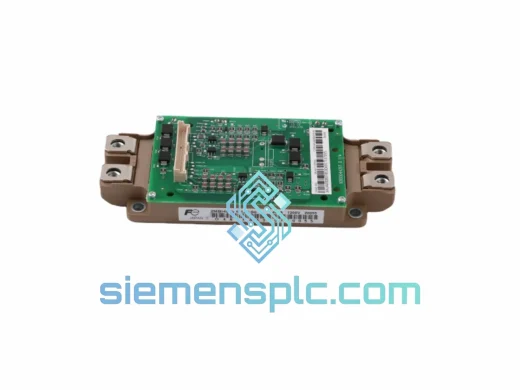
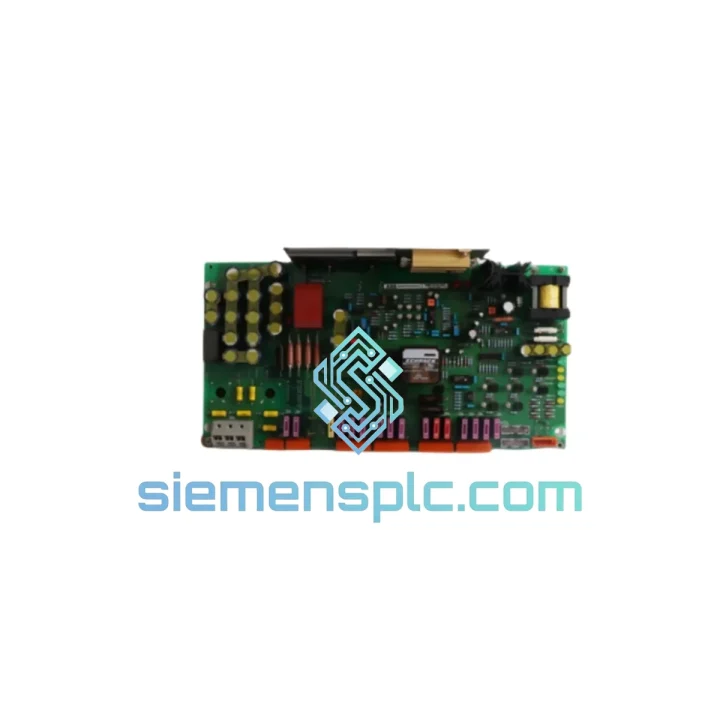
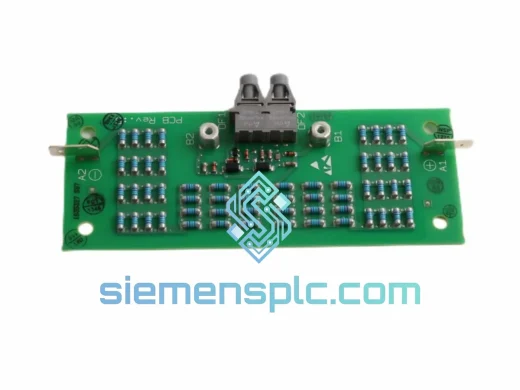
ABB 3BHB003431R0101 KUC720AE01 Excitation Control Board – ACS800 Series
Request verified availability, condition, replacement risk review, packing options and courier lead time for 3BHB003431R0101 KUC720AE01.
BrandABB
Part Number3BHB003431R0101 KUC720AE01
ConditionAvailability Check
Lead TimeRFQ Confirmation
DocumentsDatasheet / photos by RFQ
ShippingExport packing available
Auto-filled RFQ
3BHB003431R0101 KUC720AE01
Click Request Quote and the part number is inserted into the inquiry form automatically.
- Reply by email: [email protected]
- WhatsApp / Tel: +86 18359268345
- Mon-Sat 9:00-18:00 GMT+8
Procurement Data
Key Product Information
Core fields for model confirmation and RFQ routing. Detailed product narrative remains below.
- Brand
- ABB
- Primary Part Number
- 3BHB003431R0101 KUC720AE01
- Product Type
- Excitation Control Circuit Board
- Series / Family
- S800
- Manufacturer
- ABB Ltd. (Germany / Finland)
- Country of Origin
- SE
- Catalog Category
- Motor Drives
- Operating Temp.
- 0 °C to +55 °C (ambient, forced-air cooled enclosure)
- Humidity
- 5–95% RH, non-condensing (IEC 60068-2-3)
- Warranty
- 12 months — covers manufacturing defects and functional failure
Model confirmed for inquiry
3BHB003431R0101 KUC720AE01
Send quantity, destination and urgency. The RFQ form keeps this part number attached.
Request Quote
Product Overview
ABB 3BHB003431R0101 KUC720AE01: Excitation Control Architecture in ACS800 Direct Torque Control Drives
The ABB 3BHB003431R0101 KUC720AE01 is the excitation control circuit board at the core of ABB’s ACS800 variable frequency drive platform. Within the ACS800’s Direct Torque Control (DTC) architecture, this board executes the flux reference chain — receiving magnetizing current demand signals from the RDCU or RMIO control unit and translating them into gate-level excitation commands that regulate rotor flux in real time. Without a correctly functioning KUC720AE01, the DTC algorithm loses its ability to maintain orthogonal flux and torque vectors, causing the drive to revert to fault state within milliseconds of detecting flux deviation beyond the configured hysteresis band.
ABB’s DTC technology operates on a 25 µs torque control cycle — one of the fastest closed-loop update rates in industrial drive design. The KUC720AE01 board must sustain signal integrity across this cycle without introducing latency or noise artifacts. Its analog front-end uses precision instrumentation amplifiers with a common-mode rejection ratio (CMRR) exceeding 80 dB, ensuring that excitation feedback signals remain accurate even in the high-dV/dt switching environment generated by the IGBT inverter stage. The board’s PCB stack-up employs dedicated ground planes and controlled-impedance traces on the signal layers, isolating the low-level analog measurement circuits from the digital logic domain.
In multi-drive cabinet configurations — where multiple ACS800 inverter modules share a common DC bus — the KUC720AE01 participates in the inter-module synchronization protocol via the DDCS fiber optic ring. Each board maintains its own excitation state machine and reports flux status upstream to the master RDCU, enabling the system to coordinate flux pre-magnetization across parallel motor branches without cross-coupling instability. This architecture is particularly relevant in applications such as multi-motor paper machine section drives, where simultaneous flux ramp-up across four to eight drive modules must be coordinated within a defined time window to prevent mechanical shock on the paper web.
Real-time Stock & RFQ: [email protected] | WhatsApp: +86 18359268345
Technical Parameters
| Parameter | Value / Specification |
|---|---|
| Part Number | 3BHB003431R0101 |
| Module Reference | KUC720AE01 |
| Manufacturer | ABB Ltd. (Germany / Finland) |
| Compatible Drive Family | ACS800 (single-drive and multi-drive cabinet configurations) |
| Board Function | Excitation control — flux reference processing and gate excitation command generation |
| Control Interface | DDCS fiber optic (compatible with RDCU-02C, RDCU-12C, RMIO-11C, RMIO-02C) |
| Analog Input CMRR | > 80 dB (typical, instrumentation amplifier front-end) |
| Isolation Barrier | Optical isolation between control logic and power-side feedback circuits |
| Operating Temperature | 0 °C to +55 °C (ambient, forced-air cooled enclosure) |
| Storage Temperature | −40 °C to +70 °C |
| Humidity | 5–95% RH, non-condensing (IEC 60068-2-3) |
| Vibration Resistance | IEC 60068-2-6, 1–150 Hz, 1 g |
| EMC Compliance | EN 61800-3 Category C2 (drive system level) |
| PCB Construction | Multi-layer, controlled-impedance, dedicated analog/digital ground planes |
| Connector Type | Original ABB board-to-backplane connector, drop-in footprint |
| Weight | Approx. 1,960 g (assembled board with heatsink bracket) |
| Warranty | 12 months — covers manufacturing defects and functional failure |
| Condition Available | New original / Tested refurbished |
Hardware Logical Analysis
The KUC720AE01’s hardware design addresses three distinct engineering challenges inherent to excitation control in high-power DTC drives.
Optical Isolation Architecture: The board implements a two-stage isolation barrier. The first stage isolates the analog measurement inputs — motor current and flux feedback signals — from the digital processing core using high-bandwidth optocouplers rated for >5 kV isolation voltage. The second stage isolates the gate excitation output signals from the control logic, preventing IGBT switching transients (with rise times in the range of 100–200 ns and dV/dt values exceeding 5 kV/µs) from coupling back into the signal processing chain. This dual-barrier approach is essential in ACS800 cabinets where the control board and power stage share a common mechanical enclosure.
EMC Design and Shielding: The board’s PCB layout follows a strict partition strategy: the analog signal processing zone occupies one quadrant of the board, separated from the digital logic zone by a moat in the ground plane. Decoupling capacitors are placed within 1 mm of each IC power pin, with a combination of 100 nF ceramic (high-frequency) and 10 µF tantalum (bulk) capacitors forming a distributed decoupling network. The board’s edge connector includes dedicated shield pins that connect to the drive cabinet’s chassis ground, providing a low-impedance return path for common-mode noise currents induced by the inverter’s switching activity.
Flux State Machine and Fault Arbitration: The KUC720AE01 implements a hardware-level flux state machine with four defined states: pre-magnetization, flux established, flux regulation, and flux fault. Transitions between states are governed by comparator circuits with configurable hysteresis thresholds, set during drive commissioning via the RDCU parameter set. If the measured flux deviates from the reference by more than the configured threshold for longer than the defined fault delay (typically 10–50 ms, application-dependent), the board asserts a hardware fault signal that bypasses the software fault handler and directly triggers the drive’s hardware trip relay. This hardware-level arbitration ensures that flux faults result in a controlled stop even if the main control processor is occupied with other tasks.
System Integration Benefits
- Deterministic Flux Control Latency: The board’s hardware state machine operates independently of the RDCU’s software scheduler, guaranteeing flux fault detection within one 25 µs DTC cycle regardless of processor load — a requirement in applications where uncontrolled flux collapse could damage the motor or driven load.
- Fiber Optic DDCS Compatibility: Full compatibility with ABB’s Distributed Drive Control System (DDCS) protocol allows the board to participate in multi-drive ring topologies without additional interface hardware, reducing cabinet wiring complexity and eliminating galvanic coupling between drive modules.
- Drop-In Mechanical Footprint: The board maintains the original ABB connector pinout and PCB mounting pattern, enabling replacement during a planned maintenance window without mechanical modification to the drive cabinet — critical in applications where cabinet re-engineering is not feasible.
- Dual Isolation Barrier for High-dV/dt Environments: The two-stage optical isolation architecture maintains signal integrity in inverter environments with dV/dt values exceeding 5 kV/µs, preventing measurement errors that would otherwise degrade DTC torque accuracy.
- Configurable Fault Thresholds: Hysteresis thresholds and fault delay timers are accessible via the RDCU parameter interface, allowing maintenance engineers to tune the board’s fault sensitivity to match the specific motor and load characteristics of each installation without hardware modification.
- Parallel Drive Synchronization: In multi-drive configurations, the board’s DDCS interface supports flux status broadcasting to the master RDCU, enabling coordinated pre-magnetization across parallel inverter modules — a function required in multi-motor section drives in paper, steel, and textile manufacturing.
- Diagnostic Transparency: The board generates structured fault codes that are logged in the RDCU’s event buffer with millisecond-resolution timestamps, providing maintenance teams with a precise fault timeline for root-cause analysis without requiring external data logging equipment.
- Thermal Margin for Continuous Duty: Component selection and PCB thermal design provide a minimum 15 °C margin between maximum rated junction temperatures and the temperatures measured at full load in a 40 °C ambient environment, supporting continuous 24/7 operation in process industry applications.
Quality Assurance & Global Logistics
Every ABB 3BHB003431R0101 KUC720AE01 unit dispatched from our Xiamen facility undergoes a structured pre-shipment verification process. Visual inspection covers solder joint integrity, component seating, PCB surface condition, and connector pin alignment. Functional verification uses a drive-compatible test fixture that replicates the RDCU interface and applies a defined flux reference sequence, confirming that the board’s analog front-end, isolation barriers, and state machine outputs all respond within specification. Units that do not pass functional verification are quarantined and not shipped.
Packaging follows ESD-safe protocols: each board is placed in a conductive foam tray inside an anti-static shielding bag, heat-sealed, and packed in a double-wall corrugated carton with foam corner inserts. The carton is labeled with the part number, serial number, and test date. A packing list and test record accompany each shipment.
Logistics from Xiamen, China to global destinations are handled via DHL Express, FedEx International Priority, and UPS Worldwide Express, with typical transit times of 3–5 business days to Europe and North America, and 2–4 business days to Southeast Asia. All shipments include full tracking and are covered by carrier insurance. Export documentation — including commercial invoice, packing list, and certificate of origin — is prepared in compliance with the destination country’s import requirements. For customers in the EU, REACH and RoHS compliance documentation is available on request.
Contact Information
Email: [email protected]
WhatsApp: +86 18359268345
Web: siemensplc.com
Location: Xiamen, China
© 2026 siemensplc.com. All rights reserved.
Ready to quote
[email protected]
Send This Part Number to Sales
RFQ workflow
Quality workflow ->
Confirmation Process
01Model confirmation
We check the full part number, brand, series and visible nameplate information before quotation.
02Availability reply
Sales confirms stock path, condition option, quantity and realistic lead time for export dispatch.
03Packing & courier
DHL, FedEx, UPS or buyer courier arrangements can be reviewed with packing requirements.
Continue sourcing
Browse full catalog ->
Related Automation Parts
Similar brand or category products for fast comparison and multi-item RFQ lists.
ABB
RFQ Ready
ABB SDCS-UCM-1 3ADT220090R0008 Excitation Control Board
S800
Origin SE
DC Drive Control Module
ABB
RFQ Ready
ABB SDCS-PIN-51-COAT 3ADT220090R0006 DC Drive Control Card
S800
Origin SE
DC Drive Control Card