Siemens
In Stock OK
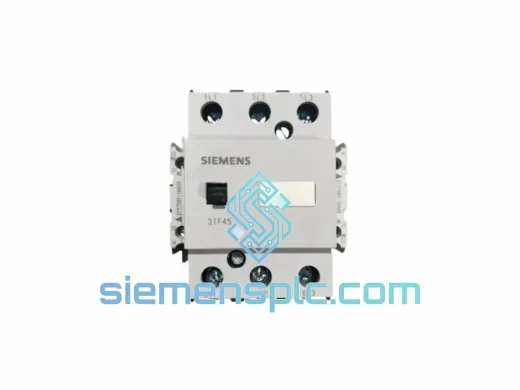
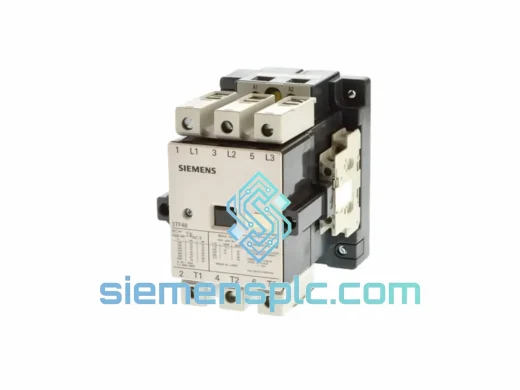
Siemens 3RT2026-1AG20 AC Power Contactor
Request verified availability, condition, replacement risk review, packing options and courier lead time for 3RT2026-1AG20.
BrandSiemens
Part Number3RT2026-1AG20
ConditionAvailability Check
Lead TimeRFQ Confirmation
DocumentsDatasheet / photos by RFQ
ShippingExport packing available
Auto-filled RFQ
3RT2026-1AG20
Click Request Quote and the part number is inserted into the inquiry form automatically.
- Reply by email: [email protected]
- WhatsApp / Tel: +86 18359268345
- Mon-Sat 9:00-18:00 GMT+8
Procurement Data
Key Product Information
Core fields for model confirmation and RFQ routing. Detailed product narrative remains below.
- Brand
- Siemens
- Primary Part Number
- 3RT2026-1AG20
- Product Type
- AC Power Contactor
- Series / Family
- SIRIUS
- Manufacturer
- Siemens AG
- Country of Origin
- DE
- Catalog Category
- Relays & Protection
Model confirmed for inquiry
3RT2026-1AG20
Send quantity, destination and urgency. The RFQ form keeps this part number attached.
Request Quote
Product Overview
Siemens 3RT2026-1AG20 — Stop the Clock on Downtime: Same-Day Dispatch for Your Motor Control Panel
A tripped contactor at 2 AM is not a maintenance event — it is a production crisis. Every minute the line sits idle, the cost accumulates: lost throughput, idle labor, penalty clauses, and the pressure of a plant manager waiting for answers. The Siemens 3RT2026-1AG20 is a 25A, 3-pole AC power contactor from the SIRIUS 3RT2 series — one of the most widely deployed motor switching devices in global industrial infrastructure. We keep verified stock in Xiamen, packed and ready. When you call, we ship.
URGENT REQUIREMENT? Contact: [email protected] | WhatsApp: +86 18359268345
Quick Technical Datasheet
| Parameter | Value | Status |
|---|---|---|
| Part Number / SKU | 3RT2026-1AG20 | ✅ Ready to Ship |
| Manufacturer | Siemens AG | |
| Series | SIRIUS 3RT2 — Size S0 | |
| Pole Configuration | 3-pole (3NO main contacts) | |
| Rated Operational Current (AC-3) | 25 A | |
| Rated Power at 400V (AC-3) | 11 kW | |
| Rated Power at 690V (AC-3) | 15 kW | |
| Control Coil Voltage (Us) | 110 V AC, 50/60 Hz | |
| Coil Voltage Tolerance | 0.85–1.1 × Us | |
| Integrated Auxiliary Contacts | 1NO + 1NC | |
| Rated Insulation Voltage (Ui) | 690 V | |
| Rated Impulse Withstand Voltage | 6 kV | |
| Mechanical Endurance | ≥ 10 million operations | |
| Electrical Endurance (AC-3) | ≥ 1 million operations | |
| Mounting | DIN rail (EN 60715) or screw | |
| Degree of Protection | IP20 (terminals IP00) | |
| Ambient Operating Temperature | -25°C to +60°C | |
| Dimensions (W × H × D) | 45 × 78 × 90 mm | |
| Weight | approx. 400 g | |
| Lead Time (In-Stock) | Ships within 24 hours of payment confirmation | ✅ Ready to Ship |
| Lead Time (Special Order) | 5–10 business days | |
| Certifications | IEC/EN 60947-4-1, CE, UL 508, CSA C22.2 No.14 |
Troubleshooting & Replacement Tips
The 3RT2026-1AG20 fails in predictable ways. Here is what field experience tells you to check before you pull the unit and what to watch when you install the replacement.
Common Failure Modes
- Coil burnout (most frequent): Caused by sustained overvoltage on the 110V AC control circuit, or by the contactor being held energized against a mechanical jam — the coil never reaches its sealed impedance and overheats. Symptom: contactor hums but does not pull in, or pulls in intermittently. Measure coil resistance; an open or shorted coil confirms replacement.
- Welded main contacts: Occurs after repeated high-inrush switching of motors above the rated AC-3 duty, or after a downstream short-circuit event. Symptom: motor runs continuously even with the control signal removed. Do not attempt to force the contactor open — isolate upstream and replace the unit.
- Worn arc chutes / contact erosion: Visible as pitting or carbon deposits on the main contact faces. Symptom: increased contact resistance, motor running hot, voltage drop across closed contacts exceeds 50 mV per pole. At this stage, replacement is more cost-effective than contact kits.
- Auxiliary contact failure: The integrated 1NC auxiliary is the most common interlock signal source. If the PLC is reporting a “contactor feedback fault” with the main contacts confirmed closed, probe the 1NC terminals directly. Resistance above 5Ω on a closed NC contact indicates contact wear or contamination.
- Mechanical latch wear: After several million operations, the return spring and latch mechanism can fatigue. Symptom: contactor drops out under vibration or does not fully release when the coil is de-energized. Replace the unit — do not attempt spring adjustment in the field.
Replacement Procedure — Key Steps
- Isolate and lock out: Open the upstream 3RV2 motor protection circuit breaker and apply LOTO. Verify zero voltage on all three main terminals with a calibrated meter.
- Photograph the wiring: Before disconnecting a single wire, photograph the terminal layout. The 3RT2026 uses A1/A2 for the coil, L1/L2/L3 for line-side, and T1/T2/T3 for load-side. Auxiliary terminals are 13/14 (NO) and 21/22 (NC).
- Check coil voltage suffix: The suffix -1AG20 designates 110V AC, 50/60 Hz. Confirm your control circuit voltage before installing. Common alternatives: -1AP00 (230V AC), -1HB4 (24V DC). Installing the wrong coil voltage will result in immediate failure or no pick-up.
- No DIP switches or firmware: Unlike PLC I/O modules, the 3RT2026-1AG20 requires zero configuration. It is a purely electromechanical device — install, torque terminals to 2.5 Nm (main) and 0.8 Nm (auxiliary), and restore power.
- Verify pick-up and drop-out: Apply control voltage and confirm the contactor pulls in cleanly with a single audible click. Chattering indicates control voltage below 0.85 × Us — check your transformer tap or control fuse.
- Test auxiliary feedback: With the contactor energized, confirm 1NC opens (resistance → ∞) and 1NO closes (resistance < 1Ω). This is your PLC interlock signal — verify it before releasing the machine to production.
- Add-on accessories: If the failed unit had a surge suppressor (3RT2916 series) or additional auxiliary block (3RH2911), transfer these to the replacement unit — they clip directly onto the same mounting points without tools.
Reliability in Harsh Conditions
The SIRIUS 3RT2 platform was not designed for a climate-controlled server room. It was engineered for the realities of industrial environments where ambient temperatures swing from sub-zero cold-start conditions to the radiant heat of a summer pump house, where vibration from adjacent compressors is constant, and where humidity from coastal or process environments accelerates corrosion on lesser components.
The 3RT2026-1AG20 carries an operating temperature range of -25°C to +60°C without derating, and a storage range of -60°C to +80°C — meaning units held in an unheated warehouse in northern climates or a hot shipping container in transit arrive ready to install without conditioning. The coil assembly uses a thermally stabilized bobbin material that maintains dimensional integrity across this full range, preventing the coil-to-frame contact that causes insulation breakdown in cheaper alternatives.
Vibration resistance is validated to IEC 60068-2-6 (sinusoidal) and IEC 60068-2-27 (shock), covering the mechanical stress profiles of compressor skids, ship engine rooms, and rail-mounted control panels. The DIN rail locking mechanism includes a positive retention clip that prevents the unit from walking off the rail under sustained vibration — a failure mode that has caused unplanned outages in high-vibration installations using inferior contactors.
In high-humidity environments, the glass-fiber reinforced housing resists moisture absorption that would otherwise cause tracking between terminals. The arc chute design channels ionized gas away from adjacent poles, preventing arc-over events that can cascade into a full panel failure. These are not marketing claims — they are the engineering decisions that explain why the SIRIUS 3RT platform has accumulated billions of operating hours across global installations.
Global Express Logistics
Our warehouse is located in Xiamen, Fujian Province — one of China’s primary international trade ports with direct freight connections to major hubs across Asia, Europe, the Middle East, and the Americas. This is not a coincidence; it is a deliberate operational choice that compresses the time between your purchase order and the unit arriving at your facility.
Standard Express Dispatch Process:
- Order confirmed before 14:00 CST: Unit packed, export documentation prepared, and handed to DHL Express or FedEx International Priority the same business day.
- DHL Express transit times: Southeast Asia 1–2 days; Europe 3–4 days; North America 3–5 days; Middle East 2–3 days; South America 5–7 days.
- FedEx International Priority: Available as an alternative carrier for destinations where FedEx has superior network coverage — particularly useful for remote industrial sites in Australia, Canada, and parts of Africa.
- Customs documentation: Commercial invoice, packing list, and HS Code 8536.49 declaration prepared for every shipment. Country-of-origin certificate (Form A or EUR.1) available on request for preferential tariff applications.
- Tracking: AWB number provided within 2 hours of dispatch. We monitor shipments proactively — if a customs hold or routing exception occurs, we contact you before you need to chase us.
- Bulk and project orders: For quantities above 10 units or consolidated BOM shipments, sea freight via Xiamen Port is available with competitive transit times to major destination ports. Contact us for a freight comparison.
When a production line is down, the logistics chain is not a background process — it is the critical path. We treat it accordingly.
Contact Information
📧 Email: [email protected]
📱 WhatsApp: +86 18359268345
🌐 Web: siemensplc.com
© 2026 siemensplc.com. All rights reserved.
Ready to quote
[email protected]
Send This Part Number to Sales
RFQ workflow
Quality workflow ->
Confirmation Process
01Model confirmation
We check the full part number, brand, series and visible nameplate information before quotation.
02Availability reply
Sales confirms stock path, condition option, quantity and realistic lead time for export dispatch.
03Packing & courier
DHL, FedEx, UPS or buyer courier arrangements can be reviewed with packing requirements.
Continue sourcing
Browse full catalog ->
Related Automation Parts
Similar brand or category products for fast comparison and multi-item RFQ lists.
Siemens
RFQ Ready
Siemens 3VU1640-1MJ00 Motor Protection Circuit Breaker – SIRIUS 3VU Series
SIRIUS
Origin DE
Motor Protection Circuit Breaker
Siemens
RFQ Ready
Siemens 3TF47 22-OXMO AC Contactor – 3TF Series SIRIUS Classic
SIRIUS
Origin DE
AC Contactor