Siemens
RFQ Ready
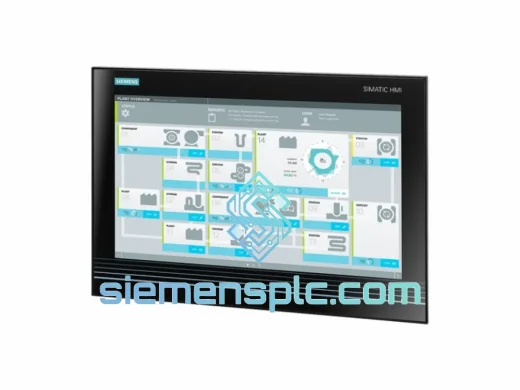
Siemens 6AV7260-5GA10-0BX0 Industrial Panel PC
SIMATIC
Origin DE
Industrial Panel PC
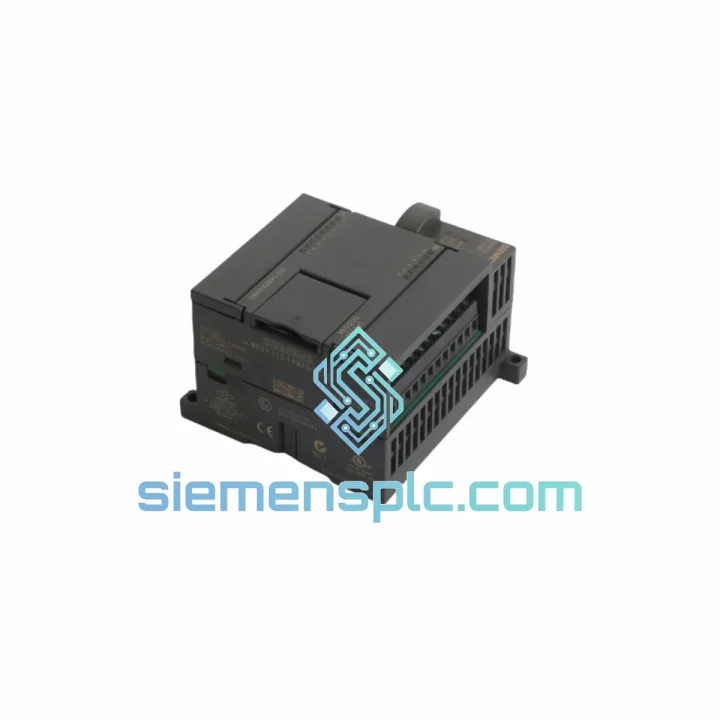
Request verified availability, condition, replacement risk review, packing options and courier lead time for 6ES7212-1AB23-0XB0.
Click Request Quote and the part number is inserted into the inquiry form automatically.
Core fields for model confirmation and RFQ routing. Detailed product narrative remains below.
The 6ES7212-1AB23-0XB0 is a compact programmable logic controller belonging to Siemens’ SIMATIC S7-200 product family. It integrates a DC 24 V power supply, onboard digital I/O, and a single RS-485 communication port into a unified housing measuring approximately 126 × 80 × 62 mm. Within a control loop, this CPU functions as the sole execution engine: it samples field inputs at the start of each scan cycle, executes the stored ladder or STL program against the process image, and writes output states to the physical terminals before the next scan begins. The deterministic scan architecture — with a rated instruction execution speed of 1.2 ms per 1,000 Boolean operations — makes it suitable for time-sensitive discrete control tasks where output latency must remain bounded and predictable.
In distributed machine architectures, the CPU 212 typically operates as a standalone controller or as a subordinate node under a SIMATIC S7-300/400 master via PPI/MPI protocol. Its 1 KB program memory and 1 KB data memory are sufficient for small-to-medium state-machine logic, timer/counter arrays, and basic arithmetic routines. The transistor output stage — rated at DC 24 V / 0.75 A per channel — supports both standard solenoid switching and high-frequency pulse-train output for stepper motor indexing, a capability not available in relay-output variants of the same series.
Real-time Stock & RFQ: [email protected] | WhatsApp: +86 18359268345
| Parameter | Specification |
|---|---|
| Part Number | 6ES7212-1AB23-0XB0 |
| Series | SIMATIC S7-200 |
| CPU Type | CPU 212 |
| Supply Voltage | DC 24 V (operating range: 20.4 – 28.8 V) |
| Onboard Digital Inputs | 8 × DC 24 V, sink/source compatible |
| Onboard Digital Outputs | 6 × DC 24 V transistor, 0.75 A per channel |
| Program Memory | 1 KB (EEPROM-backed) |
| Data Memory (V-Memory) | 1 KB |
| Boolean Execution Speed | 1.2 ms / 1K instructions |
| Communication Interface | 1 × RS-485, PPI / MPI protocol |
| Max. Expansion Modules | 2 EM modules |
| Max. Expandable Digital I/O | Up to 64 DI / 64 DO (with EM 221 / EM 222) |
| Max. Expandable Analog I/O | Up to 16 AI / 8 AO (with EM 231 / EM 232) |
| Real-Time Clock | Optional — via plug-in cartridge |
| Interrupt Inputs | 4 × rising/falling edge, configurable |
| High-Speed Counters | 4 × up to 2 kHz (single-phase) |
| Pulse Output (PTO/PWM) | 2 × up to 20 kHz (Q0.0, Q0.1) |
| Operating Temperature | 0 °C to +55 °C |
| Storage Temperature | −40 °C to +70 °C |
| Relative Humidity | 5 % to 95 %, non-condensing |
| Protection Class | IP20 (IEC 60529) |
| Mounting | DIN rail (TS 35) or panel screw mount |
| Dimensions (W × H × D) | 126 × 80 × 62 mm |
| Weight | 700 g |
| Programming Software | STEP 7 Micro/WIN V4.0 SP9 or later |
| Certifications | CE, UL 508, cUL, FM Class I Div. 2, IEC 61131-2, RoHS |
| Warranty | 12 months from date of shipment |
The CPU 212’s internal architecture centers on a fixed-cycle scan engine with a deterministic process image update mechanism. At the start of each scan, the CPU reads all physical input states into the Process Image Input (PII) table in a single atomic operation. Program execution then operates exclusively against this frozen image, eliminating mid-scan input state changes that could cause logic inconsistencies in ladder rungs with shared contacts. At scan completion, the Process Image Output (PIO) table is written to physical output terminals in a second atomic operation. This two-phase I/O model is fundamental to the CPU’s behavioral predictability in interlock and sequencing applications.
EMC Design: The 6ES7212-1AB23-0XB0 meets EN 61000-6-2 (industrial immunity) and EN 61000-6-4 (industrial emissions). The DC input circuitry incorporates optical isolation between field-side 24 V signals and the internal 5 V logic bus, providing a minimum isolation voltage of 500 V AC. This galvanic barrier suppresses common-mode noise injected by long cable runs, inductive load switching, and ground potential differences between field devices and the control panel. The transistor output stage uses a dedicated output power bus separated from the CPU logic supply, preventing output switching transients from coupling into the processor’s operating voltage rail.
Memory Retention: Program memory is stored in EEPROM, which retains content without battery backup across power cycles. Data memory (V-Memory) is SRAM-backed with an internal supercapacitor providing retention for a minimum of 100 hours at 25 °C after power loss. This architecture eliminates battery replacement as a maintenance task while preserving process data across brief power interruptions — a practical advantage in installations where UPS systems are not fitted.
High-Speed I/O Subsystem: The CPU 212 implements four hardware high-speed counter (HSC) inputs capable of counting at up to 2 kHz in single-phase mode. Counters HSC0 and HSC1 support quadrature encoder input for bidirectional position tracking. The two pulse output channels (Q0.0, Q0.1) support both Pulse Train Output (PTO) for open-loop stepper control and Pulse Width Modulation (PWM) for analog-equivalent output to variable-frequency drives or proportional valves. PTO/PWM generation is handled by dedicated hardware timers, ensuring output frequency accuracy independent of scan cycle load.
Communication Architecture: The RS-485 port operates natively in Point-to-Point Interface (PPI) protocol, supporting multi-master networks with up to 31 nodes at baud rates from 9.6 kbps to 187.5 kbps. In Freeport mode, the port can be reconfigured under program control to implement custom ASCII or Modbus RTU protocols, enabling integration with third-party HMI panels, barcode readers, and weighing terminals without additional communication modules.
Every 6ES7212-1AB23-0XB0 unit dispatched from our Xiamen, China facility passes a structured pre-shipment verification protocol. Visual inspection covers housing integrity, terminal block condition, label authenticity, and holographic seal verification against known-genuine Siemens reference samples. Each unit is powered on and the LED status array is confirmed against Siemens factory specifications before packing. Firmware version is logged and disclosed to the buyer upon request.
Anti-counterfeit screening includes PCB date-code verification, component marking cross-reference, and physical comparison of connector geometry against Siemens manufacturing tolerances. Units are packed in anti-static bags with foam-lined double-wall cartons rated for international air freight handling. All shipments include a commercial invoice, packing list, and certificate of origin for customs clearance.
Logistics options from Xiamen include DHL Express (3–5 business days to most destinations), FedEx International Priority, UPS Worldwide Expedited, and sea freight LCL for bulk orders. Export documentation is prepared in compliance with HS Code 8537.10 classification. The 12-month warranty covers functional defects under normal operating conditions; warranty claims are processed with advance replacement dispatch to minimize downtime.
Email: [email protected]
WhatsApp: +86 18359268345
Web: siemensplc.com
Location: Xiamen, China
© 2026 siemensplc.com. All rights reserved.
We check the full part number, brand, series and visible nameplate information before quotation.
Sales confirms stock path, condition option, quantity and realistic lead time for export dispatch.
DHL, FedEx, UPS or buyer courier arrangements can be reviewed with packing requirements.
Similar brand or category products for fast comparison and multi-item RFQ lists.