
Siemens
In Stock OK
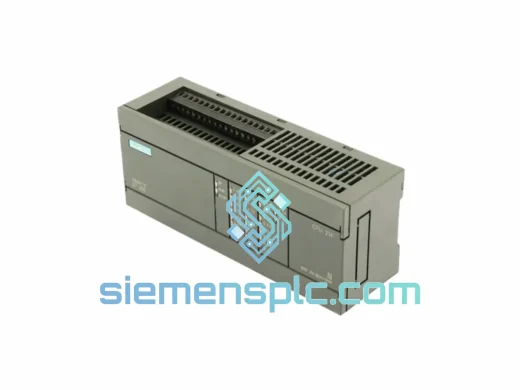
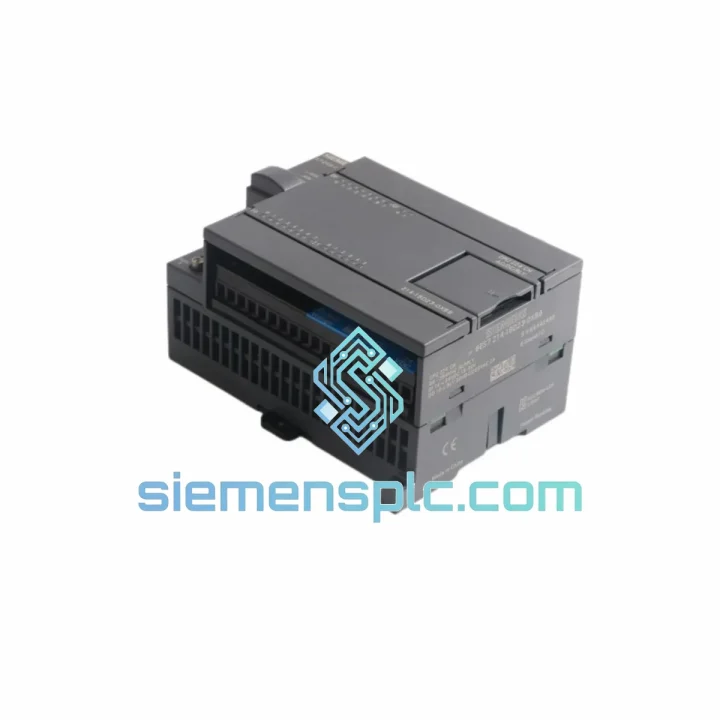
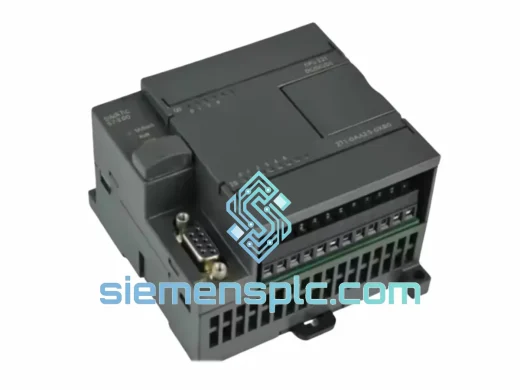
Siemens 6ES7214-1BD23-0XB8 PLC CPU Module – SIMATIC S7-200
Request verified availability, condition, replacement risk review, packing options and courier lead time for 6ES7214-1BD23-0XB8.
BrandSiemens
Part Number6ES7214-1BD23-0XB8
ConditionAvailability Check
Lead TimeRFQ Confirmation
DocumentsDatasheet / photos by RFQ
ShippingExport packing available
Auto-filled RFQ
6ES7214-1BD23-0XB8
Click Request Quote and the part number is inserted into the inquiry form automatically.
- Reply by email: [email protected]
- WhatsApp / Tel: +86 18359268345
- Mon-Sat 9:00-18:00 GMT+8
Procurement Data
Key Product Information
Core fields for model confirmation and RFQ routing. Detailed product narrative remains below.
- Brand
- Siemens
- Primary Part Number
- 6ES7214-1BD23-0XB8
- Product Type
- PLC CPU Module
- Series / Family
- SIMATIC S7-200
- Manufacturer
- Siemens AG (Germany)
- Country of Origin
- DE
- Catalog Category
- PLCs & Controllers
- Operating Temp.
- 0 °C to +55 °C
Model confirmed for inquiry
6ES7214-1BD23-0XB8
Send quantity, destination and urgency. The RFQ form keeps this part number attached.
Request Quote
Product Overview
Siemens 6ES7214-1BD23-0XB8 CPU224 CN — Compact Controller Core for Distributed Machine Automation
The Siemens 6ES7214-1BD23-0XB8 is the CPU224 CN variant within the SIMATIC S7-200 micro-PLC family, a platform that has accumulated one of the largest installed bases in small-to-medium machine automation globally. The “CN” market designation (suffix 0XB8) identifies this unit as the version type-approved for the Chinese domestic market, while remaining functionally equivalent to the international 0XB0 release in terms of instruction set, I/O architecture, and expansion bus protocol.
This CPU module integrates 14 digital inputs (DC 24 V, sink/source configurable) and 10 transistor digital outputs (DC 24 V, 0.75 A per point) directly on the base unit, eliminating the need for a separate I/O expansion card in the majority of small machine topologies. The onboard RS-485 port supports PPI, MPI, and Freeport protocols simultaneously selectable via software, enabling direct connection to STEP 7 Micro/WIN programming environments, SIEMENS TP/OP HMI panels, and third-party Modbus RTU devices without additional communication hardware.
Program execution is handled by a 12 KB user program memory space with a separate 8 KB data memory block, both backed by a supercapacitor-based retention circuit that maintains RAM contents for a minimum of 100 hours following power loss — a critical characteristic for applications where battery maintenance is operationally impractical. Boolean instruction execution time is rated at 0.37 µs, placing the CPU224 CN within the deterministic response envelope required for conveyor sequencing, packaging machine cam control, and pump station interlocking at scan cycles typically in the 1–5 ms range for programs of moderate complexity.
The expansion bus architecture supports up to seven EM (Expansion Module) slots, accommodating digital I/O modules (6ES7221/222/223 series), analog I/O modules (6ES7231/232 series), thermocouple and RTD modules (6ES7231-7PD22/7PC22), and communication modules including the EM241 modem and EM243 Ethernet adapter. The physical expansion connector uses a proprietary 40-pin bus interface with 5 V DC bus power supplied by the CPU, rated at 660 mA total for all connected expansion modules — a constraint that must be factored into system power budgeting when populating all seven slots.
At siemensplc.com, every 6ES7214-1BD23-0XB8 unit is sourced through verified supply channels, inspected for physical authenticity against known-genuine reference units, subjected to a functional power-on test covering I/O point response and RS-485 port communication, and shipped with a 12-month warranty. Stock is held in Xiamen, China, with DHL, FedEx, and UPS express options available for same-week dispatch to Southeast Asia, the Middle East, South Asia, Eastern Europe, Africa, and Latin America.
Real-time Stock & RFQ: [email protected] | WhatsApp: +86 18359268345
Technical Parameters
| Parameter | Specification |
|---|---|
| Manufacturer | Siemens AG (Germany) |
| Part Number | 6ES7214-1BD23-0XB8 |
| Series | SIMATIC S7-200 |
| Module Designation | CPU224 CN |
| Market Variant | CN (China domestic, suffix 0XB8) |
| Digital Inputs (onboard) | 14 × DC 24 V, sink/source selectable, 4 mA nominal |
| Digital Outputs (onboard) | 10 × DC 24 V transistor, 0.75 A per point, 8 A total |
| User Program Memory | 12 KB |
| Data Memory | 8 KB |
| Boolean Execution Speed | 0.37 µs per instruction |
| Communication Port | 1 × RS-485 (PPI / MPI / Freeport, 9.6–187.5 kbps) |
| Expansion Slots | Up to 7 EM modules |
| Expansion Bus Power | 5 V DC, 660 mA max (shared across all EM slots) |
| Supply Voltage | DC 24 V (20.4–28.8 V operating range) |
| Power Consumption | Approx. 7 W (CPU only, no expansion) |
| Sensor Supply Output | DC 24 V, 280 mA max |
| Data Retention (RAM) | ≥ 100 hours (supercapacitor backed) |
| Operating Temperature | 0 °C to +55 °C |
| Storage Temperature | −40 °C to +70 °C |
| Relative Humidity | 5–95 % (non-condensing) |
| Protection Class | IP20 |
| Dimensions (W × H × D) | 120.5 mm × 80 mm × 62 mm |
| Weight | Approx. 360 g |
| Mounting | DIN rail (EN 60715) or panel mount |
| Certifications | CE, UL, cUL, FM Class I Div 2, ATEX Zone 2 |
| Warranty (siemensplc.com) | 12 months from dispatch date |
Hardware Logical Analysis
The CPU224 CN executes a fixed scan-cycle architecture: input image refresh → user program execution → output image write → communication servicing. This deterministic sequence, with a minimum achievable scan time of approximately 0.8 ms for a 1 KB Boolean-only program, is the foundation of its suitability for time-critical discrete control. The instruction set covers 256 standard operations including bit logic, timer/counter (up to 256 timers, 256 counters), integer and floating-point arithmetic, PID loop control (up to 8 simultaneous PID loops via the PID Wizard in Micro/WIN), high-speed counter inputs (up to 6 HSC channels at 30 kHz single-phase or 20 kHz A/B quadrature), and two pulse output channels (PTO/PWM) at up to 20 kHz — enabling open-loop stepper motor positioning without an external motion controller.
EMC Design: The CPU224 CN input circuit employs optical isolation on all 14 digital input channels, with a nominal isolation voltage of 500 V AC between field wiring and the internal logic bus. Input filter time constants are software-configurable from 0.2 ms to 12.8 ms per input group, allowing the user to trade off noise immunity against response speed depending on field sensor characteristics. The transistor output stage uses a separate 24 V load supply rail, galvanically isolated from the CPU logic supply, with each output protected by an internal current-limiting circuit that clamps at approximately 1.5 A before thermal shutdown — preventing a shorted field device from propagating a fault to adjacent output channels.
RS-485 Port Architecture: The single RS-485 port operates as a multi-master capable interface under PPI protocol, supporting up to 31 nodes on a single segment without a repeater (cable length up to 50 m at 187.5 kbps, extendable to 1,000 m at 9.6 kbps with appropriate termination). In Freeport mode, the port is fully user-programmable via the SMB30 control byte, enabling custom ASCII or binary protocol implementations for barcode readers, weighing terminals, and third-party drives. The port hardware includes integrated 120 Ω termination resistors selectable via DIP switch on the CPU housing — a detail that eliminates the need for external termination components in point-to-point wiring configurations.
Memory Architecture: The 12 KB program memory is organized as a flat address space with no bank-switching overhead, meaning the CPU executes the full program in a single linear pass per scan cycle. The 8 KB data memory is partitioned into V (variable), M (bit memory), T (timer), C (counter), and special memory (SM) areas. The SM area (SMB0–SMB549) provides direct read/write access to CPU status flags, port configuration registers, HSC control bytes, and PID loop parameters — a structured register map that simplifies diagnostic ladder logic without requiring proprietary function blocks.
System Integration Benefits
- Deterministic scan-cycle execution: Fixed input-refresh → program-execute → output-write sequence guarantees output response latency is bounded by one scan cycle plus I/O filter delay, enabling reliable interlock timing in safety-adjacent (non-SIL) applications.
- Scalable I/O without CPU replacement: The seven-slot expansion bus allows the system to grow from 14 DI / 10 DO to a maximum of 128 DI / 120 DO by adding EM221/222/223 modules, deferring hardware investment until application scope is confirmed.
- Integrated PID with auto-tune: The Micro/WIN PID Wizard generates structured PID loop code with configurable sample time (1 ms to 10 s), output limiting, and manual/auto mode switching — reducing commissioning time for closed-loop temperature, pressure, and flow control applications.
- High-speed counter integration: Six HSC channels (modes 0–11) support single-phase, dual-phase, and A/B quadrature encoder inputs at up to 30 kHz, enabling direct connection to incremental encoders for position feedback without an external counter module.
- Pulse output for open-loop motion: Two PTO/PWM outputs at up to 20 kHz allow direct drive of stepper motor drivers in open-loop positioning applications, with the Micro/WIN Position Control Wizard generating the acceleration/deceleration profile code automatically.
- Freeport serial communication: User-programmable RS-485 Freeport mode enables integration with any serial device — barcode scanners, RFID readers, weight indicators, variable frequency drives — without requiring a dedicated communication module, reducing BOM cost.
- Diagnostic transparency via SM memory: CPU fault codes, I/O error flags, and communication status are mapped to readable SM bytes accessible from the user program, enabling in-ladder diagnostics that write fault descriptions to HMI data registers without requiring a separate diagnostic tool.
- STEP 7 Micro/WIN compatibility: Full programming support under STEP 7 Micro/WIN V4.0 SP9 (the final release for S7-200), including LAD, FBD, and STL editors, symbol table, data block editor, and system block configuration — a mature, stable toolchain with no annual license fee for existing installations.
- Supercapacitor RAM retention: The ≥ 100-hour RAM retention eliminates battery replacement as a maintenance task, reducing lifecycle cost in installations where the CPU is mounted in sealed enclosures or remote locations with infrequent access.
- DIN rail and panel mount flexibility: Standard EN 60715 DIN rail clips are integrated into the housing base, with optional panel-mount adapter brackets available, accommodating both standard control cabinet and custom enclosure installations.
Quality Assurance & Global Logistics
Every 6ES7214-1BD23-0XB8 unit dispatched from siemensplc.com is a genuine Siemens-manufactured component. Our procurement process targets verified supply channels, and each unit undergoes a structured pre-shipment inspection: physical label and housing authenticity check against reference units, firmware version verification, functional power-on test covering all I/O points and the RS-485 communication port, and anti-static packaging inspection. Units that fail any stage are quarantined and not shipped. A 12-month warranty from dispatch date covers functional failure under normal operating conditions — replacement or refund arranged within 5 business days of a confirmed warranty claim.
Our warehouse is located in Xiamen, China (Fujian Province), a major export hub with direct access to DHL, FedEx, UPS, and SF Express international services. Standard export documentation — commercial invoice, packing list, and certificate of origin — is prepared for every shipment to facilitate customs clearance. Typical dispatch time for in-stock units is 1–3 business days from order confirmation. Express delivery to Southeast Asia (2–4 days), Middle East (3–5 days), Europe (4–7 days), and the Americas (5–8 days) is available. Volume orders of 5+ units qualify for consolidated freight pricing. No minimum order quantity applies to standard inquiries.
Contact Information
Email: [email protected]
WhatsApp: +86 18359268345
Web: siemensplc.com
Location: Xiamen, China
© 2026 siemensplc.com. All rights reserved.
Ready to quote
[email protected]
Send This Part Number to Sales
RFQ workflow
Quality workflow ->
Confirmation Process
01Model confirmation
We check the full part number, brand, series and visible nameplate information before quotation.
02Availability reply
Sales confirms stock path, condition option, quantity and realistic lead time for export dispatch.
03Packing & courier
DHL, FedEx, UPS or buyer courier arrangements can be reviewed with packing requirements.
Continue sourcing
Browse full catalog ->
Related Automation Parts
Similar brand or category products for fast comparison and multi-item RFQ lists.
Siemens
RFQ Ready
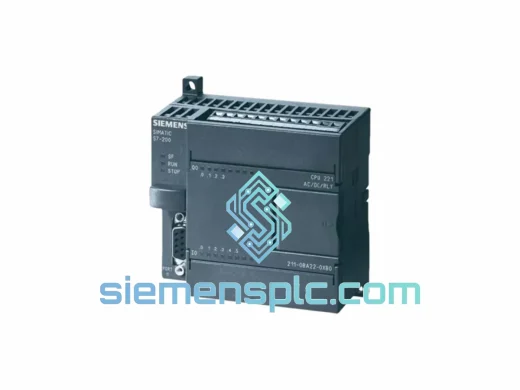
Siemens 6ES7211-0BA22-0XB0 PLC CPU Module – SIMATIC S7-200
SIMATIC S7-200
Origin DE
PLC CPU Module
Siemens
RFQ Ready
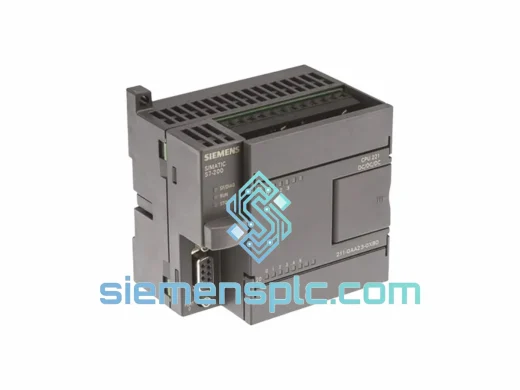
Siemens 6ES7211-0AA23-0XB0 PLC CPU Module – SIMATIC S7-200
SIMATIC S7-200
Origin DE
PLC CPU Module
Siemens
RFQ Ready
Siemens 6ES7212-1BB23-0XB8 PLC CPU Module – SIMATIC S7-200
SIMATIC S7-200
Origin DE
PLC CPU Module