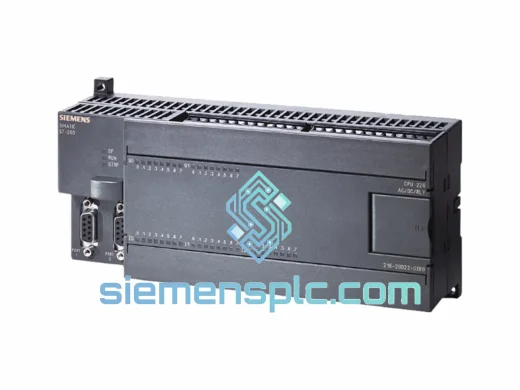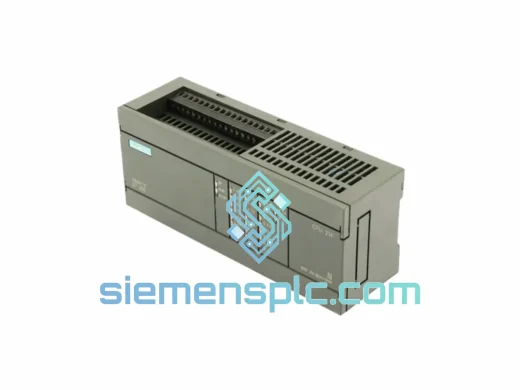
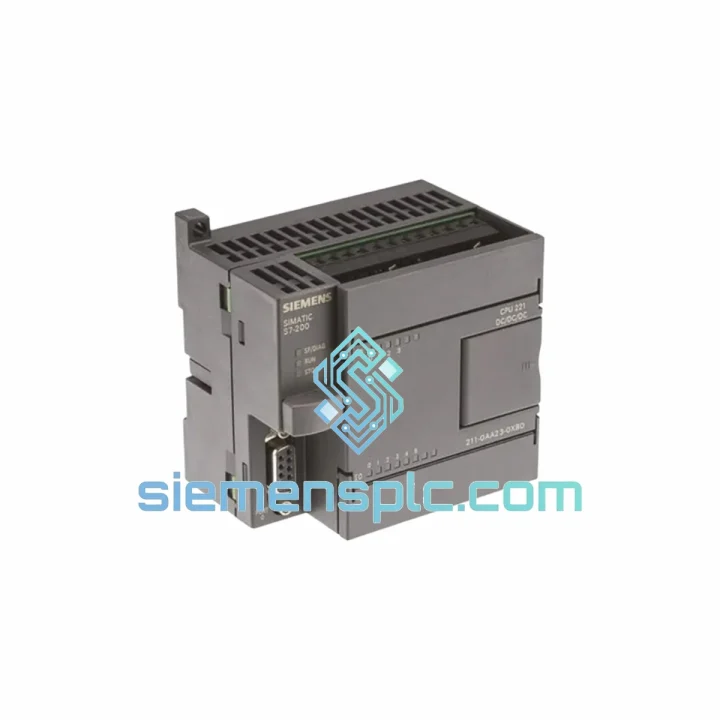
Siemens
In Stock OK
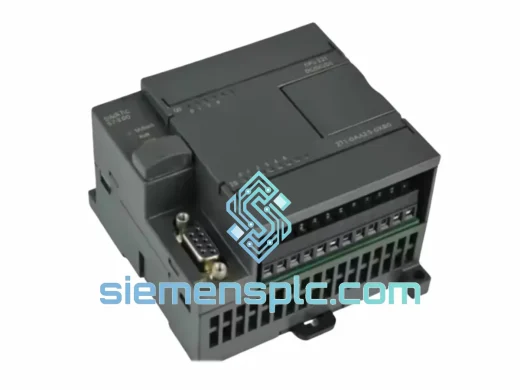
Siemens 6ES7211-0AA23-0XB0 PLC CPU Module – SIMATIC S7-200
Request verified availability, condition, replacement risk review, packing options and courier lead time for 6ES7211-0AA23-0XB0.
BrandSiemens
Part Number6ES7211-0AA23-0XB0
ConditionAvailability Check
Lead TimeRFQ Confirmation
DocumentsDatasheet / photos by RFQ
ShippingExport packing available
Auto-filled RFQ
6ES7211-0AA23-0XB0
Click Request Quote and the part number is inserted into the inquiry form automatically.
- Reply by email: [email protected]
- WhatsApp / Tel: +86 18359268345
- Mon-Sat 9:00-18:00 GMT+8
Procurement Data
Key Product Information
Core fields for model confirmation and RFQ routing. Detailed product narrative remains below.
- Brand
- Siemens
- Primary Part Number
- 6ES7211-0AA23-0XB0
- Product Type
- PLC CPU Module
- Series / Family
- SIMATIC S7-200
- Country of Origin
- DE
- Catalog Category
- PLCs & Controllers
- Operating Temp.
- 0 °C to +55 °C
- Warranty
- 12 months from date of shipment
Model confirmed for inquiry
6ES7211-0AA23-0XB0
Send quantity, destination and urgency. The RFQ form keeps this part number attached.
Request Quote
Product Overview
Siemens 6ES7211-0AA23-0XB0 CPU 221 DC/DC/DC — Compact Controller for Deterministic Machine Automation
The 6ES7211-0AA23-0XB0 is the DC/DC/DC variant of the CPU 221 within Siemens’ SIMATIC S7-200 micro-PLC family. Designed for space-constrained control panels and standalone machine applications, this unit integrates a 24 VDC power supply input, six 24 VDC digital inputs, and four transistor (sourcing) digital outputs into a single 90 × 80 × 62 mm housing. Its instruction execution rate of 0.22 ms per 1,000 Boolean operations places it firmly in the deterministic control tier required for synchronised motion interlocking, conveyor sequencing, and pump-station automation where scan-cycle jitter directly affects process repeatability.
The CPU 221 occupies the entry position in the S7-200 architecture. Unlike expansion-capable siblings such as the CPU 222 or CPU 224, the 221 carries no expansion bus connector — a deliberate hardware decision that eliminates backplane arbitration latency and reduces the total bill-of-materials for applications whose I/O count is fixed at design time. The result is a controller whose deterministic scan behaviour is unaffected by expansion module polling overhead, making it a preferred choice for OEM machine builders who need guaranteed cycle times below 5 ms on programs up to 4 KB.
Communication is handled through a single RS-485 port supporting PPI (Point-to-Point Interface), MPI (Multi-Point Interface), and Freeport mode. In Freeport mode, the port operates as a fully configurable UART, enabling direct ASCII or Modbus RTU dialogue with third-party sensors, barcode readers, and variable-frequency drives without an intermediate gateway. PPI multi-master networking allows up to 31 nodes on a single segment, supporting distributed architectures where multiple S7-200 CPUs share process data through the network variable table mechanism.
Programming is performed exclusively through STEP 7 Micro/WIN V4.0 SP9 or later, connected via a PC/PPI cable (6ES7901-3CB30-0XA0) or USB-PPI adapter. The software supports Ladder Diagram (LAD), Function Block Diagram (FBD), and Statement List (STL) editors, with an integrated instruction wizard for PID loops, HSC (High-Speed Counter) configuration, and motion control profiles. The CPU 221 supports two high-speed counters operating at up to 30 kHz in single-phase mode, enabling direct encoder feedback for positioning tasks without external counter hardware.
All units supplied through siemensplc.com are sourced from verified industrial distribution channels, shipped from Xiamen, China, and carry a 12-month warranty from date of shipment. Pre-shipment inspection includes visual examination, label and date-code verification, and a functional power-on test.
Real-time Stock & RFQ: [email protected] | WhatsApp: +86 18359268345
Technical Parameters
| Parameter | Value |
|---|---|
| Part Number | 6ES7211-0AA23-0XB0 |
| Product Family | SIMATIC S7-200 |
| CPU Designation | CPU 221 |
| Power Supply Input | 24 VDC (20.4 – 28.8 VDC) |
| Supply Current (no load) | ≤ 80 mA at 24 VDC |
| Digital Inputs | 6 × 24 VDC (IEC Type 1 sink) |
| Digital Outputs | 4 × Transistor, sourcing, 0.75 A per point |
| Output Short-Circuit Protection | Yes (electronic, per output) |
| Program Memory | 4 096 bytes (4 KB) |
| Data Memory (V-Memory) | 2 048 bytes (2 KB) |
| Retentive Memory (EEPROM) | 10 000 write cycles, permanent retention |
| Boolean Execution Speed | 0.22 ms / 1 000 instructions |
| High-Speed Counters | 4 × HSC (up to 30 kHz single-phase) |
| Pulse Outputs (PTO/PWM) | 2 × (up to 20 kHz) |
| Communication Port | 1 × RS-485, isolated, PPI / MPI / Freeport |
| Max. PPI Network Nodes | 31 |
| Analog Potentiometers | 1 × (8-bit resolution) |
| Real-Time Clock | Optional (cartridge, 6ES7297-1AA23-0XA0) |
| Expansion Modules | None (no expansion bus) |
| Dimensions (W × H × D) | 90 × 80 × 62 mm |
| Weight (unit only) | approx. 360 g |
| Operating Temperature | 0 °C to +55 °C |
| Storage Temperature | −40 °C to +70 °C |
| Relative Humidity | 5 % to 95 %, non-condensing |
| Protection Rating | IP20 (IEC 60529) |
| Shock Resistance | 15 g / 11 ms (IEC 60068-2-27) |
| Vibration Resistance | 2 g / 10–150 Hz (IEC 60068-2-6) |
| EMC Immunity | EN 61000-6-2 (industrial environment) |
| EMC Emissions | EN 61000-6-4 |
| Certifications | CE, UL, cUL, FM Class I Div 2 |
| Country of Origin | Germany |
| Warranty | 12 months from date of shipment |
Hardware Logical Analysis
The CPU 221’s input circuit employs optical isolation between the field-side 24 VDC signal and the internal 5 VDC logic bus. Each input channel passes through a dedicated opto-coupler with a nominal input filter time of 6.4 ms (software-adjustable from 0.2 ms to 12.8 ms per group). This filter architecture serves two functions: it suppresses contact bounce on mechanical switches without software debounce routines, and it attenuates conducted transients up to the IEC 61000-4-4 Level 3 threshold (2 kV, 5/50 ns burst). The isolation barrier maintains a minimum 500 V AC withstand between field wiring and the CPU logic plane, protecting the processor from ground potential differences common in multi-panel installations.
The transistor output stage uses N-channel MOSFETs with integrated flyback diodes on each channel. The sourcing topology means the load return connects to the common 0 V rail, which simplifies wiring in DC motor and solenoid valve circuits. Each output is individually protected against short-circuit and overtemperature conditions through an electronic current-limiting circuit that clamps output current at approximately 1.5 A before thermal shutdown engages. This per-channel protection prevents a single shorted load from disabling adjacent outputs — a failure mode that relay-output variants cannot avoid without external fusing.
The CPU’s internal power architecture separates the 24 VDC sensor supply (used to power field devices from the CPU’s own regulated output, rated at 280 mA) from the logic supply. This separation means sensor wiring faults that collapse the sensor supply do not affect CPU execution or communication port operation. The RS-485 port is galvanically isolated from both the logic supply and the I/O circuits, with a common-mode voltage tolerance of ±7 V relative to the CPU reference ground — sufficient for cable runs up to 1,200 m at 9.6 kbps in a properly terminated network.
Program and data retention uses a two-tier strategy: volatile SRAM for active execution (fast read/write, no wear) backed by EEPROM for permanent storage on power-down. The EEPROM write endurance of 10,000 cycles is managed by the operating system, which writes only on commanded save operations rather than on every scan cycle, preserving cell life in applications with frequent power cycling. The optional real-time clock cartridge (6ES7297-1AA23-0XA0) adds a battery-backed oscillator accurate to ±2 minutes per month, enabling time-stamped event logging and scheduled task execution without an external time-keeping device.
System Integration Benefits
- Fixed I/O architecture eliminates expansion bus polling: With no expansion connector, the CPU 221 executes its scan cycle without the variable-latency overhead of querying remote I/O modules. Scan time is a direct function of program length and instruction mix, making worst-case cycle time calculation straightforward for safety-related timing analysis.
- Freeport mode enables protocol-agnostic serial integration: The RS-485 port in Freeport mode supports baud rates from 1,200 to 115,200 bps with configurable data bits, parity, and stop bits. This allows direct integration with Modbus RTU slaves, ASCII-output sensors, and proprietary instrument protocols without a protocol converter, reducing panel component count and potential failure points.
- High-speed counter inputs support closed-loop positioning: Four HSC channels operating at 30 kHz accept quadrature encoder signals (A/B/Z) or single-phase pulse trains. The HSC interrupt mechanism triggers a program interrupt within one scan cycle of a count event, enabling position-based output switching with sub-millisecond response — adequate for indexing conveyors and rotary filling machines at moderate speeds.
- PTO/PWM outputs provide open-loop motion control without external drives: Two pulse train outputs at up to 20 kHz drive stepper motor drives directly, with the Micro/WIN motion wizard generating the acceleration/deceleration profile and position envelope automatically. This eliminates a dedicated motion controller for single-axis applications.
- Analog potentiometer provides parameter adjustment without HMI: The single on-board potentiometer maps to a special memory byte (SMB28), allowing operators to adjust a timer preset, setpoint, or gain value by turning a screwdriver-accessible trimmer. This reduces the cost of simple parameter adjustment in field-deployed machines where a full HMI is not justified.
- PPI multi-master networking enables distributed data sharing: Up to 31 S7-200 CPUs on a single RS-485 segment can exchange data through the network read/write instructions (NETR/NETW). A master CPU can read or write up to 16 bytes per instruction from any slave, supporting distributed architectures where sensor data from remote stations is consolidated at a central CPU for supervisory logic.
- EEPROM-backed program storage survives extended power loss: Unlike SRAM-only controllers that require battery maintenance, the CPU 221 stores the user program and data block in non-volatile EEPROM automatically on power-down. There is no battery to replace for program retention, reducing preventive maintenance requirements in remote or unattended installations.
- Compact DIN-rail form factor minimises panel footprint: At 90 mm wide, the CPU 221 occupies less horizontal DIN-rail space than any expansion-capable S7-200 CPU. In panels where rail space is allocated per millimetre, this allows the controller to coexist with circuit breakers, terminal blocks, and power supplies without requiring a larger enclosure.
- Diagnostic LEDs provide first-level fault isolation without software: The front panel carries SF (System Fault), RUN, STOP, and per-channel I/O LEDs. An SF indication without a STOP state points to a non-fatal system error (e.g., battery low, forced I/O) that can be diagnosed through the system status byte in SMB1 without connecting a programming device — reducing mean time to diagnosis in field service scenarios.
- Interrupt-driven I/O response decouples time-critical events from scan cycle: Rising-edge, falling-edge, and HSC interrupts execute attached interrupt routines outside the normal scan sequence, with a response latency of approximately 0.4 ms from event detection to first instruction execution. This deterministic interrupt response allows the CPU 221 to handle asynchronous events — such as emergency stop signals or encoder index pulses — with timing independent of the main program scan length.
Quality Assurance & Global Logistics
Every 6ES7211-0AA23-0XB0 unit dispatched from siemensplc.com undergoes a structured pre-shipment verification process at our Xiamen, China facility. Inspection covers physical condition assessment (housing integrity, connector pin alignment, label legibility), date-code and batch-number cross-reference against procurement documentation, and a functional power-on test confirming LED status, communication port response, and I/O channel continuity. Units that do not pass all inspection criteria are quarantined and not offered for sale.
Packaging follows Siemens original carton specifications where available, with ESD-protective inner bags and foam-cushioned outer cartons rated for the shock and vibration levels specified in ISTA 2A transit testing. For international shipments, a commercial invoice, packing list, and certificate of origin are prepared to facilitate customs clearance in the destination country. HS Code 8537.10 applies to this product category for most jurisdictions.
Standard dispatch from Xiamen is within 1–3 business days of order confirmation. Express courier services (DHL Express, FedEx International Priority, UPS Worldwide Express) deliver to most major industrial regions — including Germany, the United States, Southeast Asia, and the Middle East — within 3–7 business days door-to-door. Sea freight consolidation is available for orders exceeding 50 units, with transit times of 18–35 days depending on destination port. All shipments are tracked from dispatch to delivery, with tracking numbers provided by email within 24 hours of collection.
The 12-month warranty covers manufacturing defects and functional failures under normal operating conditions as defined in Siemens product documentation. Warranty claims are processed through our Xiamen technical team, with replacement units dispatched within 5 business days of fault confirmation. Customers are not required to return defective units before a replacement is shipped for orders with established account history.
Contact Information
Email: [email protected]
WhatsApp: +86 18359268345
Web: siemensplc.com
Location: Xiamen, China
© 2026 siemensplc.com. All rights reserved.
Ready to quote
[email protected]
Send This Part Number to Sales
RFQ workflow
Quality workflow ->
Confirmation Process
01Model confirmation
We check the full part number, brand, series and visible nameplate information before quotation.
02Availability reply
Sales confirms stock path, condition option, quantity and realistic lead time for export dispatch.
03Packing & courier
DHL, FedEx, UPS or buyer courier arrangements can be reviewed with packing requirements.
Continue sourcing
Browse full catalog ->
Related Automation Parts
Similar brand or category products for fast comparison and multi-item RFQ lists.
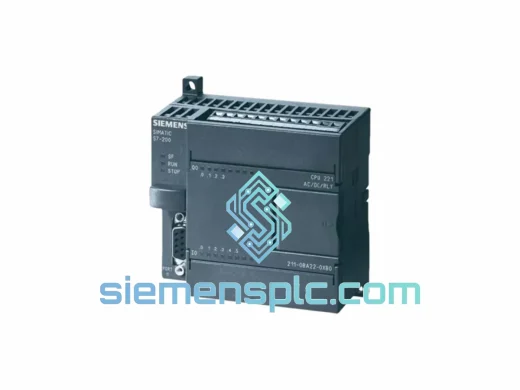
Siemens
RFQ Ready
Siemens 6ES7211-0BA22-0XB0 PLC CPU Module – SIMATIC S7-200
SIMATIC S7-200
Origin DE
PLC CPU Module
Siemens
RFQ Ready
Siemens 6ES7212-1BB23-0XB8 PLC CPU Module – SIMATIC S7-200
SIMATIC S7-200
Origin DE
PLC CPU Module