Siemens
In Stock OK
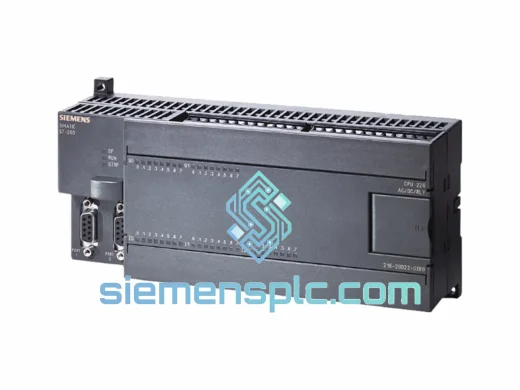
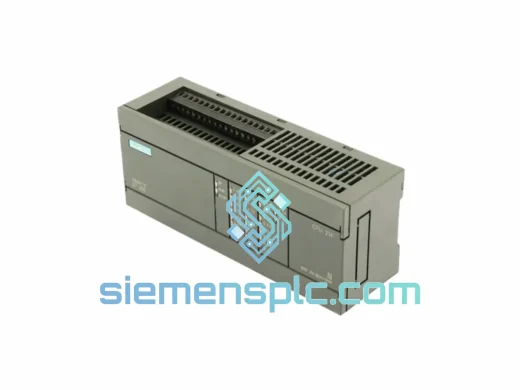
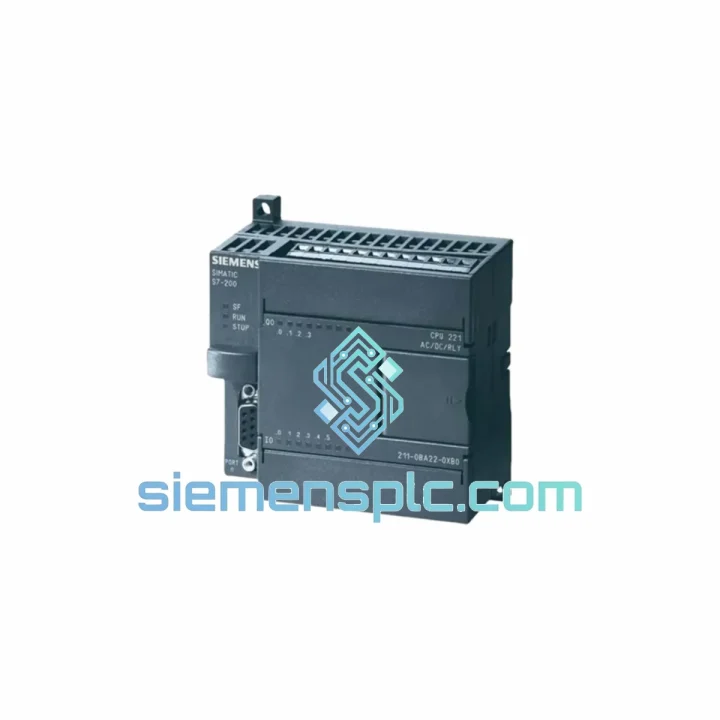
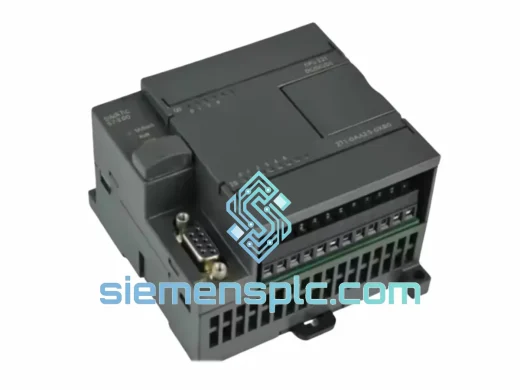
Siemens 6ES7211-0BA22-0XB0 PLC CPU Module – SIMATIC S7-200
Request verified availability, condition, replacement risk review, packing options and courier lead time for 6ES7211-0BA22-0XB0.
BrandSiemens
Part Number6ES7211-0BA22-0XB0
ConditionAvailability Check
Lead TimeRFQ Confirmation
DocumentsDatasheet / photos by RFQ
ShippingExport packing available
Auto-filled RFQ
6ES7211-0BA22-0XB0
Click Request Quote and the part number is inserted into the inquiry form automatically.
- Reply by email: [email protected]
- WhatsApp / Tel: +86 18359268345
- Mon-Sat 9:00-18:00 GMT+8
Procurement Data
Key Product Information
Core fields for model confirmation and RFQ routing. Detailed product narrative remains below.
- Brand
- Siemens
- Primary Part Number
- 6ES7211-0BA22-0XB0
- Product Type
- PLC CPU Module
- Series / Family
- SIMATIC S7-200
- Country of Origin
- DE
- Catalog Category
- PLCs & Controllers
- Operating Temp.
- 0 °C to +55 °C (horizontal); 0 °C to +45 °C (vertical)
- Warranty
- 12 months — replacement against verified manufacturing defects from date of invoice
Model confirmed for inquiry
6ES7211-0BA22-0XB0
Send quantity, destination and urgency. The RFQ form keeps this part number attached.
Request Quote
Product Overview
Siemens 6ES7211-0BA22-0XB0 CPU 221 — Fixed-I/O Standalone Controller for Discrete Machine Automation
The 6ES7211-0BA22-0XB0 is the entry-level processing unit of the SIMATIC S7-200 micro-PLC platform, engineered by Siemens for deterministic discrete-event control in compact machine panels. This unit integrates a 24 VDC DC power input stage, six optically decoupled digital inputs, four solid-state transistor outputs rated at 0.75 A per channel, and a single RS-485 serial interface — all enclosed within a 90 × 80 × 62 mm housing conforming to IP20 per IEC 60529. The CPU 221 designation identifies this as the smallest member of the S7-200 family: it carries no expansion bus connector, making it a closed-node controller optimized for fixed-function applications where I/O count is defined at design time and will not change over the machine’s service life.
The processor core executes Boolean ladder logic at 0.37 µs per instruction. For a typical 1 KB application program consisting of contact, coil, timer, and counter instructions, this yields a scan cycle in the 1 – 3 ms range under normal operating conditions — sufficient for machine-cycle control of pneumatic actuators, conveyor indexing, and packaging line sequencing where process dynamics are in the tens-of-milliseconds class. Program storage is 6 KB of flash-backed EEPROM, retaining the application image across power cycles without battery dependency. Data memory (V-memory) is 2 KB, addressable as bytes, words, or double words, providing adequate variable space for state machines, setpoint tables, and accumulated counter values in typical standalone applications.
The unit’s four high-speed counter (HSC) channels operate asynchronously to the main scan cycle via dedicated hardware counter registers clocked directly from the input terminals. Maximum count frequency is 30 kHz in single-phase mode, enabling direct interface to incremental encoders, turbine flow meters, and proximity-sensor-based position feedback systems without external frequency dividers. Two pulse output channels support both PTO (Pulse Train Output) for open-loop stepper motor axis control and PWM (Pulse Width Modulation) for proportional output applications, with output frequencies up to 20 kHz.
Communication is handled through a single RS-485 port (Port 0) supporting three operating modes: PPI master/slave for S7-200 network operation, MPI for connection to SIMATIC HMI panels, and Freeport for user-defined ASCII or Modbus RTU protocols. In Freeport mode, baud rates from 1.2 kbps to 115.2 kbps are selectable in firmware, enabling direct serial integration with variable-frequency drives, barcode readers, weighing controllers, and third-party operator terminals without gateway hardware. The port’s RS-485 differential signaling provides inherent common-mode noise rejection across cable runs up to 1,200 m in low-noise environments.
Genuine Siemens 6ES7211-0BA22-0XB0 units are available from stock at our Xiamen, China facility. Each unit is verified for authenticity and functional integrity before dispatch. Contact [email protected] or WhatsApp +86 18359268345 for real-time stock confirmation and pricing.
Real-time Stock & RFQ: [email protected] | WhatsApp: +86 18359268345
Technical Parameters
| Order Number | 6ES7211-0BA22-0XB0 |
| Platform | SIMATIC S7-200 |
| CPU Type | CPU 221 |
| Supply Voltage | 24 VDC nominal (operating range: 20.4 – 28.8 VDC) |
| Inrush Current | Max. 12 A for < 1 ms at 24 VDC cold start |
| CPU Power Draw | Max. 3 W (logic supply only, excluding field load) |
| Sensor Supply Output | 24 VDC / 180 mA (for powering field sensors) |
| Digital Inputs | 6 channels, 24 VDC, IEC 61131-2 Type 1, sink/source compatible |
| Input ON Threshold | 15 – 30 VDC |
| Input OFF Threshold | 0 – 5 VDC |
| Input Current (ON) | Approx. 4 mA at 24 VDC |
| Input Filter Time | 0.2 ms – 12.8 ms, software-configurable per channel |
| Digital Outputs | 4 channels, MOSFET sourcing, 24 VDC, 0.75 A per channel |
| Output Leakage (OFF) | ≤ 10 µA |
| Output Voltage Drop (ON) | ≤ 0.4 VDC at rated current |
| Inductive Load Clamp | Internal flyback diode per output channel |
| Program Memory | 6 KB EEPROM (non-volatile, no battery required) |
| Data Memory (V-Memory) | 2 KB |
| Boolean Execution Speed | 0.37 µs / instruction |
| High-Speed Counters | 4 × HSC, max. 30 kHz single-phase / 20 kHz A/B quadrature |
| Pulse Outputs | 2 × PTO/PWM, max. 20 kHz |
| Communication Port | 1 × RS-485 (Port 0): PPI / MPI / Freeport |
| Freeport Baud Rate | 1.2 kbps – 115.2 kbps |
| PPI Network Baud Rate | 9.6 kbps / 19.2 kbps / 187.5 kbps |
| Expansion Modules | Not supported (no expansion bus) |
| Real-Time Clock | Optional via cartridge 6ES7297-1AA23-0XA0 |
| Operating Temperature | 0 °C to +55 °C (horizontal); 0 °C to +45 °C (vertical) |
| Storage Temperature | −40 °C to +70 °C |
| Relative Humidity | 5 – 95% RH, non-condensing (IEC 60068-2-30) |
| Vibration Resistance | 10 – 57 Hz: 0.075 mm amplitude; 57 – 150 Hz: 1 g (IEC 60068-2-6) |
| Shock Resistance | 15 g / 11 ms half-sine (IEC 60068-2-27) |
| Protection Class | IP20 (IEC 60529) |
| Mounting | 35 mm DIN rail (EN 50022) or panel screw mount |
| Dimensions (W × H × D) | 90 × 80 × 62 mm |
| Weight | Approx. 320 g |
| Country of Origin | Germany |
| Approvals | CE (EMC Dir. 2014/30/EU, LVD 2014/35/EU), UL 508, cUL, FM Class I Div 2, ATEX Zone 2 (II 3 G) |
| Warranty | 12 months — replacement against verified manufacturing defects from date of invoice |
Hardware Logical Analysis
The input stage of the 6ES7211-0BA22-0XB0 uses a dedicated opto-coupler per channel rather than a shared multiplexed isolation barrier. This per-channel architecture means that a fault condition on one input — such as a wiring short that drives the opto-coupler into saturation — does not affect the isolation integrity or signal fidelity of adjacent channels. The opto-coupler forward current is set by a series resistor network sized for 24 VDC nominal, yielding approximately 4 mA LED drive current, which places the device well within the linear region of the phototransistor transfer curve and avoids the non-linear response that occurs near the minimum ON threshold.
The software-configurable input filter (0.2 ms to 12.8 ms per channel) is implemented in firmware as a digital integrator: the CPU samples each input at a fixed rate and requires the sampled value to remain stable for the configured filter period before updating the process image register. This approach eliminates the need for external RC debounce networks on mechanical contacts and allows the same physical input to be reconfigured for high-frequency sensor duty (0.2 ms filter) or slow pushbutton duty (12.8 ms filter) by a parameter change in STEP 7-Micro/WIN without hardware modification.
The four transistor output channels use N-channel MOSFET switches in a sourcing (PNP) configuration. The MOSFET’s on-resistance (R_DS(on)) at rated gate drive is sufficiently low that the output voltage drop at 0.75 A load is specified at ≤ 0.4 VDC, minimizing power dissipation in the output stage and reducing thermal stress on the device. Each channel includes an integrated freewheeling diode across the drain-source junction, providing a low-impedance recirculation path for inductive load energy during turn-off. This eliminates the voltage spike that would otherwise appear across the load terminals and protects both the MOSFET and any parallel-connected field devices from transient overvoltage.
The RS-485 transceiver is electrically isolated from the CPU logic ground through a DC-DC converter and digital isolator pair. This galvanic isolation prevents ground loop currents — which arise when the CPU cabinet ground and the remote device ground are at different potentials — from flowing through the communication cable shield and corrupting the differential signal. In multi-cabinet installations where ground potential differences of several volts are common due to separate power distribution paths, this isolation is a functional requirement rather than a convenience feature.
EMC performance is addressed at the PCB layout level through ground plane segmentation: the analog sensor supply return, the digital logic ground, and the I/O field return are routed as separate copper planes joined at a single star point near the power input terminal. This topology prevents high-frequency switching transients from the MOSFET output stage from coupling into the analog sensor supply or the RS-485 transceiver reference. Transient voltage suppression (TVS) diodes on all I/O terminals provide IEC 61000-4-5 surge immunity at 1 kV line-to-line and 2 kV line-to-earth, covering the surge levels encountered in industrial environments with inductive load switching on shared power rails.
The high-speed counter subsystem uses hardware registers clocked directly from the input pins, bypassing the main scan cycle entirely. The CPU reads the HSC accumulated value into the process image at the start of each scan, but the counting itself is continuous and unaffected by scan cycle duration. This architecture guarantees that no pulses are lost between scans, which is a critical property in flow measurement and position feedback applications where each missed count represents a quantifiable measurement error. At 30 kHz maximum count rate, the minimum pulse width that can be reliably captured is approximately 16.7 µs — well within the output pulse width of standard inductive proximity sensors operating at their rated switching frequency.
System Integration Benefits
- Closed-Node Simplicity: The absence of an expansion bus eliminates backplane arbitration overhead and inter-module communication latency, resulting in a fully deterministic scan cycle with no variable-length bus transactions affecting timing.
- Freeport Modbus RTU Master: The RS-485 port in Freeport mode can be programmed as a Modbus RTU master using the XMT/RCV instructions in STEP 7-Micro/WIN, enabling direct polling of up to 247 slave devices on a single RS-485 segment without a separate communication processor module.
- Stepper Axis Control via PTO: The PTO output generates a jitter-free pulse train at frequencies up to 20 kHz with hardware-controlled acceleration and deceleration ramps, providing open-loop stepper motor positioning without a dedicated motion controller card.
- Per-Channel Filter Reconfiguration: Input filter times can be changed online via STEP 7-Micro/WIN without stopping the CPU, allowing maintenance engineers to adjust debounce parameters in response to field sensor behavior changes without a program download cycle.
- EEPROM Program Retention: Flash-backed program storage survives indefinite power loss without battery maintenance, reducing lifecycle cost in remote installations where periodic battery replacement is logistically difficult.
- Online Diagnostic Transparency: STEP 7-Micro/WIN’s status chart and force table functions allow engineers to monitor and force individual I/O bits, timer current values, and counter accumulated values in real time over the PPI connection, without interrupting the running program.
- Sensor Supply Integration: The onboard 24 VDC / 180 mA sensor supply output eliminates the need for a separate 24 VDC power supply for field sensors in low-sensor-count applications, reducing panel component count and wiring complexity.
- HMI Direct Connection: PPI protocol support enables direct connection to Siemens TD 200, TP 070, OP 73, and compatible third-party HMI panels at 9.6 or 19.2 kbps without additional network configuration, reducing commissioning time for operator interface integration.
- Vibration and Shock Tolerance: Rated to IEC 60068-2-6 (1 g, 57 – 150 Hz) and IEC 60068-2-27 (15 g shock), the unit is qualified for installation on machine frames subject to vibration from spindles, presses, or conveyor drives without additional shock-mount hardware.
- Long-Term Spare Parts Availability: The S7-200 platform has a documented installed base with continued spare-parts supply through authorized distribution channels, supporting maintenance planning for equipment with 10 – 15 year service life expectations.
Quality Assurance & Global Logistics
Each 6ES7211-0BA22-0XB0 unit offered through siemensplc.com is sourced as genuine Siemens production hardware. Pre-shipment inspection at our Xiamen facility covers three verification layers. First, physical authentication: the Siemens holographic security label is examined under UV light for the embedded security pattern, the housing date code is cross-referenced against the label print date, and all terminal block and port connector positions are checked against the production drawing. Second, electrical verification: the unit is powered at 24 VDC and confirmed to enter RUN mode with the SF/DIAG LED extinguished, all six input LEDs are exercised by applying 24 VDC to each input terminal in sequence, and the RS-485 port is confirmed to respond to a PPI connection request from a programming adapter. Third, packaging integrity: the unit is placed in an ESD-shielding bag with desiccant, cushioned in pre-cut foam inserts, and sealed in a double-wall corrugated carton with corner protection rated for ISTA 2A air freight handling.
Export documentation is prepared to the standard required by the destination country’s customs authority: commercial invoice with HS code 8537.10 (boards, panels, consoles for electric control), packing list with net and gross weights, and a certificate of origin issued by the Xiamen Chamber of Commerce where required. This documentation package is included with every shipment and transmitted electronically to the consignee at the time of dispatch to allow pre-clearance where the destination customs authority supports it.
Shipment is executed via DHL Express, FedEx International Priority, or UPS Worldwide Expedited based on destination and urgency. Full tracking numbers are provided within 2 hours of dispatch. Typical transit times: Europe 3 – 5 business days, North America 3 – 5 business days, Southeast Asia 2 – 3 business days, Middle East 4 – 6 business days. Same-day dispatch is available for orders confirmed and payment cleared before 14:00 CST. All shipments are covered by declared-value cargo insurance. A 12-month replacement warranty applies from the invoice date; warranty claims are processed within 48 hours of receipt of fault documentation, and confirmed cases are resolved by replacement shipment at no additional freight charge to the buyer.
Contact Information
Email: [email protected]
WhatsApp: +86 18359268345
Web: siemensplc.com
Location: Xiamen, China
© 2026 siemensplc.com. All rights reserved.
Ready to quote
[email protected]
Send This Part Number to Sales
RFQ workflow
Quality workflow ->
Confirmation Process
01Model confirmation
We check the full part number, brand, series and visible nameplate information before quotation.
02Availability reply
Sales confirms stock path, condition option, quantity and realistic lead time for export dispatch.
03Packing & courier
DHL, FedEx, UPS or buyer courier arrangements can be reviewed with packing requirements.
Continue sourcing
Browse full catalog ->
Related Automation Parts
Similar brand or category products for fast comparison and multi-item RFQ lists.
Siemens
RFQ Ready
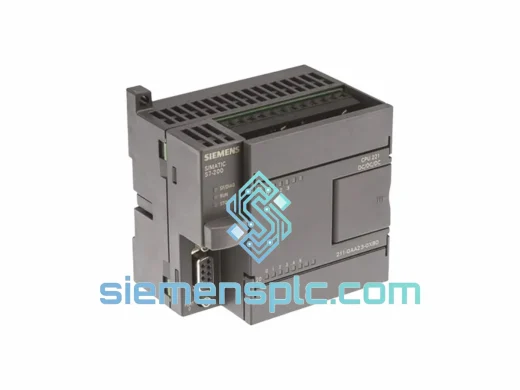
Siemens 6ES7211-0AA23-0XB0 PLC CPU Module – SIMATIC S7-200
SIMATIC S7-200
Origin DE
PLC CPU Module
Siemens
RFQ Ready
Siemens 6ES7212-1BB23-0XB8 PLC CPU Module – SIMATIC S7-200
SIMATIC S7-200
Origin DE
PLC CPU Module