Siemens
RFQ Ready
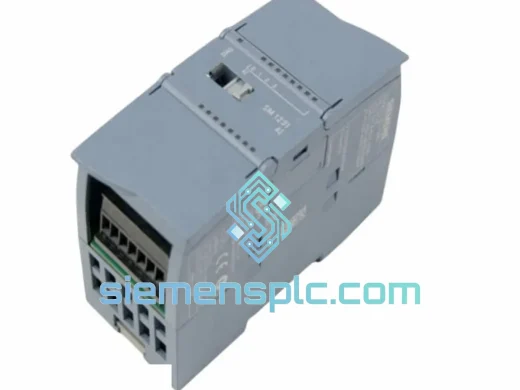
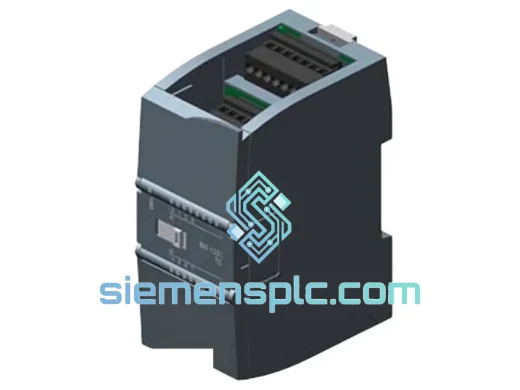
Siemens 6ES7214-1AG40-0XB0 CPU 1214C PLC Module
SIMATIC S7-1200
Origin DE
PLC CPU Module
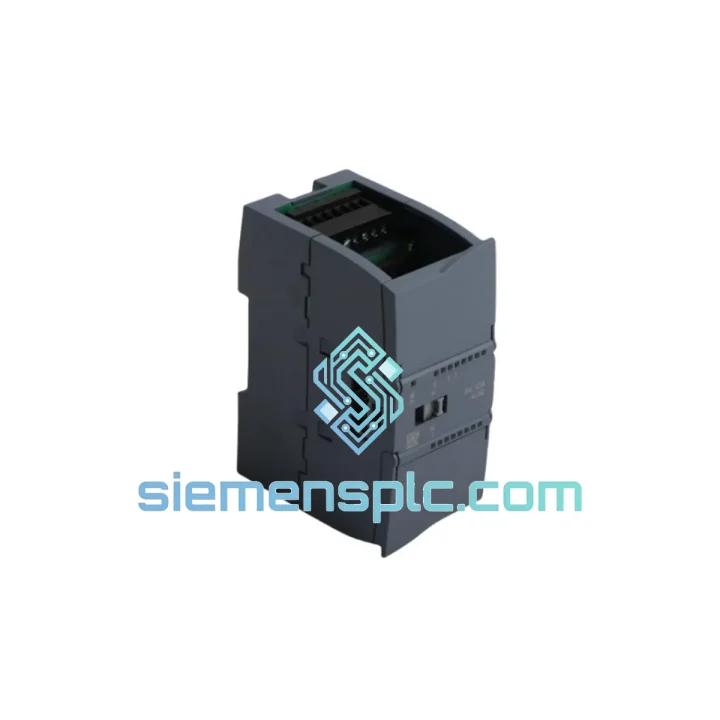
Request verified availability, condition, replacement risk review, packing options and courier lead time for 6ES7234-4HE32-0XB0.
Click Request Quote and the part number is inserted into the inquiry form automatically.
Core fields for model confirmation and RFQ routing. Detailed product narrative remains below.
The 6ES7234-4HE32-0XB0 is the SM 1234 signal module within the SIMATIC S7-1200 compact controller family — a four-input, two-output analog expansion unit designed to serve as the primary transducer interface in continuous process control architectures. Its role in the control loop is not peripheral: it occupies the exact boundary between the physical process and the digital control domain, converting field-level electrical signals into 16-bit integer representations that the CPU’s process image input (PII) can act upon within a single OB1 scan cycle.
In a closed-loop PID application — for example, a pressure-regulated hydraulic circuit or a temperature-controlled extrusion barrel — the SM 1234 handles both the measurement acquisition (AI channels reading from a 4–20 mA pressure transmitter) and the actuator command output (AQ channels driving a 0–10 V proportional valve positioner). Consolidating these two functions in a single 45 mm-wide module eliminates the need for separate SM 1231 and SM 1232 modules, reducing the total slot count on the CPU rail and cutting inter-module wiring by up to 40% in mixed-signal panel designs.
The module connects to the S7-1200 CPU via the integrated backplane bus connector — a proprietary high-speed serial interface that transfers I/O data, diagnostic status, and module identification in a single bus cycle. The CPU automatically detects the SM 1234 during startup and maps its channels into the process image without manual address assignment in TIA Portal. This deterministic data exchange ensures that analog values are refreshed every CPU scan cycle, which is critical for fast-response PID loops with derivative action enabled.
Real-time Stock & RFQ: [email protected] | WhatsApp: +86 18359268345
| Parameter | Specification |
|---|---|
| Order Number (MLFB) | 6ES7234-4HE32-0XB0 |
| Series | SIMATIC S7-1200, SM 1234 |
| Analog Inputs | 4 × AI — Voltage: ±2.5 V, ±5 V, ±10 V; Current: 0–20 mA, 4–20 mA |
| Analog Outputs | 2 × AQ — Voltage: ±10 V; Current: 0–20 mA |
| Input Resolution | 13-bit + sign (14-bit word, effective 13 bits) |
| Output Resolution | 14-bit |
| Input Impedance (Voltage) | ≥ 9 MΩ |
| Input Impedance (Current) | 250 Ω (internal shunt) |
| Output Load (Voltage) | ≥ 1 kΩ |
| Output Load (Current) | ≤ 500 Ω |
| Conversion Time per Channel | 625 µs (all 4 AI channels: 2.5 ms total) |
| Settling Time (AQ Voltage) | 300 µs to within 0.1% of full scale |
| Accuracy (25 °C, full scale) | ±0.1% (voltage), ±0.2% (current) |
| Supply Voltage | 24 V DC (via CPU backplane bus, no external 24 V required) |
| Current Consumption (Bus) | Max. 80 mA at 5 V DC (from CPU internal bus) |
| Current Consumption (24 V) | Max. 45 mA at 24 V DC |
| Isolation | Optical isolation between field side and logic side; 500 V AC test voltage |
| Dimensions (W × H × D) | 45 mm × 100 mm × 75 mm |
| Weight | Approx. 200 g (module only) |
| Operating Temperature | 0 °C to +55 °C (horizontal mounting); 0 °C to +45 °C (vertical) |
| Storage Temperature | −40 °C to +70 °C |
| Relative Humidity | 5% to 95%, non-condensing |
| Protection Rating | IP20 |
| Certifications | CE, UL, cULus, KC, RCM, ATEX Zone 2 (II 3 G Ex nA IIC T4 Gc) |
| Compatible CPUs | S7-1200: CPU 1211C, 1212C, 1214C, 1215C, 1217C (all variants) |
| TIA Portal Version | V13 SP1 and later (V16+ recommended) |
| Warranty | 12 months from date of shipment |
The SM 1234’s analog front-end uses a successive approximation register (SAR) ADC architecture with per-channel multiplexing. Each of the four input channels is sampled sequentially through an analog multiplexer, passed through a programmable gain amplifier (PGA), and converted by the SAR ADC at a 625 µs per-channel rate. The PGA stage is the key to the module’s multi-range capability: by switching the gain factor, the same ADC core handles ±2.5 V, ±5 V, and ±10 V voltage ranges as well as the 0–20 mA current range (via the internal 250 Ω shunt resistor), without requiring external range-switching relays or signal conditioners.
On the output side, the two AQ channels use a 14-bit digital-to-analog converter (DAC) with an output buffer amplifier capable of driving resistive loads down to 1 kΩ for voltage mode and sourcing up to 20 mA in current mode. The 300 µs settling time to 0.1% of full scale is achieved through an active feedback loop in the output stage that compensates for capacitive load effects — a design detail that matters in applications where the AQ channel drives long cable runs to remote actuators.
The optical isolation barrier between the field-side analog circuitry and the backplane bus logic is implemented using high-speed optocouplers rated for 500 V AC isolation test voltage. This barrier serves two functions: it prevents ground loop currents — which are endemic in large industrial installations where field instruments and the PLC panel may be grounded at different potential points — from corrupting the ADC reference voltage, and it protects the CPU’s internal 5 V logic bus from field-side transient overvoltages. The module’s EMC design complies with IEC 61000-4-2 (ESD), IEC 61000-4-4 (EFT/Burst), and IEC 61000-4-5 (Surge) immunity levels, making it suitable for deployment in environments with variable-frequency drives (VFDs), contactors, and other high-frequency switching sources in close proximity.
The backplane bus interface uses Siemens’ proprietary PROFIBUS-derived serial protocol operating at a fixed internal clock rate. Module identification, channel configuration parameters (range selection, filter time constants), and diagnostic status are exchanged during the CPU startup phase and stored in the module’s non-volatile parameter memory. If the module is replaced in the field, the CPU automatically downloads the stored configuration to the new module — a feature that reduces commissioning time during maintenance replacements to under two minutes without requiring a laptop or TIA Portal connection on-site.
Every 6ES7234-4HE32-0XB0 unit supplied by siemensplc.com is sourced as genuine Siemens-manufactured product. Authenticity is verified against the MLFB order number, production date code, and holographic label characteristics prior to dispatch. Units are stored in ESD-controlled warehouse conditions at our Xiamen, China facility, maintaining the module’s electrostatic discharge sensitivity (ESDS) classification requirements throughout the storage period.
Pre-shipment inspection includes visual examination of the backplane bus connector pins, front connector locking mechanism, and label integrity. Where stock volume permits, a powered continuity check is performed on the bus interface prior to packaging. Each unit is packed in anti-static shielding bags, surrounded by closed-cell polyethylene foam inserts, and placed in double-wall corrugated cartons rated for international air freight handling.
Shipments from Xiamen are dispatched via DHL Express, FedEx International Priority, or UPS Worldwide Express, with typical transit times of 3–5 business days to Europe and North America, and 2–4 business days to Southeast Asia. All shipments include a commercial invoice, packing list, and certificate of origin. For regulated industries requiring additional documentation, a certificate of conformity and material safety data sheet are available upon request. Export classification and HS code declaration are handled by our in-house logistics team, ensuring compliance with Chinese export regulations and destination country import requirements.
Email: [email protected]
WhatsApp: +86 18359268345
Web: siemensplc.com
Location: Xiamen, China
© 2026 siemensplc.com. All rights reserved.
We check the full part number, brand, series and visible nameplate information before quotation.
Sales confirms stock path, condition option, quantity and realistic lead time for export dispatch.
DHL, FedEx, UPS or buyer courier arrangements can be reviewed with packing requirements.
Similar brand or category products for fast comparison and multi-item RFQ lists.