Siemens
RFQ Ready
Siemens 6ES7321-1BL00-0AA0 Digital Input Module
SIMATIC
Origin DE
PLC Digital Input Module
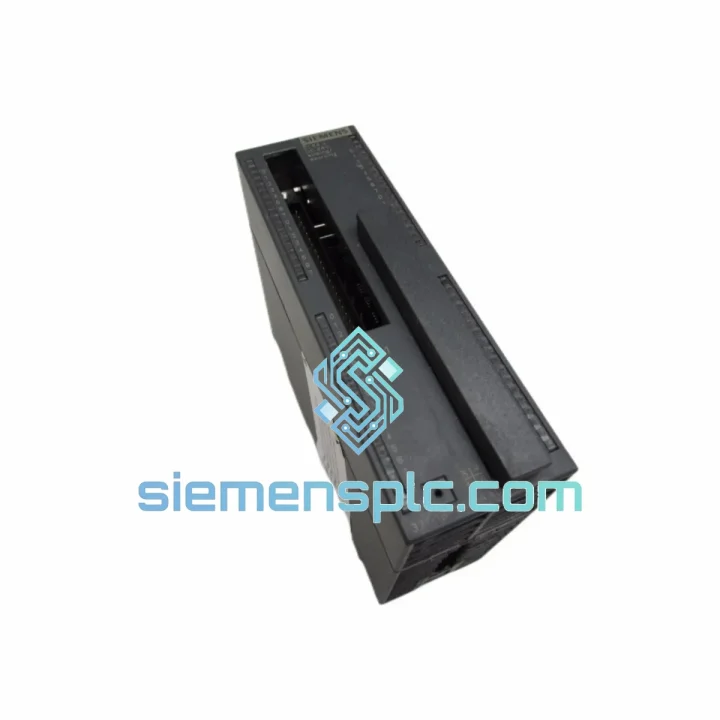
Request verified availability, condition, replacement risk review, packing options and courier lead time for 6ES7321-1BP00-0AA0.
Click Request Quote and the part number is inserted into the inquiry form automatically.
Core fields for model confirmation and RFQ routing. Detailed product narrative remains below.
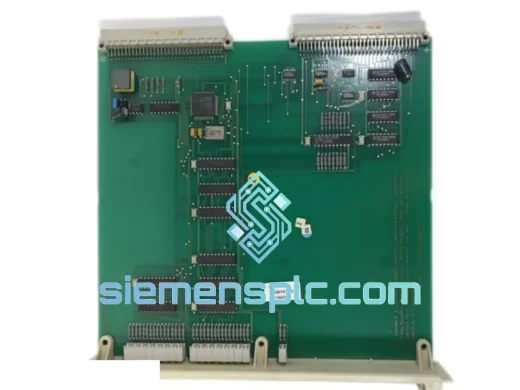
The 6ES7321-1BP00-0AA0 is a 32-channel digital input module belonging to the SM 321 family within the SIMATIC S7-300 distributed control architecture. Each channel acquires a discrete 24 V DC field signal and transfers its logical state across an optocoupler isolation barrier to the S7-300 backplane bus, where the CPU reads the process image at every scan cycle. With 32 inputs consolidated into a single 40 mm-wide slot, this module delivers one of the highest channel-per-millimeter ratios available in the S7-300 I/O range, directly reducing panel footprint, wiring labor, and per-point hardware cost in high-density discrete control applications.
Real-time Stock & RFQ: [email protected] | WhatsApp: +86 18359268345
| Parameter | Specification |
|---|---|
| Order Number (SKU) | 6ES7321-1BP00-0AA0 |
| Product Family | SIMATIC S7-300 SM 321 |
| Module Function | Digital Input (DI), non-isolated group |
| Number of Input Channels | 32 × DC 24 V |
| Rated Input Voltage | 24 V DC |
| Input Current per Channel | 7 mA (typical at 24 V DC) |
| Signal “1” Threshold (High) | 15 V DC – 30 V DC |
| Signal “0” Threshold (Low) | −3 V DC – +5 V DC |
| Galvanic Isolation | Optocoupler; 500 V AC (1 min) between field and backplane |
| Input Filter Delay (selectable) | 0.1 ms / 0.5 ms / 3 ms / 15 ms / 20 ms |
| Backplane Bus Supply Current | 100 mA at 5 V DC |
| Load Voltage Supply (L+) | 24 V DC (20.4 V – 28.8 V) |
| Power Dissipation (max) | 4.5 W |
| Module Dimensions (W × H × D) | 40 mm × 125 mm × 120 mm |
| Approximate Weight | 240 g |
| Operating Temperature Range | 0 °C to +60 °C (horizontal mounting) |
| Storage Temperature Range | −40 °C to +70 °C |
| Relative Humidity (non-condensing) | 10 % – 95 % |
| Degree of Protection | IP 20 (IEC 60529) |
| Mounting Rail | S7-300 Profile Rail (DIN EN 50022) |
| Field Connector | 40-pin front connector (order separately: 6ES7392-1AM00-0AA0) |
| Diagnostic Interrupt | Not supported on this variant |
| Process Interrupt | Not supported on this variant |
| Warranty | 12 months against manufacturing defects |
At the channel input stage, each of the 32 lines passes through a passive RC filter network whose time constant is software-selectable in five discrete steps (0.1 ms through 20 ms). This programmable debounce eliminates the need for external filter relays when interfacing with mechanical contacts, reed switches, or inductive proximity sensors that exhibit bounce durations up to approximately 15 ms. The filter selection is stored in the module’s parameter block, which the CPU downloads during startup via the backplane bus; no DIP switches or hardware jumpers are involved.
Following the RC stage, each channel drives the anode of an optocoupler LED. The optocoupler’s phototransistor output is latched into an internal 32-bit shift register. The S7-300 backplane bus controller — a dedicated ASIC on the module’s PCB — serializes this register and transmits the data frame to the CPU’s process image input (PII) area at every bus cycle. The backplane bus operates at a fixed 2.5 MHz clock rate, and the module’s bus ASIC guarantees a maximum data propagation latency of one bus cycle from signal capture to PII update, ensuring deterministic scan-cycle behavior.
The optocoupler barrier provides 500 V AC (1-minute withstand) isolation between the 24 V DC field commons and the 5 V DC backplane logic domain. This isolation architecture prevents ground-loop currents — which can reach tens of milliamps in large industrial panels with multiple earthing points — from corrupting the logic-level signals on the backplane. In environments with significant conducted EMI (IEC 61000-4-4 burst, IEC 61000-4-5 surge), the optocoupler’s inherent common-mode rejection suppresses transients that would otherwise propagate into the CPU’s address space.
The 32 input channels are organized into four groups of eight, each group sharing a common (M) terminal on the 40-pin front connector. This grouping allows field devices powered from different 24 V DC supply rails to coexist on the same module without cross-connecting their return paths, provided each group’s M terminal is wired to the corresponding supply’s negative rail. The module draws 100 mA from the 5 V DC backplane bus and up to 7 mA × 32 = 224 mA from the 24 V DC field supply at full channel activation, giving a worst-case field-side power budget of approximately 5.4 W — a figure that must be included in the panel’s 24 V DC load calculation.
Every 6ES7321-1BP00-0AA0 unit dispatched from our Xiamen, China facility is sourced directly from authorized Siemens distribution channels. Before shipment, each module undergoes a structured verification sequence: holographic label and date-code authentication against Siemens factory records; bench-level backplane communication test confirming correct bus ASIC handshake; and channel-level continuity verification across all 32 input paths. Batch and serial numbers are logged in our traceability database, enabling full supply-chain documentation for quality audits.
Modules are shipped in original Siemens anti-static packaging, double-boxed with shock-absorbing foam inserts rated for international air and sea freight. Export documentation — commercial invoice, packing list, and certificate of origin — is prepared for every international order. Standard in-stock orders ship within 1–3 business days from Xiamen. DHL Express, FedEx International Priority, and UPS Worldwide Express services are available, with typical transit times of 3–7 business days to Europe, North America, Southeast Asia, and the Middle East. For project-volume orders (10+ units), consolidated sea freight and door-to-door logistics coordination are available upon request.
All units carry a 12-month replacement warranty against manufacturing defects, with advance replacement dispatch available for qualified accounts to minimize production downtime.
Email: [email protected]
WhatsApp: +86 18359268345
Web: siemensplc.com
Location: Xiamen, China
© 2026 siemensplc.com. All rights reserved.
We check the full part number, brand, series and visible nameplate information before quotation.
Sales confirms stock path, condition option, quantity and realistic lead time for export dispatch.
DHL, FedEx, UPS or buyer courier arrangements can be reviewed with packing requirements.
Similar brand or category products for fast comparison and multi-item RFQ lists.