Siemens
RFQ Ready
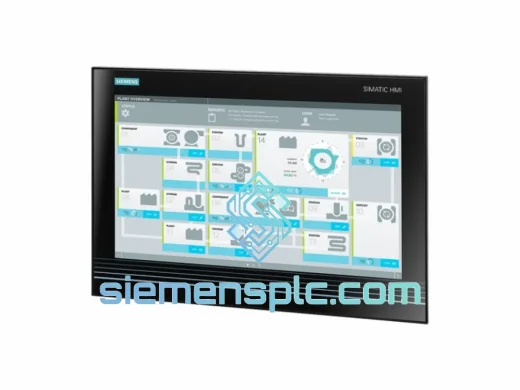
Siemens 6AV7260-5GA10-0BX0 Industrial Panel PC
SIMATIC
Origin DE
Industrial Panel PC
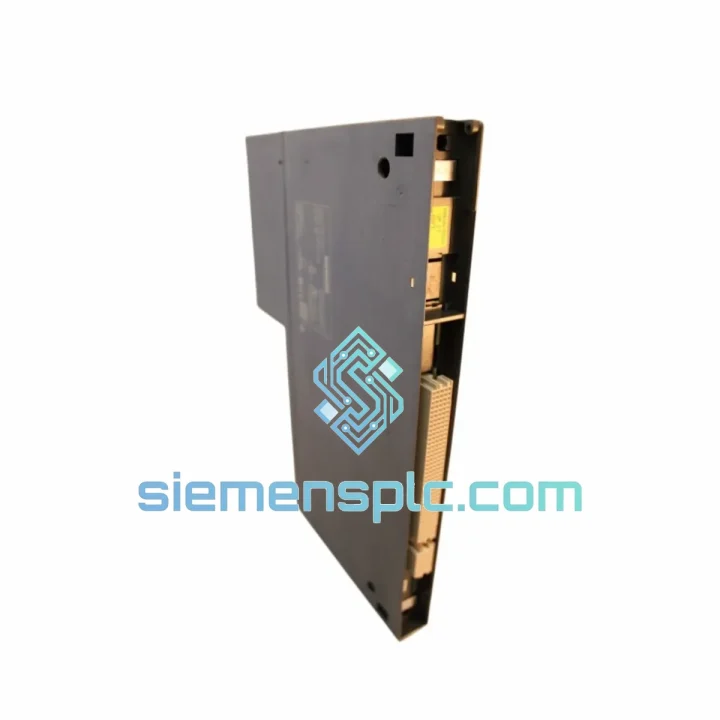
Request verified availability, condition, replacement risk review, packing options and courier lead time for 6ES7412-2EK06-0AB0.
Click Request Quote and the part number is inserted into the inquiry form automatically.
Core fields for model confirmation and RFQ routing. Detailed product narrative remains below.
The Siemens 6ES7412-2EK06-0AB0 is the CPU412-2 central processing unit for the SIMATIC S7-400 programmable logic controller family. Within a distributed or centralized S7-400 rack configuration, this module functions as the sole program execution authority: it arbitrates all backplane bus transactions, manages the cyclic and interrupt-driven task scheduler, and maintains the process image for up to 8,192 bytes of input and 8,192 bytes of output address space. Its 256 KB integrated work memory — addressable as a unified linear space for code and data — supports structured programs written in LAD, FBD, STL, SCL, and CFC under STEP 7 V5.x or TIA Portal with the S7-400 legacy support package.
The CPU412-2 occupies a single 25 mm slot in any S7-400 universal rack (UR1, UR2, UR2-H) or central rack (CR2, CR3). Its dual integrated communication ports — one MPI/DP port and one dedicated PROFIBUS DP master/slave port — allow simultaneous HMI polling, programmer access, and field-device communication without consuming an additional communication processor slot. Binary instruction processing time is rated at 0.1 ms per 1,000 binary operations, placing it in the entry-to-mid tier of the S7-400 CPU range while maintaining full compatibility with the S7-400 I/O ecosystem.
Real-time Stock & RFQ: [email protected] | WhatsApp: +86 18359268345
| Parameter | Value |
|---|---|
| Part Number | 6ES7412-2EK06-0AB0 |
| Model Designation | CPU412-2 |
| Product Family | SIMATIC S7-400 |
| Work Memory (Integrated) | 256 KB (code + data, unified) |
| Load Memory (Integrated RAM) | 256 KB; expandable via SIMATIC memory card |
| Binary Processing Speed | 0.1 ms / 1,000 binary instructions |
| Floating-Point Processing | 0.3 ms / 1,000 floating-point operations |
| Max. I/O Address Space | 8,192 bytes input / 8,192 bytes output |
| Max. Process Image Size | 2,048 bytes input / 2,048 bytes output (configurable) |
| Integrated Communication Ports | 1× MPI/DP (up to 12 Mbit/s); 1× PROFIBUS DP master/slave (up to 12 Mbit/s) |
| Max. PROFIBUS DP Slaves | 125 per DP master interface |
| Diagnostic Buffer Entries | 100 entries (non-volatile) |
| Nesting Depth (OB/FC/FB) | 24 levels |
| Timers / Counters | 2,048 / 2,048 (IEC type, unlimited software timers/counters) |
| Data Blocks | Up to 8,191 DBs; max. DB size 64 KB |
| Supply Voltage | 24 V DC (via S7-400 backplane bus) |
| Current Consumption (5 V bus) | 1.2 A max. |
| Power Dissipation | 6 W typical |
| Operating Temperature | 0 °C to +60 °C |
| Storage Temperature | −40 °C to +70 °C |
| Relative Humidity | 10 % to 95 %, non-condensing |
| Dimensions (W × H × D) | 25 mm × 290 mm × 219 mm |
| Weight | Approx. 180 g |
| Protection Class | IP20 (IEC 60529) |
| Certifications | CE (2014/30/EU, 2014/35/EU), UL/cULus (UL 508), ATEX Zone 2, IEC 61131-2, RoHS |
| Firmware Version | V6.0 (as shipped; field-upgradeable) |
| Warranty | 12 months from dispatch date |
Backplane Bus Architecture and Arbitration. The S7-400 backplane bus operates as a parallel, synchronous bus with a cycle time tightly coupled to the CPU’s OB1 scan cycle. The CPU412-2 acts as the sole bus master in a single-CPU configuration: it issues address and data tokens to each I/O module slot in a deterministic sequence, ensuring that the process image update completes within a bounded time window. This architecture eliminates the non-determinism associated with shared-bus arbitration schemes found in some distributed I/O topologies, making the 6ES7412-2EK06-0AB0 suitable for applications where scan-cycle jitter must remain below ±1 ms.
MPI/DP Dual-Mode Port. The first communication interface on the CPU412-2 operates in either MPI mode (for multi-point programming and HMI connections at up to 12 Mbit/s) or PROFIBUS DP mode. The port’s physical layer uses RS-485 differential signaling with integrated bus termination control, allowing the CPU to sit at either end or mid-segment of a PROFIBUS cable run without external termination resistors when the internal termination is enabled. The DP master stack on this port supports DPV0 and DPV1 acyclic services, enabling parameterization and alarm reading from intelligent field devices (e.g., Siemens ET 200M, ET 200S) without interrupting the cyclic data exchange.
EMC Design and Isolation Strategy. The CPU412-2 module housing is a die-cast aluminum frame bonded to the rack’s PE rail through the module connector, providing a low-impedance ground path for high-frequency interference currents. Internal signal traces on the CPU board are routed with controlled impedance and separated from the 24 V DC power plane by a dedicated ground pour, reducing capacitive coupling between the logic supply and the communication signal lines. The MPI/DP and PROFIBUS DP transceivers incorporate common-mode chokes and TVS diode arrays at the bus connector, clamping transient voltages to within ±7 V of the bus common — a margin consistent with IEC 61000-4-4 (EFT) Level 3 and IEC 61000-4-5 (surge) Level 2 requirements.
Non-Volatile Diagnostic Buffer. The 100-entry diagnostic buffer is stored in battery-backed SRAM, preserving fault records across power cycles without requiring a memory card. Each entry contains a timestamp (referenced to the CPU’s real-time clock, accurate to ±10 ppm), the OB number of the interrupted task, the event class, and the event-specific data bytes. This structure allows maintenance engineers to reconstruct the exact sequence of faults leading to a CPU STOP state — a capability that significantly reduces mean time to repair (MTTR) in production environments.
Isochronous Mode Operation. When configured for isochronous mode via STEP 7 HW Config, the CPU412-2 synchronizes its OB61 execution to the PROFIBUS DP bus cycle clock. The DP master issues a Global Control broadcast at the start of each bus cycle; the CPU latches the process image at this moment and executes OB61 within the same cycle, ensuring that actuator outputs are updated with a fixed, repeatable latency relative to sensor inputs. This mode is applicable in servo-drive coordination and high-speed press control where inter-axis synchronization tolerances are in the sub-millisecond range.
Every Siemens 6ES7412-2EK06-0AB0 unit dispatched from our Xiamen, China facility is a factory-original component sourced through documented supply channels. Physical authenticity checks include label verification against Siemens AG product databases, firmware version confirmation, and serial number cross-referencing. Modules are stored in climate-controlled ESD-safe racking at 20–25 °C and 40–60 % RH to prevent electrostatic discharge damage and moisture ingress during storage.
Prior to dispatch, each unit undergoes a power-on functional check: the module is seated in a test rack, powered via a 6ES7407-series power supply, and observed through a full CPU startup sequence including self-test completion, MPI communication handshake, and diagnostic LED state verification (RUN green, STOP off, SF off, BF off). Units that do not pass this sequence are quarantined and not shipped.
Packaging uses double-layer anti-static bags sealed with ESD-indicator tape, placed in foam-lined cartons rated for 1.2 m drop per ISTA 1A. Export documentation provided with each shipment includes a commercial invoice, packing list, certificate of origin (China), and the Siemens product datasheet. HS Code 8537.10 is pre-declared on all export documents to expedite customs clearance in the EU, US, Southeast Asia, and Middle East markets.
Standard dispatch lead time for in-stock units is 1–2 business days from order confirmation. Carrier options include DHL Express (2–4 days to most destinations), FedEx International Priority, and UPS Worldwide Expedited. Sea freight consolidation is available for bulk orders of 10+ units. A tracking number is issued within 24 hours of carrier pickup. The 12-month warranty covers manufacturing defects and covers return shipping for confirmed DOA units within 30 days of receipt.
Email: [email protected]
WhatsApp: +86 18359268345
Web: siemensplc.com
Location: Xiamen, China
© 2026 siemensplc.com. All rights reserved.
We check the full part number, brand, series and visible nameplate information before quotation.
Sales confirms stock path, condition option, quantity and realistic lead time for export dispatch.
DHL, FedEx, UPS or buyer courier arrangements can be reviewed with packing requirements.
Similar brand or category products for fast comparison and multi-item RFQ lists.