Siemens
RFQ Ready
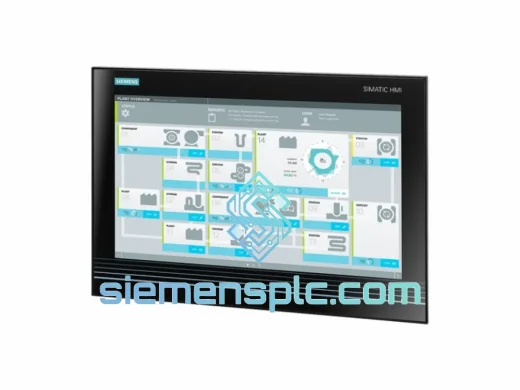
Siemens 6AV7260-5GA10-0BX0 Industrial Panel PC
SIMATIC
Origin DE
Industrial Panel PC
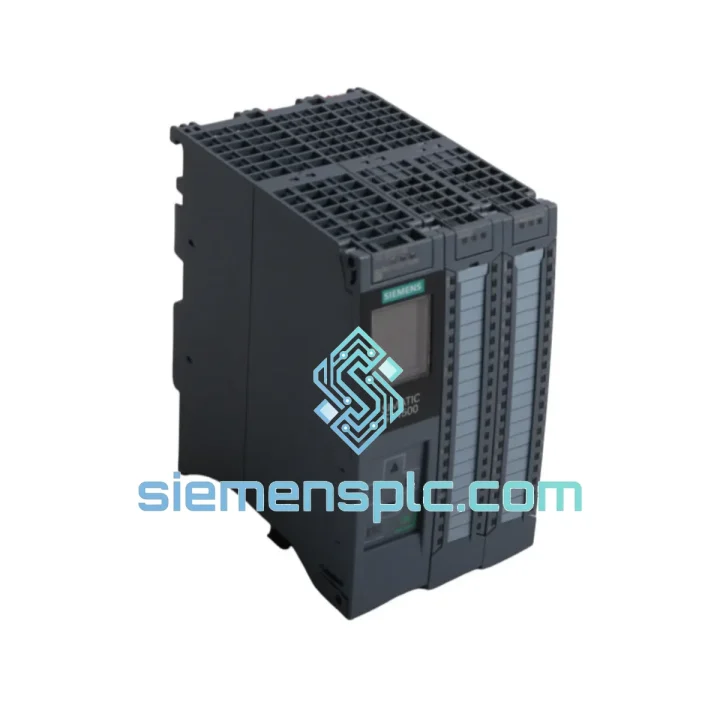
Request verified availability, condition, replacement risk review, packing options and courier lead time for 6ES7511-1CK01-0AB0.
Click Request Quote and the part number is inserted into the inquiry form automatically.
Core fields for model confirmation and RFQ routing. Detailed product narrative remains below.
The 6ES7511-1CK01-0AB0 is Siemens’ CPU 1511C-1 PN within the SIMATIC S7-1500 Compact CPU family. Its defining characteristic is the physical co-location of processing logic and field I/O termination on a single carrier unit: 32 digital inputs (24 V DC, IEC Type 1), 32 digital outputs (24 V DC transistor, 0.5 A/channel), 5 analog inputs (±10 V / 0–20 mA, 13-bit), and 2 analog outputs (±10 V / 0–20 mA, 13-bit) are all terminated directly at the CPU front connector. This eliminates the signal path through the S7-1500 backplane bus for local I/O, reducing the deterministic latency between field signal acquisition and program variable update to a single internal ASIC cycle rather than a full bus transaction.
The CPU’s program work memory is 175 KB (SRAM), with 1 MB of data work memory. Binary instruction processing executes at 60 ns per operation. These figures position the 1511C-1 PN above entry-level compact controllers while remaining within the cost envelope appropriate for mid-range machine automation — packaging lines, material handling cells, and process skids where a dedicated motion controller is not justified but IRT-grade communication is still required.
The integrated PROFINET interface operates as a 2-port managed switch supporting both RT (Real-Time, cycle ≥ 1 ms) and IRT (Isochronous Real-Time, send clock 250 µs minimum, jitter < 1 µs). The IRT capability is implemented in hardware via a dedicated communication ASIC that schedules fixed time slots within each PROFINET cycle, isolating isochronous traffic from standard TCP/IP frames on the same physical medium. This allows up to 6 speed or positioning axes to be synchronized over PROFINET without a separate motion bus or external synchronization hardware.
The CPU natively hosts an OPC UA server (up to 100 nodes) and supports Modbus TCP client/server and S7 communication concurrently over the same PROFINET port. Programming is performed in TIA Portal V15.1 and later using any IEC 61131-3 language (LAD, FBD, STL, SCL, GRAPH). The SIMATIC Memory Card (not included) serves as load memory; the CPU copies the project to internal SRAM on each startup, preserving program integrity across power faults.
Real-time Stock & RFQ: [email protected] | WhatsApp: +86 18359268345
| Parameter | Specification |
|---|---|
| MLFB / Order Number | 6ES7511-1CK01-0AB0 |
| CPU Designation | CPU 1511C-1 PN |
| Product Series | SIMATIC S7-1500 Compact CPU |
| Program Work Memory | 175 KB (internal SRAM) |
| Data Work Memory | 1 MB (internal SRAM) |
| Binary Processing Speed | 60 ns / instruction |
| Integrated DI | 32 × 24 V DC, IEC Type 1 sink, configurable filter 0.05–20 ms |
| Integrated DO | 32 × 24 V DC transistor, 0.5 A/ch, 4 A/8-ch group max |
| Integrated AI | 5 × ±10 V / 0–20 mA, 13-bit resolution |
| Integrated AO | 2 × ±10 V / 0–20 mA, 13-bit resolution |
| PROFINET Port | 1 × IRT, 2-port integrated switch, 100 Mbit/s full-duplex |
| PROFINET IRT Send Clock | 250 µs minimum |
| PROFINET IRT Jitter | < 1 µs |
| Motion Control Axes | Up to 6 (speed / positioning, PLCopen MC) |
| OPC UA Server | Integrated, up to 100 nodes |
| Additional Protocols | Modbus TCP (client/server), S7 communication, SNTP, NTP |
| Supply Voltage | 24 V DC (permissible range: 20.4–28.8 V) |
| Typical Power Consumption | ~11 W at 24 V DC nominal |
| Backplane Bus | S7-1500 U-connector, max 32 expansion modules (ET 200MP) |
| Load Memory | SIMATIC Memory Card (external, not included) |
| Mounting | 35 mm DIN rail (EN 60715) |
| Protection Class | IP20 (IEC 60529) |
| Operating Temperature | 0 °C to +60 °C (horizontal mounting) |
| Storage Temperature | −40 °C to +70 °C |
| Relative Humidity | 5–95%, non-condensing (IEC 60068-2-78) |
| EMC Emission Class | Class A per EN 61000-6-4 |
| Vibration Resistance | 5–8.4 Hz: 3.5 mm amplitude; 8.4–150 Hz: 1 g (EN 60068-2-6) |
| Shock Resistance | 15 g / 11 ms half-sine (EN 60068-2-27) |
| Approvals | CE, UL, cULus, ATEX Zone 2, IECEx, KC |
| Unit Weight | approx. 920 g |
| TIA Portal Compatibility | V15.1 / V16 / V17 / V18 / V19 |
| Firmware | V2.9 and above |
| Warranty | 12 months from shipment date |
The internal architecture of the 6ES7511-1CK01-0AB0 separates three functional domains: the main CPU core (ARM-based application processor running the PLC runtime), the I/O signal conditioning ASIC, and the PROFINET communication ASIC. These three domains communicate over an internal high-speed parallel bus that is not exposed to the backplane, meaning onboard I/O data transfer does not compete with backplane bus bandwidth allocated to expansion modules. This partitioning is the primary reason the compact CPU can sustain a stable program cycle time even when all 32 digital outputs switch simultaneously — a condition that would introduce measurable cycle jitter in architectures where onboard I/O shares the same bus as external modules.
The digital output stage uses N-channel enhancement-mode MOSFETs with integrated body diodes. Each output channel includes hardware-level short-circuit detection with a response time below 100 µs, and the detection event is written to a diagnostic buffer entry accessible in TIA Portal without any user program intervention. The 4 A group current ceiling per 8-channel block is enforced by a thermal current sensor on the output driver IC, which triggers a group shutdown and sets a diagnostic flag before the junction temperature reaches the thermal protection threshold — preventing cascading failures in dense wiring configurations.
Analog input conversion uses a successive approximation register (SAR) ADC with 13-bit effective resolution. Each analog input channel is individually configurable for voltage (±10 V, ±5 V, ±2.5 V, 0–10 V) or current (0–20 mA, 4–20 mA) measurement ranges via TIA Portal parameter assignment — no hardware jumpers required. The input stage includes a differential amplifier with a common-mode rejection ratio (CMRR) of ≥ 70 dB at 50/60 Hz, which suppresses ground loop interference in installations where field sensors share a common ground with variable-frequency drives or other switching power sources.
EMC hardening is implemented at three levels. At the housing level, the die-cast aluminum enclosure provides a Faraday cage with continuous electrical continuity through the backplane connector ground pins, achieving shielding effectiveness above 40 dB in the 30 MHz–1 GHz range. At the PROFINET port level, the RJ45 magnetics provide 1.5 kV common-mode isolation, protecting the communication ASIC from transients induced on long cable runs. At the power input level, an LC filter network attenuates conducted emissions above 150 kHz, keeping the module compliant with EN 61000-6-4 Class A without external line filters in standard panel installations.
The PROFINET IRT scheduler within the communication ASIC divides each send clock period into a reserved bandwidth (RBW) window for IRT frames and an unreserved bandwidth (UBW) window for standard TCP/IP traffic. The RBW allocation is calculated automatically by TIA Portal’s PROFINET topology editor based on the number of IRT devices and the configured send clock. This hardware-enforced time partitioning guarantees that a burst of TCP/IP traffic — such as an OPC UA data subscription update — cannot delay the transmission of IRT I/O frames, maintaining axis synchronization integrity under full network load.
All 6ES7511-1CK01-0AB0 units dispatched by siemensplc.com are genuine Siemens production hardware sourced through verified supply channels. Each unit passes a structured pre-shipment inspection covering three checkpoints: MLFB label verification against Siemens encoding rules (product family code, hardware revision, firmware suffix), functional power-on test confirming CPU entry into STOP mode with no diagnostic faults, and mechanical inspection of the U-connector backplane interface and front panel terminal block for pin integrity and housing continuity.
Batch-level traceability records — including procurement documentation, inspection date, inspector ID, and firmware version at time of dispatch — are retained for 24 months and provided to B2B customers upon written request. This documentation supports incoming quality audits in ISO 9001-certified manufacturing environments and satisfies traceability requirements in pharmaceutical (FDA 21 CFR Part 11), food processing (FSMA), and energy sector applications.
Logistics operations are based in Xiamen, China, with direct access to Xiamen Gaoqi International Airport (XMN) and Xiamen Port. In-stock orders confirmed before 15:00 CST are dispatched the same business day. Primary carriers are DHL Express and FedEx International Priority. Indicative transit times: Europe 3–5 business days, North America 4–6 business days, Southeast Asia 2–3 business days, Middle East 4–5 business days. A shipment tracking number is issued within 2 hours of dispatch. Export documentation (commercial invoice, packing list, certificate of origin) is prepared in compliance with destination country import requirements. Customs pre-clearance support and HS code declaration (HS 8537.10) are available upon request for time-critical project deliveries.
All units carry a 12-month warranty from the shipment date, covering defects in materials and workmanship under operating conditions specified in Siemens datasheet 6ES7511-1CK01-0AB0. Warranty claims are acknowledged within 2 business days and processed within 5 business days of confirmed receipt of the returned unit at our Xiamen facility.
📧 Email: [email protected]
💬 WhatsApp: +86 18359268345
🌐 Web: siemensplc.com
📍 Location: Xiamen, China
© 2026 siemensplc.com. All rights reserved.
We check the full part number, brand, series and visible nameplate information before quotation.
Sales confirms stock path, condition option, quantity and realistic lead time for export dispatch.
DHL, FedEx, UPS or buyer courier arrangements can be reviewed with packing requirements.
Similar brand or category products for fast comparison and multi-item RFQ lists.