Yokogawa
RFQ Ready
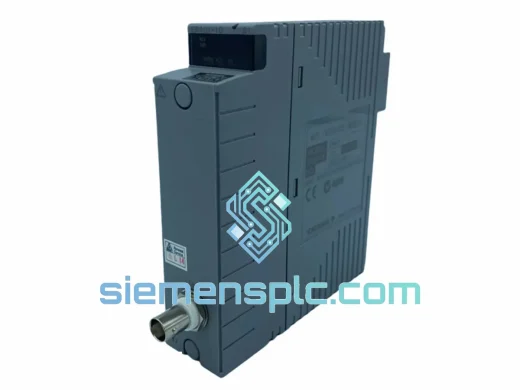
Yokogawa SAI143-H63/PRP S3 DCS Analog Input Module
CENTUM VP
Origin JP
DCS Analog Input Module
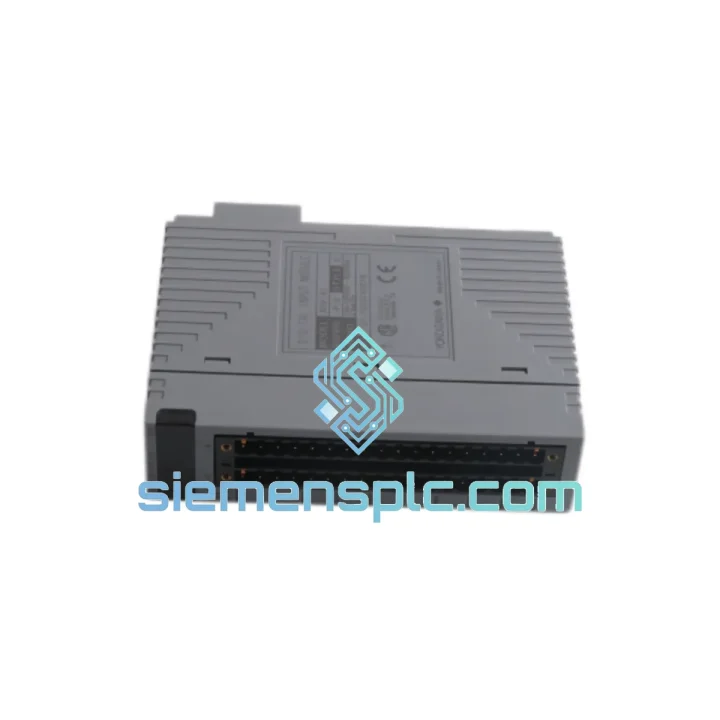
Request verified availability, condition, replacement risk review, packing options and courier lead time for ADV141-P12.
Click Request Quote and the part number is inserted into the inquiry form automatically.
Core fields for model confirmation and RFQ routing. Detailed product narrative remains below.
The ADV141-P12 S1 occupies a well-defined position in the YOKOGAWA CENTUM VP signal acquisition chain. As a 32-channel dry/wet-contact digital input module, it serves as the primary discrete-state boundary between field instrumentation and the Field Control Unit (FCU) backplane. Every valve position feedback, motor run/stop contact, and ESD relay output that enters the DCS passes through this module’s input conditioning circuitry before being time-stamped and forwarded to the controller scan engine. In large-scale process plants — refineries, LNG terminals, combined-cycle power stations — the aggregate channel count of ADV141-series modules installed in a single control room can exceed several thousand points, making per-module reliability and deterministic scan behaviour non-negotiable engineering requirements.
Unlike general-purpose I/O cards, the ADV141-P12 S1 is architected specifically for the CENTUM VP and CENTUM CS 3000 Node Unit (NU) / FCU nest environment. Its backplane connector geometry, power rail allocation, and firmware communication protocol are all native to the CENTUM platform, which eliminates the adapter layers and protocol translation overhead that introduce latency and diagnostic ambiguity in third-party I/O solutions.
📦 Real-time Stock & RFQ: [email protected] | WhatsApp: +86 18359268345
| Manufacturer | YOKOGAWA Electric Corporation |
| Part Number | ADV141-P12 S1 |
| Module Function | 32-Channel Digital Input (DI) |
| Compatible Platform | CENTUM VP, CENTUM CS 3000 |
| Input Signal Type | Dry contact / Wet contact (24 VDC nominal) |
| Channel Count | 32 channels per module |
| Input Voltage | 24 VDC (field-side wetted voltage) |
| ON-state Threshold | ≥ 15 VDC (typical) |
| OFF-state Threshold | ≤ 5 VDC (typical) |
| Isolation Architecture | Optical isolation, channel-to-backplane bus |
| Connector Type | P12 screw-type terminal block (field-wiring side) |
| Suffix S1 | Standard specification, non-intrinsically-safe |
| Mounting Interface | CENTUM VP NU / FCU nest slot (plug-in card) |
| Operating Temperature | 0 °C to +55 °C |
| Storage Temperature | −20 °C to +60 °C |
| Relative Humidity | 5 % to 95 % RH, non-condensing |
| Module Weight | Approx. 280 g |
| Regulatory Approvals | CE, cULus, RoHS |
| Warranty | 12 months from date of shipment |
| Country of Origin | Japan |
The ADV141-P12 S1 implements a two-stage signal conditioning path for each of its 32 input channels. At the field terminal, an RC debounce network suppresses contact bounce transients — typically 1–5 ms duration on mechanical relay contacts — before the signal reaches the opto-coupler input stage. The opto-coupler provides galvanic isolation with a minimum isolation voltage of 500 VDC between the field wiring and the module’s internal logic domain, protecting the CENTUM VP backplane from common-mode voltages and ground potential differences that are endemic in large industrial cable runs.
On the logic side of the opto-coupler, a parallel-to-serial shift register serialises the 32-channel state vector and transfers it to the backplane communication ASIC. This serialisation approach keeps the backplane data bus width constant regardless of channel count, which is a deliberate architectural decision by YOKOGAWA to maintain deterministic bus cycle times as node I/O density scales. The backplane ASIC then synchronises the DI data transfer with the FCU’s scan clock, ensuring that all 32 channel states captured in a single scan cycle share a common time reference — a property critical for sequence-of-events (SOE) reconstruction and interlock logic consistency.
EMC hardening on the ADV141-P12 S1 follows IEC 61000-4 series test criteria. The PCB layout routes field-side traces with guard rings and maintains a minimum creepage distance compliant with IEC 60664-1 for 300 V rated insulation. Ferrite beads on the field terminal lines attenuate high-frequency conducted interference from variable-frequency drives (VFDs) and switching power supplies that share cable trays with DI field wiring. The module housing is grounded through the nest backplane, providing a low-impedance path for shield drain currents without creating ground loops in the field wiring.
Every ADV141-P12 S1 unit dispatched from our Xiamen, China facility undergoes a structured pre-shipment inspection protocol. Physical examination covers the P12 terminal block for bent or corroded pins, the PCB surface for flux residue or component displacement, and the module housing for cracks or evidence of prior field installation. Part number and suffix are cross-referenced against the YOKOGAWA nameplate and internal documentation to confirm authenticity and specification compliance.
Functional verification — where test equipment permits — includes powering the module in a CENTUM VP-compatible nest and confirming channel response across a representative sample of input points. Modules that do not pass inspection are quarantined and not offered for sale.
Packaging follows IEC 60068-2 transport conditioning guidelines: each module is sealed in an anti-static (ESD) bag, cushioned with 25 mm closed-cell foam on all six faces, and placed in a double-wall corrugated carton rated for 32 kg/m² stacking load. Shipments from Xiamen reach major industrial hubs on the following typical transit schedules:
Full export documentation is provided with every international shipment: commercial invoice, packing list, certificate of origin, and — upon request — a material safety data sheet and certificate of conformance. DDP and DAP Incoterms are available for customers requiring door-to-door duty-paid delivery.
Email: [email protected]
WhatsApp: +86 18359268345
Web: siemensplc.com
Location: Xiamen, China
© 2026. All rights reserved.
We check the full part number, brand, series and visible nameplate information before quotation.
Sales confirms stock path, condition option, quantity and realistic lead time for export dispatch.
DHL, FedEx, UPS or buyer courier arrangements can be reviewed with packing requirements.
Similar brand or category products for fast comparison and multi-item RFQ lists.