GE
RFQ Ready
GE IS200VTCCH1CBD Thermocouple Processor Board – Mark VI IS200 Series
Mark VI
Origin US
Thermocouple Processor Board
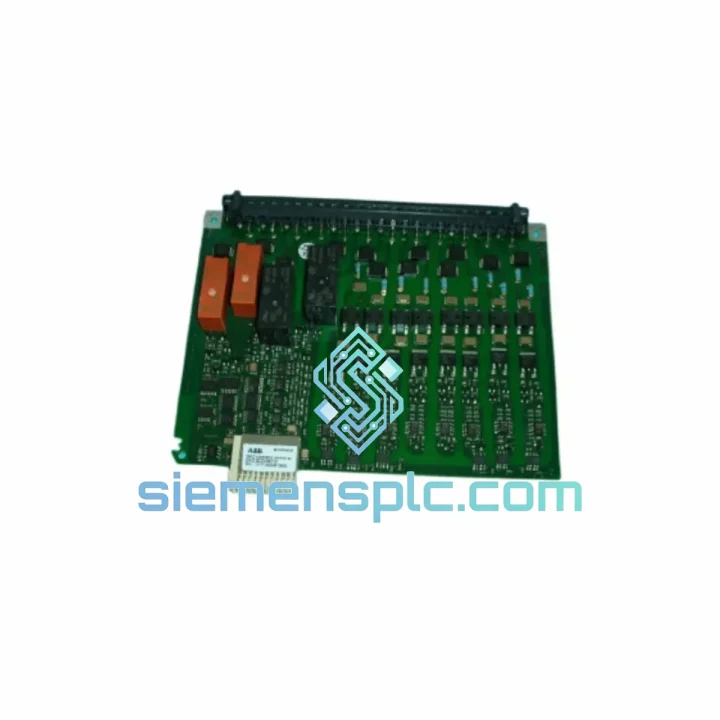
Request verified availability, condition, replacement risk review, packing options and courier lead time for DS200FCGDH1BAA.
Click Request Quote and the part number is inserted into the inquiry form automatically.
Core fields for model confirmation and RFQ routing. Detailed product narrative remains below.
Real-time Stock & RFQ: [email protected] | WhatsApp: +86 18359268345
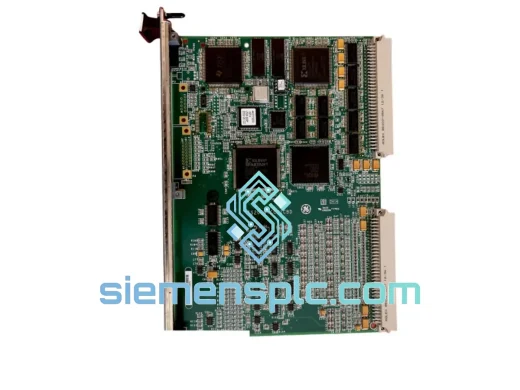
The GE DS200FCGDH1BAA is a dedicated flame detection circuit board designed for integration within General Electric’s Mark V and Mark VI Speedtronic turbine control platforms. Its primary function is the continuous acquisition, conditioning, and logical processing of combustion presence signals from UV and IR flame scanners mounted at each turbine combustion can. In gas turbine control architecture, flame detection is a safety-critical feedback path: the absence of a valid flame signal during fuel admission triggers an immediate trip sequence to prevent uncontrolled fuel accumulation and potential detonation. The DS200FCGDH1BAA executes this function with deterministic sub-cycle response, making it a non-negotiable component in any Mark V or Mark VI panel assembly.
This board occupies a defined slot within the Mark V TCCA, TCCB, or TCCC panel chassis, interfacing directly with the Speedtronic backplane bus. It receives analog and discrete inputs from scanner assemblies, applies threshold comparison and signal validation logic, and outputs a conditioned flame present/absent status to the turbine control processor. In TMR (Triple Modular Redundancy) configurations — where three independent R, S, T panels each run parallel control logic — the DS200FCGDH1BAA must be populated in all three panels to maintain voting integrity. A single missing or degraded board in a TMR system degrades the redundancy architecture from 2-of-3 to 1-of-2, materially increasing trip risk during scanner transients.
Field deployment spans combined-cycle power plants, simple-cycle peaker units, LNG compressor trains, offshore turbine packages, and refinery utility turbines. In each context, the board’s role is identical: provide a reliable, low-latency combustion status signal that the turbine control processor can act upon within the same scan cycle. The DS200FCGDH1BAA has accumulated substantial field hours across GE Frame 5, Frame 6, Frame 7E, Frame 7F, and Frame 9E turbine families, establishing a documented reliability baseline that makes it a preferred specification for both OEM panel builds and MRO replacement programs.
| Part Number | DS200FCGDH1BAA |
| Manufacturer | General Electric (GE) |
| Platform | Mark V / Mark VI Speedtronic Turbine Control |
| Board Function | Flame Detection & Combustion Signal Processing |
| Form Factor | PCB Module — Rack-Mount Card |
| Compatible Chassis | Mark V TCCA / TCCB / TCCC; Mark VI <I/O> Pack Configurations |
| Input Signal Types | UV Scanner Analog Input, IR Scanner Analog Input, Discrete Contact Input |
| Backplane Interface | Speedtronic Internal Bus (proprietary GE parallel backplane) |
| Signal Threshold Logic | Hardware comparator with software-configurable setpoints via Mark V toolbox |
| Redundancy Support | TMR (Triple Modular Redundancy) — R/S/T panel voting architecture |
| Operating Temperature | 0°C to +60°C (panel ambient); storage –20°C to +70°C |
| Humidity Rating | 5% to 95% RH, non-condensing |
| Board Dimensions | Standard Mark V card form factor (approx. 340 mm × 230 mm) |
| Weight | Approx. 300 g |
| Condition Available | New OEM / Tested Refurbished / Exchange |
| Warranty | 12 months from dispatch date (functional defects) |
| Origin | United States (GE OEM manufacture) |
The DS200FCGDH1BAA’s hardware design reflects the engineering constraints of turbine control: the board must process low-amplitude analog signals from scanner photodetectors in an environment characterized by high-frequency electrical noise from ignition systems, generator excitation, and adjacent power electronics.
Analog Front-End Isolation: Scanner input channels are galvanically isolated from the board’s digital logic domain. This isolation barrier — implemented via optocoupler stages or transformer-coupled input networks — prevents ground loop currents from the scanner cable shield from corrupting the analog measurement. In turbine enclosures where ground potential differences between the control panel and the combustion section can reach several volts, this isolation is the primary defense against false flame signals.
Signal Conditioning Chain: Raw scanner output is a low-level current or voltage proportional to detected UV/IR radiation intensity. The board’s analog front-end applies precision amplification, low-pass filtering to reject high-frequency EMI, and anti-aliasing before the signal reaches the threshold comparator. The filter cutoff is tuned to pass the characteristic flicker frequency of gas turbine combustion (typically 10–200 Hz) while rejecting ignition transients above 1 kHz.
Threshold Comparator Architecture: Flame present/absent determination is made by a hardware comparator operating in parallel with software-readable ADC data. The hardware comparator provides a deterministic, scan-cycle-independent trip output — meaning a flame loss event generates a discrete output state change without waiting for the processor scan cycle to complete. This architecture ensures that the flame loss signal reaches the turbine control processor within microseconds of the scanner signal dropping below threshold, not within the next 10–20 ms processor scan window.
EMC Design Compliance: The board layout follows GE’s internal EMC design specification for Speedtronic cards, including ground plane continuity, decoupling capacitor placement at each IC power pin, and controlled impedance routing on high-speed backplane interface lines. The card edge connector maintains defined signal-to-ground ratios to minimize crosstalk on the backplane bus during simultaneous multi-card data transfers.
Watchdog and Self-Diagnostics: The DS200FCGDH1BAA includes on-board diagnostic logic that monitors its own power supply rails and signal processing chain. A watchdog timer detects processor communication loss and asserts a board fault status on the backplane, allowing the Mark V control processor to log a hardware fault and, in TMR configurations, exclude the faulted panel from the voting calculation rather than allowing a degraded signal to participate in the 2-of-3 decision.
Every DS200FCGDH1BAA unit dispatched from our Xiamen, China facility is sourced exclusively from verified supply channels: decommissioned OEM-maintained Mark V panels, authorized GE parts distributors, and certified repair facilities operating under documented quality management systems. We do not handle unmarked, counterfeit, or unverifiable boards.
Pre-Shipment Verification Protocol:
Logistics: Units ship from Xiamen, China via DHL Express, FedEx International Priority, or UPS Worldwide Expedited. Standard transit times: 3–5 business days to Europe and North America; 2–4 business days to Southeast Asia and the Middle East. Full export documentation is included with every shipment: commercial invoice, packing list, and certificate of origin. Customs HS code classification support is available for import clearance in regulated markets.
Warranty: 12 months from dispatch date, covering functional defects under normal operating conditions. Warranty claims are processed within 5 business days of receipt of the returned unit.
Email: [email protected]
WhatsApp: +86 18359268345
Web: siemensplc.com
Location: Xiamen, China
© 2026 siemensplc.com. All rights reserved.
We check the full part number, brand, series and visible nameplate information before quotation.
Sales confirms stock path, condition option, quantity and realistic lead time for export dispatch.
DHL, FedEx, UPS or buyer courier arrangements can be reviewed with packing requirements.
Similar brand or category products for fast comparison and multi-item RFQ lists.