GE
RFQ Ready
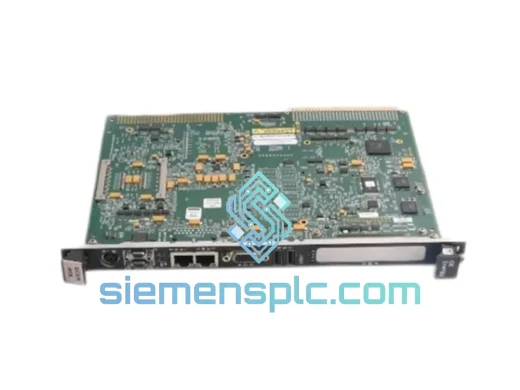
GE IS210MVRBH1A I/O Interface Board – Mark VIe Series
Mark VI
Origin US
I/O Interface Board
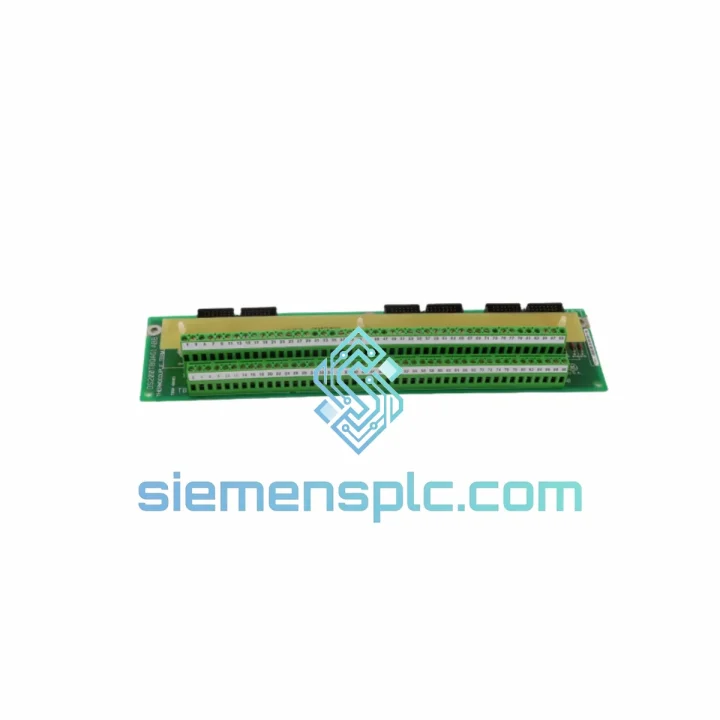
Request verified availability, condition, replacement risk review, packing options and courier lead time for DS200TBQAG1ABB.
Click Request Quote and the part number is inserted into the inquiry form automatically.
Core fields for model confirmation and RFQ routing. Detailed product narrative remains below.
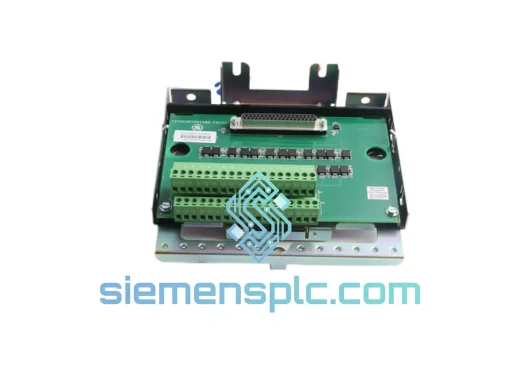
The GE DS200TBQAG1ABB is a dedicated analog terminal board engineered for deployment within GE’s Mark VI Turbine Control System. Its primary function is to serve as the physical and electrical boundary between field-side analog instrumentation — including 4–20 mA transmitters, thermocouples, and RTDs — and the Mark VI controller I/O cards mounted on the VME-based backplane. Unlike passive terminal strips, the DS200TBQAG1ABB integrates signal conditioning circuitry that normalizes incoming field signals before they reach the controller’s A/D conversion stage, directly reducing quantization error and improving loop fidelity in closed-loop turbine governor and temperature control applications.
In a typical Mark VI architecture, the DS200TBQAG1ABB is mounted in the I/O terminal board bay and connects via a dedicated ribbon or D-sub cable assembly to its paired I/O pack — commonly the VCMI or VTUR card. This physical separation of the terminal interface from the active processing electronics is a deliberate design choice: it allows field wiring to remain undisturbed during controller card replacement, significantly reducing maintenance downtime in live plant environments. The board’s screw-terminal block layout follows GE’s standardized wiring convention, enabling direct substitution without re-labeling or re-routing field cables.
The DS200TBQAG1ABB supports multiple analog input types within a single board footprint. Internal jumper or DIP-switch configuration allows channel-by-channel selection between current loop (4–20 mA), millivolt thermocouple, and resistance-based RTD inputs. Each channel incorporates a dedicated input protection network — typically a transient voltage suppressor (TVS) diode array combined with series current-limiting resistors — rated to absorb surge events consistent with IEC 61000-4-5 Level 3 requirements. This protection topology is essential in turbine environments where field cable runs may exceed 200 meters and are exposed to inductive switching transients from solenoid valves and motor starters operating on shared cable trays.
Signal integrity on the DS200TBQAG1ABB is further maintained through differential input reception on all analog channels. The board’s input stage rejects common-mode noise up to the rated CMRR specification, which is critical in power generation facilities where ground potential differences between the control room and turbine deck can reach several volts. The differential architecture, combined with the board’s shielded PCB layer stack, ensures that 50/60 Hz power-frequency interference does not corrupt the millivolt-level thermocouple signals that drive turbine exhaust temperature monitoring loops.
From a system availability standpoint, the DS200TBQAG1ABB is fully compatible with Mark VI’s Triple Modular Redundancy (TMR) configuration. In TMR deployments, three independent terminal boards — one per controller voter (R, S, T) — receive identical field signals through a signal splitter or dedicated field junction box. The Mark VI’s voting logic then compares the three digitized values and flags any channel that deviates beyond a configurable threshold, enabling fault isolation without process interruption. This architecture means the DS200TBQAG1ABB must maintain tight channel-to-channel matching specifications; GE’s manufacturing process applies calibration trimming at the board level to meet the inter-board signal matching tolerance required for accurate TMR voting.
Real-time Stock & RFQ: [email protected] | WhatsApp: +86 18359268345
| Parameter | Specification |
|---|---|
| Part Number | DS200TBQAG1ABB |
| Manufacturer | GE (General Electric Automation & Controls) |
| Series | Mark VI Turbine Control System |
| Board Type | Analog Terminal Board (ATB) |
| Analog Input Types | 4–20 mA current loop, Type J/K/T thermocouple, 2/3-wire RTD (Pt100) |
| Input Protection | TVS diode array + series resistor; IEC 61000-4-5 Level 3 surge rated |
| Common-Mode Rejection | ≥ 80 dB at 50/60 Hz (differential input architecture) |
| Operating Temperature | 0 °C to +60 °C (control cabinet ambient) |
| Storage Temperature | –40 °C to +85 °C |
| Relative Humidity | 5% to 95% non-condensing |
| Backplane Interface | D-sub / ribbon cable to paired Mark VI I/O pack (VCMI, VTUR, VPRO) |
| TMR Compatibility | Full — supports R/S/T voter configuration |
| Mounting | DIN rail / panel-mount terminal board bay (Mark VI enclosure) |
| PCB Construction | Multi-layer with dedicated EMC shielding plane |
| Approvals / Standards | CE, UL (per GE Mark VI system certification) |
| Country of Origin | United States of America |
| Weight (approx.) | 340 g |
| Warranty | 12 months from date of shipment |
The DS200TBQAG1ABB’s PCB architecture reflects GE’s design philosophy of separating passive termination from active signal processing. The board’s analog front-end employs a two-stage input network: the first stage is a passive RC low-pass filter with a –3 dB corner frequency tuned to attenuate frequencies above the Nyquist limit of the Mark VI’s A/D sampling rate, preventing aliasing artifacts in slow-scan process variables such as bearing temperature and exhaust pressure. The second stage is the differential receiver, implemented with precision thin-film resistor networks to maintain tight gain matching across all channels — a requirement for accurate thermocouple cold-junction compensation, which relies on the board’s onboard reference junction thermistor.
EMC performance is addressed at the board level through a combination of layout discipline and passive filtering. The analog signal traces are routed on inner PCB layers, sandwiched between ground planes that act as Faraday shields against radiated electric fields. Ferrite bead filters are placed in series on each analog input line at the point of entry to the PCB, presenting high impedance to high-frequency common-mode currents induced by nearby variable-frequency drives and high-voltage switching equipment common in turbine auxiliary systems. The terminal block connectors are specified with contact materials and plating that maintain low contact resistance over the board’s service life, preventing thermocouple measurement drift caused by connector oxidation — a failure mode that is disproportionately common in humid coastal and offshore power plant environments.
The board’s channel configuration mechanism — whether implemented via jumper blocks or DIP switches depending on the specific revision — allows maintenance engineers to reconfigure input types without PCB modification. This field-configurability reduces the number of distinct spare part numbers a plant must stock, as a single DS200TBQAG1ABB can be configured to serve thermocouple, RTD, or current-loop channels depending on the application requirement at the time of installation.
Every DS200TBQAG1ABB unit supplied by siemensplc.com undergoes a structured incoming inspection protocol before dispatch. Visual inspection confirms PCB integrity, component presence, and connector condition. Functional verification — where test equipment permits — checks input channel continuity and protection network integrity. Units are stored in ESD-safe anti-static bags within humidity-controlled warehouse conditions in Xiamen, China, preventing electrostatic discharge damage and moisture ingress during storage.
Xiamen’s position as a major international logistics hub provides direct access to DHL Express, FedEx International Priority, and UPS Worldwide Express services, with daily flight connections to major industrial centers across Southeast Asia, the Middle East, Europe, and the Americas. Standard export documentation — including commercial invoice, packing list, and certificate of origin — is prepared for every shipment. For customers in regions requiring specific import documentation or CITES/dual-use export compliance, our logistics team coordinates the necessary paperwork to ensure clearance without delay.
All units are shipped with a 12-month warranty covering defects in materials and workmanship. Warranty claims are processed with a target response time of 48 hours from receipt of the returned unit. Replacement or repair is provided at no charge for confirmed warranty cases. Traceability records — including sourcing documentation and inspection records — are retained for a minimum of five years and are available to customers upon request for audit or regulatory compliance purposes.
Email: [email protected]
WhatsApp: +86 18359268345
Web: siemensplc.com
Location: Xiamen, China
© 2026 siemensplc.com. All rights reserved.
We check the full part number, brand, series and visible nameplate information before quotation.
Sales confirms stock path, condition option, quantity and realistic lead time for export dispatch.
DHL, FedEx, UPS or buyer courier arrangements can be reviewed with packing requirements.
Similar brand or category products for fast comparison and multi-item RFQ lists.