
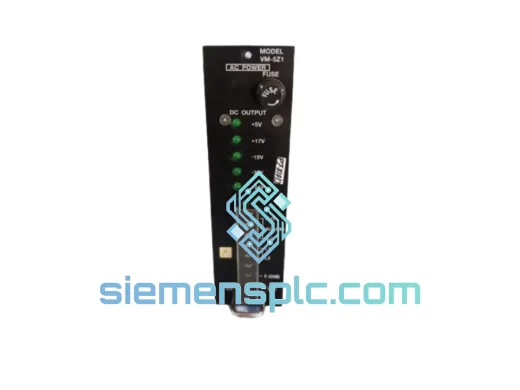
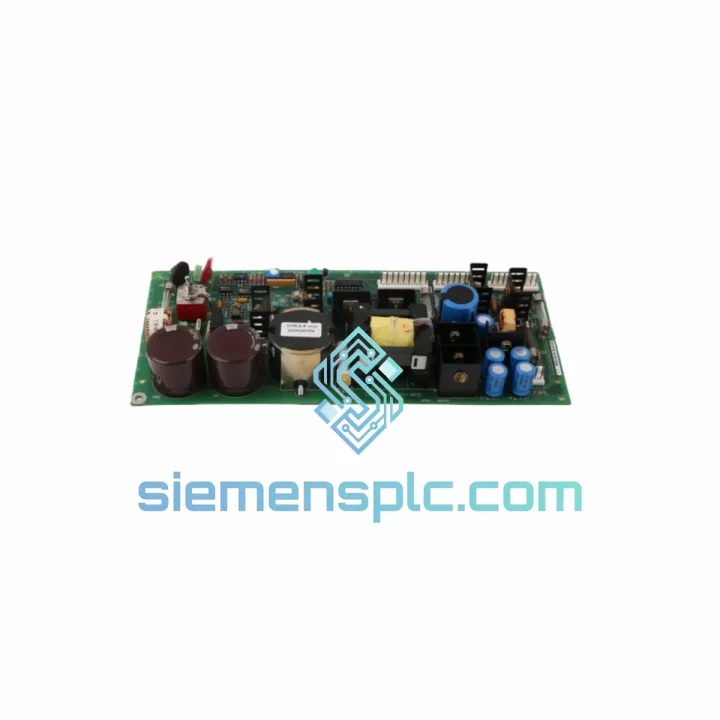
GE
In Stock OK
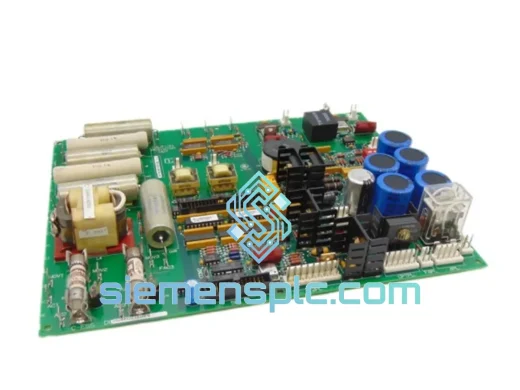
GE DS200UPSAG1AFD Power Distribution Board
Request verified availability, condition, replacement risk review, packing options and courier lead time for DS200UPSAG1AFD.
BrandGE
Part NumberDS200UPSAG1AFD
ConditionAvailability Check
Lead TimeRFQ Confirmation
DocumentsDatasheet / photos by RFQ
ShippingExport packing available
Auto-filled RFQ
DS200UPSAG1AFD
Click Request Quote and the part number is inserted into the inquiry form automatically.
- Reply by email: [email protected]
- WhatsApp / Tel: +86 18359268345
- Mon-Sat 9:00-18:00 GMT+8
Procurement Data
Key Product Information
Core fields for model confirmation and RFQ routing. Detailed product narrative remains below.
- Brand
- GE
- Primary Part Number
- DS200UPSAG1AFD
- Product Type
- PLC Power Supply Module
- Series / Family
- Mark V
- Manufacturer
- General Electric (GE)
- Country of Origin
- US
- Catalog Category
- Power Supplies
- Operating Temp.
- 0°C to 55°C continuous; 70°C short-term excursion rated
- Humidity
- 5%–95% RH, non-condensing
- Warranty
- 12 months from dispatch date against functional failure
Model confirmed for inquiry
DS200UPSAG1AFD
Send quantity, destination and urgency. The RFQ form keeps this part number attached.
Request Quote
Product Overview
GE DS200UPSAG1AFD: Your Turbine Panel Is Down — Here’s How We Get It Back Online Before the Next Shift
Three hours into an unplanned outage. The Mark V panel is dark. Maintenance has already swapped the battery bank and checked the upstream breaker — both clean. The 125 VDC bus is holding, but the downstream logic rails are sagging under load and every processor card in the rack is cycling through resets. The fault is the DS200UPSAG1AFD. You know it. Now the only question is how fast you can get a replacement on-site.
We stock DS200UPSAG1AFD boards in Xiamen. Orders confirmed before 14:00 CST ship same day — DHL Express or FedEx International Priority. We have moved boards from purchase order to delivery at operating plants in the Gulf, Southeast Asia, and South Asia in under 40 hours. That’s not a marketing claim. That’s the logistics infrastructure we’ve built specifically for plant-down scenarios where every hour of downtime has a dollar figure attached to it.
The DS200UPSAG1AFD is the DC power rail distribution and health monitoring board for GE Mark V Speedtronic turbine control systems. It conditions and distributes the +5 VDC logic rail, +15 VDC analog rail, and −15 VDC analog rail to the processor and I/O cards in the <TCCA>, <TCCB>, and <TCCC> panels. When it fails — and in panels running beyond 12 years in thermally demanding environments, it will fail — it doesn’t fail quietly. The board’s own monitoring circuitry generates the PSMX alarm and Diagnostic 30/31 codes that cascade across the entire panel. Replacing I/O cards or processor boards without addressing the UPSAG first is the most expensive misdiagnosis in Mark V maintenance.
⚡ URGENT REQUIREMENT? Contact: [email protected] | WhatsApp: +86 18359268345
Quick Technical Datasheet
| Manufacturer | General Electric (GE) |
| Full Part Number | DS200UPSAG1AFD |
| Series / Platform | GE Mark V Speedtronic Turbine Control System |
| Board Function | DC Rail Distribution, Conditioning & Health Monitoring |
| DC Rails Supplied | +5 VDC (logic), +15 VDC (analog), −15 VDC (analog) |
| Input Bus Voltage | 125 VDC nominal (Mark V panel bus architecture) |
| Compatible Panels | <TCCA>, <TCCB>, <TCCC> — TMR and simplex configurations |
| Revision Compatibility | AFD — drop-in compatible with AFA / AFB / AFC revisions |
| Operating Temperature | 0°C to 55°C continuous; 70°C short-term excursion rated |
| Humidity Tolerance | 5%–95% RH, non-condensing |
| Vibration Standard | IEC 60068-2-6 sinusoidal, 10–500 Hz sweep |
| PCB Surface Treatment | Conformal coating on signal-critical zones |
| Form Factor | Rack-mount PCB, backplane edge connector, Mark V slot-compatible |
| HS Code | 8537.10 |
| Country of Origin | USA (GE OEM manufacture) |
| Condition | 100% Original OEM — Functionally tested pre-dispatch |
| Warranty | 12 months from dispatch date against functional failure |
| Stock Status | ✔ Ready to Ship — Xiamen Warehouse |
| Same-Day Dispatch Cutoff | Orders confirmed before 14:00 CST |
Troubleshooting & Replacement Tips
Step 1 — Isolate the fault before pulling the board. Measure the 125 VDC input at the UPSAG terminal block under full panel load. If input is within ±2% of nominal and the downstream rails are sagging or oscillating, the UPSAG is the fault source. Do not condemn the board on HMI alarm text alone — the PSMX alarm and Diagnostic 30/31 codes are generated by the UPSAG’s own monitoring circuit, which means a partially degraded board can still report accurate fault data while its power conditioning section has already failed.
Fault Code Reference — What You’re Actually Seeing
- Diagnostic 30 / 31 — DC Rail Out of Tolerance: Primary UPSAG failure signature. Any monitored rail deviating beyond ±5% of nominal under load triggers this. Measure at the UPSAG test points, not at the processor card connectors — backplane trace resistance can mask the true rail condition at the source board.
- Diagnostic 42 — I/O Communication Loss: Secondary symptom of rail instability. Swapping I/O boards without fixing the UPSAG first produces repeat failures within hours. This is the single most common and most expensive misdiagnosis pattern in Mark V field maintenance.
- Diagnostic 55 — Processor Reset: Intermittent +5 VDC undervoltage caused by electrolytic capacitor ESR increase under thermal load. Resets that correlate with peak ambient temperature — mid-afternoon in Gulf or tropical climates — are a reliable UPSAG degradation signature, not a processor card fault.
- PSMX Alarm: Direct power health flag from the Mark V supervisory layer. Never log this as a nuisance alarm. It is a mandatory investigation trigger every time it appears.
Step 2 — Pre-swap configuration checklist. Before removing the installed board, photograph both sides at high resolution. The DS200UPSAG1AFD carries DIP switches for panel address and configuration. Replicate every switch position exactly on the replacement unit. A single incorrect position blocks initialization and generates a new alarm set — diagnostic time you cannot afford during a plant-down event.
Revision AFD is drop-in compatible with AFA, AFB, and AFC in standard Mark V panel configurations. No firmware changes are required for same-revision or cross-revision substitution within the AFx family. If the host processor is running a pre-2015 software release, cross-reference GE Service Bulletin GEK-105360 for firmware compatibility with boards manufactured after 2018 — an edge case, but one that has caused post-replacement initialization failures in the field.
Step 3 — Correct shutdown and installation sequence. Turbine to safe state → UPS bypass disabled → panel de-energized. The DS200UPSAG1AFD does not support hot-swap. Live insertion risks backplane connector damage and can propagate voltage transients to adjacent processor cards. After installation and power-on, allow a minimum 3-minute stabilization period before initiating the Mark V self-test sequence. Premature self-test generates false diagnostic alarms that persist in the event log and complicate post-maintenance documentation.
Step 4 — Post-replacement verification. Confirm all three DC rails are within ±1% of nominal at the UPSAG test points under full panel load. Clear the event log only after a clean self-test pass. Record the replacement board serial number, pre-replacement fault codes, and post-replacement self-test results in your CMMS immediately. This documentation is required for warranty claims and is essential for future failure pattern analysis.
Reliability in Harsh Conditions
Gas turbine control panels do not operate in controlled environments. They operate in turbine enclosures where ambient temperatures during summer peak load in the Gulf or Southeast Asia routinely push panel internals toward the upper end of the DS200UPSAG1AFD’s 55°C continuous rating. The board’s power components are selected and thermally derated to maintain rail regulation accuracy across this full envelope — not just at 25°C reference conditions.
Vibration qualification per IEC 60068-2-6 covers sinusoidal excitation from 10 to 500 Hz. This range is not arbitrary. It encompasses the mechanical frequencies produced by gas turbine operation across typical speed ranges, including harmonic content from compressor blade passing frequencies. Panels mounted close to the turbine package — standard on offshore platforms and containerized power units — are exposed to this vibration profile continuously throughout their service life. The DS200UPSAG1AFD’s PCB layout, component selection, and mounting hardware are engineered to maintain solder joint integrity under these conditions over a service life measured in years.
Conformal coating on signal-critical PCB areas provides protection against condensation during cold-start cycles and sustained high-humidity operation in tropical and coastal environments. Every unit dispatched from our Xiamen warehouse is inspected for coating integrity — delamination, cracking, or contamination under the coating is a disqualifying defect. Units that fail this inspection are quarantined. They do not ship.
All units are packed in anti-static bags with ESD warning labels. Technicians must use grounded wrist straps and ESD-safe work surfaces during installation. Latent ESD damage introduced during handling produces intermittent faults that appear days or weeks after installation — a failure mode that is entirely preventable and entirely the result of skipping ESD protocol under time pressure. Don’t skip it.
Global Express Logistics
Our dispatch hub is in Xiamen, Fujian Province, with direct freight access to Xiamen Gaoqi International Airport and established priority accounts with DHL Express and FedEx International Priority. Orders confirmed with payment before 14:00 CST are dispatched the same business day. Air waybill numbers are provided within 2 hours of dispatch confirmation.
Estimated transit times from Xiamen by region:
- Southeast Asia (Singapore, Malaysia, Thailand, Indonesia, Philippines): 1–2 business days — DHL Express
- Middle East (UAE, Saudi Arabia, Qatar, Kuwait, Oman, Bahrain): 2–3 business days — FedEx International Priority
- South Asia (India, Pakistan, Bangladesh, Sri Lanka): 2–3 business days — DHL Express
- Europe (Germany, Netherlands, UK, France, Italy, Spain): 3–4 business days — DHL or FedEx
- North America (USA, Canada, Mexico): 3–5 business days — FedEx International Priority
- Africa & Latin America: 4–7 business days; customs clearance timelines vary by destination country
Every shipment includes a complete export documentation package: commercial invoice, itemized packing list, certificate of origin, and HS code declaration (8537.10). For customers in jurisdictions with preferential tariff treatment on industrial automation components, we provide supporting documentation to facilitate customs clearance and reduce landed cost. Contact us before order confirmation if your import process requires specific documentation formats or end-user certificates.
For genuine plant-down emergencies, contact us directly via WhatsApp. We maintain priority booking arrangements with DHL and FedEx that allow us to secure same-day pick-up slots outside standard freight windows for confirmed urgent orders. Time is the variable we’re optimizing for.
Contact Information
📧 Email: [email protected]
💬 WhatsApp: +86 18359268345
🌐 Web: siemensplc.com
📍 Dispatch Location: Xiamen, Fujian, China
© 2026 siemensplc.com. All rights reserved.
Ready to quote
[email protected]
Send This Part Number to Sales
RFQ workflow
Quality workflow ->
Confirmation Process
01Model confirmation
We check the full part number, brand, series and visible nameplate information before quotation.
02Availability reply
Sales confirms stock path, condition option, quantity and realistic lead time for export dispatch.
03Packing & courier
DHL, FedEx, UPS or buyer courier arrangements can be reviewed with packing requirements.
Continue sourcing
Browse full catalog ->
Related Automation Parts
Similar brand or category products for fast comparison and multi-item RFQ lists.
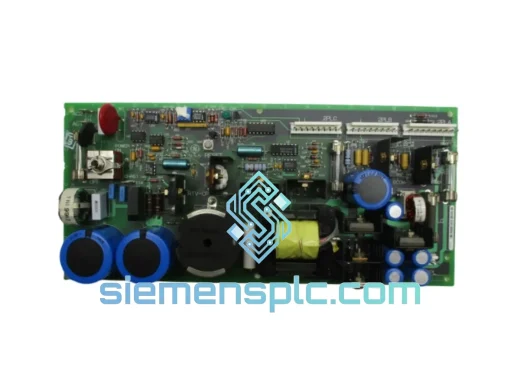
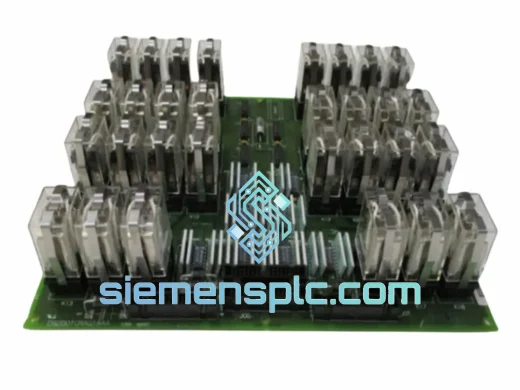
GE
RFQ Ready
GE DS200TCRAG1AAA Power Supply Board – Mark V Speedtronic
Mark V
Origin US
Power Supply Board
GE
RFQ Ready
GE DS200SDCIG1AFB Turbine Control Board – Mark V
Mark V
Origin US
Turbine Control Board