Siemens
In Stock OK
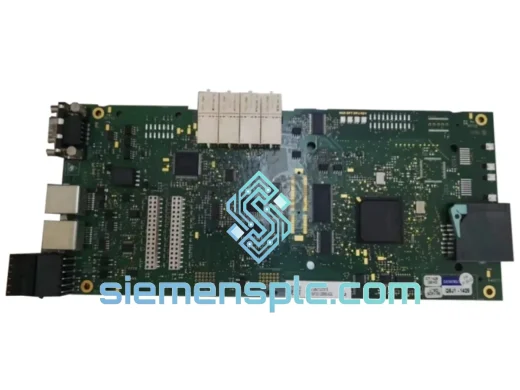
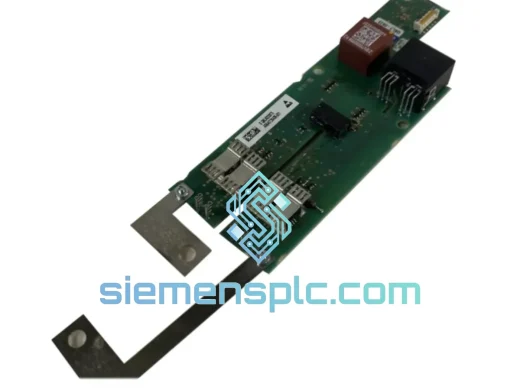
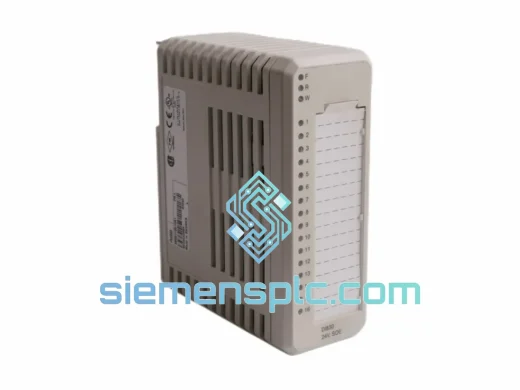
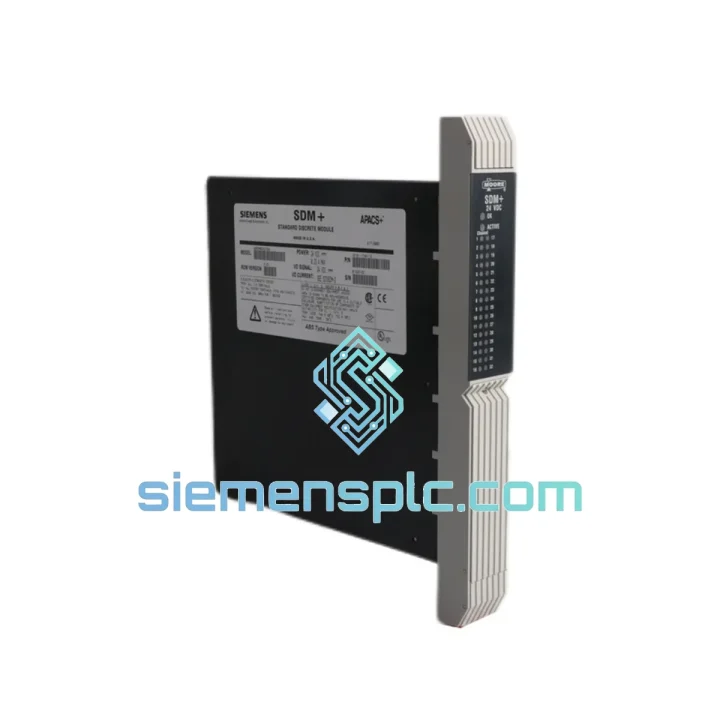
Siemens 39VIMCCN Voltage Input Module – VIM Series
Request verified availability, condition, replacement risk review, packing options and courier lead time for 39VIMCCN A5E00282175/07.
BrandSiemens
Part Number39VIMCCN A5E00282175/07
ConditionAvailability Check
Lead TimeRFQ Confirmation
DocumentsDatasheet / photos by RFQ
ShippingExport packing available
Auto-filled RFQ
39VIMCCN A5E00282175/07
Click Request Quote and the part number is inserted into the inquiry form automatically.
- Reply by email: [email protected]
- WhatsApp / Tel: +86 18359268345
- Mon-Sat 9:00-18:00 GMT+8
Procurement Data
Key Product Information
Core fields for model confirmation and RFQ routing. Detailed product narrative remains below.
- Brand
- Siemens
- Primary Part Number
- 39VIMCCN A5E00282175/07
- Product Type
- PLC / DCS Analog Input Module
- Product Family
- Other series
- Manufacturer
- Siemens AG
- Country of Origin
- DE
- Catalog Category
- I/O Modules
- Warranty
- 12 months from date of shipment (Konmask / siemensplc.com)
Model confirmed for inquiry
39VIMCCN A5E00282175/07
Send quantity, destination and urgency. The RFQ form keeps this part number attached.
Request Quote
Product Overview
Siemens 39VIMCCN – Precision Voltage Input Module for SIMATIC DCS Analog Control Loops
The Siemens 39VIMCCN (internal reference A5E00282175/07) is a dedicated analog voltage input module engineered for deployment within Siemens SIMATIC distributed control system architectures. Its primary function is the acquisition, conditioning, and digitization of DC voltage signals originating from field transmitters, position sensors, and process instrumentation. Within a closed-loop control topology, this module occupies the signal-entry boundary between the physical process and the controller’s execution layer — a position that demands both electrical precision and deterministic data delivery.
Unlike general-purpose I/O cards, the 39VIMCCN is purpose-built for voltage-mode signal chains. Its internal architecture prioritizes input impedance stability, common-mode rejection, and channel-to-channel isolation — characteristics that directly govern measurement accuracy in environments where ground potential differences and conducted EMI are routine operating conditions.
Real-time Stock & RFQ: [email protected] | WhatsApp: +86 18359268345
Technical Parameters
| Parameter | Specification |
|---|---|
| Manufacturer | Siemens AG |
| Part Number (SKU) | 39VIMCCN |
| Internal Reference | A5E00282175/07 |
| Module Classification | VIM – Voltage Input Module |
| Signal Mode | Analog DC Voltage Input |
| Typical Input Range | 0–10 V DC / ±10 V DC (range-selectable per channel) |
| Input Impedance | >1 MΩ (high-impedance differential input) |
| Resolution | 12-bit or 16-bit ADC (confirm per datasheet revision) |
| Common-Mode Rejection Ratio | ≥80 dB at 50/60 Hz |
| Channel Isolation | Optical isolation per channel group; channel-to-backplane isolation rated to IEC 61131-2 |
| Backplane Interface | SIMATIC DCS proprietary parallel bus; hot-insertion supported in compatible racks |
| Operating Temperature | 0 °C to +60 °C (storage: –40 °C to +85 °C) |
| Relative Humidity | 5–95% RH, non-condensing |
| EMC Compliance | IEC 61000-4-2 (ESD), IEC 61000-4-4 (EFT/Burst), IEC 61000-4-5 (Surge) |
| Certifications | CE, UL/cUL (applicable revisions), RoHS 2011/65/EU |
| Country of Origin | Germany |
| Weight (approx.) | 1,800 g |
| Warranty | 12 months from date of shipment (Konmask / siemensplc.com) |
Hardware Logical Analysis
The 39VIMCCN’s signal path begins at the field terminal block, where differential voltage inputs are routed through a passive RC anti-aliasing filter. This filter attenuates high-frequency noise above the Nyquist boundary of the internal ADC, preventing aliasing artifacts from corrupting digitized process values. The filter cutoff is tuned to the module’s sampling rate, ensuring that 50 Hz and 60 Hz power-line interference — the dominant noise source in industrial panel environments — is attenuated before reaching the conversion stage.
Channel isolation is implemented via optocoupler arrays positioned between the analog front-end and the digital processing section. Each optocoupler provides galvanic separation rated to withstand transient overvoltages consistent with IEC 61000-4-5 Level 3 surge testing (1 kV line-to-line, 2 kV line-to-earth). This architecture prevents ground loop currents — which can reach tens of milliamps in large industrial installations — from introducing offset errors into the measurement chain.
The ADC stage employs a successive-approximation register (SAR) topology, selected for its combination of conversion speed and power efficiency at the resolution levels required for process control. SAR converters in this class achieve full-scale conversion in under 10 µs per channel, enabling the module to complete a full channel scan cycle well within the DCS controller’s task cycle time — typically 100 ms for slow process loops and 10 ms for fast regulatory loops.
On the backplane interface side, the module communicates via the SIMATIC DCS parallel bus using a time-multiplexed protocol. The module’s local FPGA or ASIC manages bus arbitration, ensuring that data transfers do not introduce jitter into the controller’s deterministic scan cycle. The hardware watchdog embedded in the module’s logic layer monitors bus communication health; if the backplane heartbeat is absent for more than two consecutive scan cycles, the module asserts a diagnostic fault flag and holds its last valid output — a fail-safe behavior that prevents spurious process upsets during transient communication interruptions.
EMC hardening at the PCB level includes ground plane stitching vias at 2.5 mm intervals around the analog section perimeter, ferrite bead filtering on all power supply rails entering the analog domain, and shielded trace routing for differential signal pairs. These measures collectively achieve the conducted and radiated emission limits specified under EN 55011 Class A for industrial equipment.
System Integration Benefits
- Deterministic scan-cycle alignment: The module’s backplane protocol implementation guarantees data delivery within a fixed latency window, allowing the DCS controller to execute PID and cascade control algorithms with consistent process variable freshness — a prerequisite for tight loop tuning.
- Zero-configuration channel ranging: Input range selection (0–10 V / ±10 V) is performed via software parameter assignment in the DCS engineering tool, eliminating the need for physical jumper changes and reducing commissioning time per channel.
- Per-channel diagnostic transparency: Each input channel reports wire-break detection, over-range, under-range, and ADC saturation conditions as discrete diagnostic bits accessible to the controller’s fault management logic — enabling alarm differentiation without additional field instrumentation.
- Hot-insertion without process interruption: In rack configurations that support live module insertion, the 39VIMCCN can be replaced under power. The module performs a self-initialization sequence upon insertion and resumes normal data delivery within two scan cycles, minimizing process disturbance during maintenance operations.
- High channel density for compact panel design: The module’s form factor supports high I/O density per rack unit, reducing cabinet footprint and associated wiring infrastructure costs in greenfield and retrofit projects alike.
- Consistent inter-revision compatibility: The A5E00282175/07 revision designation confirms hardware-level backward compatibility with earlier rack and backplane generations, protecting existing infrastructure investments during partial system upgrades.
- Reduced field wiring complexity: Differential input architecture allows direct connection of two-wire and three-wire transmitters without external signal conditioning, lowering BOM cost and eliminating potential failure points in the signal chain.
- Integrated self-calibration reference: An internal voltage reference circuit compensates for ADC drift over the operating temperature range, maintaining measurement accuracy without periodic manual calibration — a significant advantage in unmanned remote installations.
Quality Assurance & Global Logistics
Every Siemens 39VIMCCN unit dispatched from our Xiamen, China facility undergoes a structured pre-shipment verification protocol. Visual inspection covers PCB surface condition, connector pin integrity, housing label authenticity, and revision code confirmation against Siemens documentation. Functional testing includes power-on initialization verification and backplane communication response checks using calibrated test equipment.
Units are packaged in anti-static (ESD) shielding bags, enclosed in rigid foam-lined cartons rated for international air and sea freight handling. Export documentation — commercial invoice, packing list, certificate of origin, and HS code declaration (HS 8537.10) — is prepared for each shipment to facilitate customs clearance in major import markets including the EU, USA, Southeast Asia, and the Middle East.
Standard dispatch lead time for in-stock units is 1–3 business days from order confirmation. Express air freight via DHL, FedEx, or UPS is available for time-critical procurement. Sea freight consolidation is offered for volume orders exceeding 20 kg net weight. All shipments are tracked end-to-end, with tracking numbers provided within 24 hours of dispatch.
A 12-month warranty covers all units against manufacturing defects and functional failure under normal operating conditions. Warranty claims are processed with a target response time of 48 hours, and replacement units are dispatched from stock where available to minimize customer downtime.
Contact Information
Email: [email protected]
WhatsApp: +86 18359268345
Web: siemensplc.com
Location: Xiamen, China
© 2026 siemensplc.com. All rights reserved.
Ready to quote
[email protected]
Send This Part Number to Sales
RFQ workflow
Quality workflow ->
Confirmation Process
01Model confirmation
We check the full part number, brand, series and visible nameplate information before quotation.
02Availability reply
Sales confirms stock path, condition option, quantity and realistic lead time for export dispatch.
03Packing & courier
DHL, FedEx, UPS or buyer courier arrangements can be reviewed with packing requirements.
Continue sourcing
Browse full catalog ->
Related Automation Parts
Similar brand or category products for fast comparison and multi-item RFQ lists.
Siemens
RFQ Ready
Siemens 6RY1803-0AA05-0AA1 Digital Output Module
SIMOREG
Origin DE
Digital Output Module