GE
RFQ Ready
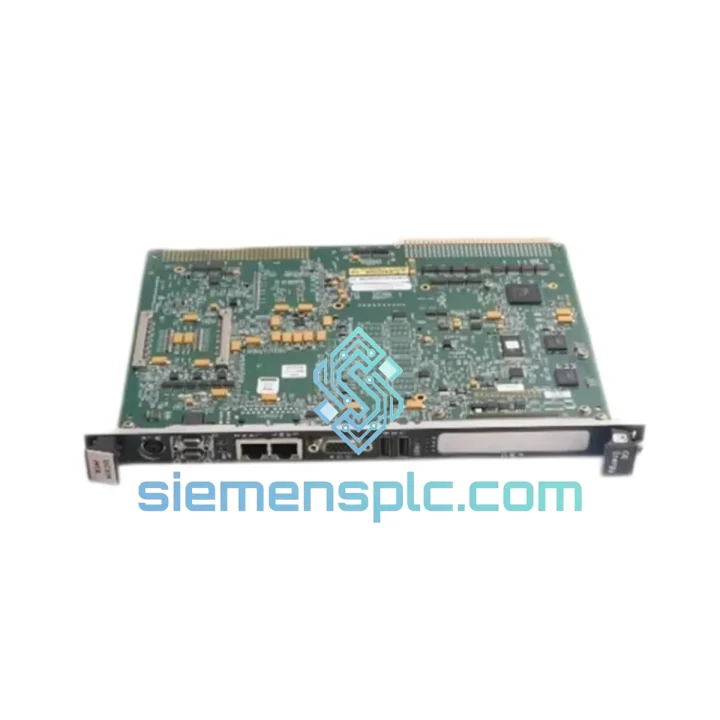
GE IS210MVRBH1A I/O Interface Board – Mark VIe Series
Mark VI
Origin US
I/O Interface Board
Request verified availability, condition, replacement risk review, packing options and courier lead time for IS210MACCH2A IS210MACCH2AKH.
Click Request Quote and the part number is inserted into the inquiry form automatically.
Core fields for model confirmation and RFQ routing. Detailed product narrative remains below.
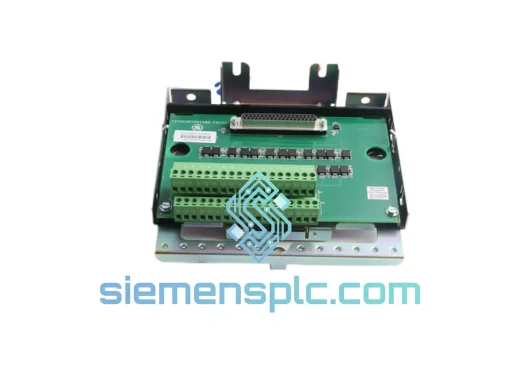
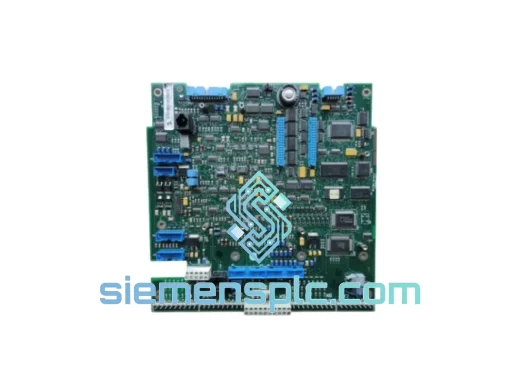
The GE IS210MACCH2A is a dedicated I/O interface board engineered for deployment within General Electric’s Mark VI Speedtronic Turbine Control System. Occupying the MACC (Machine Analog and Contact Controller) slot within the Mark VI I/O rack, this module functions as the primary signal conditioning and acquisition layer between field instrumentation and the Mark VI controller core. Its role is not peripheral — it sits directly in the deterministic control loop, processing thermocouple inputs, RTD signals, 4–20 mA analog loops, and discrete contact closures that govern turbine sequencing, protection, and governor response.
In a Mark VI architecture, the MACC board handles signal multiplexing and analog-to-digital conversion before data is transferred across the VME-based backplane to the VCMI (VME Communications and Memory Interface) card. Latency in this acquisition chain directly affects the control system’s ability to respond to transient events — compressor surge, flame-out detection, or overspeed conditions. The IS210MACCH2A is designed to maintain sub-millisecond acquisition cycles under continuous industrial load, ensuring that the controller’s 10 ms scan cycle receives fully conditioned, validated data on every pass.
Real-time Stock & RFQ: [email protected] | WhatsApp: +86 18359268345
| Parameter | Specification |
|---|---|
| Part Number | IS210MACCH2A / IS210MACCH2AKH |
| Manufacturer | General Electric (GE Energy) |
| Series | Mark VI Speedtronic Turbine Control |
| Module Classification | MACC — Machine Analog & Contact Controller I/O Board |
| Form Factor | Single-slot PCB card, Mark VI I/O rack compatible |
| Analog Input Channels | Thermocouple (J/K/T/E type), RTD (Pt100/Pt1000), 4–20 mA current loop |
| Discrete I/O | Dry contact inputs and relay-driven discrete outputs |
| A/D Resolution | 16-bit analog-to-digital conversion |
| Backplane Interface | VME bus — compatible with Mark VI VCMI/VCCC architecture |
| Operating Voltage | +5 VDC / ±15 VDC via backplane power rail |
| Operating Temperature | 0°C to +60°C (control cabinet ambient) |
| Storage Temperature | -40°C to +85°C |
| Humidity | 5% to 95% RH, non-condensing |
| EMC Compliance | Designed to IEC 61000-4 series immunity levels for industrial environments |
| Weight | Approx. 240 g |
| Warranty | 12 months from date of shipment |
The IS210MACCH2A implements a multi-stage signal conditioning chain that begins at the field terminal block and terminates at the VME backplane data bus. Each analog input channel passes through a passive RC low-pass filter stage (typically 10 Hz cutoff) before reaching the instrumentation amplifier. This filter stage attenuates high-frequency conducted noise — a persistent issue in turbine enclosures where variable-frequency drives, ignition transformers, and high-current bus bars generate broadband EMI in the 1–100 kHz range.
Following the filter stage, the instrumentation amplifier provides differential input sensing with a common-mode rejection ratio (CMRR) exceeding 80 dB at 50/60 Hz. This is critical in power plant environments where ground potential differences between field instruments and the control cabinet can reach several volts. The differential architecture ensures that common-mode interference — induced by parallel cable runs or shared conduit with power wiring — is rejected before the signal reaches the ADC.
The 16-bit successive-approximation ADC samples each channel in a round-robin multiplexed sequence. At the Mark VI’s 10 ms control cycle, the MACC board must complete a full scan of all active channels and transfer the results to the VCMI card within the allocated time slot. The board’s onboard microcontroller manages this sequencing autonomously, offloading the scan burden from the main controller CPU and ensuring deterministic data delivery regardless of channel count.
For discrete I/O, the board uses optocoupler isolation on all digital input channels. The optocoupler barrier provides galvanic isolation rated at 1500 VAC between field wiring and the logic-level circuitry, protecting the backplane from voltage transients generated by inductive field devices — solenoid valves, motor contactors, and relay coils. Output channels use solid-state relay drivers with snubber networks to suppress switching transients.
The board’s PCB layout follows IEC 61000-4-2 (ESD) and IEC 61000-4-4 (EFT/Burst) design guidelines: ground planes are continuous beneath analog signal traces, high-impedance nodes are guarded with driven shields, and decoupling capacitors are placed within 2 mm of each IC power pin. These layout disciplines, combined with the board’s metal faceplate and rack-mount grounding, contribute to the module’s measured immunity to radiated and conducted disturbances in the turbine control cabinet environment.
Every IS210MACCH2A unit dispatched from our Xiamen, China facility undergoes a structured pre-shipment verification process. Boards are powered on a Mark VI-compatible test bench, and each analog channel is stimulated with calibrated reference signals across the full input range. ADC linearity, channel-to-channel crosstalk, and discrete I/O switching are verified against GE’s published acceptance criteria. Units that do not meet specification are quarantined and not offered for sale.
Packaging follows IEC 61340-5-1 electrostatic discharge protection requirements: each board is sealed in a conductive poly bag, placed in anti-static foam, and shipped in a double-wall corrugated carton. For international shipments, cartons are labeled with HS Code 8537.10 and accompanied by a commercial invoice, packing list, and certificate of conformance. Export documentation is prepared in compliance with Chinese customs regulations and the destination country’s import requirements.
Logistics from Xiamen to major industrial hubs: DHL Express to Europe (3–5 business days), FedEx International Priority to North America (4–6 business days), and regional freight forwarding to Southeast Asia and the Middle East (5–10 business days). For urgent turbine outage scenarios, same-day dispatch is available for orders confirmed before 14:00 CST. All shipments are tracked end-to-end, with tracking numbers provided within 24 hours of dispatch.
A 12-month warranty covers all units against manufacturing defects and functional failure under normal operating conditions. Warranty claims are processed with a replacement-first policy — a replacement unit is dispatched before the defective board is returned, minimizing downtime for the customer’s facility.
Email: [email protected]
WhatsApp: +86 18359268345
Web: siemensplc.com
Location: Xiamen, China
© 2026 siemensplc.com. All rights reserved.
We check the full part number, brand, series and visible nameplate information before quotation.
Sales confirms stock path, condition option, quantity and realistic lead time for export dispatch.
DHL, FedEx, UPS or buyer courier arrangements can be reviewed with packing requirements.
Similar brand or category products for fast comparison and multi-item RFQ lists.