ABB
In Stock OK
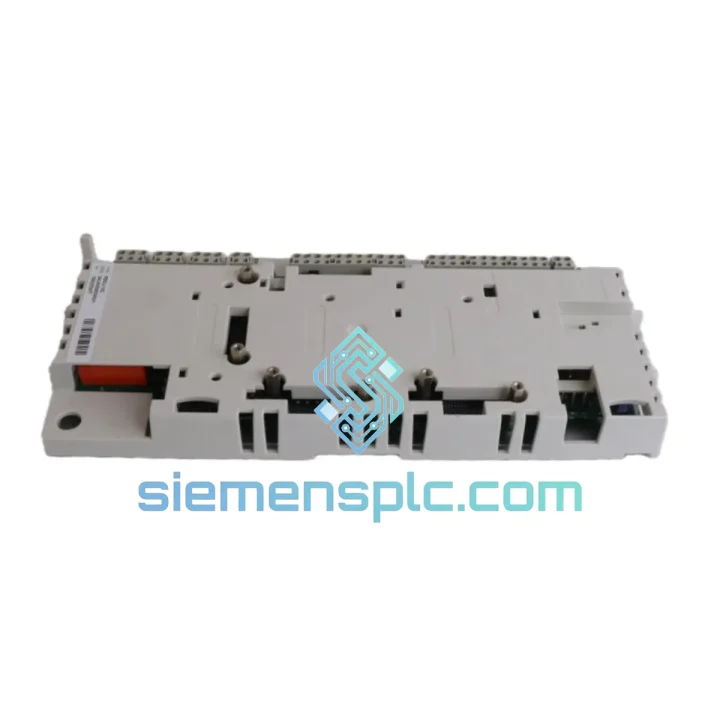
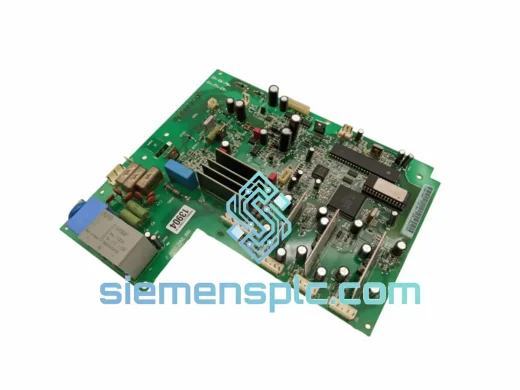
ABB RDCU-12 3AUA0000036521 Drive Control Unit
Request verified availability, condition, replacement risk review, packing options and courier lead time for RDCU-12.
BrandABB
Part NumberRDCU-12
ConditionAvailability Check
Lead TimeRFQ Confirmation
DocumentsDatasheet / photos by RFQ
ShippingExport packing available
Auto-filled RFQ
RDCU-12
Click Request Quote and the part number is inserted into the inquiry form automatically.
- Reply by email: [email protected]
- WhatsApp / Tel: +86 18359268345
- Mon-Sat 9:00-18:00 GMT+8
Procurement Data
Key Product Information
Core fields for model confirmation and RFQ routing. Detailed product narrative remains below.
- Brand
- ABB
- Primary Part Number
- RDCU-12
- Product Type
- Drive Control Unit
- Series / Family
- S800
- Country of Origin
- SE
- Catalog Category
- Industrial Automation Spares
Model confirmed for inquiry
RDCU-12
Send quantity, destination and urgency. The RFQ form keeps this part number attached.
Request Quote
Product Overview
ABB RDCU-12 (3AUA0000036521): Stop the Clock on Your ACS800 Downtime
Every minute your ACS800 drive sits dead, the losses compound — halted conveyor lines, stalled compressors, missed production targets, and maintenance crews standing by at overtime rates. The RDCU-12 control board is the single most common failure point in the ACS800 platform, and it is also the fastest path back to full operation. We stock it. We ship it today. From Xiamen to your plant floor, the clock is already running in your favor.
The ABB RDCU-12 (factory part number 3AUA0000036521) is the main intelligence board of the ACS800 variable frequency drive family. It carries the DSP that executes ABB’s Direct Torque Control algorithm, manages all I/O, handles fieldbus communication via the RDCO adapter slot, and maintains the fiber-optic DDCS link to the power section. When this board fails, the drive fails — no fault codes, no soft errors, just a dead unit. Replacing it correctly and quickly is the only play.
URGENT REQUIREMENT? Contact: [email protected] | WhatsApp: +86 18359268345
Quick Technical Datasheet
| Parameter | Specification | Status |
|---|---|---|
| Part Number | RDCU-12 / 3AUA0000036521 | ✔ Ready to Ship |
| Brand | ABB Ltd. | |
| Series Compatibility | ACS800-01, -02, -04, -07, -11, -17, -31 | |
| Board Function | Main Drive Control Unit (DCU) | |
| Control Algorithm | ABB Direct Torque Control (DTC), 40 µs cycle | |
| Fieldbus Interface | DDCS fiber-optic CH0–CH3; RDCO adapter slot | |
| Digital Inputs | 6 × DI (programmable logic) | |
| Digital Outputs | 3 × DO relay | |
| Analog Inputs | 2 × AI (±10 V / 0–20 mA selectable) | |
| Analog Outputs | 2 × AO (0–20 mA) | |
| Encoder Support | TTL incremental via RTAC/RTAC-01 module | |
| Memory | Flash (firmware + parameter storage) | |
| Operating Temperature | 0 °C to +55 °C | |
| Storage Temperature | −40 °C to +70 °C | |
| Humidity | 5–95% RH, non-condensing | |
| Weight | ~600 g | |
| Certifications | CE, UL, cUL (as part of ACS800 system) | |
| Origin | Finland | |
| Dispatch Location | Xiamen, China | ✔ Same-Day Dispatch Available |
Troubleshooting & Replacement Tips
Identifying RDCU-12 failure vs. other ACS800 faults: Before pulling the board, rule out the obvious. A dead RDCU-12 typically presents as a completely unresponsive drive — no panel display, no fault code, no response to start commands. If you are seeing fault codes (F-xxx or A-xxx), the RDCU-12 is likely still alive and the fault is elsewhere. True RDCU-12 failures often follow a power surge, capacitor bank failure on the APOW board, or a fiber-optic cable short that back-fed voltage into the CH0 port.
Pre-replacement checklist:
- Back up all drive parameters using CDP312R panel (Parameter → Backup) or ABB DriveWindow before powering down. The RDCU-12 holds parameters in flash — a new board ships with factory defaults.
- Record the firmware version from the existing board label or panel display (Menu → Parameters → Group 33). The replacement board must run compatible firmware. Mismatched firmware between RDCU-12 and AINT board versions causes immediate fault F-0022 on startup.
- Photograph the RDCO fieldbus adapter and fiber-optic cable routing before disconnection. CH0 and CH1 fiber connectors are easy to swap — wrong assignment causes loss of panel communication or fieldbus dropout.
- Check the RDCO adapter type installed (RPBA-01 for PROFIBUS, RCAN-01 for CANopen, etc.). The adapter transfers to the new RDCU-12 directly — no reconfiguration needed if the board revision matches.
Replacement procedure (field-tested sequence):
- Isolate and lock out the ACS800. Verify DC bus discharge — minimum 5 minutes after power-off, confirm <50 V DC on bus terminals with a calibrated meter before touching any board.
- Disconnect fiber-optic cables from CH0–CH3 in labeled sequence. Protect fiber ends with caps — contaminated fiber faces cause intermittent DDCS faults post-reinstallation.
- Remove the RDCO adapter (two screws, lift straight up). Set aside — it goes directly onto the new board.
- Release the RDCU-12 board retaining clips (two points, top and bottom). Slide the board out of the guide rails — do not flex the PCB.
- Install the new RDCU-12 into the guide rails, seat firmly until both retaining clips engage. Reinstall RDCO adapter. Reconnect fiber-optic cables in original sequence.
- Power up. The drive will display factory defaults. Restore parameter backup via panel or DriveWindow. Perform motor ID run (Parameter 99.10 = ID RUN STANDARD) if motor data has changed or was not previously stored.
- Verify fieldbus communication by checking Parameter Group 51 (RDCO configuration) and confirming the PLC/DCS is receiving drive status word correctly before releasing to production.
Common fault codes linked to RDCU-12 degradation:
- F-0001 (Overcurrent): Can be RDCU-12 DTC model corruption — check if fault clears after parameter restore.
- F-0009 (DC Overvoltage) recurring without load change: Suspect RDCU-12 DC bus measurement circuit drift.
- F-0022 (DDCS Communication Loss): Fiber cable first, then RDCU-12 CH0 port integrity.
- A-0006 (Communication Warning): RDCO adapter seating issue or RDCU-12 fieldbus processor fault — reseat adapter before condemning the board.
- Panel blank, no fault logged: RDCU-12 power supply rail failure — check APOW board output voltages first (±15 V, +5 V), then replace RDCU-12 if rails are confirmed good.
Reliability in Harsh Conditions
The RDCU-12 was engineered for environments that would destroy consumer-grade electronics in weeks. ABB designed the ACS800 control board to operate continuously in the conditions that define heavy industry — not the clean rooms of IT infrastructure, but the mill floors, offshore platforms, and chemical plants where temperature swings, vibration, and airborne contaminants are daily realities.
The board’s conformal coating protects the PCB and component leads against humidity ingress and condensation cycles — critical in coastal industrial facilities and tropical climates where relative humidity regularly exceeds 80%. The fiber-optic DDCS communication architecture eliminates the ground loop interference and EMI coupling that plague copper-based control wiring in high-power drive environments. When a 690 V, 500 kW drive is switching IGBTs at several kilohertz, the noise environment is severe — the RDCU-12’s optical isolation keeps the control logic clean regardless.
Mechanical robustness is built into the board mounting system. The guide-rail and clip retention design prevents vibration-induced connector fretting — a failure mode that plagues drives mounted on compressor skids or near heavy stamping presses. Operating temperature range of 0 °C to +55 °C covers the vast majority of industrial enclosure environments, and the −40 °C storage rating means boards can be warehoused in unheated facilities without risk of cold-soak damage to capacitors or solder joints.
Units we supply are inspected for physical integrity — no cracked solder joints, no swollen capacitors, no burned traces, no corroded connector pins. ESD handling protocols are enforced throughout our warehouse process. Every board ships in a properly grounded anti-static bag inside a foam-lined carton rated for international air freight handling.
Global Express Logistics
Our dispatch hub is in Xiamen, China — a major international freight gateway with daily DHL Express and FedEx International Priority departures. When you confirm an order before 14:00 CST, same-day dispatch is standard. Here is what the logistics chain looks like from your order to your receiving dock:
- Order confirmation: Stock verified, unit pulled and inspected, export documentation prepared (commercial invoice, packing list, certificate of origin).
- Packaging: Anti-static bag → foam insert → double-wall carton → fragile/ESD labels applied. Gross weight typically 1.2–1.5 kg for RDCU-12.
- Customs declaration: HS Code 8537.10 (boards for industrial control), declared as new or refurbished industrial spare part. We handle all export paperwork — you handle import clearance at your end (we provide all supporting documents).
- Carrier options: DHL Express Worldwide (2–4 business days to Europe/Americas), FedEx International Priority (2–3 business days), UPS Worldwide Express (3–5 business days). Tracking number provided within 2 hours of dispatch.
- Delivery confirmation: Signature-required delivery to your specified address. We monitor shipments and proactively flag any customs holds or routing exceptions.
- Emergency freight: For critical shutdowns requiring next-flight-out service, contact us directly on WhatsApp — we can arrange charter courier for time-critical situations.
We have shipped ABB spare parts to manufacturing facilities across Germany, the Netherlands, the United States, Australia, India, Brazil, and Southeast Asia. Customs documentation is prepared to the standard required by each destination country’s import authority. If your facility requires specific documentation formats (e.g., EUR.1 movement certificate, CITES exemption, or specific country-of-origin declarations), advise us at order placement.
Contact Information
For stock confirmation, technical questions, or urgent procurement — reach us directly:
- Email: [email protected]
- WhatsApp: +86 18359268345
- Web: siemensplc.com
© 2026 siemensplc.com. All rights reserved.
Ready to quote
[email protected]
Send This Part Number to Sales
RFQ workflow
Quality workflow ->
Confirmation Process
01Model confirmation
We check the full part number, brand, series and visible nameplate information before quotation.
02Availability reply
Sales confirms stock path, condition option, quantity and realistic lead time for export dispatch.
03Packing & courier
DHL, FedEx, UPS or buyer courier arrangements can be reviewed with packing requirements.
Continue sourcing
Browse full catalog ->
Related Automation Parts
Similar brand or category products for fast comparison and multi-item RFQ lists.
ABB
RFQ Ready
ABB SNAT-7120 SNAZ7120J Drive Control Module – ACS/DCS Series
S800
Origin SE
Drive Control Module