Siemens PLC sourcing desk · Multi-brand automation spares [email protected] +86 18359268345
ABB In Stock OK

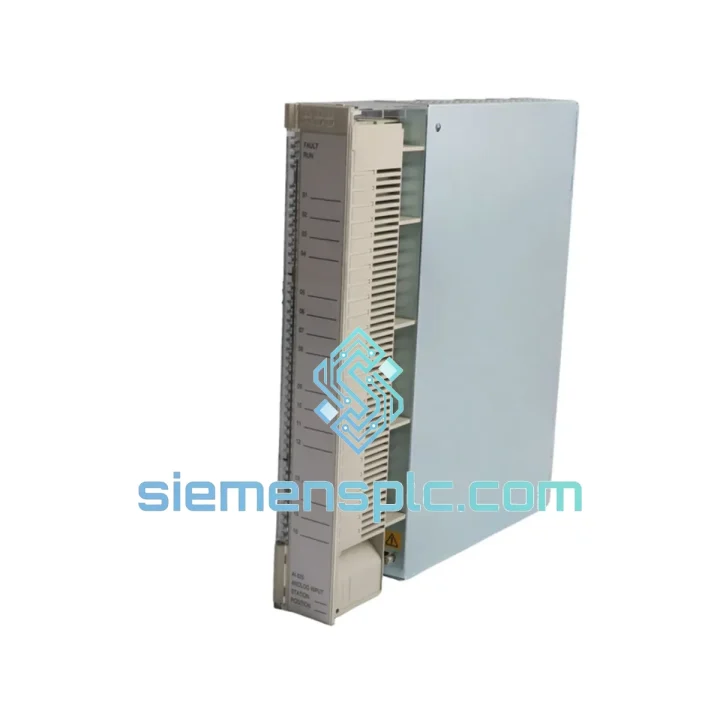
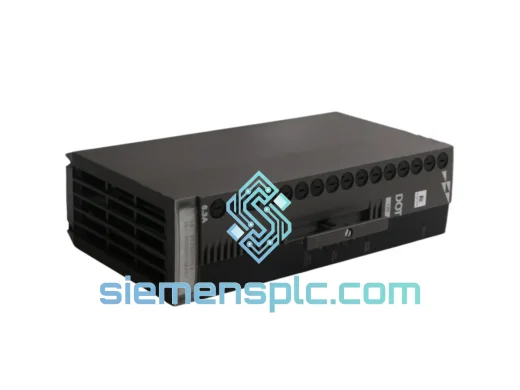
ABB AI625 3BHT300036R1 Analog Input Module

Request verified availability, condition, replacement risk review, packing options and courier lead time for AI625 3BHT300036R1.

Exact partAI625 3BHT300036R1 RFQ auto-fillPart number attached Export packingDHL / FedEx / UPS Sales replyEmail or WhatsApp
BrandABB Part NumberAI625 3BHT300036R1 ConditionAvailability Check Lead TimeRFQ Confirmation DocumentsDatasheet / photos by RFQ ShippingExport packing available
Auto-filled RFQ AI625 3BHT300036R1

Click Request Quote and the part number is inserted into the inquiry form automatically.

Procurement Data

Key Product Information

Core fields for model confirmation and RFQ routing. Detailed product narrative remains below.

Brand
ABB
Primary Part Number
AI625 3BHT300036R1
Product Type
Analog Input Module
Series / Family
AC500
Country of Origin
SE
Catalog Category
I/O Modules
Operating Temp.
−25 °C to +60 °C
Model confirmed for inquiry AI625 3BHT300036R1 Send quantity, destination and urgency. The RFQ form keeps this part number attached.
Request Quote
Product Overview

ABB AI625 3BHT300036R1 — Stop the Clock on Your Downtime, Ship Today

Your line is down. Every minute the AC500 rack sits dark costs you money — scrap, missed throughput, penalty clauses. The AI625 (3BHT300036R1) is the 8-channel analog input module that sits between your field transmitters and your CPU, and when it fails, nothing moves. We stock it. We ship it today from Xiamen via DHL Express. Most destinations in Asia receive it within 24–48 hours; Europe and North America within 3–5 business days. That is the only number that matters right now.

URGENT REQUIREMENT? Contact: [email protected] | WhatsApp: +86 18359268345

Quick Technical Datasheet

Parameter Specification
Part Number AI625 / 3BHT300036R1
Platform ABB AC500 PLC
Module Type Analog Input
Channels 8 (individually configurable)
Input Ranges 0–10 V, ±10 V, 0–20 mA, 4–20 mA
Resolution 16-bit
Conversion Time ≤ 1 ms per channel
Isolation Channel-to-channel + channel-to-bus
Supply Voltage 24 V DC (via CPU or expansion bus)
Operating Temperature −25 °C to +60 °C
Protection Rating IP20
Certifications CE, UL, cUL, ATEX Zone 2
Country of Origin Germany
Stock Status ✅ Ready to Ship — Xiamen Warehouse

Troubleshooting & Replacement Tips

After 10 years pulling failed modules off live racks, here is what actually goes wrong with the AI625 and what to watch when you swap it out.

Most Common Failure Modes

  • Channel drift / frozen reading: Usually a failed input multiplexer IC or a cracked SMD capacitor on the signal conditioning stage. Symptom: one or two channels read a fixed value regardless of field signal. Confirm by swapping a known-good transmitter to the suspect channel. If the reading stays frozen, the module is dead — replace it.
  • ERR LED solid red on power-up: Firmware mismatch between the AI625 and the CPU. This happens when a spare module from a different firmware batch is installed. Check the CPU firmware version in Automation Builder (Help → About) and compare against the module’s label. If the CPU is running firmware below V2.3, the AI625 will not initialize.
  • Intermittent channel noise / spikes: Almost always a grounding issue at the terminal base (TB521). Check that the shield terminal on the TB521 is bonded to the cabinet PE rail with a short, low-impedance conductor. A 10 Ω ground loop will corrupt 16-bit readings at the LSB level — invisible on a trend but lethal to a PID loop.
  • Module not recognized by CPU (no I/O address assigned): The AC500 uses automatic slot addressing — the CPU scans the I/O bus on power-up and assigns addresses sequentially. If the AI625 does not appear in the I/O tree after a cold start, reseat the module on the TB521 and cycle power. If it still does not appear, check the bus connector pins on the terminal base for bent contacts.

Step-by-Step Hot-Swap Replacement Procedure

  1. In Automation Builder, set the CPU to STOP mode. Do not power down the rack — the AC500 supports module replacement under power if the CPU is in STOP.
  2. Note the channel configuration (signal type per channel) from the existing project. Screenshot the AI625 configuration dialog before pulling the module.
  3. Press the release lever on the TB521 terminal base and slide the AI625 out. The field wiring stays on the TB521 — no rewiring required.
  4. Slide the new AI625 into the TB521 until it clicks. The bus connector is keyed — it cannot be inserted backwards.
  5. Set the CPU back to RUN. The AC500 will auto-detect the new module and apply the stored configuration from the project. No manual address assignment or DIP switch setting is required on this module.
  6. Verify all 8 channels in the Automation Builder online monitor. Compare live readings against your field transmitter values. Allow 30 seconds for the ADC to stabilize after power-up.
  7. Check the ERR LED. Green = healthy. If it stays red, connect Automation Builder and read the diagnostic buffer — the fault code will tell you exactly what is wrong.

Configuration Notes

  • The AI625 has no DIP switches or rotary address selectors. All configuration is done in software via Automation Builder — channel signal type, filter time constant, and wire-break detection are all set per channel in the module properties dialog.
  • Wire-break detection only works in 4–20 mA mode. If you are using 0–20 mA or voltage inputs, a broken wire will read as 0 — not as a fault. Design your application logic accordingly.
  • If you are replacing an AI625 with an AI625-XC (extended temperature variant, 3BHT300036R2), the firmware and configuration are identical. The swap is transparent to the CPU.

Reliability in Harsh Conditions

The AI625 is not a lab instrument. It is built for the floor — cement dust, coolant mist, 50 °C cabinet interiors, and the kind of vibration that loosens terminal screws over a weekend. ABB designed the AC500 I/O series to IEC 61131-2 environmental requirements, and the AI625 carries that through in every layer of its construction.

The PCB is conformally coated to resist condensation and airborne contaminants — a detail that matters in coastal plants and food processing facilities where humidity swings are routine. The housing is a glass-fiber reinforced polycarbonate that does not crack under the thermal cycling that destroys cheaper enclosures. Vibration resistance is rated to IEC 60068-2-6: 10–57 Hz at 0.075 mm displacement, 57–150 Hz at 1 g. That covers most industrial machinery including compressors, presses, and conveyor drives mounted in the same cabinet.

The internal power supply filtering is designed to reject the kind of high-frequency noise that variable-frequency drives inject into 24 V DC bus rails. In plants where VFDs and analog I/O share the same cabinet, this is not a minor detail — it is the difference between a stable 4–20 mA reading and a channel that oscillates ±200 counts at 50 Hz. The AI625 handles it without external filtering in the vast majority of installations.

ATEX Zone 2 certification means the module can be installed in control panels located in areas where explosive atmospheres may occasionally be present — relevant for oil and gas, chemical, and solvent-handling facilities. The certification is on the module itself, not just the housing, which simplifies the documentation burden for hazardous area installations.

Global Express Logistics

We ship from our Xiamen warehouse, which gives us direct access to Xiamen Gaoqi International Airport — one of the highest-throughput cargo hubs in southern China. That matters when you need a module on a plane today, not queued at an inland freight hub.

Standard Express Routing:

  • Asia-Pacific (Japan, South Korea, Singapore, Australia): DHL Express or FedEx International Priority — 1–3 business days door to door.
  • Europe (Germany, Netherlands, UK, Poland): DHL Express — 3–5 business days. We pre-fill all customs documentation including commercial invoice, packing list, and HS code declaration to prevent clearance delays.
  • North America (USA, Canada, Mexico): FedEx International Priority — 3–5 business days. We have experience with FDA and CBP import requirements for industrial electronics.
  • Middle East (UAE, Saudi Arabia, Qatar): DHL Express — 2–4 business days. We handle all re-export documentation for modules shipped through free trade zones.
  • South America (Brazil, Chile, Colombia): FedEx or DHL — 5–7 business days. We advise on import duty classification to minimize clearance time at Brazilian Receita Federal.

Every shipment includes a tracking number sent within 2 hours of dispatch, a commercial invoice with accurate declared value, and a packing list with module serial numbers. For urgent orders, we can provide a pre-alert to your customs broker before the shipment departs Xiamen. If your plant has a preferred carrier account, we can ship on your account number — just provide it at the time of order.

For orders placed before 14:00 CST, same-day dispatch is standard. We do not batch shipments — each order goes out individually so your module is not waiting for another customer’s freight to consolidate.

Contact Information

📧 Email: [email protected]
📱 WhatsApp: +86 18359268345
🌐 Web: siemensplc.com

© 2026 siemensplc.com. All rights reserved.

Ready to quote

Send This Part Number to Sales

[email protected]
RFQ workflow

Confirmation Process

Quality workflow ->
01Model confirmation

We check the full part number, brand, series and visible nameplate information before quotation.

02Availability reply

Sales confirms stock path, condition option, quantity and realistic lead time for export dispatch.

03Packing & courier

DHL, FedEx, UPS or buyer courier arrangements can be reviewed with packing requirements.