ABB
RFQ Ready
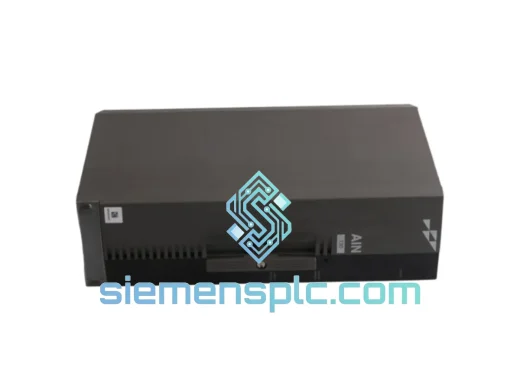
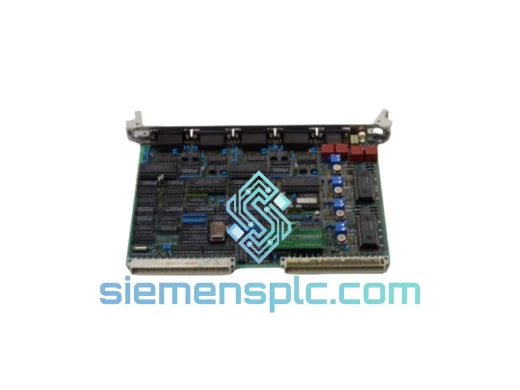
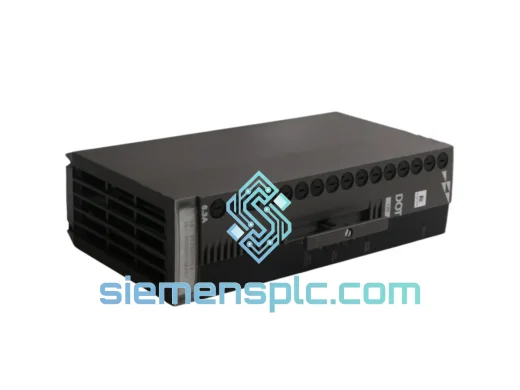
ABB P-HB-DOT-12010000 Safety Digital Output Module – AC500-S
AC500
Origin SE
Safety Digital Output Module
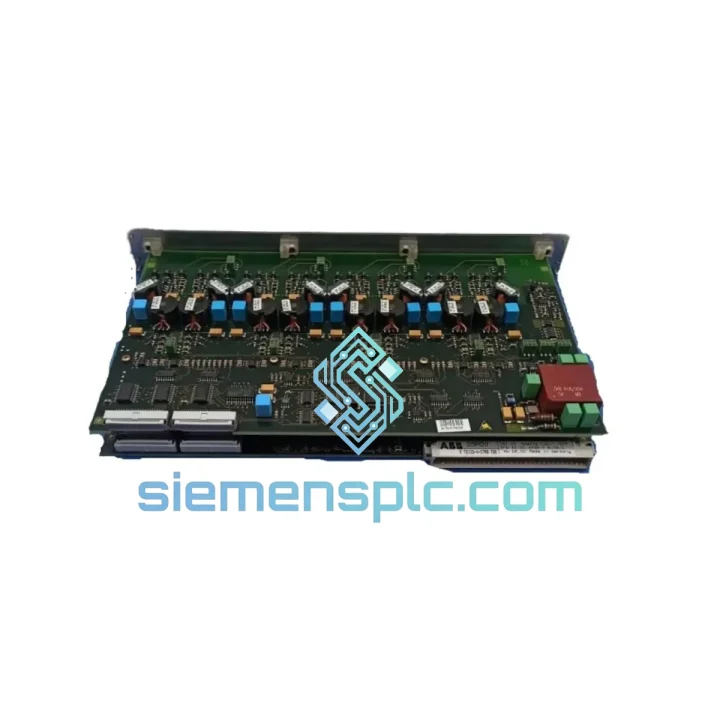
Request verified availability, condition, replacement risk review, packing options and courier lead time for CAI10.
Click Request Quote and the part number is inserted into the inquiry form automatically.
Core fields for model confirmation and RFQ routing. Detailed product narrative remains below.
The ABB CAI10 is an 8-channel analog input module designed for integration within the AC500 S500 distributed I/O platform. Its primary function within a control loop is to convert field-level analog signals — sourced from transmitters, sensors, and transducers — into digital values that the AC500 CPU can process within its scan cycle. Each of the eight channels operates independently, accepting either current-loop signals (4–20 mA, 0–20 mA) or voltage signals (0–10 V, ±10 V), with channel-by-channel mode selection performed in software via ABB Automation Builder. The module resolves each input to 12-bit precision (0–4095 counts), yielding a theoretical resolution of approximately 4.88 µA per count on a 4–20 mA loop — sufficient for the majority of process variable measurements in flow, pressure, temperature, and level applications.
Within the S500 I/O bus architecture, the CAI10 communicates with the AC500 CPU over a proprietary parallel backplane bus. This bus transfers I/O data synchronously with the CPU scan cycle, ensuring that analog values presented to the application program reflect the physical state of the field at a deterministic point in time. The conversion time per channel is ≤ 10 ms, meaning that for a fully populated 8-channel module, all channels complete conversion within one standard 80 ms window — well within the update rate requirements of most process control applications. The module draws its operating power directly from the S500 terminal base (TB521 or TB523), eliminating the need for a separate field-side power supply for the measurement circuitry itself.
Real-time Stock & RFQ: [email protected] | WhatsApp: +86 18359268345
| Part Number / SKU | CAI10 |
| Brand | ABB |
| Series | AC500 / S500 I/O |
| Number of Channels | 8 analog inputs (individually configurable) |
| Input Signal Ranges | 4–20 mA, 0–20 mA, 0–10 V, ±10 V |
| Resolution | 12-bit (0–4095 counts) |
| Conversion Time | ≤ 10 ms per channel |
| Input Impedance (Voltage Mode) | > 100 kΩ |
| Input Impedance (Current Mode) | ≤ 250 Ω (shunt resistor) |
| Supply Voltage | 24 V DC via S500 backplane bus |
| Operating Temperature | −25 °C to +60 °C |
| Storage Temperature | −40 °C to +70 °C |
| Protection Rating | IP20 |
| Mounting | S500 I/O terminal base TB521 / TB523 (DIN rail) |
| Module Width | 35 mm |
| Weight | 240 g |
| Compatible CPUs | PM571, PM572, PM581, PM582, PM591, PM592, PM595 |
| HS Code | 8537.10.90 |
| Origin | Germany |
| Warranty | 12 months from date of dispatch |
| Certifications | CE, UL 508, IEC 61131-2, RoHS |
The CAI10’s input stage employs a differential measurement topology on each channel. Rather than referencing each input signal to a common analog ground, the differential front-end measures the voltage or current between two dedicated terminals per channel. This architecture provides common-mode rejection — the module attenuates noise signals that appear equally on both conductors of a twisted-pair cable run. In industrial environments where 4–20 mA loops share cable trays with motor drive cabling, this rejection characteristic is not incidental; it is the primary mechanism that maintains measurement accuracy over cable runs exceeding 100 m.
The analog-to-digital conversion chain uses a successive approximation register (SAR) ADC architecture. SAR converters are well-suited to this application class because they offer a fixed, predictable conversion time — a property that matters when the CPU scan cycle must account for I/O update latency in its timing budget. Unlike sigma-delta converters, which trade conversion speed for resolution, the SAR approach in the CAI10 delivers 12-bit results within the ≤ 10 ms window without requiring oversampling or decimation filters that would introduce variable group delay.
EMC compliance is achieved through a combination of hardware filtering and PCB layout discipline. Each analog input channel incorporates an RC low-pass filter at the terminal interface, attenuating high-frequency conducted interference before it reaches the ADC input. The module’s PCB separates the analog signal ground plane from the digital logic ground plane, with a single-point connection between them — a standard technique for preventing digital switching noise from coupling into the analog measurement path. The module meets IEC 61000-4-2 (ESD), IEC 61000-4-4 (EFT/burst), and IEC 61000-4-5 (surge) immunity levels, which are the three most common sources of measurement corruption in switchgear-dense control panels.
The S500 backplane bus interface on the CAI10 uses a parallel data transfer protocol with hardware handshaking. The CPU asserts a strobe signal to latch the converted values from the module’s output registers into the CPU’s process image table. This latch mechanism ensures that the CPU reads a consistent snapshot of all eight channels — values that were all valid at the same conversion cycle — rather than a mix of values from different conversion instants. For control applications where multiple analog inputs feed a single PID block, this temporal consistency is a prerequisite for correct derivative and integral calculations.
Every ABB CAI10 unit supplied by siemensplc.com is sourced through verified industrial distribution channels and carries full ABB factory authenticity. Prior to dispatch from our Xiamen, China warehouse, each module undergoes a structured pre-shipment inspection protocol: visual examination of housing integrity, connector pin condition, and label legibility; authenticity cross-check against ABB part number markings and date codes; power-on functional verification where test fixtures are available; and packaging in anti-static bags with humidity indicator cards inside double-wall corrugated cartons.
Xiamen’s geographic position — a major southeastern China port city with direct access to Xiamen Gaoqi International Airport and Xiamen Port — enables competitive transit times to destinations across Southeast Asia, the Middle East, Europe, and the Americas. Standard air freight from Xiamen to Singapore, Dubai, Frankfurt, and Los Angeles typically clears customs within 3–7 business days. For time-critical plant shutdowns or emergency replacements, expedited courier options (DHL Express, FedEx Priority) are available with next-flight-out booking on request.
Export documentation is prepared in compliance with Chinese customs regulations and destination-country import requirements. Available Incoterms include EXW (Xiamen), FOB (Xiamen Port), DAP, and DDP. HS Code 8537.10.90 is declared on all commercial invoices. Certificate of Conformity and test reports are available on request for quality-system documentation purposes. All units are covered by a 12-month warranty from the date of dispatch, covering manufacturing defects and premature failure under normal operating conditions.
Email: [email protected]
WhatsApp: +86 18359268345
Web: siemensplc.com
Location: Xiamen, China
© 2026 siemensplc.com. All rights reserved.
We check the full part number, brand, series and visible nameplate information before quotation.
Sales confirms stock path, condition option, quantity and realistic lead time for export dispatch.
DHL, FedEx, UPS or buyer courier arrangements can be reviewed with packing requirements.
Similar brand or category products for fast comparison and multi-item RFQ lists.