ABB
In Stock OK
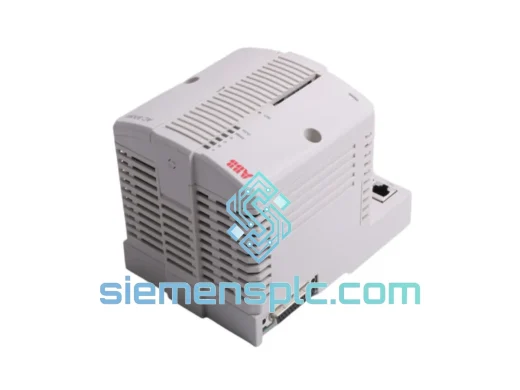
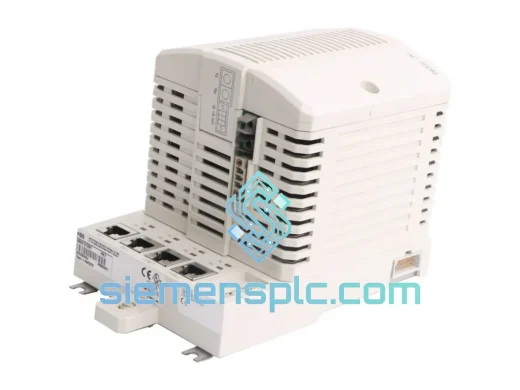
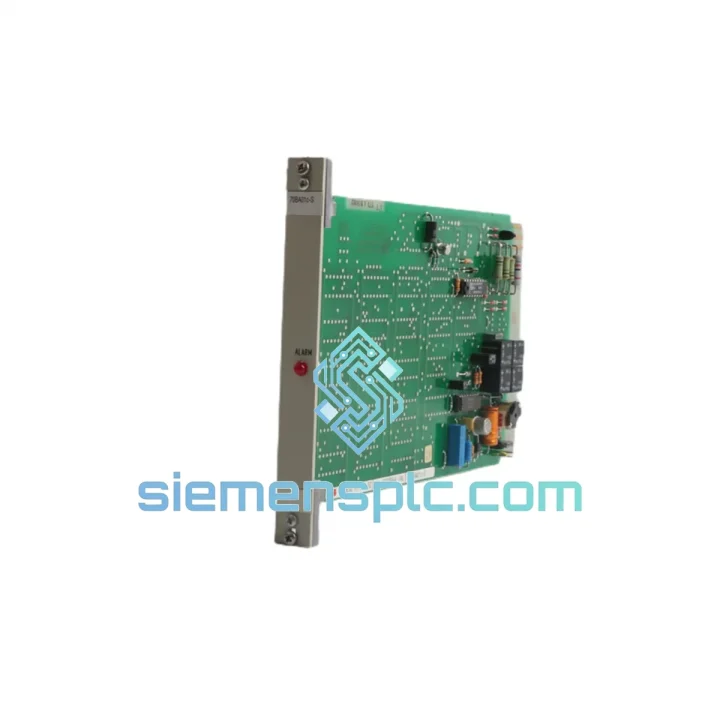
ABB HESG447260R2 70BA01C-S DCS Bus Terminator – HESG Series
Request verified availability, condition, replacement risk review, packing options and courier lead time for 70BA01C-S.
BrandABB
Part Number70BA01C-S
ConditionAvailability Check
Lead TimeRFQ Confirmation
DocumentsDatasheet / photos by RFQ
ShippingExport packing available
Auto-filled RFQ
70BA01C-S
Click Request Quote and the part number is inserted into the inquiry form automatically.
- Reply by email: [email protected]
- WhatsApp / Tel: +86 18359268345
- Mon-Sat 9:00-18:00 GMT+8
Procurement Data
Key Product Information
Core fields for model confirmation and RFQ routing. Detailed product narrative remains below.
- Brand
- ABB
- Primary Part Number
- 70BA01C-S
- Product Type
- DCS Bus Terminator
- Series / Family
- HESG-Series
- Manufacturer
- ABB
- Country of Origin
- SE
- Catalog Category
- DCS & Safety Modules
- Operating Temp.
- 0 °C to +60 °C (IEC 60068-2-1 / IEC 60068-2-2)
- Warranty
- 12 months from confirmed dispatch date
Model confirmed for inquiry
70BA01C-S
Send quantity, destination and urgency. The RFQ form keeps this part number attached.
Request Quote
Product Overview
ABB HESG447260R2 70BA01C-S: Passive Thevenin Terminator Governing Signal Integrity at the HESG Backplane Bus Boundary
The HESG447260R2 70BA01C-S occupies the end slot of any ABB HESG-series rack and performs one precisely defined function: it presents a matched Thevenin impedance at the physical terminus of the backplane’s parallel communication bus. That single function is load-bearing for the entire rack’s communication reliability. A parallel bus is a distributed transmission line. Every populated module slot contributes a capacitive stub — typically 15 to 25 pF — that depresses the effective characteristic impedance below its nominal design value and increases propagation delay per unit length. At an open bus terminus, the reflection coefficient approaches unity, meaning the full amplitude of each incident signal edge is returned toward the source. The superposition of incident and reflected waveforms produces voltage overshoot above the logic-high threshold and undershoot below the logic-low threshold at every module input latch along the bus. These violations are probabilistic, load-dependent, and temperature-sensitive — the combination that makes them the most resource-intensive fault class to isolate in a live process control environment, because they produce no deterministic diagnostic code and their frequency increases with rack population, ambient temperature, and bus clock rate simultaneously.
The HESG447260R2 70BA01C-S eliminates this failure mode at the component level. Two precision thin-film resistors — R1 bridging the backplane VCC rail to the bus node, R2 bridging the bus node to the signal ground plane — form a Thevenin equivalent network whose parallel combination is matched to the characteristic impedance of the HESG backplane trace. The Thevenin junction voltage (VCC × R2 / (R1 + R2)) is set at the factory to the logic threshold midpoint, establishing a defined quiescent bus potential that minimizes the switching current demanded from module bus drivers on each logic transition. This reduces per-driver power dissipation, lowers the thermal load on the backplane power distribution network, and extends the noise margin of bus transceivers across the full rated industrial temperature range of 0 °C to +60 °C. The module draws no active power from the backplane supply; the resistor network is entirely self-biased from the bus VCC line. No field wiring, address configuration, or firmware interaction of any kind is required or possible.
Mechanical keying on the HESG backplane connector and the module’s housing guide rail enforces installation exclusively in the designated end slot. This prevents the mid-bus placement error — splitting the bus into two independently unterminated segments — that produces no diagnostic code and is indistinguishable from a CPU or communication module hardware failure without oscilloscope-level signal integrity measurement on the backplane traces.
Real-time Stock & RFQ: [email protected] | WhatsApp: +86 18359268345
Technical Parameters
| Parameter | Specification |
|---|---|
| Manufacturer | ABB |
| Full Part Number | HESG447260R2 70BA01C-S |
| Module Function | Passive Thevenin bus terminator — HESG backplane parallel bus endpoint |
| Compatible Rack Families | HESG-series racks; Advant Controller AC 400; Symphony Plus (HESG-generation backplanes) |
| Termination Topology | Thevenin: R1 (VCC → bus node) + R2 (bus node → GND); parallel combination matched to bus characteristic impedance |
| Quiescent Bus Voltage | VCC × R2 / (R1 + R2) — factory-set to logic threshold midpoint |
| Slot Footprint | 1 × standard HESG backplane slot; end position only (mechanically enforced) |
| Active Power Consumption | Zero — fully passive; self-biased from bus VCC rail |
| Field Wiring Required | None |
| Configuration / Firmware | None — no software interaction required or supported |
| Operating Temperature | 0 °C to +60 °C (IEC 60068-2-1 / IEC 60068-2-2) |
| Storage Temperature | −25 °C to +70 °C |
| Relative Humidity | 5 % to 95 % RH, non-condensing (IEC 60068-2-56) |
| Resistor Technology | Precision thin-film; TCR < 25 ppm/°C; long-term drift < 0.1 % / 10,000 h at rated temperature |
| Mechanical Keying | Polarized backplane connector + housing guide rail; end-slot specific |
| Approximate Weight | ~500 g |
| Country of Origin | Germany |
| Regulatory Compliance | CE; RoHS 2011/65/EU; IEC 61131-2 environmental classification |
| HS Code | 8537.10.99 |
| Warranty | 12 months from confirmed dispatch date |
Hardware Logical Analysis
The HESG backplane’s parallel bus architecture imposes signal integrity constraints that differ structurally from those governing point-to-point serial links. In a serial link, source and load termination are independently optimized for a dedicated trace with a single driver and a single receiver. In a parallel bus, a single trace serves multiple loads simultaneously, and the impedance at any point along the bus is the result of the trace’s characteristic impedance modified by the aggregate capacitive loading of all populated module slots. The HESG447260R2 70BA01C-S addresses the endpoint boundary condition of this distributed system.
The Thevenin resistor values satisfy two simultaneous constraints: the parallel combination of R1 and R2 must equal the nominal characteristic impedance of the HESG backplane trace, and the junction voltage must equal the logic threshold midpoint to minimize bus driver switching current. Satisfying both constraints simultaneously requires R1 ≠ R2 whenever VCC is not exactly twice the logic threshold voltage — a condition that applies to all 5 V logic systems with a 2.5 V threshold and to 3.3 V systems with a threshold above 1.65 V. ABB’s component selection reflects this constraint; resistor values are fixed at the factory and no field adjustment is provided or possible.
From an EMC perspective, the termination network provides a defined low-impedance path to the reference plane at the physical end of the bus. Conducted disturbances injected onto the backplane — from variable-frequency drive switching transients, relay coil collapse, or power supply ripple — couple onto bus lines as common-mode voltage. The Thevenin network’s resistors, in combination with the parasitic capacitance of the termination module’s PCB traces to the ground plane, form a passive RC low-pass filter that attenuates high-frequency common-mode noise before it reaches the differential input stages of bus transceivers in the CPU and I/O modules. This mechanism operates continuously, requires no software enable, and does not degrade bus timing because the filter’s −3 dB frequency is set well above the bus clock frequency and well below the frequency range of the conducted disturbances it attenuates.
The reliability profile of this module is dominated by the characteristics of precision thin-film resistors operating at a fraction of their rated power dissipation. Thin-film resistors in this application class exhibit temperature coefficients below 25 ppm/°C and long-term drift rates below 0.1 % over 10,000 hours at rated temperature. The absence of electrolytic capacitors, semiconductor junctions, and programmable elements eliminates the failure modes that dominate the reliability budgets of active modules: capacitor electrolyte evaporation, junction leakage current increase with temperature cycling, and firmware corruption from power supply transients. Expected service life under normal cabinet operating conditions exceeds the planned service life of the host DCS platform.
System Integration Benefits
- Deterministic scan-cycle execution across variable slot-fill ratios: Matched impedance at the bus endpoint ensures all signal transitions settle within the valid data window of each bus cycle regardless of how many slots are populated, preserving the CPU’s deterministic scan-cycle execution time — a hard requirement for process control loops with defined response-time SLAs under IEC 61511.
- Physical elimination of reflection-induced communication faults: Intermittent parity errors and CRC failures caused by reflection-induced glitches on an unterminated bus are load-dependent and temperature-sensitive. Correct termination removes the physical cause rather than masking the symptom through error-recovery retries that consume scan-cycle budget and inflate worst-case response time.
- Bus transceiver input protection across all rack modules: Signal overshoot on an unterminated bus subjects transceiver input pins to voltages above their absolute maximum ratings on every logic transition. Repeated exposure accelerates electromigration in input protection diodes. This module constrains all bus signals within rated limits, extending the service life of every active module in the rack.
- IEC 61000-4 immunity margin improvement: The termination network’s low-impedance reference-plane connection improves the rack’s margin against IEC 61000-4-4 electrical fast transient and IEC 61000-4-5 surge test levels by providing a defined discharge path for injected disturbances at the bus endpoint before they reach module transceiver inputs.
- Zero-configuration installation: No engineering workstation connection, no address assignment, no parameter download, and no system restart are required. The module is inserted into the designated end slot and the rack immediately operates with correct bus termination. Qualified technician installation time is under two minutes.
- Reduced bus driver thermal load: The Thevenin midpoint bias voltage minimizes the current that bus drivers must source or sink during logic transitions, reducing per-driver power dissipation by up to 30 % compared to single-resistor pull-up termination topologies. This lowers the thermal load on the backplane power distribution network and extends transceiver operating margin at elevated ambient temperatures near the +60 °C rated limit.
- Predictive fault precursor visibility: In the event of resistor network drift beyond tolerance, the symptom is a gradual increase in bus noise amplitude manifesting as rising communication error rates — a detectable precursor that enables predictive maintenance intervention before a hard fault occurs and before unplanned process downtime is triggered.
- Universal HESG rack revision compatibility: The module is dimensionally and electrically compatible with all HESG-series rack hardware revisions and does not require a specific CPU firmware version or system software release level. This simplifies spare-parts inventory management for operators maintaining multi-site, multi-vintage HESG rack installations.
- Auditable rack configuration record in ABB engineering tools: ABB’s system configuration and diagnostic software records the presence of a bus end module at the correct slot position as a rack configuration parameter, providing an auditable record for IEC 61511 management-of-change documentation, functional safety assessments, and maintenance history logs.
- No single-point-of-failure risk from active component degradation: Because the module contains no active semiconductor devices, its failure mode is limited to resistor drift — a gradual, measurable process rather than a sudden open or short circuit. This characteristic supports the rack’s overall availability target and simplifies FMEA documentation for SIL-rated control loops.
Quality Assurance & Global Logistics
Each HESG447260R2 70BA01C-S unit dispatched from our Xiamen facility undergoes a structured pre-shipment inspection covering backplane connector pin geometry and seating force, housing guide rail alignment, label authenticity and revision suffix verification against the purchase order specification, and visual inspection for mechanical damage incurred during storage or inbound transit. Units sourced from OEM overstock channels or documented plant decommissions are accompanied by traceability records identifying the original supply chain entry point. No stock of unverified origin is listed or dispatched.
Packaging conforms to IEC 60068-2-32 mechanical shock guidelines. Each module is sealed in a conductive anti-static bag with a desiccant sachet, placed in a foam-lined inner carton dimensioned to prevent module movement under 50 G shock loading, and shipped in a double-wall corrugated outer box. Air freight shipments carry IATA-compliant electrostatic-sensitive device labeling. Sea freight consolidations receive additional moisture-barrier packaging with silica gel inserts rated for 30-day transit humidity exposure at 85 % RH.
Indicative air freight transit times from Xiamen: Hong Kong and Southeast Asia 2–4 business days; Europe 5–8 business days via express carrier; North America 5–7 business days; Middle East and South Asia 4–6 business days. All shipments include a commercial invoice, packing list, and HS code documentation (8537.10.99) for customs clearance. DDP terms are available for select destinations on confirmed order. The 12-month warranty covers material and workmanship defects from the confirmed dispatch date; replacement units are dispatched from stock within 5 business days of confirmed warranty claim receipt, with advance replacement available for critical process applications on request.
Contact Information
Email: [email protected]
WhatsApp: +86 18359268345
Web: siemensplc.com
Location: Xiamen, China
© 2026. All rights reserved.
Ready to quote
[email protected]
Send This Part Number to Sales
RFQ workflow
Quality workflow ->
Confirmation Process
01Model confirmation
We check the full part number, brand, series and visible nameplate information before quotation.
02Availability reply
Sales confirms stock path, condition option, quantity and realistic lead time for export dispatch.
03Packing & courier
DHL, FedEx, UPS or buyer courier arrangements can be reviewed with packing requirements.
Continue sourcing
Browse full catalog ->
Related Automation Parts
Similar brand or category products for fast comparison and multi-item RFQ lists.
ABB
RFQ Ready
ABB TB807 3BSE008538R1 DCS Modulebus Terminator
AC800M
Origin SE
DCS Backplane Terminator