ABB
RFQ Ready
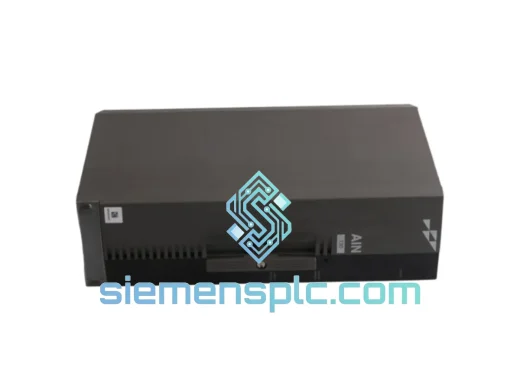
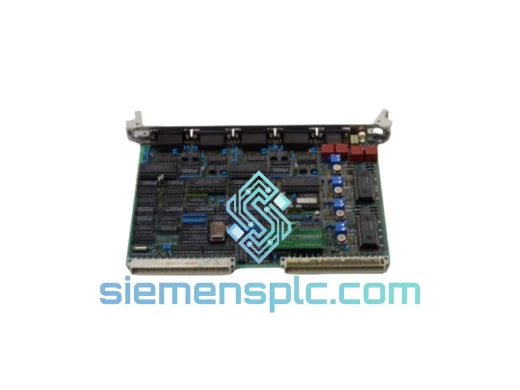
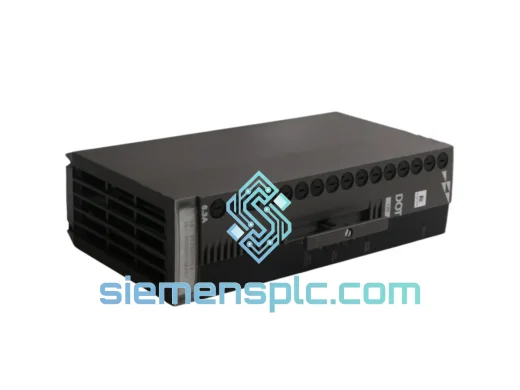
ABB P-HB-DOT-12010000 Safety Digital Output Module – AC500-S
AC500
Origin SE
Safety Digital Output Module
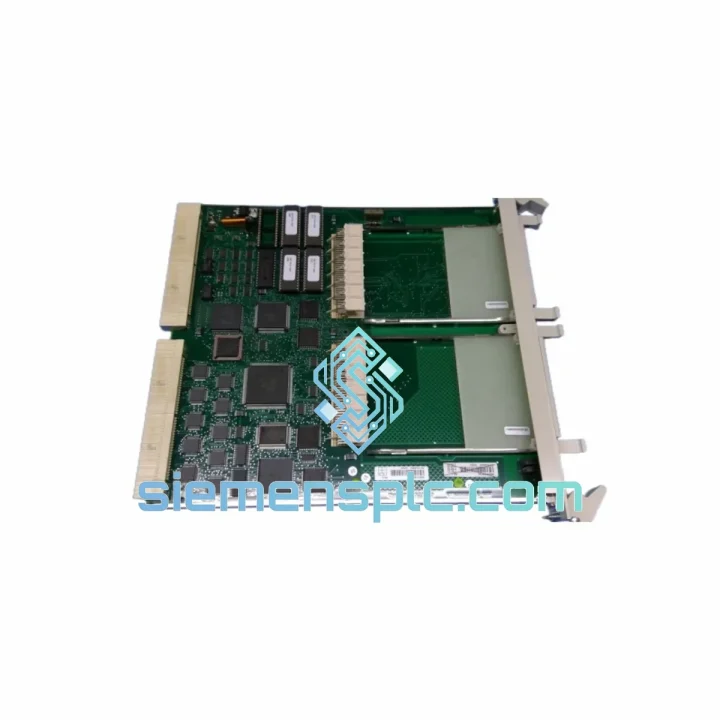
Request verified availability, condition, replacement risk review, packing options and courier lead time for 3BSE003816R1 SC520.
Click Request Quote and the part number is inserted into the inquiry form automatically.
Core fields for model confirmation and RFQ routing. Detailed product narrative remains below.
The ABB 3BSE003816R1 SC520 is a four-slot submodule carrier purpose-built for the AC500 programmable logic controller platform. Its function within a control cabinet is structural and electrical simultaneously: it provides the mechanical housing, internal parallel bus routing, and 24 VDC distribution rail that allow up to four SM-series I/O submodules to operate as a single, coherent, CPU-addressable I/O node. The SC520 is not a passive terminal block — it is an active backplane segment whose slot-address decoding logic directly determines how the AC500 CPU maps field signals into the process image table at each scan cycle.
Within the AC500 hardware hierarchy, the platform separates processing resources from field I/O at the physical level. The CPU module and communication processors occupy the upper tier; the SC520 and its installed SM submodules occupy the lower tier. Data exchange between tiers occurs over the AC500 proprietary internal bus, which the SC520 bridges. This separation allows engineers to specify I/O channel density — digital inputs, digital outputs, analog inputs, analog outputs — entirely independently of CPU selection, and to expand field connections by adding SC520 carriers without modifying the CPU or communication layer. Each carrier added to the assembly increments the available I/O address space by the aggregate channel count of its four submodule slots.
In MRO and spare-parts contexts, the SC520 is a non-substitutable component. A failed or mechanically damaged carrier cannot be bypassed by software reconfiguration — the physical backplane must be intact for the CPU to enumerate the submodules installed in that carrier’s slots. Procurement lead time for this part directly affects system downtime duration, making verified stock availability a critical factor in maintenance planning for AC500-based installations in process control, water treatment, building automation, and discrete manufacturing.
Real-time Stock & RFQ: [email protected] | WhatsApp: +86 18359268345
| Manufacturer | ABB |
| Part Number | 3BSE003816R1 |
| Model | SC520 |
| Function | 4-Slot Submodule Carrier for AC500 SM-Series I/O Modules |
| Compatible Platform | ABB AC500 PLC (V1 / V2 / V3 CPU generations) |
| Submodule Slots | 4 × SM-series positions (DI / DO / AI / AO) |
| Internal Bus Type | AC500 proprietary synchronous parallel backplane bus |
| Supply Voltage | 24 VDC nominal (supplied via AC500 power supply module) |
| Mounting Standard | DIN EN 60715 — 35 mm DIN rail; panel mount optional |
| Protection Class | IP20 per IEC 60529 |
| Operating Temperature | −25 °C to +70 °C |
| Storage Temperature | −40 °C to +85 °C |
| Relative Humidity | 5 % – 95 %, non-condensing (IEC 60068-2-78) |
| Vibration | IEC 60068-2-6: 10–150 Hz, 1 g continuous |
| Mechanical Shock | IEC 60068-2-27: 15 g peak, 11 ms half-sine |
| EMC Immunity | EN 61000-6-2 (Industrial Environment) |
| EMC Emission | EN 61000-6-4 |
| Certifications | CE, cULus, RoHS 2011/65/EU |
| Backplane Connector Rating | ≥100 mating cycles, gold-plated contacts, <10 mΩ contact resistance |
| Unit Weight | 600 g |
| Country of Origin | Germany |
| Warranty | 12 months from shipment date |
The SC520 implements slot-based address decoding through passive onboard logic that assigns a fixed bus address offset to each of its four submodule positions. At AC500 CPU startup, the firmware executes a sequential bus enumeration scan across all connected carriers. Each occupied slot on the SC520 responds with its module type identifier, allowing the CPU to construct the process image table layout before the first scan cycle executes. This deterministic enumeration eliminates the address arbitration overhead present in dynamic-discovery bus architectures, contributing to a consistent and bounded startup time regardless of I/O channel count.
The carrier’s PCB ground plane architecture bonds all submodule shield terminations to the DIN rail earth reference through a low-impedance copper pour, measured at <0.5 Ω from any submodule connector shield pin to the DIN rail clip. This common-mode noise suppression path is particularly effective in cabinets where variable-frequency drives share the same enclosure — a common configuration in pump control and HVAC applications. The 24 VDC supply and return traces are routed on inner PCB layers with deliberate spatial separation from the bus signal traces on outer layers, reducing inter-layer capacitive coupling to below the threshold that would affect bus signal integrity at AC500 bus clock frequencies.
Each submodule slot uses a dual-latch retention mechanism. The latch engages a machined groove on the SM-series module housing, providing both axial pull-out resistance and a positive tactile confirmation of full connector seating. The design requires deliberate manual release before a submodule can be withdrawn — accidental ejection from vibration or incidental contact during adjacent maintenance operations is mechanically prevented. The connector itself is a high-cycle gold-plated edge type rated for ≥100 mating cycles, maintaining contact resistance below 10 mΩ across the full −25 °C to +70 °C operating range.
The open-frame carrier body allows convective airflow across all four installed submodule faces without requiring forced-air cooling in standard industrial ambient conditions up to 60 °C. Thermal dissipation from the carrier itself is negligible — the SC520 does not contain active switching components. Heat load in the assembly is generated entirely by the installed SM submodules, and the carrier’s geometry does not impede the thermal management strategy of any SM-series module currently in the AC500 catalog.
Each ABB 3BSE003816R1 SC520 unit dispatched from siemensplc.com is sourced through documented procurement channels and passes a structured pre-shipment inspection before packaging. Inspection covers: factory label verification against ABB part number and revision records, visual examination of backplane connector contact surfaces for plating integrity, latch mechanism function test on all four submodule slots, and hardware revision documentation cross-check. Units are packed in anti-static bags with rigid outer cartons and desiccant inserts where transit humidity conditions require moisture control.
Logistics operations are based in Xiamen, China — a primary export hub with direct carrier access to DHL Express, FedEx International Priority, UPS Worldwide Express, and SF International. Standard export documentation is prepared for all international shipments: commercial invoice, packing list, and certificate of origin. For shipments requiring HS code declarations, customs pre-clearance documentation, or end-user certificates, our team provides complete export compliance support at no additional charge.
Typical dispatch lead time is 1–3 business days from order confirmation. Indicative air freight transit times: Europe 3–5 business days; North America 4–6 business days; Southeast Asia 2–3 business days; Middle East 4–5 business days; South Asia 3–4 business days. All shipments include carrier tracking from dispatch to delivery confirmation. The 12-month warranty covers manufacturing defects and functional failures under normal operating conditions as defined in ABB’s product documentation. Warranty claims are acknowledged within 2 business days and processed within 5 business days of receipt of the returned unit at our Xiamen facility.
Email: [email protected]
WhatsApp: +86 18359268345
Web: siemensplc.com
Location: Xiamen, China
© 2026 siemensplc.com. All rights reserved.
We check the full part number, brand, series and visible nameplate information before quotation.
Sales confirms stock path, condition option, quantity and realistic lead time for export dispatch.
DHL, FedEx, UPS or buyer courier arrangements can be reviewed with packing requirements.
Similar brand or category products for fast comparison and multi-item RFQ lists.