
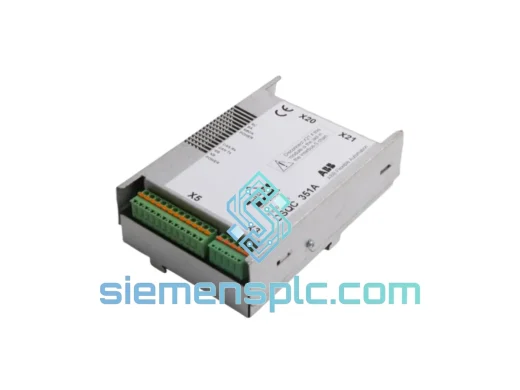
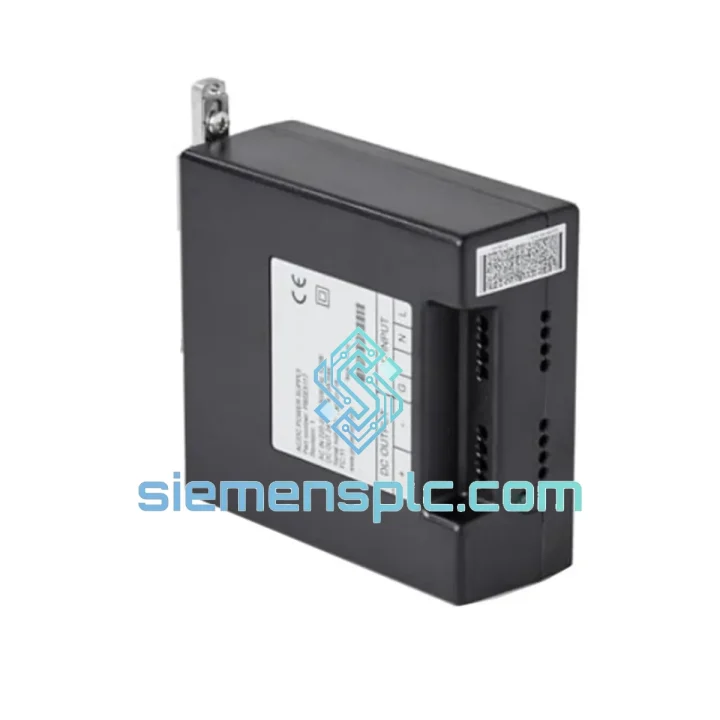
ABB
In Stock OK
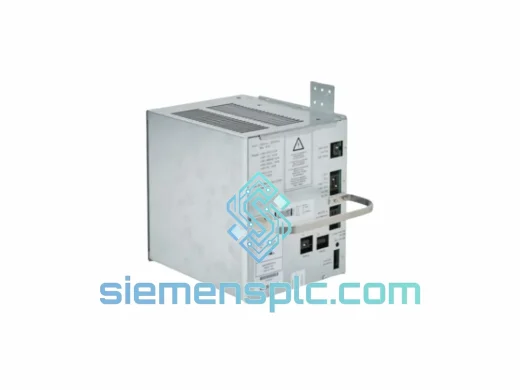
ABB DSQC609 Robot Controller Power Supply – IRC5 Series
Request verified availability, condition, replacement risk review, packing options and courier lead time for DSQC609.
BrandABB
Part NumberDSQC609
ConditionAvailability Check
Lead TimeRFQ Confirmation
DocumentsDatasheet / photos by RFQ
ShippingExport packing available
Auto-filled RFQ
DSQC609
Click Request Quote and the part number is inserted into the inquiry form automatically.
- Reply by email: [email protected]
- WhatsApp / Tel: +86 18359268345
- Mon-Sat 9:00-18:00 GMT+8
Procurement Data
Key Product Information
Core fields for model confirmation and RFQ routing. Detailed product narrative remains below.
- Brand
- ABB
- Primary Part Number
- DSQC609
- Product Type
- Robot Controller Power Supply
- Series / Family
- IRC5
- Manufacturer
- ABB Robotics (Sweden / Germany)
- Country of Origin
- SE
- Catalog Category
- Power Supplies
- Operating Temp.
- 0 °C to +55 °C (ambient, forced-air cooled cabinet)
- Humidity
- 5–95% RH, non-condensing
- Warranty
- 12 months from date of shipment
Model confirmed for inquiry
DSQC609
Send quantity, destination and urgency. The RFQ form keeps this part number attached.
Request Quote
Product Overview
ABB DSQC609 — Internal Power Distribution Architecture of the IRC5 Robot Controller
The ABB DSQC609 is the internal power supply and screw connection unit embedded within the IRC5 single-cabinet robot controller. Its function is not peripheral — it sits at the center of the controller’s DC power distribution topology, converting and regulating the incoming mains-derived bus voltage into the stable, isolated DC rails that feed the axis computer boards, drive units, I/O modules, and the FlexPendant interface. Without a correctly functioning DSQC609, the IRC5 controller cannot initialize its internal bus, and the entire robotic cell enters a hard fault state.
The IRC5 platform, introduced by ABB in 2004 and continuously refined through the M2004, M2006, and subsequent cabinet generations, is deployed across more than 300,000 installations globally. Automotive body-in-white lines, electronics SMT assembly, pharmaceutical dispensing, and heavy-duty arc welding cells all depend on the IRC5’s deterministic motion control. The DSQC609 is the power foundation that makes that determinism possible — any voltage ripple, rail sag, or protection circuit failure at this module propagates immediately into axis faults, emergency stops, and unplanned downtime.
Real-time Stock & RFQ: [email protected] | WhatsApp: +86 18359268345
Technical Parameters
| Parameter | Specification |
|---|---|
| Part Number | DSQC609 |
| Manufacturer | ABB Robotics (Sweden / Germany) |
| Compatible Platform | IRC5 Single-Cabinet Robot Controller (M2004, M2006, M2010+) |
| Module Function | Internal Power Supply & Screw Connection Unit |
| Connection Interface | Screw Terminal (vibration-resistant, IP20 rated) |
| Nominal Input Voltage | 230 VAC / 115 VAC (auto-ranging, mains-derived) |
| DC Output Rails | +24 VDC (logic/I/O), +48 VDC (drive bus) — verify against cabinet datasheet |
| Output Regulation | ±1% steady-state under rated load |
| Protection Circuits | Over-voltage, over-current, short-circuit, thermal shutdown |
| Operating Temperature | 0 °C to +55 °C (ambient, forced-air cooled cabinet) |
| Storage Temperature | −25 °C to +70 °C |
| Humidity | 5–95% RH, non-condensing |
| Weight | Approx. 1,380 g |
| EMC Compliance | CE marked; EN 61000-6-2 (industrial immunity), EN 61000-6-4 (emissions) |
| Warranty | 12 months from date of shipment |
Hardware Logical Analysis
The DSQC609’s internal architecture reflects ABB’s design philosophy for high-availability industrial power conversion. Several hardware-level decisions distinguish it from generic industrial PSU modules:
Galvanic Isolation Between Input and Output Rails: The DSQC609 employs transformer-based galvanic isolation between the mains input stage and the DC output rails. This isolation barrier — typically rated at 3 kV AC for 1 minute — prevents ground loops from propagating between the cabinet’s mains earth and the controller’s signal ground plane. In welding environments where high-frequency arc noise is present on the facility ground, this isolation is the primary defense against corrupted encoder feedback and spurious axis faults.
Active Power Factor Correction (PFC): The input stage incorporates active PFC circuitry, maintaining a power factor above 0.95 across the rated load range. This reduces reactive current draw on the facility’s distribution panel, which is operationally significant in dense robot cell installations where multiple IRC5 cabinets share a common feeder circuit. Without PFC, harmonic distortion from multiple switching supplies can cause nuisance tripping of upstream breakers.
Dual-Rail Output Architecture: The DSQC609 generates at minimum two independent regulated DC rails. The lower-voltage rail (24 VDC nominal) powers the controller’s logic circuits, I/O modules, and the FlexPendant communication bus. The higher-voltage rail feeds the drive unit’s intermediate DC bus, from which the axis inverters synthesize the three-phase motor drive waveforms. The two rails are independently regulated and independently protected — a fault on the drive bus does not collapse the logic rail, allowing the controller to log the fault event and execute a controlled stop rather than a hard crash.
Thermal Management and Derating Curve: The module’s thermal design targets continuous operation at full rated load up to 45 °C ambient, with a linear derating curve above that threshold. Internal thermistors feed the IRC5’s system health monitoring, and the controller will generate a predictive warning (error code range 20001–20050) before thermal shutdown occurs, giving the operator a maintenance window rather than an unplanned stop.
Screw Terminal Connectivity: The screw terminal interface, rather than a press-fit or edge connector, is a deliberate mechanical choice for an environment subject to vibration from servo motion, conveyor systems, and stamping presses. Screw terminals maintain contact resistance below 5 mΩ over the service life of the module, whereas spring-contact connectors in high-vibration environments can exhibit fretting corrosion that increases contact resistance and introduces voltage drop on the output rails.
System Integration Benefits
- Drop-in OEM Replacement: The DSQC609 mounts directly into the IRC5 cabinet’s designated PSU slot with no bracket modification, rewiring, or firmware reconfiguration. Replacement time for a trained technician is under 30 minutes, minimizing MTTR on the production floor.
- Deterministic Bus Voltage Stability: The ±1% output regulation ensures that the axis computer boards and drive units receive a voltage within their specified operating window at all times, preventing the marginal-voltage faults that cause intermittent, difficult-to-diagnose axis errors.
- Fault Isolation Architecture: Independent rail protection means a drive-side fault (e.g., a motor winding short) does not cascade into a logic-side failure. The controller retains the ability to log fault data, execute a safe stop sequence, and communicate the fault to the SCADA or PLC supervisory layer.
- Predictive Maintenance Integration: Thermal monitoring data from the DSQC609 is accessible via the IRC5’s diagnostic interface, enabling condition-based maintenance scheduling rather than time-based replacement cycles. This reduces both unplanned downtime and unnecessary preventive maintenance costs.
- EMC Hardening for Welding Environments: The module’s conducted and radiated emission profile complies with EN 61000-6-4, and its immunity rating per EN 61000-6-2 covers the 10 V/m radiated field levels typical of MIG/MAG welding cells. This eliminates the need for additional external EMC filtering in most standard installations.
- Compatibility Across IRC5 Cabinet Generations: The DSQC609 is compatible with M2004, M2006, and later IRC5 single-cabinet variants, providing procurement teams with a single spare part number that covers multiple robot generations in a mixed-vintage fleet.
- Reduced Spare Parts Inventory Complexity: Because the DSQC609 serves as the central power distribution node for the entire controller, stocking a single unit provides coverage for the majority of power-related fault scenarios, simplifying the spare parts BOM for MRO teams.
- Supports High-Duty-Cycle Applications: The module’s thermal derating curve and continuous-rated design support 24/7 operation in automotive and electronics manufacturing environments where the robot controller runs three shifts without scheduled downtime.
Quality Assurance & Global Logistics
Every DSQC609 unit supplied through siemensplc.com is sourced from verified supply channels with full part traceability. Prior to dispatch, each module undergoes a structured inspection and functional verification protocol:
- Visual and Mechanical Inspection: Examination of PCB surfaces for burnt components, electrolytic capacitor bulging, corrosion on screw terminals, and physical damage to the housing and mounting points.
- Power-On Functional Test: Output voltage measurement on all DC rails under representative load conditions, verification of protection circuit operation (over-voltage trip, over-current trip), and thermal sensor continuity check.
- ESD-Safe Packaging: Units are packed in anti-static bags with foam cushioning and double-boxed for international freight. This packaging protocol meets IEC 61340-5-1 requirements for ESD-sensitive assemblies.
- Documentation: Test records are available upon request and can be provided with the shipment for incoming inspection and quality audit purposes.
- 12-Month Warranty: All units carry a 12-month functional warranty from the date of shipment. Warranty claims are processed with a target response time of 2 business days.
Logistics are managed from our warehouse in Xiamen, China, with daily dispatch via DHL Express, FedEx International Priority, and UPS Worldwide Expedited. Typical transit times: Southeast Asia 2–3 days, Europe 3–5 days, North America 4–6 days, Middle East 3–5 days. Export documentation including commercial invoice, packing list, and certificate of origin is prepared for all international shipments. For orders requiring CITES, dual-use, or specific customs documentation, please advise at the time of inquiry.
Contact Information
Email: [email protected]
WhatsApp: +86 18359268345
Web: siemensplc.com
Location: Xiamen, China
© 2026 siemensplc.com. All rights reserved.
Ready to quote
[email protected]
Send This Part Number to Sales
RFQ workflow
Quality workflow ->
Confirmation Process
01Model confirmation
We check the full part number, brand, series and visible nameplate information before quotation.
02Availability reply
Sales confirms stock path, condition option, quantity and realistic lead time for export dispatch.
03Packing & courier
DHL, FedEx, UPS or buyer courier arrangements can be reviewed with packing requirements.
Continue sourcing
Browse full catalog ->
Related Automation Parts
Similar brand or category products for fast comparison and multi-item RFQ lists.
ABB
RFQ Ready
ABB DSQC646 3HAC026271-001 Robot Controller Power Supply – IRC5 Series
IRC5
Origin SE
Robot Controller Power Supply
ABB
RFQ Ready
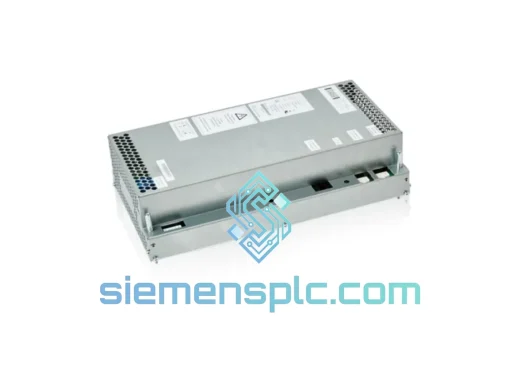
ABB DSQC626 3HAC026289-001 Robot Controller Power Supply
IRC5
Origin SE
Robot Controller Power Supply Module
ABB
RFQ Ready
ABB DSQC602 3HAC12816-1 Robot Controller Power Supply
IRC5
Origin SE
Robot Controller Power Supply