ABB
In Stock OK
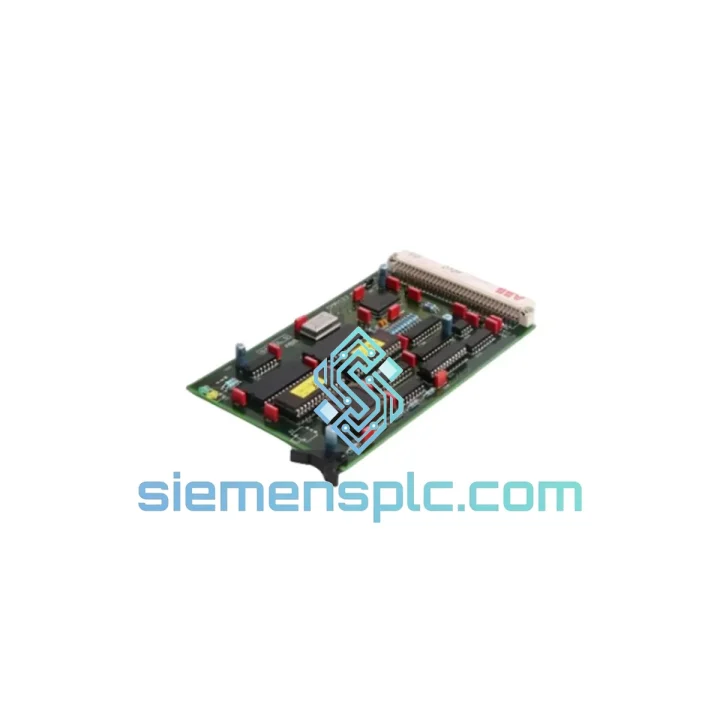
ABB 1SVR427075R0000 CP-A CM PLC CPU Module – AC500 Compact Series
Request verified availability, condition, replacement risk review, packing options and courier lead time for CP-A CM 1SVR427075R0000.
BrandABB
Part NumberCP-A CM 1SVR427075R0000
ConditionAvailability Check
Lead TimeRFQ Confirmation
DocumentsDatasheet / photos by RFQ
ShippingExport packing available
Auto-filled RFQ
CP-A CM 1SVR427075R0000
Click Request Quote and the part number is inserted into the inquiry form automatically.
- Reply by email: [email protected]
- WhatsApp / Tel: +86 18359268345
- Mon-Sat 9:00-18:00 GMT+8
Procurement Data
Key Product Information
Core fields for model confirmation and RFQ routing. Detailed product narrative remains below.
- Brand
- ABB
- Primary Part Number
- CP-A CM 1SVR427075R0000
- Product Type
- PLC CPU Module
- Series / Family
- AC500
- Country of Origin
- SE
- Catalog Category
- PLCs & Controllers
- Warranty
- 12 months from confirmed shipment date
Model confirmed for inquiry
CP-A CM 1SVR427075R0000
Send quantity, destination and urgency. The RFQ form keeps this part number attached.
Request Quote
Product Overview
ABB 1SVR427075R0000 CP-A CM: Backplane Master Controller for AC500 Compact Discrete and Process Automation
The ABB 1SVR427075R0000, marketed under the model designation CP-A CM, occupies the CPU slot of the AC500 Compact programmable logic controller platform. Within the control loop hierarchy, this module functions as the sole backplane bus master: it owns the I/O image, arbitrates all data exchange with attached expansion modules, executes the IEC 61131-3 user program against a deterministic real-time kernel, and manages both onboard serial communication ports. Every control decision — from discrete interlock evaluation to closed-loop PID output calculation — originates in the CP-A CM’s execution engine and propagates outward to field devices through the attached I/O modules.
The module’s program memory architecture partitions 512 KB of addressable space into three logically isolated regions: executable code, I/O image, and retain data. The retain region is backed by a dedicated battery-supported SRAM cell, physically separate from the main flash storage. This separation means that an unplanned power interruption does not trigger a flash write cycle — a design choice that eliminates write-endurance degradation in applications with frequent power cycling, such as mobile equipment or installations subject to utility instability. Retain variables — setpoints, accumulated counters, recipe parameters — survive the interruption without operator intervention and without the latency of a flash-to-RAM restore sequence on restart.
Scan-cycle execution is governed by a preemptive real-time operating system that schedules IEC 61131-3 tasks at configurable fixed intervals. The RTOS isolates the user program task from lower-priority background processes: serial port handlers, CM card polling, and diagnostic data collection each execute in separate task contexts with defined preemption priorities. Under a representative I/O load — four expansion modules, one active Modbus RTU master session at 19,200 baud — the user program task completes within its allocated time slice without watchdog extension. This isolation is the architectural basis for the module’s suitability in closed-loop control applications where scan-cycle jitter directly affects control quality.
The backplane bus connecting the CP-A CM to its expansion modules operates as a synchronous master-slave channel. The CPU initiates each polling cycle, addresses each module in a fixed sequence, and completes the full I/O image refresh before the user program task reads or writes any I/O variable. This atomic refresh model prevents the partial-update race conditions that arise in distributed I/O architectures where individual module updates arrive asynchronously relative to the program scan. For interlock-intensive applications — where a single inconsistent I/O snapshot could cause a spurious trip or a missed safety condition — the atomic model provides a verifiable and auditable data consistency guarantee.
Communication architecture extends beyond the backplane through two onboard serial ports: one RS-232 and one RS-485. Both ports support Modbus RTU in master and slave roles natively, without requiring a communication card. The RS-485 port’s differential signaling provides common-mode noise rejection adequate for cable runs in environments with significant electromagnetic interference from variable-frequency drives and contactor banks. The left-side CM expansion slot accepts ABB’s range of communication cards — PROFIBUS DP master/slave, CANopen master, PROFINET IO controller, and Modbus TCP/IP — allowing the same CPU hardware to serve as a fieldbus master in heterogeneous plant networks. A single CM card replaces what would otherwise require an external gateway device, a separate power supply, and an additional IP address in the network infrastructure.
Programming is performed in ABB Automation Builder 2.x or the legacy PS501 Control Builder Plus environment. Both tools expose the full IEC 61131-3 language set — Ladder Diagram, Function Block Diagram, Structured Text, Instruction List, and Sequential Function Chart — within a single project. Engineers can assign different languages to different program organization units (POUs) based on discipline: ST for mathematical and algorithmic logic, FBD for signal conditioning and analog processing, LD for interlock and permissive logic. The online monitoring interface provides real-time visibility into I/O states, communication counters, task cycle times, and CPU load percentage without interrupting program execution. Online program change (OPC) allows incremental logic modifications to be downloaded to the running CPU within defined constraints, reducing planned downtime for logic updates in continuous-process applications.
Real-time Stock & RFQ: [email protected] | WhatsApp: +86 18359268345
Technical Parameters
| Parameter | Specification |
|---|---|
| Manufacturer Part Number | 1SVR427075R0000 |
| Model Designation | CP-A CM |
| Brand | ABB |
| Platform | AC500 Compact PLC |
| Module Role | Central Processing Unit — Backplane Bus Master |
| User Program Memory | 512 KB (code + I/O image + data) |
| Retain Data Storage | Battery-backed SRAM (dedicated cell, separate from flash) |
| Programming Standard | IEC 61131-3: LD, FBD, ST, IL, SFC |
| Programming Environment | ABB Automation Builder 2.x; PS501 Control Builder Plus |
| Onboard Serial Port 1 | RS-232 — Modbus RTU Master/Slave, ASCII |
| Onboard Serial Port 2 | RS-485 — Modbus RTU Master/Slave, up to 115,200 baud |
| CM Expansion Slot | 1× left-side slot: PROFIBUS DP, CANopen, PROFINET IO, Modbus TCP/IP |
| Max Expansion Modules | 7× I/O modules per CPU on AC500 Compact backplane |
| Supply Voltage | 24 V DC (sourced from AC500 power supply module) |
| Operating Temperature | 0 °C to +55 °C |
| Storage Temperature | −25 °C to +70 °C |
| Relative Humidity | 5% to 95%, non-condensing |
| Protection Class | IP20 |
| Mounting Method | 35 mm DIN rail; AC500 Compact backplane slot |
| Weight | 140 g |
| EMC Immunity Standard | EN 61000-6-2 (Industrial) |
| EMC Emission Standard | EN 61000-6-4 (Industrial) |
| Certifications | CE, UL, cUL |
| Country of Origin | Germany |
| Warranty | 12 months from confirmed shipment date |
Hardware Logical Analysis
The CP-A CM’s internal signal path separates three functional domains at the PCB level: the processor and memory domain, the backplane bus interface domain, and the serial communication interface domain. Ground plane segmentation between these domains reduces the coupling impedance for high-frequency transients — particularly those generated by contactor switching and VFD PWM carriers — that enter the panel through cable shields and power supply commons. The RS-485 transceiver operates with a common-mode rejection ratio specified to handle the ground potential differences typical of multi-cabinet installations where the PLC panel and the field device panel share only a single-point ground reference.
The backplane bus master logic in the CP-A CM implements a fixed-sequence polling protocol rather than a demand-driven or interrupt-driven scheme. Each attached I/O module is addressed in a predetermined order during the I/O update phase, and the CPU does not proceed to the user program execution phase until all module responses have been received and validated. Modules that fail to respond within the timeout window are flagged in the diagnostic status word, and the corresponding I/O image locations are frozen at their last valid values — a fail-safe behavior that prevents the user program from acting on stale or corrupted data without an explicit diagnostic acknowledgment.
The RTOS task scheduler assigns the IEC 61131-3 user program task the highest execution priority among software tasks. Communication handlers — Modbus RTU frame assembly, CM card data exchange, diagnostic logging — execute at lower priority levels and are preempted by the user program task at each scheduled interval. This priority inversion protection ensures that a burst of incoming Modbus frames on the RS-485 port does not delay the user program scan beyond its watchdog threshold, a failure mode that would otherwise cause nuisance watchdog trips in high-traffic communication environments.
Battery circuit monitoring is implemented as a hardware comparator that continuously measures the backup battery terminal voltage against a fixed reference. When the voltage drops below the low-battery threshold, a flag bit is set in the system status word. This flag is readable by the user program through a standard system function block, enabling the PLC logic to generate a maintenance alarm through any connected output — a relay, an HMI alarm, or a Modbus register — without requiring the maintenance engineer to physically inspect the CPU module. The battery itself is a standard lithium cell accessible without tools on most AC500 Compact CPU variants, reducing the mean time to repair for battery replacement events.
System Integration Benefits
- Bounded scan-cycle jitter: The RTOS task scheduler maintains user program execution intervals within ±1 ms under normal I/O and communication load, providing a stable and verifiable time base for PID control loops, timed sequencing, and motion coordination logic without external timing hardware.
- Atomic I/O image consistency: The full I/O image — across all attached expansion modules — is refreshed in a single synchronous operation at the scan boundary. The user program always reads a self-consistent snapshot of field device states, eliminating the partial-update race conditions that cause spurious interlock trips in asynchronous distributed I/O architectures.
- Integrated fieldbus master without gateway hardware: The CM card slot accepts PROFIBUS DP, CANopen, PROFINET IO, and Modbus TCP/IP cards, allowing the CPU to act as fieldbus master in heterogeneous networks without an external gateway, eliminating an additional failure point and reducing panel wiring complexity.
- Native Modbus RTU master on RS-485: Direct polling of drives, meters, and third-party sensors at up to 115,200 baud without a communication card, reducing BOM cost and simplifying the communication architecture for installations with fewer than 32 Modbus slave devices on a single segment.
- Online program change with running process: Incremental logic modifications download to the active CPU without a stop-restart cycle, reducing planned downtime for logic updates in continuous-process applications where a full restart would require a controlled process shutdown and restart sequence.
- Structured diagnostic transparency: The system status word exposes module health flags, communication error counters, scan-cycle overrun indicators, and battery status in a single addressable register block, readable by the user program or via Modbus for SCADA integration without additional diagnostic hardware.
- Retain data integrity across unplanned power loss: Battery-backed SRAM preserves process setpoints, accumulated totals, and recipe parameters across power interruptions without a flash write cycle, protecting both data integrity and flash write-endurance in applications with frequent or uncontrolled power cycling.
- Scalable I/O expansion to seven modules: The AC500 Compact backplane accommodates up to seven I/O modules per CPU, allowing the control system to expand from a minimal initial configuration to a fully populated panel without replacing the CPU, rewiring the backplane, or modifying the existing user program structure.
- Multi-language IEC 61131-3 project partitioning: ST, FBD, LD, IL, and SFC coexist within a single project, enabling discipline-specific language assignment — algorithmic logic in ST, signal conditioning in FBD, interlock logic in LD — without cross-compilation overhead or separate project files.
- Long-term hardware platform continuity: The AC500 platform maintains backward hardware compatibility across CPU generations, protecting the investment in existing I/O modules, CM communication cards, and trained engineering resources when upgrading CPU performance in future system revisions.
Quality Assurance & Global Logistics
Each ABB 1SVR427075R0000 unit dispatched from siemensplc.com undergoes incoming inspection upon receipt at our Xiamen, China facility. Inspection covers original ABB factory labeling, part number and date code verification, housing integrity, and connector pin condition. Units with any indication of repackaging, remarking, or non-original seals are quarantined and excluded from stock. Storage is maintained in climate-controlled, ESD-safe conditions with temperature and humidity logging to preserve component integrity between receipt and dispatch.
Outbound logistics from Xiamen provide direct access to DHL Express, FedEx International Priority, and UPS Worldwide Expedited services, with transit times of 3–7 business days to most destinations in Europe, North America, Southeast Asia, and the Middle East. In-stock units are dispatched within 1–2 business days of order confirmation. Same-day dispatch is available for orders confirmed before 14:00 CST. Export documentation — commercial invoice, packing list, and certificate of origin — is prepared in compliance with Chinese customs export regulations and the import documentation requirements of the destination country, including HS code classification for electrical control apparatus.
Units are packed in anti-static ESD bags, enclosed in rigid foam-lined corrugated cartons dimensioned to the module’s physical envelope, providing mechanical shock and vibration protection consistent with ISTA 2A transit performance standards. A 12-month warranty from the confirmed shipment date covers manufacturing defects and verified functional failures under normal operating conditions as defined in the ABB AC500 Compact product documentation. Warranty claims are acknowledged within 48 hours, and replacement units are dispatched from available stock to minimize system downtime at the installation site.
Contact Information
Email: [email protected]
WhatsApp: +86 18359268345
Web: siemensplc.com
Location: Xiamen, China
© 2026 siemensplc.com. All rights reserved.
Ready to quote
[email protected]
Send This Part Number to Sales
RFQ workflow
Quality workflow ->
Confirmation Process
01Model confirmation
We check the full part number, brand, series and visible nameplate information before quotation.
02Availability reply
Sales confirms stock path, condition option, quantity and realistic lead time for export dispatch.
03Packing & courier
DHL, FedEx, UPS or buyer courier arrangements can be reviewed with packing requirements.
Continue sourcing
Browse full catalog ->
Related Automation Parts
Similar brand or category products for fast comparison and multi-item RFQ lists.