ABB
RFQ Ready
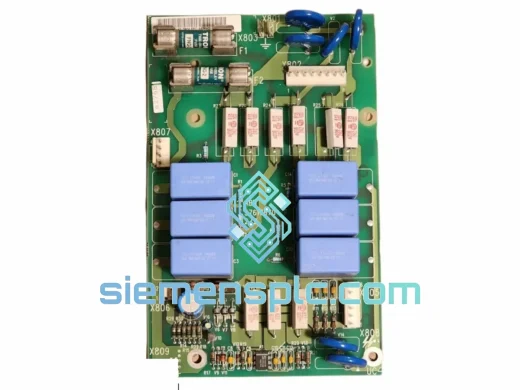
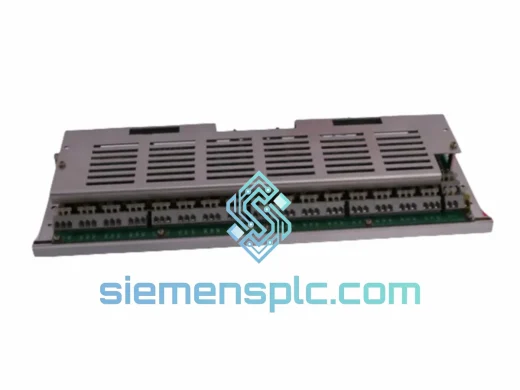
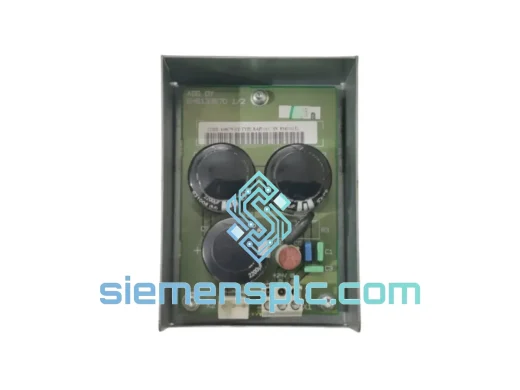
ABB SDCS-PIN-4 3ADT314100R1001 Interface Board
DCS Drive Series
Origin SE
PLC Interface Board
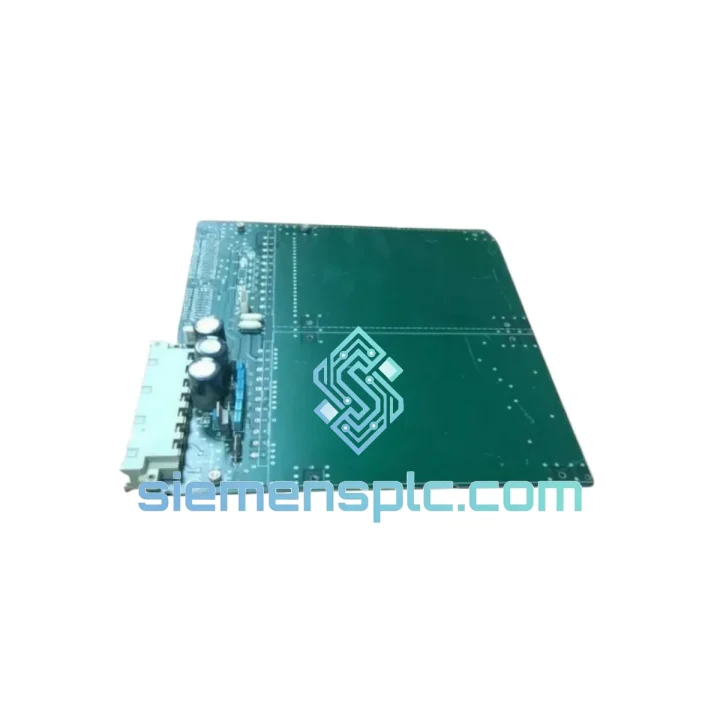
Request verified availability, condition, replacement risk review, packing options and courier lead time for 209630R2-B4LAA.
Click Request Quote and the part number is inserted into the inquiry form automatically.
Core fields for model confirmation and RFQ routing. Detailed product narrative remains below.
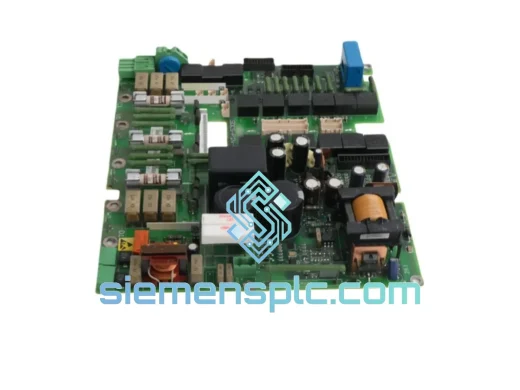
The ABB 209630R2-B4LAA is a hardware-revision-specific printed circuit board assembly engineered for deployment within ABB’s DCS 400/500/600 series DC drive platforms. Designated by revision suffix B4LAA, this board occupies the control layer of the drive’s signal chain — receiving speed and torque reference signals from the supervisory controller, executing closed-loop PID regulation, and issuing firing-angle commands to the thyristor bridge via the gate-pulse interface. Its position in the control hierarchy makes it the deterministic core of the entire drive’s dynamic response: armature current ramp rates, field weakening transitions, and regenerative braking sequences are all governed by the logic embedded on this board.
Unlike generic PCB assemblies, the 209630R2-B4LAA is designed to operate within ABB’s proprietary backplane communication protocol, exchanging real-time status frames with the power interface board (typically SDCS-PIN-205 or equivalent) at cycle times below 1 ms. This tight coupling between the control board and the power stage eliminates the latency penalties associated with optically isolated serial bridges, preserving the phase-angle resolution required for precise torque control in demanding applications such as winding machines, rolling mills, and crane hoists.
The B4LAA hardware revision incorporates updated gate-array logic compared to earlier R1 iterations, with revised interrupt-handling firmware that reduces jitter on the current-feedback sampling loop. Engineers replacing an R1 board with the R2-B4LAA variant should verify firmware compatibility with the host drive’s parameter set before commissioning, as the sampling-rate change affects the default current-controller gain tables stored in non-volatile memory.
Real-time Stock & RFQ: [email protected] | WhatsApp: +86 18359268345
| Parameter | Specification |
|---|---|
| Part Number | 209630R2 |
| Hardware Revision | B4LAA |
| Manufacturer | ABB (Sweden) |
| Component Classification | PCB Control Board Assembly |
| Compatible Drive Series | ABB DCS 400 / DCS 500 / DCS 600 |
| Supply Voltage (Logic) | +5 VDC / ±15 VDC (from drive PSU) |
| Current Feedback Input | Differential analog, ±10 V range |
| Speed Reference Input | Analog ±10 V / digital fieldbus (drive-dependent) |
| Gate Pulse Output | 6-channel thyristor firing, optically isolated |
| Backplane Interface | ABB proprietary parallel bus, <1 ms cycle |
| Operating Temperature | 0 °C to +55 °C (ambient, forced-air cooled enclosure) |
| Storage Temperature | -25 °C to +70 °C |
| Humidity | 5–95% RH, non-condensing |
| PCB Dimensions | Approx. 280 × 180 mm (verify against drive BOM) |
| Weight | Approx. 300 g |
| Compliance | CE, RoHS-compatible |
| Country of Origin | Sweden |
| Warranty | 12 months from date of shipment |
The 209630R2-B4LAA implements a multi-layer EMC strategy that addresses both conducted and radiated interference — a non-trivial requirement given that the board operates in close physical proximity to thyristor bridges generating dV/dt transients in excess of 500 V/μs. The board’s ground plane is segmented into analog and digital domains, joined at a single star point adjacent to the analog-to-digital converter cluster. This topology prevents high-frequency digital switching currents from injecting noise into the current-feedback measurement path, where a 1 mV error at the ADC input translates directly into a torque-regulation offset.
Optocoupler isolation barriers rated at 2.5 kV RMS separate the gate-pulse output stage from the logic core, providing galvanic isolation between the control-voltage domain and the thyristor gate circuits. The isolation capacitance across each barrier is held below 10 pF to limit common-mode current injection during fast switching events. On the input side, the analog speed-reference and current-feedback signals pass through active low-pass filters with a –3 dB corner frequency tuned to reject switching harmonics above 2 kHz while preserving the bandwidth required for the current-control loop.
The board’s watchdog circuit monitors the main processor’s instruction cycle via a hardware timer that must be serviced within a fixed window. If the processor fails to reset the watchdog — due to firmware hang, memory corruption, or supply-voltage excursion — the watchdog asserts a hardware fault signal that inhibits all gate pulses within one firing cycle, preventing uncontrolled thyristor conduction. This fail-safe architecture is independent of software and cannot be masked by firmware.
Every ABB 209630R2-B4LAA unit dispatched from our Xiamen, China facility undergoes a structured incoming inspection protocol: visual examination for PCB delamination, solder-joint integrity, and component seating; functional power-on verification against ABB’s published self-test sequence; and ESD-safe handling throughout the process chain. Units sourced from authorized ABB distribution channels carry full traceability documentation — batch records, date codes, and certificates of conformance — available upon request at no additional charge.
Export packaging follows IEC 60068-2-27 shock-protection guidelines: the board is sealed in a static-dissipative bag, cushioned within 50 mm of closed-cell polyethylene foam, and enclosed in a double-wall corrugated carton rated for international air-freight handling. Shipments from Xiamen reach major industrial hubs in Southeast Asia within 3–5 business days, Europe within 5–8 business days, and North America within 6–9 business days via DHL Express or FedEx International Priority. Customs documentation — commercial invoice, packing list, and HS code declaration — is prepared in compliance with destination-country import regulations to minimize clearance delays.
A 12-month warranty covers all new units against manufacturing defects and premature failure under normal operating conditions. Warranty claims are processed with a target response time of 48 hours from receipt of the defective unit, with advance replacement available for customers operating under maintenance contracts.
Email: [email protected]
WhatsApp: +86 18359268345
Web: siemensplc.com
Location: Xiamen, China
© 2026 siemensplc.com. All rights reserved.
We check the full part number, brand, series and visible nameplate information before quotation.
Sales confirms stock path, condition option, quantity and realistic lead time for export dispatch.
DHL, FedEx, UPS or buyer courier arrangements can be reviewed with packing requirements.
Similar brand or category products for fast comparison and multi-item RFQ lists.