ABB
RFQ Ready
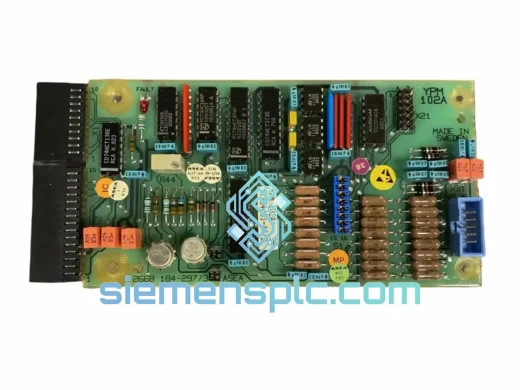
ABB YPM102A YT204001-AA Analog Output Module – AC 800M S800 I/O
S800
Origin SE
Analog Output Module
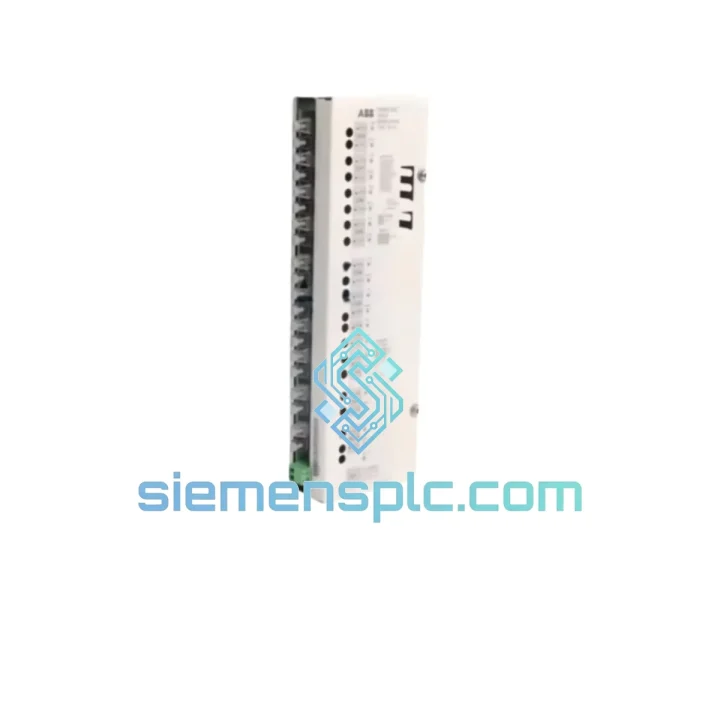
Request verified availability, condition, replacement risk review, packing options and courier lead time for NDBU-95C.
Click Request Quote and the part number is inserted into the inquiry form automatically.
Core fields for model confirmation and RFQ routing. Detailed product narrative remains below.
The ABB NDBU-95C, catalogued under part number 3AFE64008366, is a dedicated digital input/output extension unit engineered for deployment within ABB ACS800 series variable-frequency drive platforms. Its primary function is to expand the native I/O capacity of the ACS800 drive controller via the DDCS (Distributed Drives Communication System) fiber-optic bus, enabling deterministic, noise-immune signal exchange between the drive and external field devices across physically distributed control panels.
In multi-drive installations — such as those found in steel rolling mills, paper machine sections, marine propulsion systems, and large-scale HVAC plants — the NDBU-95C serves as the peripheral node in a DDCS ring or star topology. Each unit connects to the drive’s DDCS master port using duplex plastic or glass fiber-optic cables, achieving galvanic isolation between the drive’s power electronics and the I/O field wiring. This architecture eliminates ground-loop interference and common-mode noise that would otherwise corrupt digital signal integrity in high-power environments where bus voltages and switching transients are significant.
The module occupies a standard ACS800 option slot and draws its operating power directly from the drive’s internal 24 VDC auxiliary supply, removing the need for an external power rail. Its compact form factor and DIN-rail-compatible mounting bracket allow integration into both drive-mounted and remote panel configurations without structural modification to the existing cabinet layout.
Real-time Stock & RFQ: [email protected] | WhatsApp: +86 18359268345
| Parameter | Value |
|---|---|
| Manufacturer | ABB |
| Part Number | 3AFE64008366 |
| Model Designation | NDBU-95C |
| Product Series | ACS800 Drive Option Modules |
| Module Function | Digital I/O Extension via DDCS Fiber-Optic Bus |
| Communication Protocol | DDCS (Distributed Drives Communication System) |
| Physical Interface | Duplex plastic or glass fiber-optic (HFBR connectors) |
| Digital Inputs | Expandable DI channels (24 VDC logic, sink/source configurable) |
| Digital Outputs | Expandable DO channels (relay or transistor type, drive-dependent) |
| Supply Voltage | 24 VDC ± 10% (sourced from ACS800 auxiliary supply) |
| Power Consumption | ≤ 5 W typical |
| Operating Temperature | 0 °C to +55 °C |
| Storage Temperature | −40 °C to +70 °C |
| Relative Humidity | 5–95%, non-condensing |
| Degree of Protection | IP20 (module body) |
| Mounting | ACS800 option slot / DIN rail (with bracket) |
| Weight | Approx. 400 g |
| Compliance | CE, RoHS, UL (drive-level certification) |
| Compatible Drive Platform | ABB ACS800-01/-02/-04/-07/-11/-17/-31/-37, ACS800 Multi-Drive |
| Warranty | 12 months from date of shipment |
The NDBU-95C’s architecture is built around the DDCS fiber-optic communication layer, which operates at a fixed baud rate synchronized to the ACS800 drive’s internal control cycle. Unlike conventional copper-based fieldbus extensions, the fiber-optic physical layer provides inherent galvanic isolation — there is no electrical continuity between the drive’s control board and the NDBU-95C’s field terminal block. This is not a passive optical coupler arrangement; the module contains its own microcontroller that handles DDCS frame decoding, I/O state latching, and fault reporting independently of the drive’s main CPU load.
From an EMC standpoint, the NDBU-95C addresses two distinct interference vectors. First, conducted emissions from the drive’s IGBT switching stages (typically 4–16 kHz carrier frequency, with harmonic content extending into the MHz range) are fully blocked at the fiber-optic interface — no common-impedance coupling path exists. Second, radiated field immunity is achieved through the module’s shielded PCB layout, where the I/O signal traces are routed with guard rings and the terminal block connectors are positioned at the cabinet-facing edge, away from the fiber-optic transceiver circuitry.
The DDCS protocol itself uses a time-division multiplexed frame structure. The ACS800 master polls each NDBU-95C node within a deterministic scan cycle, typically 2–10 ms depending on the number of nodes in the ring. Each node responds with its current I/O state within a single frame period, ensuring that the drive’s application program receives consistent, time-stamped I/O data without jitter introduced by bus arbitration contention — a characteristic that distinguishes DDCS from token-passing or CSMA/CD-based alternatives.
The module’s digital input circuitry uses optical isolation at the terminal interface, with a minimum input filter time of 1 ms (hardware-configurable via drive parameters) to suppress contact bounce and high-frequency noise spikes from inductive field devices such as proximity sensors and relay coils. Output drivers are protected against short-circuit and overload conditions, with thermal shutdown logic that reports fault status back to the drive via the DDCS status word — enabling the application program to execute a controlled stop sequence rather than an uncontrolled trip.
Every ABB NDBU-95C (3AFE64008366) unit dispatched from our Xiamen, China facility is sourced through verified supply channels and subjected to a structured pre-shipment inspection protocol. Label authenticity, date code consistency, and connector condition are verified against ABB’s published hardware revision documentation. Units are powered on where test fixtures permit, and DDCS communication handshake is confirmed prior to packaging.
Packaging follows anti-static and mechanical protection standards: each module is sealed in an ESD-shielded bag, placed in foam-lined inner packaging, and enclosed in a double-wall corrugated outer carton rated for international air and sea freight handling. Shipments from Xiamen reach major industrial hubs in Southeast Asia within 3–5 business days via express air freight, and European and North American destinations within 5–8 business days. DHL, FedEx, and UPS express accounts are maintained for time-critical orders. Sea freight consolidation is available for bulk orders exceeding 10 units.
All shipments are accompanied by a commercial invoice, packing list, and certificate of origin. Export classification and HS code documentation are prepared in compliance with Chinese customs regulations and destination-country import requirements. A 12-month warranty covers manufacturing defects and functional failure under normal operating conditions. Warranty claims are processed with a target response time of 48 hours from receipt of the defective unit.
Email: [email protected]
WhatsApp: +86 18359268345
Web: siemensplc.com
Location: Xiamen, China
© 2026 siemensplc.com. All rights reserved.
We check the full part number, brand, series and visible nameplate information before quotation.
Sales confirms stock path, condition option, quantity and realistic lead time for export dispatch.
DHL, FedEx, UPS or buyer courier arrangements can be reviewed with packing requirements.
Similar brand or category products for fast comparison and multi-item RFQ lists.