
ABB
In Stock OK
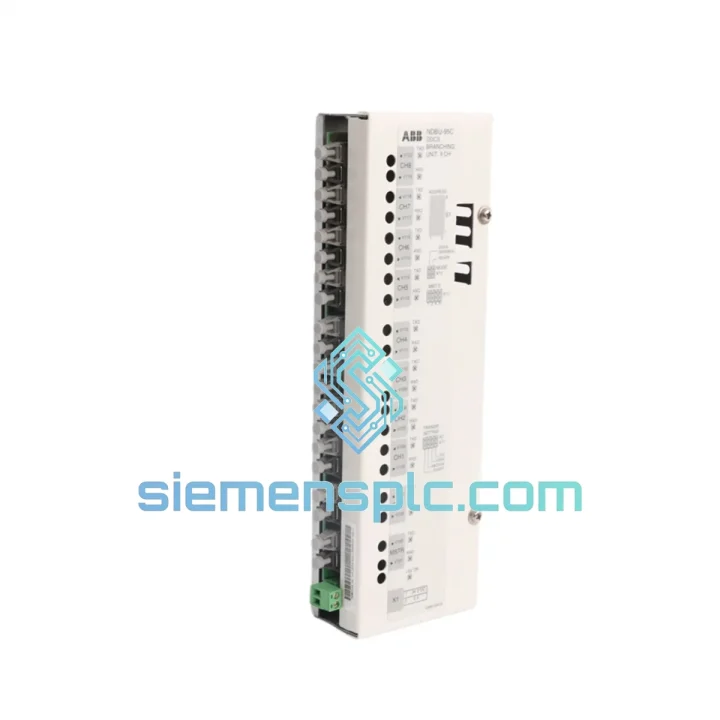
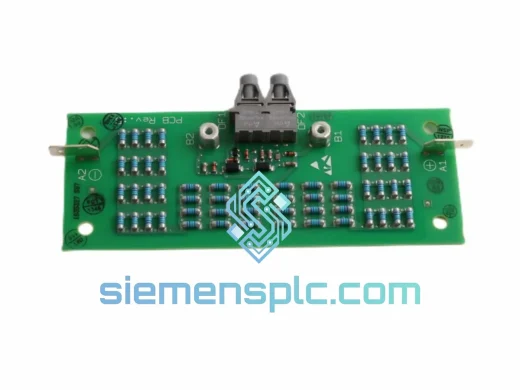
ABB NDBU-95C Fiber Optic Branching Unit – DDCS Series
Request verified availability, condition, replacement risk review, packing options and courier lead time for NDBU-95C.
BrandABB
Part NumberNDBU-95C
ConditionAvailability Check
Lead TimeRFQ Confirmation
DocumentsDatasheet / photos by RFQ
ShippingExport packing available
Auto-filled RFQ
NDBU-95C
Click Request Quote and the part number is inserted into the inquiry form automatically.
- Reply by email: [email protected]
- WhatsApp / Tel: +86 18359268345
- Mon-Sat 9:00-18:00 GMT+8
Procurement Data
Key Product Information
Core fields for model confirmation and RFQ routing. Detailed product narrative remains below.
- Brand
- ABB
- Primary Part Number
- NDBU-95C
- Product Type
- Fiber Optic Communication Module
- Series / Family
- S800
- Manufacturer
- ABB Ltd.
- Country of Origin
- SE
- Model Function
- Fiber Optic Ring Branching Unit — Active Hub
- Catalog Category
- Motor Drives
- Operating Temp.
- 0 °C to +55 °C
- Warranty
- 12 months from date of shipment
- Compliance
- CE, RoHS
Model confirmed for inquiry
NDBU-95C
Send quantity, destination and urgency. The RFQ form keeps this part number attached.
Request Quote
Product Overview
ABB NDBU-95C: Fiber Optic Branching Architecture in Multi-Drive DDCS Control Loops
In high-power multi-drive installations — rolling mills, winder sections, marine thruster arrays, crane systems — the integrity of the inter-drive communication ring is not a secondary concern. It is the backbone of coordinated motion control. The ABB NDBU-95C is the branching node that physically constructs and sustains that ring. It is not a passive splitter; it is an active fiber optic hub that manages the DDCS (Distributed Drive Control System) token-passing protocol across up to nine slave channels simultaneously, while maintaining the deterministic cycle time that high-performance torque-sharing applications demand.
The NDBU-95C belongs to ABB’s NDBU family of DDCS branching units, positioned specifically for systems requiring nine downstream slave ports. It operates as the physical-layer hub between the master controller — typically an ABB AC500 or AC800M PLC equipped with a DDCS master board — and the individual drive units (ACS800, ACS880, DCS800) fitted with RDCO-0x option boards. Each port uses 1 mm plastic optical fiber (POF) with HFBR-type connectors, providing galvanic isolation between all nodes and eliminating ground-loop interference that would otherwise corrupt high-resolution speed and torque reference signals in environments with large motor drives switching at multi-kilohertz PWM frequencies.
Real-time Stock & RFQ: [email protected] | WhatsApp: +86 18359268345
Technical Parameters
| Part Number | NDBU-95C |
| Manufacturer | ABB Ltd. |
| Series | DDCS (Distributed Drive Control System) |
| Function | Fiber Optic Ring Branching Unit — Active Hub |
| Slave Channels | 9 × HFBR-type plastic fiber optic ports |
| Master Channel | 1 × DDCS ring input/output (upstream) |
| Fiber Type | 1 mm POF (Plastic Optical Fiber), HFBR connectors |
| Max Segment Length | Up to 10 m per fiber segment (POF) |
| Topology Support | Ring and star configurations |
| Supply Voltage | 24 VDC ± 10% |
| Power Consumption | Approx. 5 W typical |
| Operating Temperature | 0 °C to +55 °C |
| Storage Temperature | −40 °C to +70 °C |
| Relative Humidity | 5–95%, non-condensing |
| Mounting | DIN rail (35 mm) |
| Enclosure | IP20 |
| Weight | 720 g |
| Compliance | CE, RoHS |
| Compatible Drives | ACS800, ACS880, DCS800 (with RDCO-0x option board) |
| Compatible Controllers | AC500, AC800M with DDCS master interface |
| Warranty | 12 months from date of shipment |
| Lead Time | In-stock units: 3–5 business days; sourced units: 2–4 weeks |
Hardware Logical Analysis
The NDBU-95C implements an active optical repeater architecture at each port rather than a passive optical splitter. This distinction is critical: a passive splitter divides optical power across branches, causing signal attenuation proportional to the number of ports. The NDBU-95C instead receives, regenerates, and retransmits the DDCS data frame at each slave port independently, preserving signal integrity regardless of the number of connected nodes. This active regeneration is what allows the unit to maintain the DDCS protocol’s deterministic 2 ms cycle time across all nine channels without accumulated jitter.
From an EMC standpoint, the transition to plastic optical fiber at every node boundary provides complete galvanic isolation. In a typical multi-drive cabinet where 690 V AC bus bars and high-frequency IGBT switching coexist within 300–500 mm of control wiring, conducted and radiated interference levels can exceed 100 dB·μV/m in the 150 kHz–30 MHz range. Copper-based fieldbus solutions require extensive shielding and grounding discipline to operate reliably in this environment. The NDBU-95C eliminates this constraint entirely: the fiber link carries no electrical potential, making it immune to common-mode voltages, ground potential differences between drive cabinets, and capacitively coupled switching transients.
The token-passing arbitration logic embedded in the DDCS protocol assigns each slave node a fixed time slot within the communication cycle. The NDBU-95C’s role is to ensure that the token frame arrives at each slave port within the allocated window. Because the unit uses active regeneration with fixed propagation delay per port, the timing budget is predictable and consistent — a property that passive hubs cannot guarantee. This determinism is the foundation for torque-sharing and speed-synchronization algorithms running in the master PLC, where a missed or delayed token would corrupt the reference update and introduce speed deviation between mechanically coupled drives.
The HFBR connector interface used on the NDBU-95C is a push-pull bayonet-style coupling that provides a defined insertion depth and repeatable optical alignment. This mechanical precision ensures consistent coupling efficiency across maintenance cycles — a factor that matters in installations where fiber connectors may be disconnected and reconnected during annual drive servicing. The 1 mm POF core diameter provides a generous alignment tolerance compared to glass fiber, reducing the risk of misalignment-induced signal degradation during field maintenance.
System Integration Benefits
- Deterministic cycle time preservation: Active regeneration at each port maintains the DDCS 2 ms token cycle across all nine slave channels, enabling real-time torque and speed reference updates without accumulated latency.
- Galvanic isolation at every node: Fiber optic links eliminate ground loop currents between drive cabinets, removing a primary source of communication errors in high-power installations.
- Ring topology fault tolerance: In ring configuration, a single fiber break causes the ring to reconfigure automatically, maintaining communication to all remaining nodes without manual intervention.
- Scalable multi-drive architecture: Multiple NDBU-95C units can be daisy-chained on the master ring, extending the system to 18, 27, or more slave drives while preserving the same communication structure.
- Diagnostic transparency: The DDCS protocol transmits drive status words, fault codes, and actual values back to the master on every cycle. The NDBU-95C passes this upstream data without modification, giving the PLC full visibility into each drive’s operating state in real time.
- Reduced cabinet wiring complexity: A single fiber cable per slave drive replaces multi-conductor shielded copper cables, reducing wiring labor, connector count, and potential failure points in the control cabinet.
- Compatibility with existing ABB drive infrastructure: The NDBU-95C integrates directly with ACS800, ACS880, and DCS800 drives fitted with RDCO-0x option boards — no firmware changes or additional configuration layers required for basic ring commissioning.
- Consistent signal quality over service life: Optical fiber does not degrade due to oxidation, vibration-induced micro-fretting, or insulation breakdown — failure modes that affect copper connectors in high-vibration industrial environments over multi-year service periods.
- Simplified commissioning documentation: The fixed, predictable topology of a DDCS ring built around NDBU-95C units maps directly to ABB’s drive commissioning tools (DriveWindow, Drive Composer), reducing the time required to configure node addresses and verify communication status during startup.
Quality Assurance & Global Logistics
Every NDBU-95C unit supplied by siemensplc.com is sourced through verified industrial supply channels with full traceability to ABB’s authorized distribution network. Prior to dispatch, each unit undergoes physical inspection covering label authenticity, connector condition, housing integrity, and date code verification against ABB production records. Units are ESD-packaged in anti-static bags with foam cushioning and shipped with a certificate of inspection.
Our operations are based in Xiamen, China — a designated free trade zone port with direct access to international freight carriers including DHL Express, FedEx International Priority, UPS Worldwide, and sea freight consolidators for bulk orders. Xiamen’s port infrastructure supports same-day export documentation processing, enabling in-stock units to clear customs and reach destinations in Southeast Asia within 3–5 business days, Europe and the Middle East within 5–7 business days, and the Americas within 5–8 business days. All shipments include commercial invoice, packing list, certificate of origin, and HS code classification documentation to facilitate smooth customs clearance at the destination port.
Payment is accepted via T/T bank transfer, PayPal, Western Union, and other terms agreed with qualified buyers. Multi-currency invoicing is available in USD, EUR, and CNY. A 12-month warranty covers all units against manufacturing defects and functional failures under normal operating conditions from the date of shipment.
Contact Information
Email: [email protected]
WhatsApp: +86 18359268345
Web: siemensplc.com
Location: Xiamen, China
© 2026 siemensplc.com. All rights reserved.
Ready to quote
[email protected]
Send This Part Number to Sales
RFQ workflow
Quality workflow ->
Confirmation Process
01Model confirmation
We check the full part number, brand, series and visible nameplate information before quotation.
02Availability reply
Sales confirms stock path, condition option, quantity and realistic lead time for export dispatch.
03Packing & courier
DHL, FedEx, UPS or buyer courier arrangements can be reviewed with packing requirements.
Continue sourcing
Browse full catalog ->
Related Automation Parts
Similar brand or category products for fast comparison and multi-item RFQ lists.
ABB
RFQ Ready
ABB SDCS-UCM-1 3ADT220090R0008 Excitation Control Board
S800
Origin SE
DC Drive Control Module
ABB
RFQ Ready
ABB SDCS-PIN-51-COAT 3ADT220090R0006 DC Drive Control Card
S800
Origin SE
DC Drive Control Card