ABB
RFQ Ready
ABB 3BHE012276R0102 Excitation Control Board – UNITROL Series
UNITROL
Origin SE
Excitation Control Board
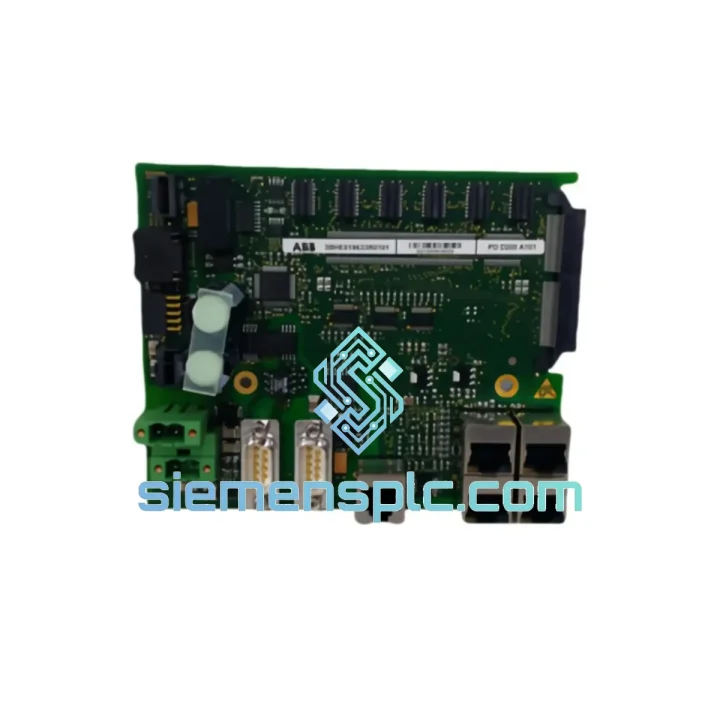
Request verified availability, condition, replacement risk review, packing options and courier lead time for 3BHE019633R0101.
Click Request Quote and the part number is inserted into the inquiry form automatically.
Core fields for model confirmation and RFQ routing. Detailed product narrative remains below.
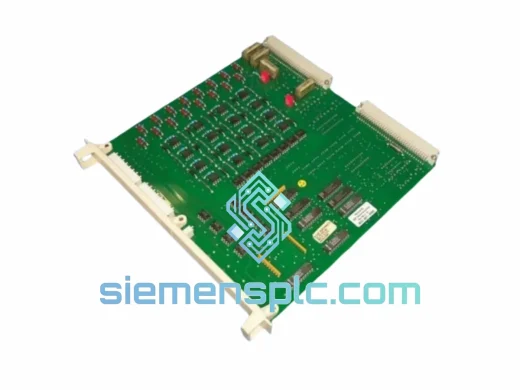
The ABB 3BHE019633R0101, module designation PDD200 A101, is a purpose-engineered exciter controller board designed for integration within ABB’s UNITROL 5000 and UNITROL 6000 automatic voltage regulator (AVR) platforms. Its operational mandate is precise closed-loop field current regulation for synchronous generators and large synchronous motors deployed in power generation stations, grid-connected industrial plants, and heavy-duty drive applications. The board sits at the functional boundary between the AVR master processor and the thyristor power conversion stage, translating normalized current setpoints into phase-angle firing commands with deterministic sub-millisecond execution.
Within the UNITROL control hierarchy, the PDD200 A101 receives field current demand signals from the upstream AVR processor via the chassis backplane bus. It compares these demand values against real-time field current measurements obtained through a galvanically isolated transducer interface, then computes the thyristor firing angle (α) using an embedded discrete PI regulation algorithm. The firing angle output is transmitted to the thyristor bridge gate drive circuit — via fiber-optic links in high-power configurations — ensuring complete electrical separation between the low-voltage control domain and the high-voltage power conversion stage. This separation is not incidental; it is a deliberate EMC architecture decision that eliminates conducted interference paths between the thyristor switching transients and the sensitive analog measurement circuitry on the controller board.
Protection logic is a first-class function of the PDD200 A101, not a delegated responsibility of the host AVR board. The module independently monitors over-excitation (OEL), under-excitation (UEL), and loss-of-field (LOF) conditions. When any monitored parameter breaches its configured threshold, the module asserts a protection flag directly to the system supervisory bus. Because this logic executes within the module’s own control loop cycle — rather than waiting for inter-board communication — protection response latency is bounded by the module’s firmware cycle time, typically in the single-digit millisecond range. This characteristic is consistent with generator protection coordination requirements defined under IEEE C37.102 and supports grid-code compliance in utility-scale power plant applications.
The signal acquisition chain begins at the field current measurement input, where an isolation amplifier stage converts the raw DC field current signal from the transducer into a scaled analog voltage referenced to the board’s local ground plane. An anti-aliasing low-pass filter conditions the signal before it enters the onboard analog-to-digital converter. The digitized measurement feeds the PI control algorithm, which outputs a phase-angle command updated at each control cycle. This architecture ensures that measurement noise and transient disturbances are attenuated before influencing the firing angle calculation, contributing to stable voltage regulation under dynamic load conditions.
For maintenance engineers executing an unplanned replacement of a failed PDD200 A101, the module’s initialization behavior is operationally significant. System configuration parameters — including PI gain settings, protection thresholds, and setpoint scaling — are retained on the UNITROL master AVR board. Upon insertion of a replacement PDD200 A101, the master board re-synchronizes with the new module during the startup sequence without requiring standalone firmware programming or parameter re-entry. This design characteristic directly reduces generator outage duration during emergency maintenance events, where minimizing downtime is the primary operational constraint.
siemensplc.com maintains verified stock of the ABB 3BHE019633R0101 sourced through established industrial supply channels. Each unit is subject to a pre-dispatch inspection covering part number and label authenticity, PCB and connector physical integrity, ESD packaging compliance, and serial number documentation for traceability. Shipments originate from Xiamen, China, using DHL Express and FedEx International Priority, with standard transit times of 3–7 business days to Europe, 2–5 business days to Southeast Asia, and 5–10 business days to the Americas and Middle East.
Real-time Stock & RFQ: [email protected] | WhatsApp: +86 18359268345
| Part Number | 3BHE019633R0101 |
| Module Designation | PDD200 A101 |
| Manufacturer | ABB Ltd. (ASEA Brown Boveri) |
| Product Series | UNITROL Excitation Control |
| Primary Function | Closed-loop field current regulation; thyristor firing angle control |
| Compatible Platforms | UNITROL 5000, UNITROL 6000 (confirm BOM revision for UNITROL 1000) |
| Regulation Algorithm | Discrete PI control with configurable gain parameters |
| Field Current Feedback | Galvanically isolated transducer input with onboard ADC signal chain |
| Gate Drive Output | Thyristor firing angle command; fiber-optic output compatible in high-power configurations |
| Protection Functions | OEL (Over-Excitation Limiter), UEL (Under-Excitation Limiter), LOF (Loss-of-Field) |
| Protection Response | Single-digit millisecond range (module-local execution) |
| Backplane Interface | UNITROL chassis backplane bus (parallel/serial, platform-specific) |
| Watchdog Function | Backplane communication health monitor with safe-state fallback |
| Operating Temperature | 0 °C to +55 °C |
| Storage Temperature | −25 °C to +70 °C |
| Relative Humidity | 5–95% RH, non-condensing |
| PCB Form Factor | Plug-in module, rack/chassis mount |
| Approximate Weight | 500 g |
| Compliance | CE marking; IEC 60068-2 environmental testing; IEC 60664-1 isolation coordination |
| Country of Origin | Germany |
| Warranty | 12 months from dispatch date against manufacturing defects |
Isolation Barrier Architecture: The field current measurement input crosses a galvanic isolation barrier implemented via a dedicated isolation amplifier. This barrier is rated to withstand transient overvoltages consistent with IEC 60664-1 Category III industrial environments. Generator field circuits can produce common-mode transients of several hundred volts during fault clearing events; without this isolation stage, such transients would propagate directly into the 3.3 V or 5 V digital logic domain, causing logic corruption or component failure. The isolation amplifier output is referenced to the board’s local analog ground, which is itself separated from the digital ground plane by a controlled impedance bridge — a standard technique for minimizing analog-digital ground coupling in mixed-signal PCB designs.
Multi-Layer PCB EMC Stack-Up: The PDD200 A101 employs a multi-layer PCB construction with dedicated power and ground planes. Analog measurement circuits occupy a physically separated board region from the digital processing logic, with the ground plane split managed to prevent return current from digital switching from flowing beneath sensitive analog traces. Decoupling capacitors are placed at each IC power supply pin to suppress high-frequency switching noise at the source. The thyristor gate pulse output path uses fiber-optic transmission in high-power UNITROL configurations, providing complete galvanic isolation between the control board and the thyristor bridge — eliminating the conducted EMI coupling path that would otherwise exist through a copper gate drive cable running adjacent to high dV/dt switching nodes.
Embedded Protection Execution: OEL, UEL, and LOF protection functions execute within the PDD200 A101’s own firmware, not as tasks delegated to the UNITROL master AVR board. This partitioning means protection response time is determined by the module’s local control loop cycle period rather than the round-trip latency of the inter-board backplane communication. In practical terms, this architecture supports protection assertion times in the single-digit millisecond range, which aligns with the coordination margins required by generator protection relay schemes designed per IEEE C37.102. The protection flags are simultaneously asserted to the backplane supervisory bus, allowing the master AVR board and any connected SCADA system to log the event with a timestamped fault code.
Backplane Watchdog and Safe-State Logic: The module’s firmware includes a communication watchdog timer that monitors the validity and periodicity of setpoint data received from the master AVR board over the backplane bus. If valid setpoint data is not received within a configured timeout window — indicating a backplane fault, master board failure, or communication error — the watchdog triggers a safe-state response. Depending on system configuration, this response either holds the last valid thyristor firing angle or de-energizes the field circuit in a controlled manner. This behavior prevents uncontrolled field current excursions during system-level faults, which could otherwise result in generator over-voltage or loss of synchronism.
Thermal Design Margins: Component placement on the PDD200 A101 is arranged to manage thermal dissipation within the UNITROL chassis convection cooling envelope. High-dissipation components are positioned to maximize airflow exposure, and component spacing is calculated to maintain junction temperatures within rated limits at the maximum specified ambient of 55 °C. This thermal margin is relevant for installations in tropical climates or poorly ventilated control rooms where ambient temperatures approach the upper end of the rated range.
Every ABB 3BHE019633R0101 dispatched by siemensplc.com passes a structured pre-shipment inspection protocol. Inspection steps include: part number and label verification against ABB documentation references; physical examination of the PCB surface, edge connectors, and component bodies for mechanical damage; ESD packaging compliance check confirming anti-static bag integrity and humidity indicator card condition for sea freight consignments; and serial number and date code recording for shipment traceability documentation. A certificate of conformance is available upon request for procurement processes requiring documented quality evidence.
Logistics operations are based in Xiamen, China. Primary export carriers are DHL Express and FedEx International Priority. Standard transit times are 3–7 business days to European destinations, 2–5 business days to Southeast Asian destinations, and 5–10 business days to the Americas and Middle East. Sea freight consolidation is available for multi-unit orders where project lead time permits. All shipments include a commercial invoice, packing list, and country-of-origin certificate to support customs clearance. HS code documentation and export classification records are provided on request for regulated procurement environments.
The 12-month warranty covers manufacturing defects and component failures under normal operating conditions from the dispatch date. Warranty claims are initiated via email with photographic documentation and a written fault description. Replacement units or credit notes are issued following technical review of the submitted evidence.
Email: [email protected]
WhatsApp: +86 18359268345
Web: siemensplc.com
Location: Xiamen, China
© 2026 siemensplc.com. All rights reserved.
We check the full part number, brand, series and visible nameplate information before quotation.
Sales confirms stock path, condition option, quantity and realistic lead time for export dispatch.
DHL, FedEx, UPS or buyer courier arrangements can be reviewed with packing requirements.
Similar brand or category products for fast comparison and multi-item RFQ lists.