ABB
RFQ Ready
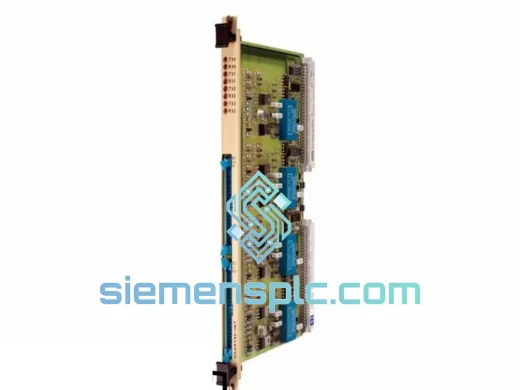
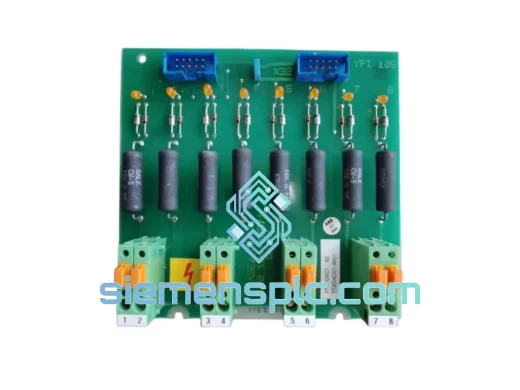
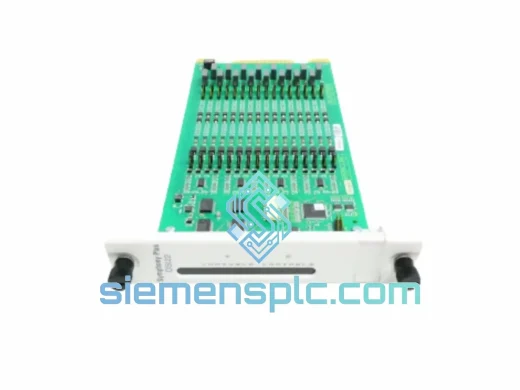
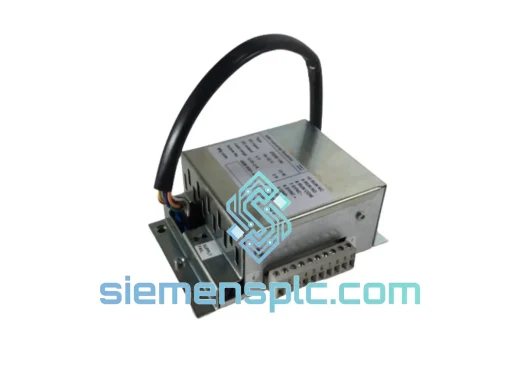
ABB 3BHB000272R0101 DCS I/O Interface Module
Symphony Plus
Origin SE
DCS I/O Interface Module
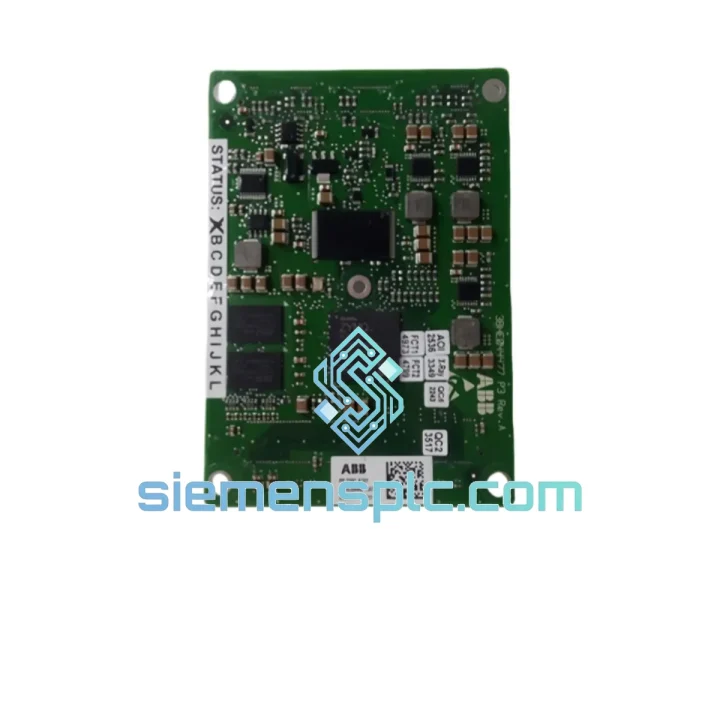
Request verified availability, condition, replacement risk review, packing options and courier lead time for 3BHE044481R0101 PPE091 A101.
Click Request Quote and the part number is inserted into the inquiry form automatically.
Core fields for model confirmation and RFQ routing. Detailed product narrative remains below.
The ABB 3BHE044481R0101, designated model PPE091 A101, is a dedicated analog expansion card engineered for deployment within ABB’s Symphony Plus and AC800M distributed control system platforms. Its primary function is to extend the analog signal acquisition and output capacity of the host controller rack, enabling high-density process variable monitoring across multi-loop industrial installations. In a typical DCS control loop, this module occupies a defined slot on the S800 or equivalent I/O bus, where it interfaces directly with field transmitters, control valves, and actuator positioners through 4–20 mA or ±10 V signal paths.
Unlike generic I/O expanders, the PPE091 A101 is designed around ABB’s proprietary backplane communication protocol, which enforces deterministic data transfer cycles between the expansion card and the CPU module. Each analog channel is individually scanned at a fixed rate governed by the controller’s task execution period, ensuring that process variable updates arrive at the control algorithm with consistent latency — a non-negotiable requirement in closed-loop PID and cascade control strategies where scan jitter directly translates to control deviation.
The module’s signal conditioning circuitry incorporates per-channel galvanic isolation, implemented through optocoupler barriers rated for continuous operation at industrial common-mode voltages. This architecture prevents ground loop currents — a persistent source of measurement error in large-scale plant installations where field instruments and control panels share separate earthing systems — from corrupting the analog signal chain. The isolation barrier also provides a defined withstand voltage between field wiring and the backplane bus, protecting the controller from transient overvoltages induced by nearby switching equipment or lightning events on cable runs.
From a system integration perspective, the 3BHE044481R0101 supports ABB’s online module replacement procedure, allowing maintenance personnel to extract and reinsert the card without de-energizing the rack or interrupting the controller’s execution cycle. The backplane arbitration logic detects the module’s removal, flags the affected channels as unavailable in the controller’s I/O health register, and automatically re-initializes the channel configuration upon reinsertion — all within the controller’s normal scan cycle. This behavior is critical in continuous process industries such as refining, power generation, and chemical manufacturing, where planned shutdowns carry significant production cost.
Signal accuracy is maintained through a 16-bit analog-to-digital conversion stage per input channel, delivering a resolution of approximately 0.0015% of full scale. The output channels employ a corresponding 16-bit DAC architecture with a guaranteed monotonicity specification, meaning the output signal increases or decreases without reversal for any increment of the digital command word — a property essential for valve positioner control where non-monotonic output behavior causes hunting and mechanical wear. All channel calibration data is stored in non-volatile memory within the module itself, so calibration parameters survive power cycling and module replacement without requiring re-entry at the engineering workstation.
The module’s EMC design follows IEC 61000-4 series test standards, with particular attention to conducted and radiated immunity in the frequency bands most prevalent in industrial environments: variable-frequency drive switching harmonics (typically 2–150 kHz), high-frequency burst transients from contactor switching (IEC 61000-4-4, 2 kV), and electrostatic discharge events (IEC 61000-4-2, 4 kV contact). The PCB layout routes analog signal traces away from digital clock lines and uses a split ground plane strategy to minimize capacitive coupling between the high-frequency digital domain and the precision analog front end.
For procurement and technical consultation, contact our engineering team directly: [email protected] | WhatsApp: +86 18359268345. Stock confirmation and RFQ responses are issued within one business day.
| Parameter | Specification |
|---|---|
| Part Number | 3BHE044481R0101 |
| Model Designation | PPE091 A101 |
| Series | PPE091 |
| Manufacturer | ABB (ASEA Brown Boveri) |
| Module Category | Analog Expansion Card / DCS I/O Module |
| Compatible Platforms | ABB Symphony Plus, AC800M, S800 I/O |
| Signal Types | 4–20 mA (current), ±10 V (voltage) |
| ADC Resolution (Input) | 16-bit per channel |
| DAC Resolution (Output) | 16-bit, guaranteed monotonic |
| Channel Isolation | Galvanic (optocoupler), per channel |
| Common-Mode Rejection | ≥ 80 dB at 50/60 Hz |
| Operating Temperature | 0 °C to +60 °C |
| Storage Temperature | −25 °C to +70 °C |
| Relative Humidity | 5–95% RH, non-condensing |
| Supply Voltage | 24 VDC via backplane bus |
| EMC Immunity | IEC 61000-4-2 (ESD), IEC 61000-4-4 (EFT), IEC 61000-4-5 (Surge) |
| Mounting | DIN rail / rack slot, backplane connector |
| Weight | 1,320 g |
| Country of Origin | Germany |
| Condition | Genuine OEM — New or tested surplus (specify at RFQ) |
| Warranty | 12 months from dispatch date |
The PPE091 A101’s internal architecture separates into three functional domains: the field interface layer, the signal conditioning layer, and the backplane communication layer. Understanding how these domains interact explains the module’s reliability characteristics in demanding process environments.
Field Interface Layer: Each analog input channel is terminated through a precision input impedance network that presents a defined load to the field transmitter — typically ≥ 10 MΩ for voltage inputs and ≤ 250 Ω burden for current loop inputs. This impedance matching prevents transmitter loading errors, which become significant when multiple parallel measurement points share a single transmitter output. The input protection circuit includes transient voltage suppression (TVS) diodes clamped to the isolation barrier’s withstand rating, providing a first line of defense against field wiring faults.
Signal Conditioning Layer: Following the isolation barrier, the analog signal enters a low-noise instrumentation amplifier stage with programmable gain. The gain setting is written by the controller during module initialization based on the channel configuration stored in the project engineering database. A successive-approximation ADC then digitizes the conditioned signal at the module’s internal sampling rate, which is synchronized to the backplane clock to eliminate aperture jitter between channels. The resulting digital words are buffered in a dual-port RAM structure accessible to both the local signal processor and the backplane interface logic.
Backplane Communication Layer: The module communicates with the CPU over ABB’s proprietary high-speed serial bus embedded in the rack backplane. The bus protocol uses a master-slave arbitration scheme where the CPU issues a cyclic read command to each I/O slot in sequence. The PPE091 A101 responds with a data frame containing channel values, channel status flags (over-range, under-range, wire-break detection), and module health bits. This status reporting mechanism allows the controller’s diagnostic logic to distinguish between a failed field instrument and a failed I/O channel — a distinction that significantly reduces mean time to repair in fault investigation scenarios.
EMC Design: The PCB employs a four-layer stackup with dedicated analog and digital ground planes separated by a split at the isolation barrier boundary. Decoupling capacitors are placed within 1 mm of each IC power pin to suppress high-frequency supply noise. Ferrite beads on the backplane power rails attenuate conducted interference from adjacent modules. The module housing provides shielding continuity through the rack frame, contributing to the system-level radiated emission performance.
Every ABB 3BHE044481R0101 PPE091 A101 unit dispatched from our Xiamen facility has passed a structured incoming inspection protocol. Visual examination confirms label integrity, connector pin condition, PCB surface cleanliness, and housing continuity against ABB’s OEM reference documentation. Where test fixtures are available, functional verification confirms backplane communication handshake and channel signal response prior to packaging.
Units are packed in anti-static ESD shielding bags, placed in foam-lined cartons rated for international air freight handling, and sealed with tamper-evident tape. Each shipment includes a commercial invoice, packing list, and certificate of origin prepared for customs clearance in the destination country. HS code documentation is provided upon request to facilitate import duty classification.
Logistics options from Xiamen, China include DHL Express (3–5 business days to most destinations), FedEx International Priority, and consolidated sea freight for large-volume orders. In-stock units are typically dispatched within 1–2 business days of payment confirmation. Tracking information is provided at the time of dispatch. For time-critical plant shutdowns, expedited same-day dispatch can be arranged — contact us directly to confirm availability and cutoff times.
All units carry a 12-month warranty from the dispatch date, covering defects in materials and workmanship under normal operating conditions. Dead-on-arrival units are replaced or refunded within 30 days. Post-sale technical support for installation and compatibility verification is provided at no additional charge by our engineering team.
Email: [email protected]
WhatsApp: +86 18359268345
Web: siemensplc.com
Location: Xiamen, China
© 2026 siemensplc.com. All rights reserved.
We check the full part number, brand, series and visible nameplate information before quotation.
Sales confirms stock path, condition option, quantity and realistic lead time for export dispatch.
DHL, FedEx, UPS or buyer courier arrangements can be reviewed with packing requirements.
Similar brand or category products for fast comparison and multi-item RFQ lists.