ABB
RFQ Ready
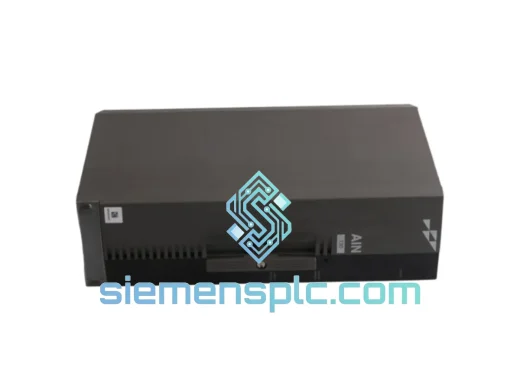
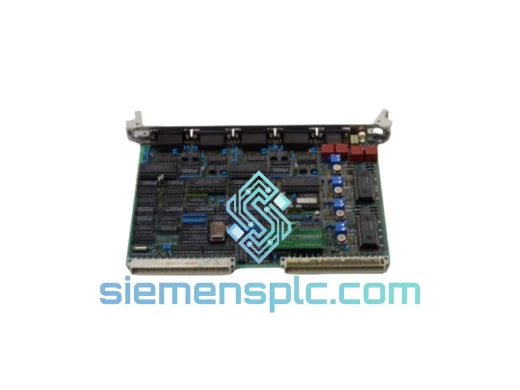
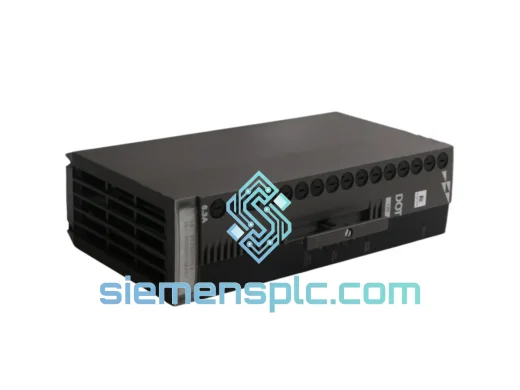
ABB P-HB-DOT-12010000 Safety Digital Output Module – AC500-S
AC500
Origin SE
Safety Digital Output Module
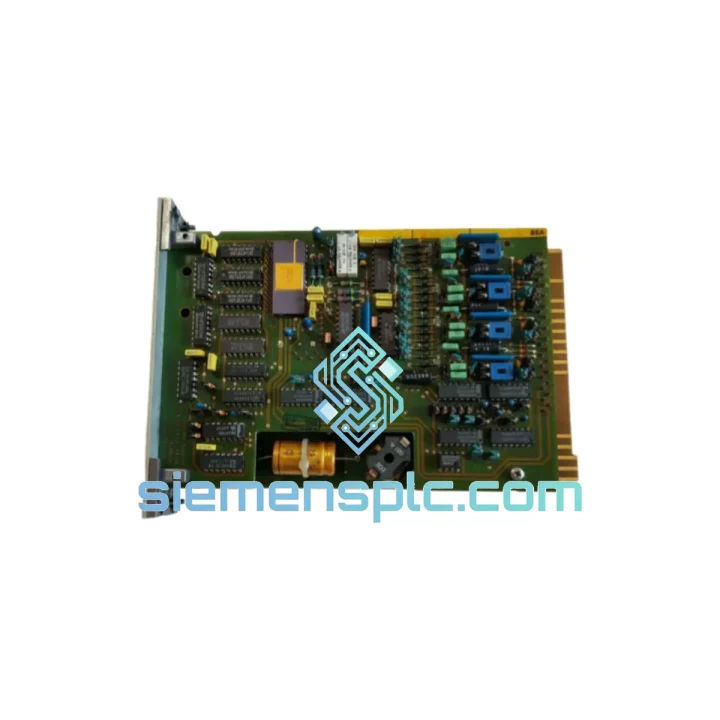
Request verified availability, condition, replacement risk review, packing options and courier lead time for 70AB02B-E.
Click Request Quote and the part number is inserted into the inquiry form automatically.
Core fields for model confirmation and RFQ routing. Detailed product narrative remains below.
The ABB 70AB02B-E is a digital I/O expansion module engineered for deployment within the ABB AC500 programmable logic controller platform. Its primary function within a control loop is to serve as the deterministic signal interface layer between field-level sensors and actuators and the AC500 CPU’s execution environment. Unlike generic I/O cards that rely on software polling, the 70AB02B-E participates in the AC500 backplane bus protocol, which operates on a time-sliced, priority-arbitrated communication cycle. This architecture guarantees that I/O data is refreshed synchronously with the CPU scan cycle, eliminating the jitter that characterizes asynchronous fieldbus-attached I/O in high-speed process control applications.
In a closed-loop control scenario — for example, a high-speed conveyor tension regulation system — the 70AB02B-E captures digital feedback signals from encoder index pulses or proximity sensors and presents them to the CPU within a bounded latency window. The module’s internal signal conditioning circuitry filters contact bounce and suppresses transient noise before the logical state is latched, ensuring that the CPU receives a clean, debounced representation of the physical process state. This is not a trivial function: in environments with variable-frequency drives, arc welding equipment, or high-current motor starters operating in proximity, the electromagnetic environment can corrupt unfiltered digital inputs at rates that exceed the CPU scan period, leading to spurious state transitions and control instability.
The 70AB02B-E addresses this through a combination of hardware-level input filtering with configurable time constants and optical isolation between the field-side terminals and the backplane logic. The optocoupler barrier provides galvanic isolation rated to withstand common-mode voltage transients, protecting the CPU backplane from ground potential differences that routinely occur in large industrial installations where field devices are powered from separate distribution panels. This isolation is not merely a compliance checkbox — it is a functional requirement in any installation where the field wiring runs exceed 10 meters or share cable trays with power conductors.
The module mounts directly onto the AC500 expansion rack and connects to the CPU via the internal backplane bus without requiring any external communication cable. This eliminates a common failure mode in distributed I/O architectures: connector degradation and cable-induced signal integrity issues. The backplane bus itself operates at a fixed clock rate, and the 70AB02B-E’s bus interface logic is implemented in dedicated hardware rather than firmware, which means bus participation latency is fixed and not subject to firmware execution variability.
From a system design perspective, the 70AB02B-E is particularly well-suited for applications requiring deterministic response to discrete events: emergency stop chain monitoring, safety interlock verification, valve position feedback, and motor run/fault status aggregation. Its channel density allows a single module to consolidate the I/O requirements of multiple field devices, reducing rack space consumption and simplifying cable management in panel-constrained installations.
Real-time Stock & RFQ: [email protected] | WhatsApp: +86 18359268345
| Parameter | Specification |
|---|---|
| Part Number | 70AB02B-E |
| Brand | ABB |
| Series | AC500 |
| Module Category | Digital I/O Expansion Module |
| Mounting | DIN rail via AC500 expansion rack |
| Bus Interface | AC500 internal backplane bus (proprietary, hardware-implemented) |
| Input Voltage Range (DI) | 24 V DC nominal (18–30 V DC operating range) |
| Input Current per Channel | Approx. 5 mA at 24 V DC |
| Input Filter Time Constant | Configurable via Automation Builder (0.1 ms – 20 ms) |
| Galvanic Isolation | Optocoupler isolation, field side vs. backplane logic |
| Output Type (DO) | Transistor (sourcing), short-circuit protected |
| Output Rated Current | 0.5 A per channel continuous |
| Output Voltage Drop | < 1.5 V at rated current |
| Operating Temperature | -25°C to +70°C |
| Storage Temperature | -40°C to +85°C |
| Relative Humidity | 5–95% RH, non-condensing |
| Protection Class | IP20 (IEC 60529) |
| EMC Compliance | EN 61000-6-2 (immunity), EN 61000-6-4 (emission) |
| Vibration Resistance | IEC 60068-2-6: 5–150 Hz, 1 g |
| Shock Resistance | IEC 60068-2-27: 15 g, 11 ms half-sine |
| Weight | Approx. 300 g |
| Certifications | CE, UL, cUL, RoHS, ATEX (zone 2 with appropriate housing) |
| Warranty | 12 months from date of shipment |
Optocoupler Isolation Architecture: Each digital input channel on the 70AB02B-E is terminated through a current-limiting resistor network into the anode of a dedicated optocoupler LED. The phototransistor output drives the backplane logic through a Schmitt-trigger buffer, which provides hysteresis to prevent oscillation at the logic threshold when the input signal is transitioning slowly — a condition that occurs with long cable capacitance or marginal sensor output drive capability. The isolation barrier is rated for continuous common-mode voltage, which is sufficient to handle the ground potential differences encountered in multi-panel industrial installations without requiring additional isolation relays.
EMC Design and Conducted Noise Rejection: The module’s PCB layout segregates the field-side circuitry from the backplane logic using a physical ground plane split, with the only coupling path being through the optocoupler. Bypass capacitors are placed at each power supply entry point to suppress conducted emissions from the backplane bus. The field-side terminal block connections are routed through common-mode chokes that attenuate differential-mode noise injected by inductive field devices switching under load. This multi-layer EMC approach allows the module to maintain correct I/O state representation in environments with radiated field strengths up to 10 V/m across the 80 MHz–1 GHz band, consistent with EN 61000-4-3 Level 3 test criteria.
Output Short-Circuit Protection: The transistor output stage incorporates a current-sensing feedback loop that limits output current to a safe level during a short-circuit condition and latches the output off after a configurable number of retry attempts. This prevents thermal runaway in the output driver without requiring external fusing on each channel, simplifying panel wiring and reducing the component count in the output circuit. The latch state is readable by the CPU as a diagnostic bit, enabling the application program to generate an alarm and log the fault event with a timestamp.
Backplane Bus Participation: The module’s bus interface logic implements the AC500 backplane protocol in dedicated gate-array logic, not in a microcontroller running firmware. This means the bus response time is fixed at the hardware propagation delay level — typically sub-microsecond — and is not subject to interrupt latency or firmware scheduling variability. The CPU can therefore rely on the I/O data being valid within a deterministic window after the bus cycle initiates, which is a prerequisite for implementing time-critical control algorithms such as cam-profile switching or high-speed counting with hardware-assisted capture.
Every ABB 70AB02B-E unit supplied through siemensplc.com is sourced from verified distribution channels with full lot traceability to ABB’s manufacturing records. Units are inspected upon receipt for label integrity, housing condition, connector pin geometry, and serial number consistency against ABB’s published part number database. Functional pre-shipment verification confirms bus interface response and I/O channel continuity before packaging.
Shipments originate from Xiamen, China, with access to DHL Express, FedEx International Priority, and UPS Worldwide Expedited services. Transit times to major industrial hubs: Europe 3–5 business days, Southeast Asia 2–4 business days, Middle East 4–6 business days, North America 5–7 business days. All shipments include a commercial invoice, packing list, and country-of-origin declaration. Export classification and HS code documentation are prepared for each shipment to facilitate customs clearance without delay. In-stock units ship within 1–2 business days of order confirmation. A 12-month warranty against manufacturing defects is included with every unit, covering failure under normal operating conditions as defined by ABB’s published environmental and electrical specifications.
Email: [email protected]
WhatsApp: +86 18359268345
Web: siemensplc.com
Location: Xiamen, China
© 2026 siemensplc.com. All rights reserved.
We check the full part number, brand, series and visible nameplate information before quotation.
Sales confirms stock path, condition option, quantity and realistic lead time for export dispatch.
DHL, FedEx, UPS or buyer courier arrangements can be reviewed with packing requirements.
Similar brand or category products for fast comparison and multi-item RFQ lists.