ABB
RFQ Ready
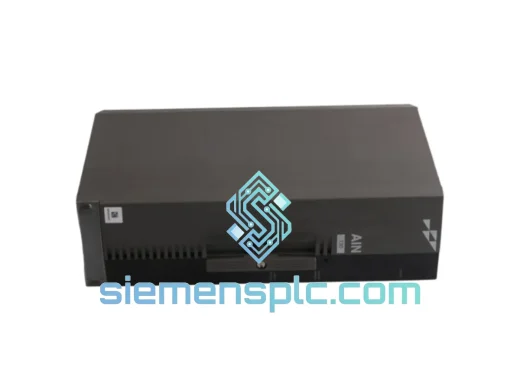
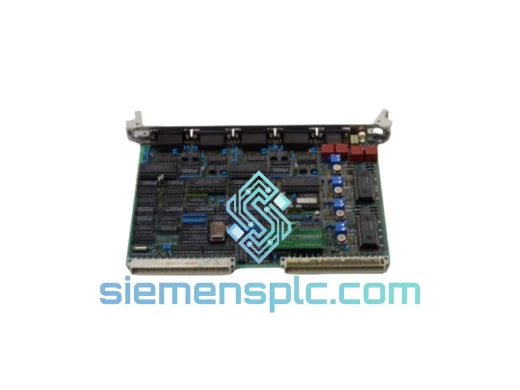
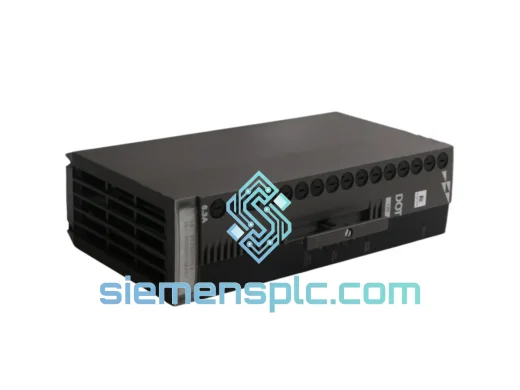
ABB P-HB-DOT-12010000 Safety Digital Output Module – AC500-S
AC500
Origin SE
Safety Digital Output Module
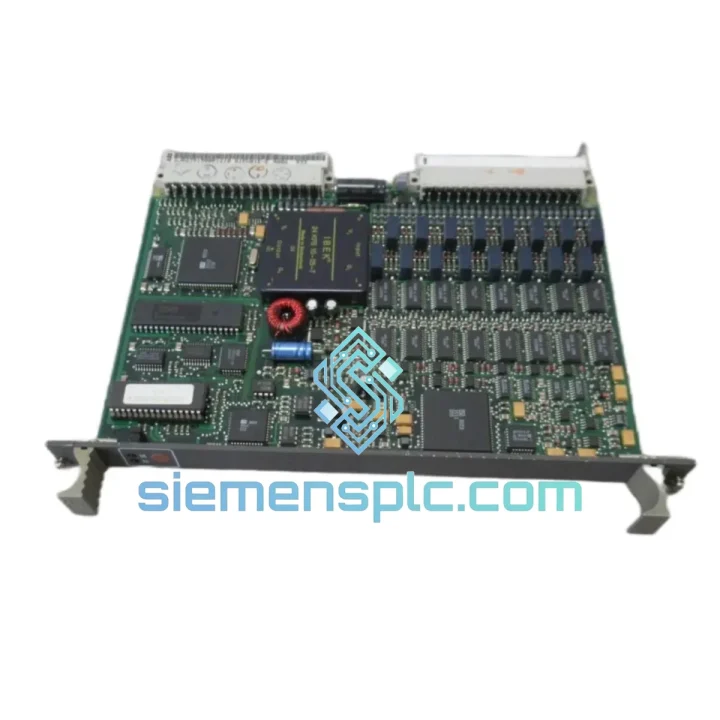
Request verified availability, condition, replacement risk review, packing options and courier lead time for 81EU01 GJR2391500R1210 81EU01E-E.
Click Request Quote and the part number is inserted into the inquiry form automatically.
Core fields for model confirmation and RFQ routing. Detailed product narrative remains below.
The ABB 81EU01, order code GJR2391500R1210, variant designation 81EU01E-E, is a software-configurable universal input module designed for deployment within ABB’s AC500 PLC platform and the Freelance distributed control system. Its defining characteristic is the elimination of signal-type-specific hardware: a single module accepts thermocouples (TC), resistance temperature detectors (RTD/PT100/PT1000), current loops (0–20 mA / 4–20 mA), voltage signals (0–10 V), and potential-free digital contacts — all within the same physical form factor. This architecture directly reduces panel cabinet footprint, simplifies spare-parts inventory management, and shortens commissioning time on multi-signal process installations.
In a control loop context, the 81EU01 occupies the field-interface layer between physical sensors and the AC500 CPU’s application program. Field transmitters and sensors wire directly to the module’s front-face screw terminals. The module’s onboard 16-bit analog-to-digital converter digitizes each channel’s signal, applies linearization (for TC and RTD types), and transfers the engineering-unit value to the CPU via the S500 internal backplane bus at each PLC scan cycle. The CPU then exposes these values as standard IEC 61131-3 typed variables — accessible to PID function blocks, alarm managers, historian interfaces, and SCADA OPC-UA servers without additional signal conditioning hardware.
Per-channel signal type and measurement range are configured entirely in software using ABB Automation Builder (AC500 platform) or Control Builder F (Freelance DCS). Configuration data is written to the module’s onboard EEPROM at startup; no hardware jumpers or DIP switches are required. This software-only configuration model supports rapid retasking of channels during plant modifications without physical rewiring or hardware replacement.
Real-time Stock & RFQ: [email protected] | WhatsApp: +86 18359268345
| Parameter | Value |
|---|---|
| Part Number | 81EU01 |
| Order Code | GJR2391500R1210 |
| Variant Designation | 81EU01E-E |
| Manufacturer | ABB Ltd. |
| Platform | AC500 PLC (S500 I/O bus) / Freelance DCS |
| Module Function | Universal Input Module |
| Supported Signal Types | TC (J, K, T, E, R, S, B), RTD PT100/PT1000, 0–20 mA, 4–20 mA, 0–10 V, Digital Input (dry contact) |
| A/D Resolution | 16-bit |
| Measurement Accuracy | ±0.1% of full scale (analog modes) |
| Channel Isolation | Galvanic channel-to-channel and channel-to-backplane bus |
| Supply Voltage | 24 V DC via S500 backplane bus |
| Operating Temperature | 0 °C to +60 °C |
| Storage Temperature | −40 °C to +85 °C |
| Relative Humidity | 5–95% RH, non-condensing |
| Protection Rating | IP20 |
| Mounting | DIN rail via AC500 S500 backplane |
| Certifications | CE, UL, cUL, ATEX Zone 2 (with appropriate enclosure) |
| Country of Origin | Germany |
| HS Code | 8537.10 |
| Warranty | 12 months against manufacturing defects |
The 81EU01’s internal architecture is structured around three functional layers: the field-side analog front-end, the isolation barrier, and the digital processing and bus-interface stage.
Analog Front-End and Signal Conditioning: Each input channel incorporates a programmable gain amplifier (PGA) whose gain range is selected by the firmware based on the configured signal type. For thermocouple inputs, a cold-junction compensation (CJC) sensor mounted on the module PCB measures the terminal block temperature and applies the Seebeck coefficient correction in firmware — eliminating the need for external CJC hardware. RTD measurement uses a precision constant-current excitation source; the resulting voltage drop across the RTD element is measured differentially, and the firmware applies the Callendar–Van Dusen equation for PT100/PT1000 linearization. For mA and V inputs, the PGA is configured for unity or low gain, and the signal is passed directly to the ADC after anti-aliasing filtering.
Galvanic Isolation Architecture: The isolation barrier between the field-side circuitry and the backplane-side digital logic is implemented using optocoupler arrays for digital signals and transformer-based DC/DC isolation for the analog measurement circuits. This dual-barrier approach achieves a working isolation voltage sufficient to withstand common-mode transients typical of industrial field wiring — including inductive load switching on shared cable trays. The isolation prevents ground-loop currents from corrupting measurement accuracy on long cable runs (up to 300 m for 4–20 mA loops per ABB application guidelines).
EMC Design: The module PCB incorporates multi-layer ground plane partitioning that separates the analog measurement ground from the digital logic ground, with a single-point star connection at the isolation barrier. Decoupling capacitors are placed at each power rail entry point. The front-face terminal block includes transient voltage suppression (TVS) diodes on each input channel to clamp ESD and fast transient bursts per IEC 61000-4-4 (EFT/Burst) and IEC 61000-4-2 (ESD) test levels. The module housing is designed to mate with the AC500 backplane’s shielded enclosure, contributing to the system’s overall radiated emissions compliance under EN 61131-2.
S500 Bus Interface: On the backplane side, the module communicates with the AC500 CPU via the S500 internal bus — a proprietary parallel bus operating at deterministic cycle times synchronized to the CPU’s task scheduler. The module’s bus interface logic implements a dual-port RAM architecture: the ADC writes digitized channel values to one port while the CPU reads from the other, ensuring that the CPU always retrieves a consistent, non-torn snapshot of all channel values within a single bus transaction. This eliminates the inter-channel time skew that would otherwise occur in a sequential polling architecture.
Every ABB 81EU01 (GJR2391500R1210) unit dispatched from our Xiamen, China facility undergoes a structured pre-shipment verification protocol. Label authentication confirms the GJR2391500R1210 barcode against ABB’s published order code database. PCB date codes are cross-referenced against known production batches to identify non-genuine assemblies. A functional power-on test verifies that the module initializes correctly on an AC500 backplane and that all channel diagnostic registers report nominal status. Firmware version is recorded and included in the shipment documentation.
Packaging follows ABB’s original anti-static bag and foam-lined export carton specification. ESD-safe handling procedures are maintained throughout the inbound inspection, storage, and outbound packing stages. Each shipment is accompanied by a pre-shipment inspection report; third-party inspection by SGS or Bureau Veritas is available upon request for high-value orders.
Standard export logistics from Xiamen utilize DHL Express or FedEx International Priority, with typical transit times of 3–5 business days to Europe, 2–4 days to Southeast Asia, and 4–7 days to North America. Sea freight consolidation is available for bulk orders. Export documentation — commercial invoice, packing list, certificate of origin, and ECCN classification (EAR99) — is prepared to the destination country’s import requirements. Customs clearance support is provided for major trade lanes.
A 12-month warranty against manufacturing defects is provided from the date of shipment. Dead-on-arrival (DOA) units are replaced within 7 business days of confirmed fault diagnosis. Warranty claims are processed via email with photographic evidence and, where required, return of the defective unit for inspection.
Email: [email protected]
WhatsApp: +86 18359268345
Web: siemensplc.com
Location: Xiamen, China
© 2026 siemensplc.com. All rights reserved.
We check the full part number, brand, series and visible nameplate information before quotation.
Sales confirms stock path, condition option, quantity and realistic lead time for export dispatch.
DHL, FedEx, UPS or buyer courier arrangements can be reviewed with packing requirements.
Similar brand or category products for fast comparison and multi-item RFQ lists.