ABB
RFQ Ready
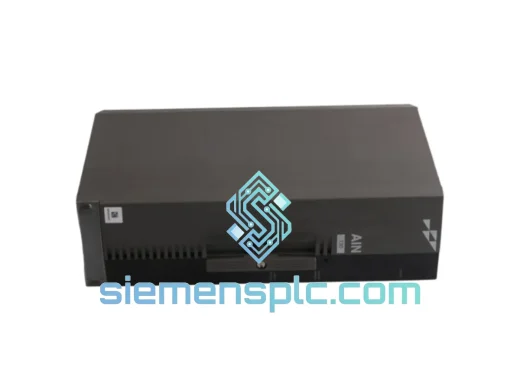
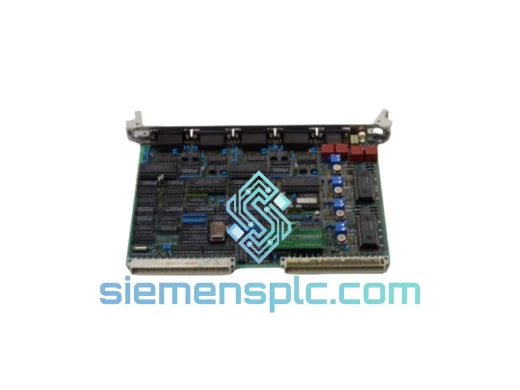
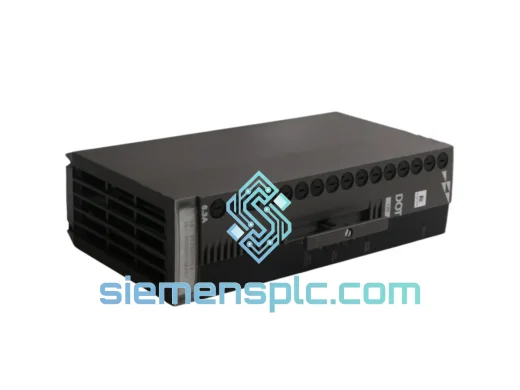
ABB P-HB-DOT-12010000 Safety Digital Output Module – AC500-S
AC500
Origin SE
Safety Digital Output Module
Request verified availability, condition, replacement risk review, packing options and courier lead time for AP303/21011000.
Click Request Quote and the part number is inserted into the inquiry form automatically.
Core fields for model confirmation and RFQ routing. Detailed product narrative remains below.
The ABB AP303/21011000 is a dedicated analog input module engineered for the AC500 PLC platform. Within a closed-loop control architecture, this module occupies the signal acquisition layer: it receives raw process signals from field transmitters, conditions them through internal circuitry, converts them to digital values via an onboard ADC, and delivers structured data to the AC500 CPU over the internal backplane bus. The accuracy and latency of this conversion chain directly determine the quality of PID regulation, alarm response, and process trending in any installation.
The AC500 backplane bus operates at a deterministic cycle, meaning the CPU polls each I/O module at a fixed interval defined by the task configuration. The AP303/21011000 holds converted values in a local buffer register, ensuring the CPU always reads a stable, non-glitching value regardless of field signal transients. This buffered architecture eliminates race conditions between ADC conversion cycles and CPU scan cycles — a critical design consideration in high-speed process loops where signal jitter can propagate into control output instability.
Real-time Stock & RFQ: [email protected] | WhatsApp: +86 18359268345
| Parameter | Specification |
|---|---|
| Part Number | AP303/21011000 |
| Manufacturer | ABB |
| Product Series | AC500 PLC Platform |
| Module Function | Analog Input |
| Number of Channels | 8 analog input channels (configurable per channel) |
| Input Signal Range | 0–10 V DC / 0–20 mA / 4–20 mA (per channel, software-selectable) |
| Resolution | 12-bit ADC (4096 steps per channel) |
| Conversion Accuracy | ±0.1% of full scale at 25°C |
| Input Impedance (Voltage) | >100 kΩ |
| Input Impedance (Current) | 250 Ω (burden resistor integrated) |
| Channel Isolation | Optical isolation between field and backplane logic (500 V AC, 1 min) |
| Cycle Time (Conversion) | ≤1 ms per channel (sequential multiplexed ADC) |
| Operating Temperature | -25°C to +60°C |
| Storage Temperature | -40°C to +85°C |
| Relative Humidity | 5%–95%, non-condensing |
| Protection Class | IP20 |
| Power Consumption | ≤3 W (from AC500 backplane 5 V DC rail) |
| Backplane Interface | AC500 internal I/O bus (proprietary parallel bus) |
| Mounting | DIN rail via AC500 expansion rack |
| Dimensions (W×H×D) | Approx. 35 mm × 130 mm × 115 mm |
| Weight | Approx. 200 g (module only) |
| Compliance | CE, RoHS, IEC 61131-2 |
| Warranty | 12 months from date of shipment |
The AP303/21011000 employs a multiplexed ADC topology: a single high-precision 12-bit converter is shared across all 8 input channels via an analog multiplexer (MUX). The MUX sequentially connects each channel to the ADC input at a switching rate that ensures all 8 channels complete one full conversion cycle within the module’s internal scan period. This design trades simultaneous sampling for cost efficiency and board density — a deliberate engineering choice appropriate for process control applications where inter-channel phase relationships are not critical.
Each channel input stage incorporates a passive RC low-pass filter ahead of the MUX. This filter attenuates high-frequency noise components — particularly 50/60 Hz mains interference and switching transients from variable-frequency drives (VFDs) operating in the same panel. The filter corner frequency is set to pass the process signal bandwidth (typically DC to 10 Hz for temperature and pressure loops) while rejecting EMI above that range. This hardware-level filtering reduces the burden on software averaging routines and improves raw ADC reading stability.
The optical isolation barrier between the field-side analog circuitry and the backplane-side digital logic is implemented using linear optocouplers rated at 500 V AC isolation voltage. This barrier serves two functions: it prevents ground loop currents — which arise when field instruments and the PLC share different ground references — from corrupting ADC readings, and it protects the CPU backplane from voltage surges originating in the field wiring. In installations with long cable runs or instruments powered from separate panels, this isolation is not optional — it is a fundamental requirement for measurement integrity.
The module’s backplane interface logic includes a local register file that stores the most recent ADC result for each channel. The AC500 CPU reads this register file during its I/O update phase without interrupting the ADC conversion cycle. This decoupled architecture means the CPU scan time and the ADC conversion time are independent — the module never forces the CPU to wait for a conversion to complete, and the ADC is never interrupted mid-conversion by a CPU read request. The result is deterministic I/O update latency, which is a prerequisite for stable PID control loops.
EMC compliance is achieved through a combination of hardware measures: the PCB layout routes analog signal traces away from digital clock lines, the power supply decoupling uses multi-stage LC filtering on the 5 V backplane rail, and the module housing provides a Faraday shield effect when installed in a grounded metal enclosure. The module meets IEC 61131-2 immunity requirements for conducted and radiated disturbances, including the 4 kV contact discharge and 8 kV air discharge levels specified in IEC 61000-4-2.
Every ABB AP303/21011000 unit supplied by siemensplc.com is sourced as genuine ABB OEM product. Units are inspected upon receipt: label authenticity, housing integrity, connector pin condition, and factory seal status are verified before the unit enters stock. Functional bench testing is performed on selected units to confirm power-on behavior and signal response. A Certificate of Conformance is available for qualified orders.
Shipments originate from our warehouse in Xiamen, Fujian Province, China. Xiamen is a major export hub with direct access to international express carriers. Standard dispatch time for in-stock items is 1–3 business days. Carrier options include DHL Express, FedEx International Priority, UPS Worldwide Expedited, and SF Express International. For bulk orders, sea freight via Xiamen Port is available with full export documentation including commercial invoice, packing list, and certificate of origin.
All shipments comply with Chinese export regulations. HS code classification and customs documentation are prepared accurately to minimize clearance delays at the destination. For orders to the EU, UKCA/CE compliance documentation is provided. For orders to the Middle East and Southeast Asia, we coordinate with local customs brokers upon request.
The 12-month warranty covers manufacturing defects and functional failures under normal operating conditions. Warranty claims are processed with a replacement-first policy: a replacement unit is dispatched before the defective unit is returned, minimizing production downtime for the buyer.
Email: [email protected]
WhatsApp: +86 18359268345
Web: siemensplc.com
Location: Xiamen, China
© 2026 siemensplc.com. All rights reserved.
We check the full part number, brand, series and visible nameplate information before quotation.
Sales confirms stock path, condition option, quantity and realistic lead time for export dispatch.
DHL, FedEx, UPS or buyer courier arrangements can be reviewed with packing requirements.
Similar brand or category products for fast comparison and multi-item RFQ lists.