
ABB
In Stock OK
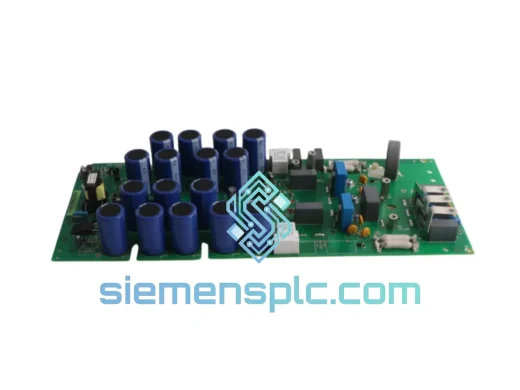
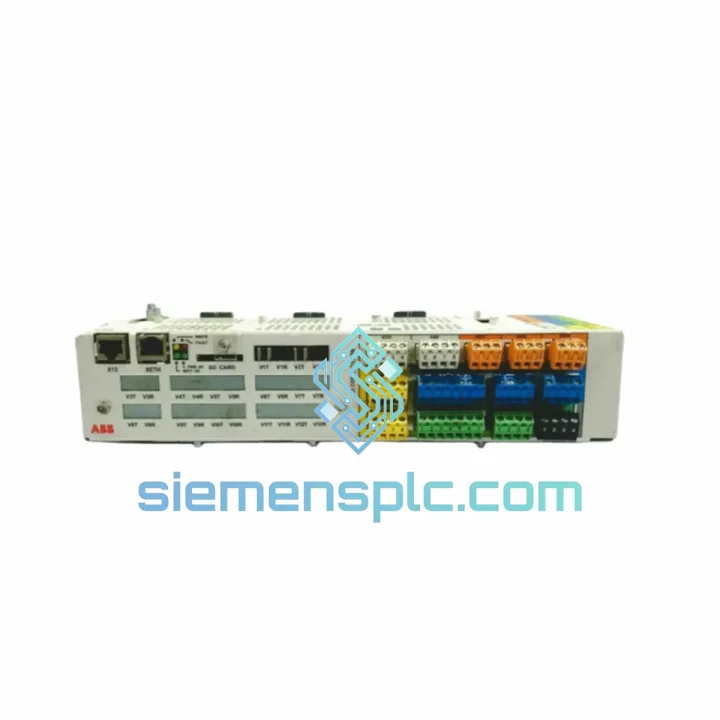
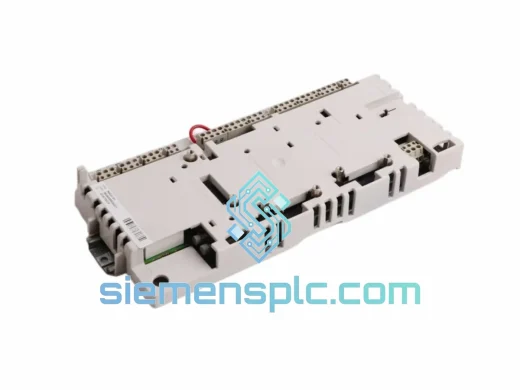
ABB BCU-12C 3AUA0000110429 Drive Control Unit – ACS800 Series
Request verified availability, condition, replacement risk review, packing options and courier lead time for BCU-12C.
BrandABB
Part NumberBCU-12C
ConditionAvailability Check
Lead TimeRFQ Confirmation
DocumentsDatasheet / photos by RFQ
ShippingExport packing available
Auto-filled RFQ
BCU-12C
Click Request Quote and the part number is inserted into the inquiry form automatically.
- Reply by email: [email protected]
- WhatsApp / Tel: +86 18359268345
- Mon-Sat 9:00-18:00 GMT+8
Procurement Data
Key Product Information
Core fields for model confirmation and RFQ routing. Detailed product narrative remains below.
- Brand
- ABB
- Primary Part Number
- BCU-12C
- Product Type
- Drive Control Unit
- Series / Family
- S800
- Manufacturer
- ABB Ltd.
- Country of Origin
- SE
- Catalog Category
- Motor Drives
- Operating Temp.
- 0 °C to +55 °C (within drive enclosure)
- Warranty
- 12 months against manufacturing defects
- Compliance
- CE, RoHS 2011/65/EU
Model confirmed for inquiry
BCU-12C
Send quantity, destination and urgency. The RFQ form keeps this part number attached.
Request Quote
Product Overview
ABB BCU-12C 3AUA0000110429 — Precision Torque Execution Board for ACS800 Variable-Speed Drive Systems
The BCU-12C, carrying OEM reference 3AUA0000110429, is the dedicated control board of ABB’s ACS800 platform — a drive series engineered for demanding industrial processes including paper machine sections, marine propulsion, metals rolling, and water treatment pump stations. This board is not a peripheral interface card; it is the computational core that executes ABB’s Direct Torque Control (DTC) algorithm, the motor model that determines every switching decision made by the IGBT power stage. Understanding the BCU-12C requires understanding where it sits in the signal chain: upstream of the gate drivers, downstream of the fieldbus adapter, and at the center of every closed-loop torque and speed response the drive produces.
DTC on the ACS800 platform operates on a 25 µs interrupt cycle. At each interrupt, the DSP on the BCU-12C reads digitized phase current measurements from the drive’s current transducers and the DC-link voltage from the bus voltage sensor, feeds these values into a real-time motor model, computes instantaneous stator flux linkage and electromagnetic torque estimates, compares them against the active references, and selects the optimal IGBT switching vector from a pre-computed look-up table. The entire sequence — measurement, estimation, comparison, and output — completes within the 25 µs window. This is not a software approximation; it is a hardware-timed interrupt with deterministic execution enforced by the DSP’s real-time operating kernel. The practical consequence is a torque step response time of under 5 ms without a shaft encoder, a figure that scalar V/Hz drives cannot approach regardless of their carrier frequency setting.
The BCU-12C manages the full I/O complement of the ACS800 standard control section: three analog inputs configurable for 0–10 V or 0–20 mA signals, three analog outputs at 0–20 mA, six 24 VDC digital inputs, and three relay outputs rated at 250 VAC / 30 VDC, 2 A. A dedicated adapter slot accepts ABB’s RDCO (DeviceNet), RPBA (PROFIBUS-DP), RETA (EtherNet/IP), or RCAN (CANopen) fieldbus modules, allowing the same board hardware to integrate into any major industrial network architecture without modification. Expansion headers on the board accept RAIO analog I/O, RDIO digital I/O, and RTAC pulse encoder option modules, extending the I/O capacity for applications requiring closed-loop position feedback or additional process signals.
For maintenance engineers managing ACS800 spare-parts pools, the BCU-12C is a single-board replacement that restores complete drive functionality. It is pin-compatible across ACS800 hardware revisions R1 through R8. Parameter backup via DriveWindow or the ACS800 keypad panel takes under 60 seconds; restore after board swap takes the same time. The board stores the last 64 fault events with timestamps and drive state snapshots — speed reference, actual speed, DC-link voltage, output current — in onboard EEPROM that survives power loss. This fault log is the first diagnostic resource a service engineer should access after an unplanned trip, as it eliminates the need for an oscilloscope or external data logger to reconstruct pre-fault operating conditions.
Real-time Stock & RFQ: [email protected] | WhatsApp: +86 18359268345
Technical Parameters
| Parameter | Specification |
|---|---|
| Manufacturer | ABB Ltd. |
| Part Number | BCU-12C |
| OEM Reference | 3AUA0000110429 |
| Compatible Platform | ACS800 Single-Drive & Multi-Drive Cabinet Series |
| Module Function | Drive Control Unit — DTC motor model, I/O management, fieldbus interface, fault diagnostics |
| DTC Interrupt Cycle | 25 µs (stator flux and torque estimation) |
| Torque Step Response | <5 ms (open-loop DTC, no encoder) |
| PWM Carrier Frequency | 1–12 kHz, parameter-selectable |
| Analog Inputs | 3 × AI: 0–10 V or 0–20 mA, differential, 12-bit resolution |
| Analog Outputs | 3 × AO: 0–20 mA, 11-bit resolution |
| Digital Inputs | 6 × DI: 24 VDC, optocoupler-isolated, 2.5 kV isolation |
| Relay Outputs | 3 × DO: 250 VAC / 30 VDC, 2 A resistive |
| Fieldbus Adapter Slot | 1 × slot: RDCO / RPBA / RETA / RCAN (protocol-specific module) |
| Expansion Headers | RAIO, RDIO, RTAC option modules |
| Encoder Input (via RTAC) | HTL/TTL pulse encoder, up to 200 kHz input frequency |
| Sensorless Speed Accuracy | ±0.1% of nominal speed (steady state, open-loop DTC) |
| Fault Event Log | 64 events with timestamp, fault code, and drive state snapshot (EEPROM) |
| Operating Temperature | 0 °C to +55 °C (within drive enclosure) |
| Storage Temperature | −40 °C to +70 °C |
| Relative Humidity | 5–95% RH, non-condensing (IEC 60068-2-78) |
| Vibration | IEC 60068-2-6: 2–9 Hz / 3.5 mm; 9–200 Hz / 10 m/s² |
| Shock | IEC 60068-2-27: 150 m/s², 11 ms half-sine |
| EMC Immunity | IEC 61800-3 Category C2 / C3 |
| Compliance | CE, RoHS 2011/65/EU |
| Country of Origin | Finland |
| Board Weight | ~500 g |
| Warranty | 12 months against manufacturing defects |
Hardware Logical Analysis
The BCU-12C employs a dual-processor architecture that separates real-time motor control from supervisory system management at the silicon level. The primary processor is a fixed-point DSP clocked to execute the DTC interrupt service routine within the 25 µs window without preemption. Its instruction pipeline is dedicated exclusively to the motor model: stator resistance voltage drop calculation, flux integrator update, torque estimator, and switching vector selector. No fieldbus frame processing, no I/O polling, and no parameter read/write operations share this execution context. The secondary processor — a RISC microcontroller — handles all supervisory tasks: PROFIBUS or EtherNet/IP frame assembly and parsing, analog I/O scan at 1 ms intervals, relay output state management, fault log writes, and keypad panel communication. The two processors exchange data through a shared dual-port RAM block with hardware semaphore arbitration, ensuring that a burst of fieldbus traffic or a parameter write operation cannot introduce jitter into the DSP’s 25 µs interrupt schedule.
EMC Architecture: The board uses a six-layer PCB. Layers 1 and 6 carry signal traces; layers 2 and 5 are dedicated ground planes; layers 3 and 4 carry power distribution. Analog signal paths are routed on layer 1 with a guard trace ring connected to the analog ground plane, physically isolating them from the digital logic on layer 6. All digital I/O lines pass through optocouplers with 2.5 kV isolation voltage and a common-mode transient immunity of 10 kV/µs — a specification chosen to withstand the dV/dt transients (typically 1–5 kV/µs) generated by the drive’s own IGBT switching events on the DC bus. Differential amplifiers on the analog inputs provide common-mode rejection exceeding 60 dB across the 50 Hz to 10 kHz band, attenuating noise coupled from motor cables running parallel to signal wiring in cable trays.
Thermal Component Selection: Electrolytic capacitors on the BCU-12C are rated at 105 °C, providing a calculated service life exceeding 100,000 hours at the board’s nominal 55 °C operating point. Flash memory for parameter storage is rated for 100,000 write cycles — sufficient for daily parameter changes over a 270-year service life, making write endurance a non-limiting factor in any realistic maintenance scenario.
DDCS Fiber-Optic Ring (Multi-Drive): In ACS800 multi-drive cabinet configurations, BCU-12C boards communicate over ABB’s Distributed Drive Control System (DDCS) using plastic optical fiber links. Each BCU-12C monitors DDCS ring continuity and detects communication loss within one frame period (1 ms at standard baud rate). Upon detection, the board asserts a fault output and logs the event with a timestamp accurate to 1 ms, enabling the master PLC to initiate a controlled ramp-down sequence before mechanical stress accumulates in coupled machinery.
System Integration Benefits
- Fixed 25 µs torque loop, independent of network load: The DTC interrupt is hardware-timed and cannot be delayed by fieldbus traffic, parameter writes, or I/O scan activity. Torque response consistency is guaranteed regardless of PROFIBUS or EtherNet/IP network utilization — a requirement in tension-controlled winding, unwinding, and draw-roll applications where torque ripple directly causes web tension variation.
- Open-loop speed accuracy of ±0.1%: DTC’s motor model derives speed estimates from electrical measurements rather than a shaft encoder, achieving ±0.1% steady-state speed accuracy without encoder hardware, wiring, or maintenance. This eliminates a common failure point in wet, dusty, or high-vibration environments.
- Protocol-agnostic fieldbus integration: The adapter-slot architecture allows the BCU-12C to interface with PROFIBUS-DP, EtherNet/IP, DeviceNet, or CANopen by exchanging the adapter module. No board-level changes, no firmware updates, and no re-commissioning of the motor model are required when changing network protocols.
- 64-event fault log with drive state snapshots: Pre-fault operating conditions — speed reference, actual speed, DC-link voltage, output current — are captured automatically at each fault event and stored in EEPROM. Engineers can reconstruct the sequence of events leading to a trip without continuous data logging infrastructure, reducing mean time to diagnose (MTTD) in unplanned downtime scenarios.
- Sub-60-second parameter backup and restore: The full ACS800 parameter set is stored on the BCU-12C board and transferable via DriveWindow or the keypad panel in under 60 seconds. Board replacement restores the drive to its pre-failure configuration in minutes, minimizing planned and unplanned maintenance windows.
- Modular I/O expansion without external hardware: RAIO, RDIO, and RTAC option boards connect directly to BCU-12C expansion headers, adding analog I/O channels, digital I/O channels, or encoder feedback without external terminal blocks, signal conditioners, or additional cabinet space.
- Galvanic isolation via fiber-optic DDCS: Inter-drive communication in multi-drive cabinets uses plastic optical fiber, eliminating ground-loop currents between drive sections in high-power installations where ground potential differences between cabinet sections can reach tens of volts.
- Cross-revision hardware compatibility: BCU-12C is pin- and firmware-compatible across ACS800 hardware revisions R1 through R8, allowing facilities operating mixed-vintage ACS800 fleets to maintain a single spare-board type rather than stocking revision-specific spares.
Quality Assurance & Global Logistics
Each BCU-12C unit dispatched from siemensplc.com is sourced from verified ABB distribution channels or authenticated OEM surplus stock with documented chain of custody. Before dispatch, every board undergoes a structured inspection sequence: visual examination under 10× magnification covering solder joint integrity, component seating, and connector pin condition; continuity verification across all I/O connector pins using a calibrated test fixture; and a powered functional test confirming DSP boot sequence completion, LED status output, and communication port handshake response. The board’s serial number and date code are recorded against the order reference for full traceability throughout the warranty period.
Packaging is engineered for international freight handling. The board is sealed in a 10 MΩ anti-static shielding bag with a humidity indicator card, placed in a foam-lined corrugated carton rated for 1.2 m drop impact per ISTA 2A, and over-packed in a wooden crate for consolidated freight shipments. Export documentation provided as standard includes commercial invoice, packing list, certificate of origin, and HS code declaration (HS 8537.10) for customs clearance in all major import jurisdictions.
Logistics operations are based in Xiamen, China, with direct access to DHL Express, FedEx International Priority, UPS Worldwide Express, and TNT Economy Express networks. In-stock orders are dispatched within 1–3 business days. Air freight to Europe, North America, Southeast Asia, and the Middle East achieves door-to-door delivery in 3–7 business days under normal customs clearance conditions. All shipments carry cargo insurance; tracking numbers are issued at the time of dispatch. A 12-month warranty against manufacturing defects is provided; warranty claims receive a target response within 48 hours, with replacement units dispatched upon defect confirmation and failed units returned via prepaid shipping label.
Contact Information
Email: [email protected]
WhatsApp: +86 18359268345
Web: siemensplc.com
Location: Xiamen, China
© 2026 siemensplc.com. All rights reserved.
Ready to quote
[email protected]
Send This Part Number to Sales
RFQ workflow
Quality workflow ->
Confirmation Process
01Model confirmation
We check the full part number, brand, series and visible nameplate information before quotation.
02Availability reply
Sales confirms stock path, condition option, quantity and realistic lead time for export dispatch.
03Packing & courier
DHL, FedEx, UPS or buyer courier arrangements can be reviewed with packing requirements.
Continue sourcing
Browse full catalog ->
Related Automation Parts
Similar brand or category products for fast comparison and multi-item RFQ lists.
ABB
RFQ Ready
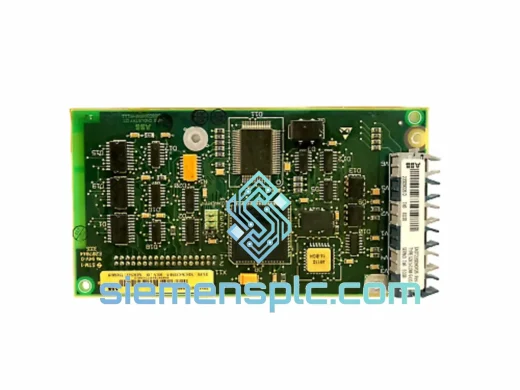
ABB SDCS-COM-5 3BSE006567R1 Fieldbus Communication Module
S800
Origin SE
Fieldbus Communication Module
ABB
RFQ Ready
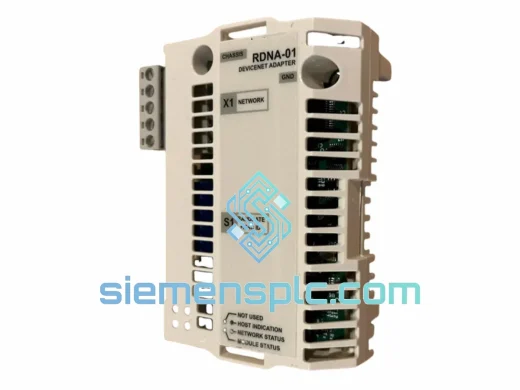
ABB RDNA-01 DeviceNet Adapter Module – ACS800 ACS600
S800
Origin SE
Fieldbus Communication Module
ABB
RFQ Ready
ABB RDCU-12C 3AUA0000036521 Drive Control Unit
S800
Origin SE
PLC & Drive Control Module