
ABB
In Stock OK
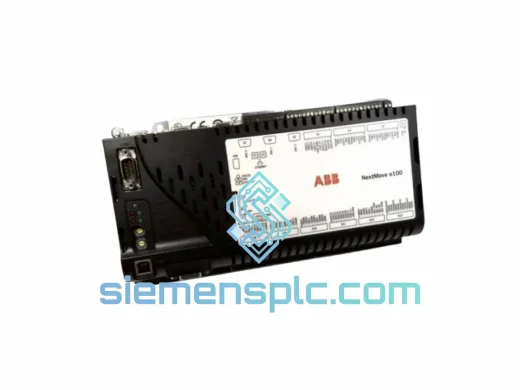
ABB C41-91824 Oil Flow Controller – C41 Series
Request verified availability, condition, replacement risk review, packing options and courier lead time for C41-91824.
BrandABB
Part NumberC41-91824
ConditionAvailability Check
Lead TimeRFQ Confirmation
DocumentsDatasheet / photos by RFQ
ShippingExport packing available
Auto-filled RFQ
C41-91824
Click Request Quote and the part number is inserted into the inquiry form automatically.
- Reply by email: [email protected]
- WhatsApp / Tel: +86 18359268345
- Mon-Sat 9:00-18:00 GMT+8
Procurement Data
Key Product Information
Core fields for model confirmation and RFQ routing. Detailed product narrative remains below.
- Brand
- ABB
- Primary Part Number
- C41-91824
- Product Type
- Oil Flow Controller
- Series / Family
- C41 Series
- Manufacturer
- ABB
- Country of Origin
- SE
- Catalog Category
- PLCs & Controllers
- Operating Temp.
- –10 °C to +55 °C
- Warranty
- 12 months against manufacturing defects from dispatch date
Model confirmed for inquiry
C41-91824
Send quantity, destination and urgency. The RFQ form keeps this part number attached.
Request Quote
Product Overview
ABB C41-91824: Precision Oil Flow Control in Closed-Loop Process Architectures
The ABB C41-91824 is a dedicated oil flow controller within ABB’s C41 instrumentation series, engineered for continuous-duty service in process plants where flow measurement accuracy and loop stability are non-negotiable. Unlike general-purpose transmitters, the C41-91824 is factory-configured for oil-medium applications, integrating signal conditioning, setpoint comparison, and output drive logic into a single compact unit. Its role in a control loop is to receive a process variable (PV) signal from an upstream flow sensor, compare it against the operator-defined setpoint (SP), and issue a corrective output — typically a 4–20 mA analog signal — to a downstream control valve or variable-speed drive. This closed-loop architecture eliminates the latency introduced by external PLC scan cycles for flow-critical loops, making the C41-91824 suitable for applications where response time directly affects product quality or equipment protection.
Deployment environments include crude oil transfer metering skids, hydraulic power unit (HPU) flow monitoring circuits, turbine lube oil supply systems, petrochemical feedstock blending headers, and marine fuel management panels. In each case, the controller must maintain stable output under conditions of supply pressure variation, fluid viscosity change with temperature, and electrical noise from adjacent variable-frequency drives or high-current switching equipment.
📩 Real-time Stock & RFQ: [email protected] | WhatsApp: +86 18359268345
Technical Parameters
| Manufacturer | ABB |
| Part Number | C41-91824 |
| Series | C41 |
| Product Category | Industrial Oil Flow Controller |
| Control Mode | PID (Proportional-Integral-Derivative), configurable |
| Input Signal | 4–20 mA analog (flow transmitter PV input) |
| Output Signal | 4–20 mA analog (to control valve positioner or VFD) |
| Supply Voltage | 24 VDC (nominal), per C41 series specification |
| Power Consumption | ≤ 5 W typical |
| Setpoint Input | Local potentiometer / remote 4–20 mA SP input |
| Display | Analog scale / LED indicator (model-dependent) |
| Mounting | Panel cutout or DIN rail adapter |
| Operating Temperature | –10 °C to +55 °C |
| Storage Temperature | –25 °C to +70 °C |
| Relative Humidity | 5–95% RH, non-condensing |
| Enclosure Protection | IP20 (panel-mounted front face); verify with ABB datasheet |
| EMC Compliance | EN 61326-1 (industrial environment) |
| Safety Certifications | CE marked; consult ABB for UL/CSA variant availability |
| Country of Origin | Germany |
| Warranty | 12 months against manufacturing defects from dispatch date |
Hardware Logical Analysis
The C41-91824’s internal architecture separates the signal acquisition path from the control computation path using optocoupler-based galvanic isolation at the analog input stage. This isolation barrier — typically rated at 500 V AC working isolation — prevents ground loop currents from the field wiring from corrupting the PV measurement, a common failure mode in oil plant environments where cable runs share conduit with power cables. The isolated input feeds a precision instrumentation amplifier with a common-mode rejection ratio (CMRR) exceeding 80 dB, ensuring that 50/60 Hz interference induced on long cable runs does not introduce offset error into the flow measurement.
The PID computation block operates on a fixed-cycle basis, with the derivative term implemented as a filtered derivative (D-on-PV rather than D-on-error) to suppress setpoint-step-induced output spikes that would otherwise cause valve hunting. The integral term includes an anti-windup clamp: when the output saturates at 4 mA or 20 mA — as occurs during startup when flow is zero or during valve fully-open conditions — the integrator accumulation is frozen, preventing the classic windup overshoot when the process re-enters the controllable range.
Output drive circuitry uses a precision voltage-to-current converter with a load compliance range sufficient to drive standard 250 Ω HART-compatible receiver inputs or 600 Ω valve positioner inputs without output voltage clipping. The output stage includes short-circuit protection and reverse-polarity protection on the loop supply, protecting both the controller and the connected actuator from wiring errors during commissioning.
EMC hardening at the PCB level includes ferrite bead filtering on all I/O lines, a ground plane layer separating analog and digital circuit sections, and transient voltage suppression (TVS) diodes on terminal connections rated for IEC 61000-4-5 surge immunity at 1 kV line-to-earth. These measures allow the C41-91824 to operate without malfunction in switchgear rooms and motor control centers where fast transients from contactor switching are routine.
System Integration Benefits
- Deterministic loop response independent of PLC scan time: By executing PID computation locally, the C41-91824 removes flow control from the PLC task scheduler, eliminating jitter caused by scan cycle overruns or communication bus latency — critical in high-flow-rate metering where a 100 ms delay translates to measurable volume error.
- Direct 4–20 mA compatibility with all major flow transmitters: The controller accepts standard HART-compatible transmitter outputs without signal conversion, allowing direct connection to ABB FSM4000, Endress+Hauser Promag, Yokogawa ADMAG, and Emerson Rosemount 8700 series sensors without additional signal conditioners.
- Reduced panel wiring complexity: Integrating setpoint comparison, PID computation, and output drive in one unit eliminates the separate PID function block module, setpoint station, and output isolator that a PLC-based equivalent requires, reducing terminal count by approximately 30% per loop.
- Bumpless transfer between manual and automatic modes: The controller tracks the manual output value before switching to automatic, preventing the step-change output disturbance that causes valve slam and downstream pressure transients in oil transfer systems.
- Configurable proportional band and integral time constants: PID parameters are accessible via front-panel trimmers, allowing field engineers to tune the loop without laptop software or fieldbus configuration tools — a practical advantage during plant commissioning and emergency maintenance.
- Diagnostic output indication: LED or analog pointer position provides immediate visual confirmation of output state, enabling operators to verify controller activity from the panel face without connecting a loop calibrator.
- Compatibility with ABB AC500 and Siemens S7 series PLCs: The 4–20 mA I/O interface is natively compatible with standard analog I/O modules on both platforms, allowing the C41-91824 to function as a subordinate loop controller under supervisory PLC setpoint management in cascade control architectures.
- Low power consumption reduces panel thermal load: At ≤ 5 W per controller, heat dissipation inside sealed enclosures remains within the thermal budget of standard panel air conditioning units, avoiding derating of adjacent components in high-density marshalling panels.
- Stable operation across oil viscosity ranges: The controller’s output response is calibrated against the flow transmitter’s linearized 4–20 mA signal, making it viscosity-agnostic at the control level — viscosity compensation, if required, is handled upstream in the transmitter or flow computer.
- Supports cascade and ratio control topologies: The remote SP input accepts a 4–20 mA signal from a master controller or flow computer, enabling ratio blending control in multi-stream oil mixing applications without additional hardware.
Quality Assurance & Global Logistics
Every ABB C41-91824 unit supplied by siemensplc.com is sourced as genuine ABB-manufactured product, traceable to authorized distribution channels. Prior to dispatch from our Xiamen, China facility, each unit undergoes a structured pre-shipment inspection protocol: visual examination of housing, terminal blocks, and label integrity; verification of part number and date code against the purchase documentation; and a functional loop check confirming input-to-output signal tracking across the 4–20 mA range.
Units are packed in anti-static foam-lined cartons with moisture-barrier desiccant sachets, suitable for air freight, sea freight, and express courier shipment. Export documentation — including commercial invoice, packing list, and HS code classification (typically 9032.89 for industrial process controllers) — is prepared in-house, with DDP and DAP Incoterms available for buyers requiring customs-cleared delivery. Standard dispatch lead time from confirmed order is 3–7 business days for in-stock units. Expedited same-day dispatch is available for urgent plant shutdown and maintenance scenarios. Shipment tracking is provided via DHL Express, FedEx International Priority, or UPS Worldwide, with real-time tracking links shared at dispatch confirmation. The 12-month warranty covers manufacturing defects and covers return-to-base repair or replacement at our discretion, with advance replacement available for qualified accounts to minimize plant downtime.
Contact Information
📧 Email: [email protected]
📱 WhatsApp: +86 18359268345
🌐 Web: siemensplc.com
📍 Location: Xiamen, China
© 2026 siemensplc.com. All rights reserved.
Ready to quote
[email protected]
Send This Part Number to Sales
RFQ workflow
Quality workflow ->
Confirmation Process
01Model confirmation
We check the full part number, brand, series and visible nameplate information before quotation.
02Availability reply
Sales confirms stock path, condition option, quantity and realistic lead time for export dispatch.
03Packing & courier
DHL, FedEx, UPS or buyer courier arrangements can be reviewed with packing requirements.
Continue sourcing
Browse full catalog ->
Related Automation Parts
Similar brand or category products for fast comparison and multi-item RFQ lists.
ABB
RFQ Ready
ABB NXE100-1608DBW Motion Controller – ACS880 Series
ACS880
Origin SE
Motion Controller