ABB
In Stock OK
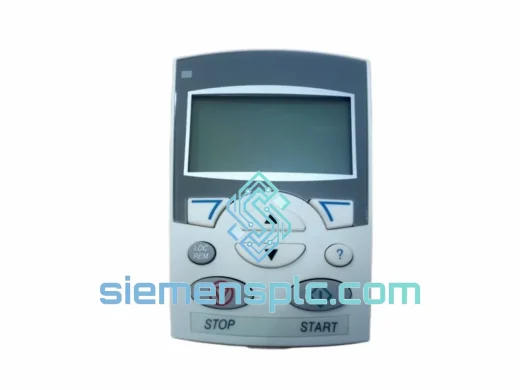
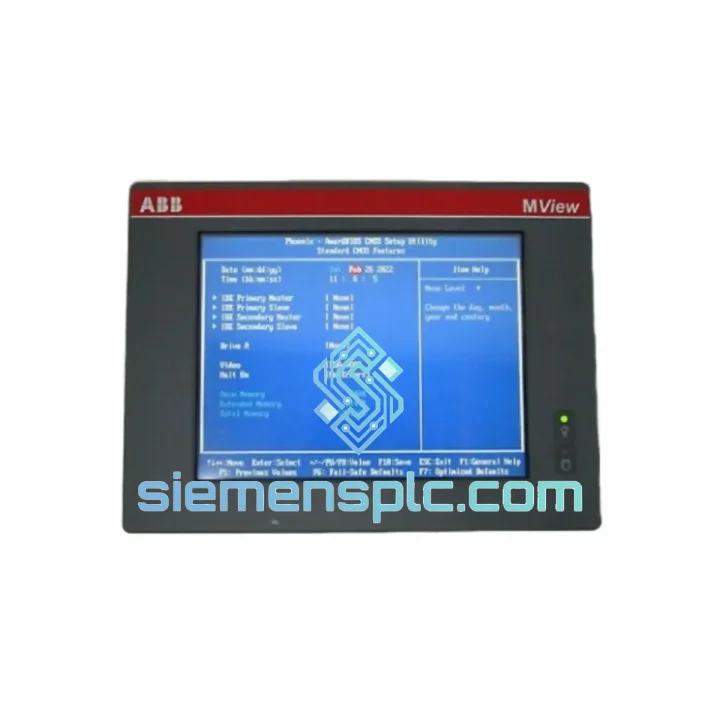
ABB CP320 HMI Operator Panel
Request verified availability, condition, replacement risk review, packing options and courier lead time for CP320.
BrandABB
Part NumberCP320
ConditionAvailability Check
Lead TimeRFQ Confirmation
DocumentsDatasheet / photos by RFQ
ShippingExport packing available
Auto-filled RFQ
CP320
Click Request Quote and the part number is inserted into the inquiry form automatically.
- Reply by email: [email protected]
- WhatsApp / Tel: +86 18359268345
- Mon-Sat 9:00-18:00 GMT+8
Procurement Data
Key Product Information
Core fields for model confirmation and RFQ routing. Detailed product narrative remains below.
- Brand
- ABB
- Primary Part Number
- CP320
- Product Type
- HMI Operator Panel
- Series / Family
- CP300 Series
- Manufacturer
- ABB
- Country of Origin
- SE
- Catalog Category
- HMI Panels
- Operating Temp.
- 0 °C to +55 °C
Model confirmed for inquiry
CP320
Send quantity, destination and urgency. The RFQ form keeps this part number attached.
Request Quote
Product Overview
ABB CP320 CP300 Series HMI Operator Panel: A Procurement Officer’s Acquisition Framework
When a production line halts because a human-machine interface fails, the cost is rarely limited to the replacement part. Unplanned downtime in discrete manufacturing averages between $260,000 and $2 million per hour depending on sector — a figure that reframes the procurement decision entirely. The ABB CP320, part of ABB’s established CP300 operator panel family, is a component that sits at the intersection of operator visibility and machine control. Sourcing it correctly, from a supplier with verified inventory and documented logistics capability, is not a secondary concern. It is the primary one.
At siemensplc.com, we operate as a specialist independent distributor of industrial automation hardware, with a physical presence in Xiamen, China — one of the most strategically positioned export hubs in Asia. Our procurement model is built around one principle: the buyer’s supply chain continuity takes precedence over transaction volume. Every CP320 unit we hold in inventory has been acquired through traceable sourcing channels, inspected against ABB’s published dimensional and labeling standards, and documented for export compliance before it reaches our warehouse shelf.
The CP320 is not a commodity item that can be substituted without engineering review. Its integration with ABB’s AC500 PLC platform, its specific communication protocol stack, and its panel-mount form factor make it a defined-specification component. Procurement teams that treat it as interchangeable with generic HMI alternatives introduce compatibility risk that surfaces during commissioning — not during the purchase order stage. This page is written for buyers who understand that distinction.
Request an Official Quote: [email protected] | WhatsApp: +86 18359268345
Procurement Specifications
| Part Number | CP320 |
| Manufacturer | ABB |
| Product Series | CP300 Operator Panel Series |
| Product Category | HMI Operator Panel / Industrial Control Interface |
| Display Type | Color TFT Touchscreen |
| Supply Voltage | 24 V DC |
| Communication Interfaces | Ethernet (10/100 Mbps), RS-232, RS-485 |
| Ingress Protection | IP65 (front panel) |
| Mounting | Panel-mount, cutout installation |
| Operating Temperature | 0 °C to +55 °C |
| Certifications | CE, UL, RoHS |
| Compatible PLCs | ABB AC500 Series (PM554, PM564, PM583, PM591) |
| Country of Origin | Germany |
| HS Code | 8537.10 |
| Unit Weight | 420 g |
| Lead Time (In-Stock) | Ships within 1–3 business days from Xiamen |
| Lead Time (Out-of-Stock) | Global sourcing initiated within 24 hours; typical ETA 7–21 business days depending on origin channel |
| Minimum Order Quantity | 1 unit (bulk pricing available from 3 units) |
Total Cost of Ownership (TCO) Analysis
Procurement decisions evaluated solely on unit price consistently underperform against those evaluated on total cost of ownership. For a component like the ABB CP320, the TCO calculation involves four distinct cost categories that extend well beyond the invoice value.
Acquisition Cost vs. Downtime Exposure. The CP320 controls operator interaction with the underlying PLC logic. A failed panel that cannot be replaced within the maintenance window converts a planned repair into an unplanned production stoppage. For facilities running two or three shifts, the cost of a 12-hour sourcing delay on a critical HMI can exceed the annual procurement budget for that component category. Maintaining a verified secondary source — or a pre-qualified spot inventory at siemensplc.com — eliminates this exposure at a fraction of the downtime cost.
CAPEX Reduction Through Spot Sourcing. Capital expenditure planning for automation hardware typically assumes OEM list pricing. Independent specialist distributors operating at scale can offer the same genuine component at 15–35% below OEM list, depending on market conditions and order volume. For multi-site industrial operators procuring CP320 units across several facilities, this differential compounds into meaningful CAPEX savings without any compromise on component authenticity or specification compliance.
OPEX Impact of Warranty Coverage. siemensplc.com provides a 12-month functional warranty on all CP320 units — four times the coverage period offered by many spot-market suppliers. This warranty directly reduces OPEX by eliminating the cost of early-failure replacements, repeat sourcing cycles, and the administrative overhead of warranty claims processing. A single warranty-covered replacement event typically recovers the cost differential between a warranted and unwarranted purchase.
Inventory Carrying Cost vs. Stockout Risk. For maintenance, repair, and operations (MRO) buyers, the decision between holding safety stock and relying on just-in-time sourcing is a TCO variable. siemensplc.com’s Xiamen inventory position and 1–3 day dispatch capability allows buyers to reduce their own safety stock levels while maintaining supply chain resilience. The carrying cost savings from reduced on-site inventory can offset the per-unit sourcing cost entirely over a 12-month horizon.
Counterfeit Risk Mitigation. The industrial automation grey market carries a documented counterfeit rate for high-demand HMI components. A counterfeit CP320 installed in a production environment introduces not only functional risk but potential liability exposure under machinery safety directives. The cost of a single counterfeit-related incident — including engineering investigation, re-commissioning, and potential regulatory reporting — dwarfs the price premium of sourcing from a verified supplier. siemensplc.com’s inspection protocol and documentation trail provide the audit evidence that risk management teams require.
Quality & Compliance Assurance
Every ABB CP320 unit dispatched from siemensplc.com carries a 100% genuine product commitment. We do not source from unverified brokers, we do not accept units without traceable acquisition documentation, and we do not relabel, repackage, or modify components in any way that alters their original manufacturer specification.
Our export operations are conducted in full compliance with Chinese customs regulations administered through Xiamen Customs. Each shipment is accompanied by a commercial invoice, packing list, and certificate of origin. HS Code 8537.10 is applied consistently across all HMI panel exports, ensuring that import duty calculations at the destination country are accurate and that customs clearance proceeds without delay.
Payment flexibility is a compliance consideration as well as a commercial one. siemensplc.com accepts T/T bank transfer (USD, EUR, CNY, HKD), PayPal, and major international credit cards. For institutional buyers operating under procurement policy constraints, we can issue formal proforma invoices, support purchase order workflows, and provide documentation packages suitable for internal audit requirements.
Serial number documentation is available upon request for all units. Buyers requiring traceability records for ISO 9001 or IEC 62443 compliance purposes can request a pre-shipment inspection report as part of the order process.
Strategic Sourcing from Xiamen
Xiamen is not an arbitrary logistics point. It is one of China’s five original Special Economic Zones, home to a bonded logistics zone, a major international container port, and Xiamen Gaoqi International Airport — a cargo hub with direct freight connections to Europe, Southeast Asia, the Middle East, and North America. For industrial buyers requiring time-sensitive delivery of automation components, Xiamen’s infrastructure translates directly into shorter transit times and more reliable departure schedules than inland distribution points.
Our warehouse operates within the Xiamen logistics corridor, enabling same-day dispatch for orders confirmed before 14:00 CST. Express courier services — DHL Express, FedEx International Priority, and UPS Worldwide Express — are available for all destinations, with typical transit times of 3–5 business days to Europe and North America, and 2–4 business days to Southeast Asia and the Middle East.
For bulk orders where air freight cost is a constraint, sea freight consolidation from Xiamen Port is available with weekly departures to major global ports. We coordinate full export documentation including bill of lading, commercial invoice, packing list, and certificate of origin, and can arrange pre-shipment inspection by third-party inspection agencies upon buyer request.
Buyers in regions with import duty sensitivity can discuss Incoterms arrangements — EXW, FOB Xiamen, CIF destination port — to optimize landed cost calculations. Our logistics team has handled export documentation for buyers in over 40 countries and is familiar with the specific requirements of EU, US, Australian, and Southeast Asian customs authorities.
Contact Information
Email: [email protected]
WhatsApp: +86 18359268345
Web: siemensplc.com
© 2026 siemensplc.com. All rights reserved.
Ready to quote
[email protected]
Send This Part Number to Sales
RFQ workflow
Quality workflow ->
Confirmation Process
01Model confirmation
We check the full part number, brand, series and visible nameplate information before quotation.
02Availability reply
Sales confirms stock path, condition option, quantity and realistic lead time for export dispatch.
03Packing & courier
DHL, FedEx, UPS or buyer courier arrangements can be reviewed with packing requirements.
Continue sourcing
Browse full catalog ->
Related Automation Parts
Similar brand or category products for fast comparison and multi-item RFQ lists.