ABB
RFQ Ready
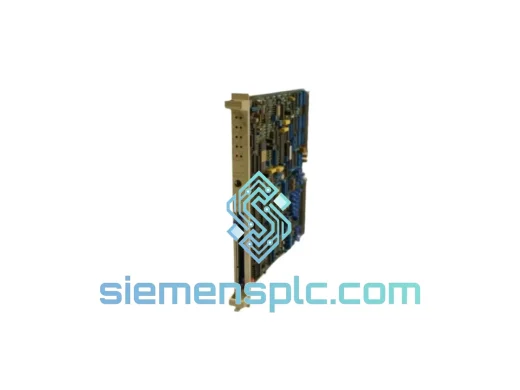
ABB SPICT13A Computer Interface Module – Advant Series
Advant
Origin SE
Computer Interface Module
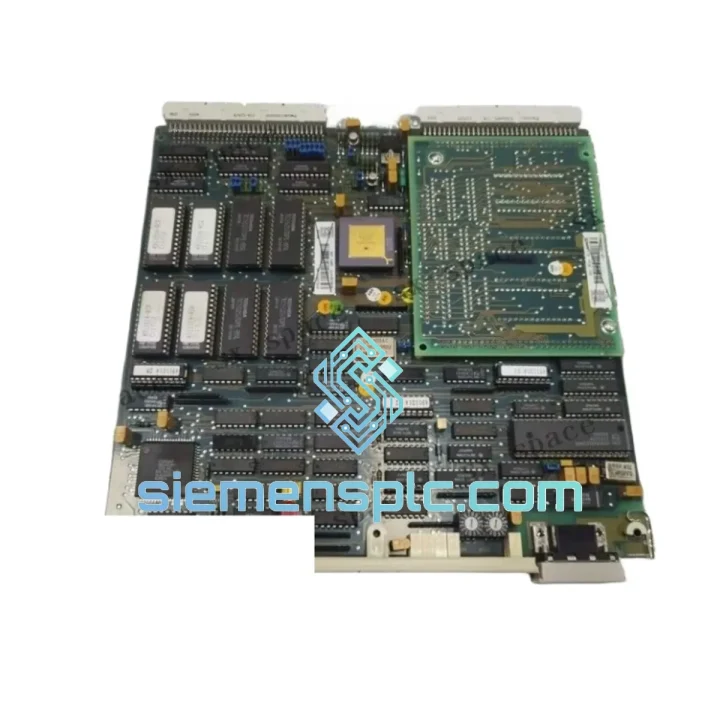
Request verified availability, condition, replacement risk review, packing options and courier lead time for DSCS 140.
Click Request Quote and the part number is inserted into the inquiry form automatically.
Core fields for model confirmation and RFQ routing. Detailed product narrative remains below.
The ABB DSCS 140 is a single-slot Eurocard-format communication processor board engineered for deployment within ABB’s Advant OCS and Advant Master distributed control system architectures. Its primary function is to offload serial protocol handling and network arbitration from the main CPU module, preserving deterministic scan-cycle execution on the process control side while maintaining continuous, low-latency data exchange across field communication buses. In multi-node DCS topologies where CPU bandwidth is a finite resource, the DSCS 140 acts as a dedicated co-processor that absorbs the interrupt overhead of serial framing, error detection, and retransmission logic — tasks that, if handled by the main CPU, would introduce jitter into the control loop.
The module interfaces with the ABB Advant S-bus backplane, drawing 24 VDC from the rack power supply and communicating with the host CPU via the backplane’s internal data highway. Externally, it exposes RS-232 and RS-485 serial ports, supporting both point-to-point and multi-drop wiring configurations. Native protocol support includes MODBUS RTU and ABB’s proprietary RCOM/RLINK communication stack, which is the standard inter-node protocol within Advant Master installations. This dual-protocol capability allows the DSCS 140 to serve simultaneously as a gateway to third-party MODBUS field devices and as a peer node on the ABB DCS network without requiring external protocol converters.
Real-time Stock & RFQ: [email protected] | WhatsApp: +86 18359268345
| Parameter | Value |
|---|---|
| Part Number | DSCS 140 |
| Manufacturer | ABB |
| Product Series | Advant / Master DCS |
| Module Function | Communication Processor Board |
| Form Factor | Single-slot Eurocard PCB (3U) |
| Backplane Interface | ABB Advant S-bus |
| External Ports | RS-232 (D-sub 9-pin), RS-485 (terminal block) |
| Supported Protocols | MODBUS RTU, ABB RCOM, ABB RLINK |
| Supply Voltage | 24 VDC ±15% via backplane |
| Power Consumption | ≤ 8 W (typical operating) |
| Operating Temperature | 0 °C to +55 °C |
| Storage Temperature | −25 °C to +70 °C |
| Relative Humidity | 5–95% RH, non-condensing |
| Vibration Resistance | IEC 60068-2-6 compliant |
| EMC Compliance | EN 61000-4 series (ESD, EFT, surge, conducted RF) |
| Certifications | CE, UL (per original ABB documentation) |
| Module Weight | Approx. 460 g |
| Warranty | 12 months from date of shipment |
The DSCS 140’s architecture is built around a dedicated microcontroller that handles all serial communication state machines independently of the Advant Master CPU’s main scan cycle. The internal bus arbitration logic uses a token-passing scheme on the S-bus backplane, ensuring that the communication processor never monopolizes the backplane data highway during high-throughput bursts. This prevents the communication load from propagating latency into the process I/O scan.
From an EMC standpoint, the board incorporates opto-isolation on all external serial interfaces. The RS-485 transceiver stage is galvanically isolated from the backplane logic ground, with an isolation barrier rated to withstand common-mode transients typical of industrial field wiring environments — particularly relevant in installations where communication cables run in proximity to high-voltage motor drive cabling or transformer feeders. The RS-232 port includes TVS diode protection on each signal line, clamping fast transients before they reach the UART input stage.
The RCOM/RLINK protocol stack implemented in firmware uses a cyclic redundancy check (CRC-16) on every transmitted frame, with automatic retransmission on detected errors. The retry counter and timeout parameters are configurable via the Advant Builder engineering tool, allowing system integrators to tune the communication behavior for high-noise environments where occasional frame corruption is expected. The module’s onboard EEPROM retains configuration parameters across power cycles without requiring a battery backup, eliminating a common failure mode in older communication boards.
Thermal management is passive: the board relies on convective airflow within the rack enclosure. The component layout places the highest-dissipation ICs — the microcontroller and the RS-485 driver — at the top edge of the PCB, aligned with the natural convection path in a vertically mounted rack. This layout choice extends component service life in installations where forced-air cooling is not available or has failed.
Every ABB DSCS 140 unit dispatched from our Xiamen, China facility undergoes individual functional verification under powered conditions prior to packaging. Test procedures cover backplane communication handshake, serial port loopback integrity, protocol frame generation and CRC validation, and thermal stability at operating temperature. Units that do not meet ABB’s original performance specifications are quarantined and not offered for sale.
Stock condition is clearly classified: new-surplus units are original ABB production with intact factory seals; refurbished units have been cleaned, re-tested, and issued a fresh 12-month warranty. All units are packaged in ESD-safe anti-static bags, placed in foam-lined cartons with corner protection, and shipped via DHL Express, FedEx International Priority, or UPS Worldwide Expedited depending on destination and urgency. Typical transit time from Xiamen to major industrial hubs in Europe, North America, and Southeast Asia is 3–5 business days under express service.
Export documentation — including commercial invoice, packing list, and certificate of origin — is prepared in compliance with destination country import requirements. HS code classification and customs value declaration are handled accurately to avoid clearance delays. For customers requiring traceability documentation, batch records and test reports are available upon request at no additional charge.
The 12-month warranty covers defects in materials and workmanship under normal operating conditions as defined in ABB’s original product documentation. Warranty claims are processed with a target response time of 48 hours, and replacement units are dispatched from in-stock inventory to minimize system downtime.
📧 Email: [email protected]
📱 WhatsApp: +86 18359268345
🌐 Web: siemensplc.com
📍 Location: Xiamen, China
© 2026 siemensplc.com. All rights reserved.
We check the full part number, brand, series and visible nameplate information before quotation.
Sales confirms stock path, condition option, quantity and realistic lead time for export dispatch.
DHL, FedEx, UPS or buyer courier arrangements can be reviewed with packing requirements.
Similar brand or category products for fast comparison and multi-item RFQ lists.