ABB
RFQ Ready
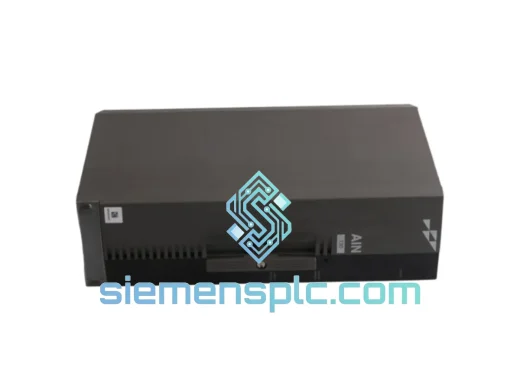
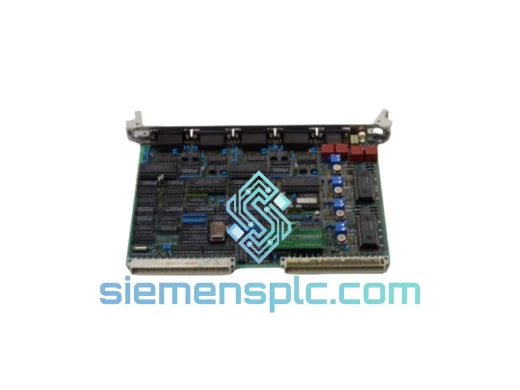
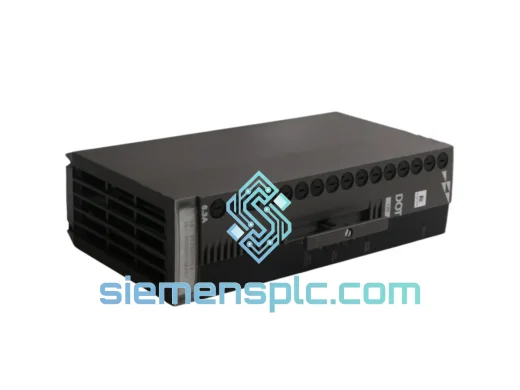
ABB P-HB-DOT-12010000 Safety Digital Output Module – AC500-S
AC500
Origin SE
Safety Digital Output Module
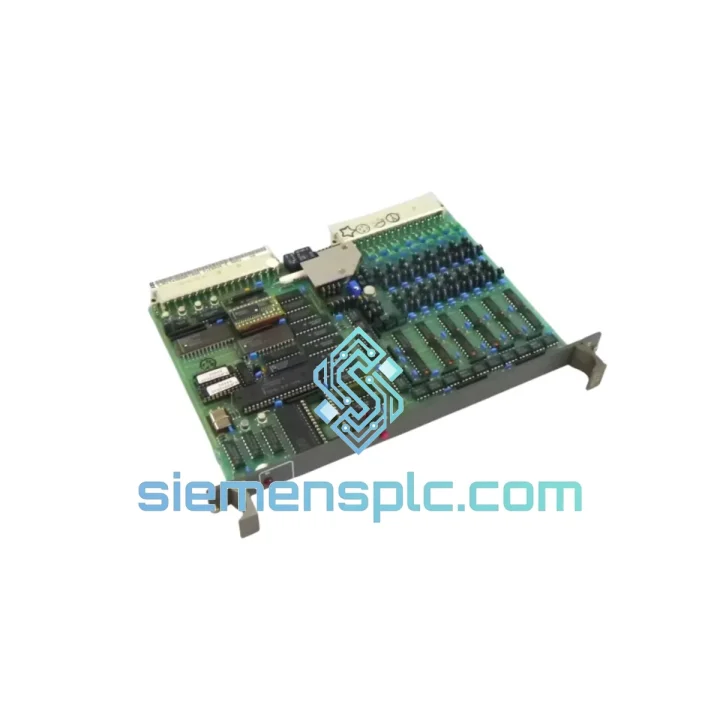
Request verified availability, condition, replacement risk review, packing options and courier lead time for 81EB02E-E.
Click Request Quote and the part number is inserted into the inquiry form automatically.
Core fields for model confirmation and RFQ routing. Detailed product narrative remains below.
The ABB GJR2349000R1000 (catalog alias 81EB02E-E) is a 16-channel digital binary input module engineered for the ABB AC500 programmable logic controller platform. Within a distributed control loop, this module occupies the field-signal acquisition layer: it receives 24 V DC discrete signals from field devices — limit switches, proximity sensors, push-button stations, and relay contacts — and presents them to the AC500 CPU over the internal S-Bus backplane at deterministic scan intervals. The module’s role is not passive buffering; it performs per-channel signal conditioning, debounce filtering, and optical isolation before forwarding validated logic states to the CPU’s process image input table (PII). This architecture decouples field-side transients from the controller’s logic domain, preserving scan-cycle integrity even in electrically noisy industrial environments.
The AC500 platform employs a synchronous backplane protocol where I/O modules are polled in a fixed sequence during each PLC scan cycle. The GJR2349000R1000 responds to these polls with a 16-bit input word representing the instantaneous state of all channels. Because the module’s internal sampling rate exceeds the typical CPU scan period (≤10 ms for standard AC500 configurations), no input event is missed between consecutive scans — a critical requirement in high-speed discrete manufacturing and safety-adjacent applications.
Real-time Stock & RFQ: [email protected] | WhatsApp: +86 18359268345
| Parameter | Specification |
|---|---|
| Part Number | GJR2349000R1000 |
| Catalog Reference | 81EB02E-E |
| Module Function | Digital (Binary) Input, 16-channel |
| Compatible Platform | ABB AC500 PLC Series |
| Input Signal Type | 24 V DC, IEC 61131-2 Type 1 / Type 3 |
| Input Voltage Range (ON) | 15 V DC – 30 V DC |
| Input Voltage Range (OFF) | 0 V DC – 5 V DC |
| Input Current (typical) | ≈ 7 mA per channel at 24 V DC |
| Galvanic Isolation | Opto-coupler per channel group (field side vs. logic side) |
| Input Filter / Debounce | Configurable: 0.1 ms / 1 ms / 10 ms (via Automation Builder) |
| Backplane Interface | ABB AC500 S-Bus (internal, synchronous) |
| Module Width | 1 slot (standard AC500 I/O rack) |
| Operating Temperature | -25 °C to +60 °C |
| Storage Temperature | -40 °C to +70 °C |
| Relative Humidity | 5 % – 95 %, non-condensing |
| Protection Class | IP20 (module body) |
| Certifications | CE, UL, cUL, RoHS |
| Weight | Approx. 400 g |
| Country of Origin | Germany |
| Warranty | 12 months from date of shipment |
The GJR2349000R1000 implements per-channel opto-coupler isolation using high-speed phototransistor pairs rated for a minimum isolation voltage of 500 V AC (rms). Each opto-coupler stage introduces a propagation delay of approximately 0.5 µs under nominal conditions — negligible relative to the module’s configurable debounce filter window, which is the dominant latency contributor. The debounce filter is implemented in firmware on the module’s local microcontroller, not in the CPU, which means filter processing does not consume CPU scan-cycle budget.
From an EMC perspective, the module’s PCB layout follows a split-plane strategy: the field-side ground plane (FG) and the logic-side ground plane (LG) are physically separated and bridged only through the opto-coupler’s isolation barrier. This prevents common-mode noise injected on field wiring — particularly inductive switching transients from solenoid valves and motor contactors — from coupling into the backplane data lines. The module meets IEC 61000-4-4 (EFT/Burst, 2 kV) and IEC 61000-4-5 (Surge, 1 kV line-to-line) immunity levels, which are standard requirements for industrial panel environments.
The module’s terminal base (TB511 or TB521 series) provides the mechanical and electrical interface to field wiring. The spring-clamp or screw-clamp terminal options accept conductors from 0.2 mm² to 2.5 mm² (AWG 24–12), accommodating both signal cables and heavier field wiring without adapter ferrules. The module-to-terminal-base connection is a zero-insertion-force (ZIF) bus connector that allows the module to be swapped without disturbing field wiring — a significant advantage during maintenance windows in live panels.
Diagnostics are handled at the module level: the GJR2349000R1000 reports its operational status (module present, module fault, configuration mismatch) to the CPU via the S-Bus status word. In ABB Automation Builder, these status bits are mapped to system variables accessible in the PLC program, enabling the application layer to implement self-monitoring logic without additional hardware.
Every unit of the ABB GJR2349000R1000 supplied by siemensplc.com is sourced through verified industrial distribution channels and carries full ABB original labeling, including the part number, date code, and CE/UL markings on the module body. Units are inspected upon receipt against ABB’s published dimensional and label specifications before entering our inventory.
Pre-shipment testing includes a power-on functional check with all 16 input channels exercised against a 24 V DC test fixture, verifying that each channel’s LED indicator and corresponding S-Bus data bit respond correctly. Modules that do not pass this check are quarantined and not offered for sale.
Packaging follows ESD-safe protocols: each module is placed in an anti-static bag, cushioned with foam inserts rated for IEC 61340-5-1 compliance, and boxed in double-wall corrugated cartons. This packaging standard is maintained regardless of order quantity.
Shipments originate from our warehouse in Xiamen, China (Fujian Province), a major export hub with direct access to DHL, FedEx, UPS, and TNT express networks. Typical transit times are 3–5 business days to Europe and North America, 2–4 business days to Southeast Asia and the Middle East. All shipments include a commercial invoice, packing list, and HS Code 8537.10 declaration for customs clearance. Expedited same-day dispatch is available for orders confirmed before 14:00 CST.
A 12-month warranty covers all units against manufacturing defects and functional failure under normal operating conditions. Warranty claims are processed with a replacement-first policy: a replacement unit is dispatched upon receipt of the defective module, minimizing downtime for the end user.
Email: [email protected]
WhatsApp: +86 18359268345
Web: siemensplc.com
Location: Xiamen, China
© 2026 siemensplc.com. All rights reserved.
We check the full part number, brand, series and visible nameplate information before quotation.
Sales confirms stock path, condition option, quantity and realistic lead time for export dispatch.
DHL, FedEx, UPS or buyer courier arrangements can be reviewed with packing requirements.
Similar brand or category products for fast comparison and multi-item RFQ lists.