ABB
RFQ Ready
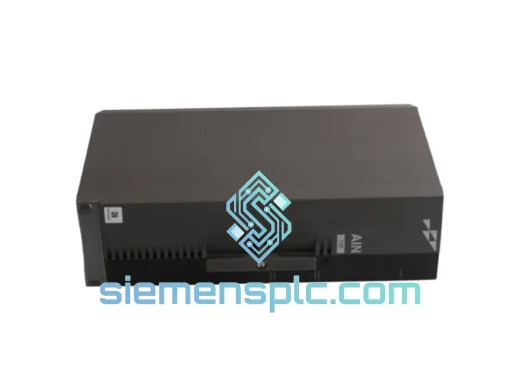
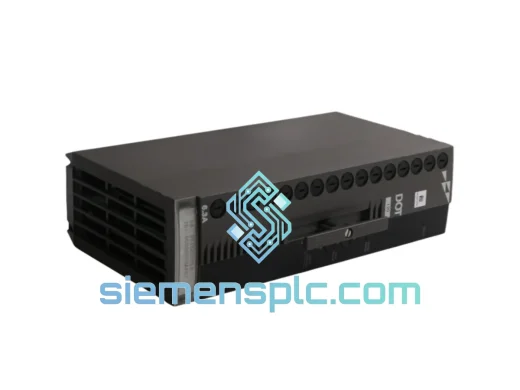
ABB P-HB-DOT-12010000 Safety Digital Output Module – AC500-S
AC500
Origin SE
Safety Digital Output Module
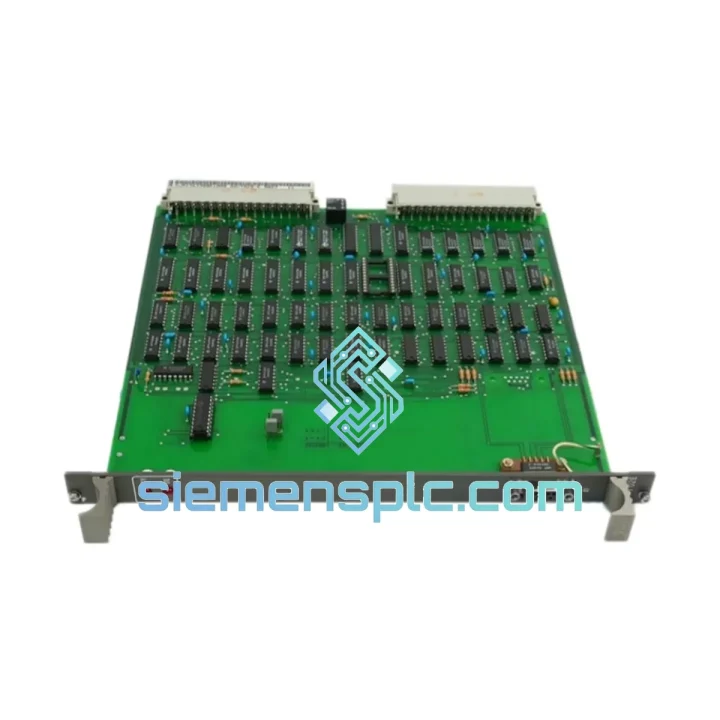
Request verified availability, condition, replacement risk review, packing options and courier lead time for 88VT02A-E.
Click Request Quote and the part number is inserted into the inquiry form automatically.
Core fields for model confirmation and RFQ routing. Detailed product narrative remains below.
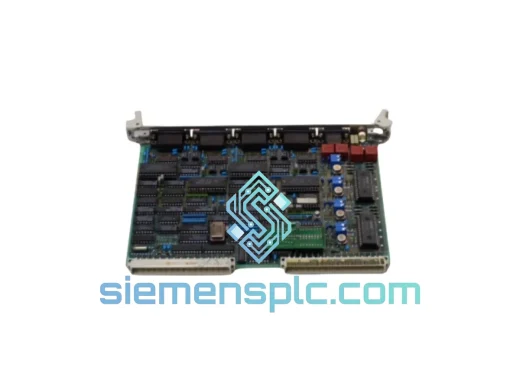
The ABB GJR2363900R1000 (revision 88VT02A-E) is a factory-assembled I/O interface circuit board engineered for deployment within the ABB AC500 scalable PLC platform. Its primary function is to serve as the signal conditioning and routing layer between the AC500 CPU module and field-level instrumentation, bridging the deterministic backplane bus with analog and digital I/O terminal blocks. This board is not a peripheral accessory — it is a structural component of the AC500 I/O subsystem, and its electrical integrity directly governs the scan-cycle fidelity of the entire control loop.
In distributed control architectures where AC500 CPUs manage multi-zone process loops — such as temperature cascade control in chemical reactors, pressure regulation in compressor stations, or multi-axis positioning in automated assembly lines — the GJR2363900R1000 acts as the deterministic handoff point between the CPU’s real-time operating system and the physical process. Any degradation in this board’s signal path introduces latency jitter that propagates upstream into PID tuning stability and alarm response time. Procurement engineers replacing this board in MRO scenarios must therefore treat it as a precision instrument, not a commodity PCB.
Real-time Stock & RFQ: [email protected] | WhatsApp: +86 18359268345
| Part Number | GJR2363900R1000 |
| Hardware Revision | 88VT02A-E |
| Manufacturer | ABB Ltd. |
| Product Series | AC500 PLC Platform |
| Module Function | I/O Interface Circuit Board (backplane-coupled) |
| Supply Voltage | 24 VDC ±15%, supplied via AC500 backplane bus |
| Power Consumption | ≤ 3.5 W (typical, fully loaded channel configuration) |
| Operating Temperature | -25°C to +60°C (IEC 60068-2-1/2) |
| Storage Temperature | -40°C to +85°C |
| Relative Humidity | 5–95% RH, non-condensing (IEC 60068-2-78) |
| Vibration Resistance | IEC 60068-2-6: 5–150 Hz, 1 g |
| Shock Resistance | IEC 60068-2-27: 15 g, 11 ms half-sine |
| EMC Immunity | EN 61000-4-2 (ESD), EN 61000-4-4 (EFT/Burst), EN 61000-4-5 (Surge) |
| Protection Class | IP20 per IEC 60529 |
| Backplane Interface | AC500 internal parallel bus (proprietary ABB protocol) |
| CPU Compatibility | PM554, PM564, PM572, PM581, PM582, PM583, PM585, PM591, PM592 series |
| Certifications | CE (2014/30/EU EMC Directive), UL 508, cUL, RoHS 2011/65/EU |
| PCB Construction | Multi-layer FR4, HASL finish, conformal coating available |
| Weight | Approx. 400 g |
| Country of Origin | Germany |
| Warranty | 12 months against manufacturing defects from invoice date |
The GJR2363900R1000 operates as a passive-active hybrid interface: passive in the sense that it draws no independent program execution, and active in that its onboard ASICs perform real-time signal conditioning, channel multiplexing, and fault detection without CPU intervention.
Backplane Bus Coupling Architecture: The board connects to the AC500 backplane via a high-density edge connector that carries both the parallel data bus and the distributed power rail. The bus operates at a fixed clock rate synchronized to the CPU’s scan cycle master clock, ensuring that I/O data latched by this board is always temporally aligned with the CPU’s input image table update. This eliminates the asynchronous sampling errors that occur in systems where I/O modules operate on independent clocks.
Optical Isolation (Galvanic Separation): Each I/O channel group is galvanically isolated from the backplane logic using high-speed optocouplers rated for ≥2.5 kV isolation voltage. This isolation barrier prevents ground loop currents — common in industrial environments where field devices share grounding with heavy motor drives — from corrupting the digital logic on the backplane side. The optocoupler response time is specified to maintain signal fidelity at the AC500’s maximum I/O scan rate without introducing phase distortion in fast-switching digital channels.
EMC Design — Conducted and Radiated Immunity: The PCB layout follows a strict ground plane partitioning strategy: the field-side ground (FGND) and the logic-side ground (LGND) are separated by the isolation barrier and only joined at a single star point on the backplane connector. Decoupling capacitors are placed within 2 mm of every IC power pin, and ferrite beads are inserted on all inter-board signal lines crossing the isolation boundary. This layout discipline allows the board to pass EN 61000-4-4 Level 4 EFT/Burst testing (4 kV peak, 5/50 ns pulse) without soft errors or latch-up events.
Onboard Diagnostic Logic: A dedicated supervisory circuit continuously monitors supply rail voltage, channel overcurrent conditions, and bus communication integrity. Fault flags are written to a status register accessible by the AC500 CPU on every scan cycle. This means fault detection latency is bounded by the CPU scan time — typically 1–10 ms — rather than relying on external watchdog timers or SCADA polling cycles that may introduce detection delays of several seconds.
Thermal Management: The board’s power dissipation profile is designed to remain within safe operating limits at the maximum rated ambient temperature of +60°C without forced air cooling. Component placement prioritizes thermal spreading across the PCB copper planes, and high-dissipation components are positioned away from temperature-sensitive analog circuitry to prevent thermal drift in signal conditioning stages.
Every GJR2363900R1000 88VT02A-E unit supplied by siemensplc.com is sourced through documented supply chains with full chain-of-custody traceability. ABB’s original factory labeling, date codes, and serial numbers are intact on all units — no relabeling, repackaging, or refurbishment is performed. Each board undergoes the following verification steps prior to dispatch:
Logistics operations are based in Xiamen, China — a major international port city with direct air freight connections to Europe, North America, Southeast Asia, and the Middle East. Standard dispatch lead time is 1–3 business days from order confirmation. Express air freight (DHL, FedEx, UPS) delivers to most destinations within 3–7 business days. Full commercial documentation is provided with every shipment: commercial invoice, packing list, certificate of origin, and HS code declaration (HS 8537.10) for customs clearance. Net-30 payment terms are available for qualified institutional buyers upon credit review.
Email: [email protected]
WhatsApp: +86 18359268345
Web: siemensplc.com
Location: Xiamen, China
© 2026 siemensplc.com. All rights reserved.
We check the full part number, brand, series and visible nameplate information before quotation.
Sales confirms stock path, condition option, quantity and realistic lead time for export dispatch.
DHL, FedEx, UPS or buyer courier arrangements can be reviewed with packing requirements.
Similar brand or category products for fast comparison and multi-item RFQ lists.