ABB
RFQ Ready
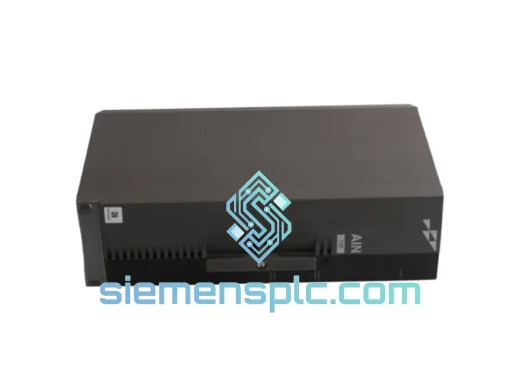
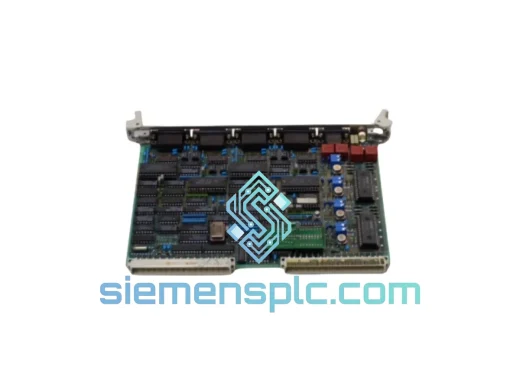
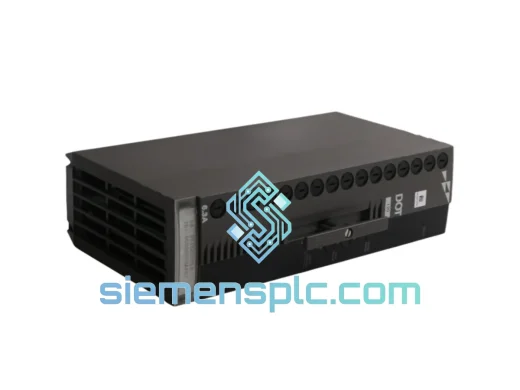
ABB P-HB-DOT-12010000 Safety Digital Output Module – AC500-S
AC500
Origin SE
Safety Digital Output Module
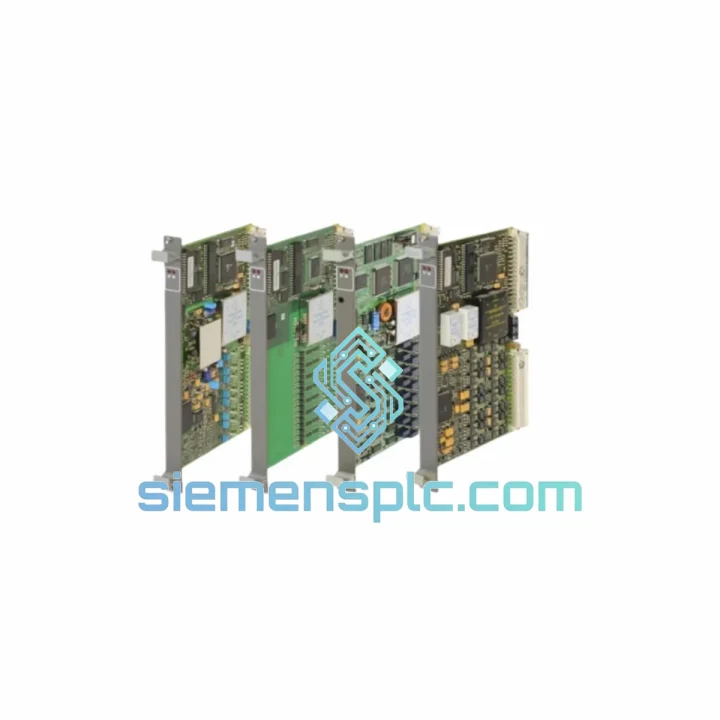
Request verified availability, condition, replacement risk review, packing options and courier lead time for 81ET03A-E.
Click Request Quote and the part number is inserted into the inquiry form automatically.
Core fields for model confirmation and RFQ routing. Detailed product narrative remains below.
In process automation, the integrity of temperature measurement is not a secondary concern — it is the foundation upon which closed-loop control, safety interlock logic, and regulatory compliance are built. The ABB GJR2403500R3010, carrying the firmware designation 81ET03A-E, is a dedicated temperature sensor input module engineered for the AC500 S500 distributed I/O system. Its role within a control loop is unambiguous: to acquire raw resistance or thermoelectric voltage signals from field-mounted sensors, perform on-board linearization and cold-junction compensation where applicable, and deliver calibrated engineering-unit values to the AC500 CPU via the S500 I/O bus — all within a deterministic scan cycle that process controllers depend on for stable PID execution.
Unlike general-purpose analog input modules that accept 4–20 mA or 0–10 V signals, the 81ET03A-E is purpose-built for direct sensor connection. This eliminates the transmitter stage entirely for RTD and thermocouple circuits, reducing the signal chain from four components to two: sensor and module. Each removed component in a measurement chain is one fewer source of drift, calibration error, and failure mode. For installations with dozens or hundreds of temperature measurement points — common in chemical reactors, pharmaceutical batch systems, and power generation facilities — this architectural simplification translates directly into lower installed cost, reduced panel wiring density, and improved long-term measurement stability.
The module integrates into the AC500 S500 I/O bus without gateways or protocol converters. From the CPU’s perspective, the 81ET03A-E appears as a standard process image object, with channel values mapped to the input data area and diagnostic status bits accessible via standard IEC 61131-3 function blocks in ABB’s Automation Builder environment. This transparency is critical for system architects who need to maintain deterministic cycle times across large I/O configurations.
Real-time Stock & RFQ: [email protected] | WhatsApp: +86 18359268345
| Parameter | Specification |
|---|---|
| Part Number | GJR2403500R3010 |
| Firmware / Order Designation | 81ET03A-E |
| Brand | ABB |
| Product Series | AC500 S500 Distributed I/O |
| Module Function | Temperature Sensor Input (RTD & Thermocouple) |
| Supported RTD Types | Pt100, Pt1000, Ni100, Ni1000 (2-wire, 3-wire, 4-wire) |
| Supported Thermocouple Types | Type J, K, T, E, B, R, S |
| Analog-to-Digital Resolution | 16-bit (effective resolution per channel) |
| Cold Junction Compensation | Internal, automatic (thermocouple channels) |
| Bus Interface | AC500 S500 I/O bus (parallel backplane) |
| Mounting | DIN rail via S500 terminal unit (e.g., TU505, TU516) |
| Operating Temperature | -25 °C to +60 °C (refer to ABB datasheet for full derating) |
| Storage Temperature | -40 °C to +70 °C |
| Relative Humidity | 5 % to 95 %, non-condensing |
| Protection Class | IP20 (module body) |
| Weight | 1,040 g |
| Certifications | CE, UL/cUL (refer to ABB official documentation) |
| Country of Origin | Germany |
| Warranty | 12 months from date of shipment |
The 81ET03A-E’s hardware architecture reflects a design philosophy centered on measurement accuracy and signal integrity under industrial electromagnetic conditions. Several aspects of its physical design merit detailed examination.
Sensor Excitation and Lead Resistance Compensation: For RTD measurements, the module generates a precision constant-current excitation signal and applies it to the sensor element. In 3-wire and 4-wire configurations, the module’s internal measurement circuitry actively cancels lead resistance errors — a critical requirement when sensor cables span tens of meters across a plant floor. The 4-wire Kelvin connection eliminates lead resistance entirely from the measurement path, achieving accuracy figures that 2-wire configurations cannot match in long-cable installations.
Galvanic Isolation Architecture: Each channel group within the 81ET03A-E is galvanically isolated from the S500 I/O bus and from adjacent channel groups. This isolation barrier — typically implemented via optocoupler arrays and isolated DC/DC converters — serves two functions: it prevents ground loop currents from corrupting measurement signals when sensors share a common reference with other field equipment, and it protects the CPU backplane from transient overvoltages originating at the sensor terminals. In environments where welding equipment, variable-frequency drives, or high-power switching loads operate in proximity to the control cabinet, this isolation is not optional — it is the primary defense against measurement corruption and hardware damage.
On-Board Linearization Engine: Thermocouple output voltage is a non-linear function of temperature. The 81ET03A-E performs polynomial linearization on-board, using the standard ITS-90 reference functions for each thermocouple type. This means the CPU receives a linearized temperature value in engineering units directly, without requiring the application program to implement linearization tables or correction algorithms. The computational load on the CPU is reduced, and the linearization accuracy is consistent regardless of the application programmer’s implementation choices.
EMC Design and Noise Rejection: The module’s analog front-end incorporates differential input topology with common-mode rejection ratios (CMRR) designed to suppress 50/60 Hz interference — the dominant noise source in industrial environments where power cables and signal cables share cable trays. Hardware filtering at the input stage attenuates high-frequency transients before they reach the ADC, preventing aliasing artifacts that would otherwise appear as measurement noise in the process image.
Diagnostic Register Architecture: The 81ET03A-E maintains a set of per-channel diagnostic status bits that are updated each scan cycle. These bits report wire-break conditions (open circuit), short-circuit faults, out-of-range sensor values, and module-level supply voltage anomalies. The diagnostic data is accessible to the CPU application program via standard process image mapping, enabling the control logic to implement sensor fault handling — switching to backup sensors, triggering alarms, or entering safe-state routines — without requiring additional hardware or communication overhead.
Every unit of the ABB GJR2403500R3010 81ET03A-E supplied through siemensplc.com is sourced from verified industrial supply channels and carries ABB’s original factory quality documentation. ABB’s manufacturing processes for the AC500 S500 I/O series comply with ISO 9001 quality management standards, and each module undergoes functional testing at the factory prior to shipment. The module’s CE marking confirms conformity with applicable EU directives for electromagnetic compatibility and low-voltage equipment.
Our warehouse and logistics operations are based in Xiamen, China — a major international trade hub with direct access to air freight and sea freight routes serving North America, Europe, Southeast Asia, the Middle East, and Australia. Standard international shipments are dispatched within 1–3 business days of order confirmation. Expedited air freight options are available for urgent MRO requirements, with transit times of 3–7 business days to most destinations. Each shipment is accompanied by a complete export documentation package: commercial invoice, packing list, and certificate of origin — all formatted to facilitate customs clearance in the destination country.
Anti-static packaging with foam cushioning is used for all module shipments to protect sensitive electronic components from electrostatic discharge and mechanical shock during transit. Shipment tracking information is provided at the time of dispatch. For orders requiring third-party inspection, pre-shipment inspection coordination is available upon request.
All units supplied carry a 12-month warranty from the date of shipment, covering manufacturing defects and functional failures under normal operating conditions. Our technical team provides pre-sales compatibility verification and post-delivery integration support to ensure the module performs as specified within your AC500 system configuration.
Email: [email protected]
WhatsApp: +86 18359268345
Web: siemensplc.com
Location: Xiamen, China
© 2026 siemensplc.com. All rights reserved.
We check the full part number, brand, series and visible nameplate information before quotation.
Sales confirms stock path, condition option, quantity and realistic lead time for export dispatch.
DHL, FedEx, UPS or buyer courier arrangements can be reviewed with packing requirements.
Similar brand or category products for fast comparison and multi-item RFQ lists.