ABB
RFQ Ready
ABB HAC807B102 Analog Input Termination Unit – AC800M Series
AC800M
Origin SE
Analog Input Termination Unit
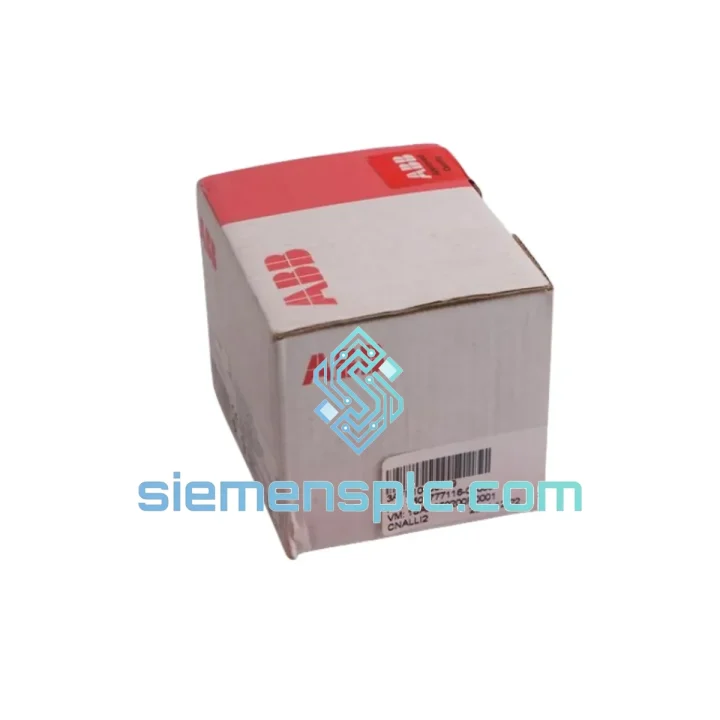
Request verified availability, condition, replacement risk review, packing options and courier lead time for IMCIS02.
Click Request Quote and the part number is inserted into the inquiry form automatically.
Core fields for model confirmation and RFQ routing. Detailed product narrative remains below.
The ABB IMCIS02 is a dedicated analog input slave module engineered for deployment within ABB’s AC800M Distributed Control System platform. Its primary function is deterministic acquisition of field-level analog signals — current and voltage — and their transmission across the IMCIS slave bus to the IMCIM master module, which in turn interfaces with the AC800M controller backplane. In a closed-loop process control architecture, the IMCIS02 occupies the first stage of the signal chain: it converts raw field instrument outputs into digitized process values that the controller uses to execute PID algorithms, interlock logic, and sequence control. The module’s design reflects ABB’s engineering philosophy for the Advant Controller lineage: deterministic scan cycles, hardware-level channel isolation, and passive fault tolerance that does not require controller intervention to maintain bus integrity.
In oil and gas upstream facilities, chemical batch reactors, power plant auxiliary systems, and water treatment SCADA networks, the IMCIS02 handles the acquisition of transmitter signals from pressure, temperature, flow, and level instruments. Its multi-channel architecture allows a single module to serve an entire instrument cluster, reducing rack footprint and wiring complexity while maintaining per-channel electrical independence.
Real-time Stock & RFQ: [email protected] | WhatsApp: +86 18359268345
| Part Number | IMCIS02 |
| Manufacturer | ABB |
| Module Classification | Analog Input Slave Module |
| Compatible Platform | ABB AC800M DCS / Advant Controller Series |
| Bus Interface | IMCIS slave bus (master: IMCIM) |
| Input Signal Range | 4–20 mA (current loop); 0–10 V (voltage, platform-dependent) |
| Channel Isolation | Optical isolation per channel; channel-to-channel and channel-to-bus |
| A/D Resolution | 12-bit minimum (platform-calibrated) |
| Scan Cycle | Synchronous with IMCIM master polling cycle |
| Operating Temperature | 0 °C to +55 °C |
| Storage Temperature | −25 °C to +70 °C |
| Relative Humidity | 5–95% RH, non-condensing |
| Power Supply | Backplane bus (system-integrated, no external PSU required) |
| Mounting | Rack-integrated (IMCIS expansion rack or S800 I/O rack) |
| Weight | Approx. 300 g |
| Certifications | CE, UL (platform-level) |
| Warranty | 12 months from date of shipment |
The IMCIS02’s internal architecture is structured around three functional layers: the analog front-end, the isolation barrier, and the digital bus interface.
Analog Front-End: Each input channel is terminated through a precision burden resistor network that converts the 4–20 mA loop current into a proportional voltage. This voltage is then fed into a sample-and-hold circuit that freezes the signal value at the moment of the IMCIM master’s polling command, ensuring that all channels within a scan cycle reflect a temporally consistent snapshot of the process. This is critical in fast-changing processes such as turbine speed control or reactor pressure management, where asynchronous sampling would introduce phase errors into the control algorithm.
Optical Isolation Mechanism: Between the analog front-end and the A/D conversion stage, each channel passes through an optocoupler barrier. This galvanic isolation serves two purposes: it eliminates ground loop currents that would otherwise corrupt low-level signals from transmitters located hundreds of meters from the control room, and it provides a defined breakdown voltage boundary that protects the digital bus circuitry from field-side transients. In environments with heavy motor drives, arc furnaces, or high-voltage switching equipment, this isolation layer is the primary EMC defense mechanism at the module level.
EMC Design: The PCB layout follows a split-plane strategy: the analog ground plane and the digital ground plane are physically separated and joined only at a single star point near the isolation barrier. This prevents high-frequency digital switching noise from coupling into the analog signal path. Decoupling capacitors are placed at each power rail entry point, and the bus connector interface includes common-mode chokes to suppress conducted interference from the backplane.
Bus Interface Logic: The IMCIS02 operates as a passive slave on the IMCIS bus. It does not initiate communication; it responds only to polling frames from the IMCIM master. This architecture means that a failed IMCIS02 module does not generate spurious bus traffic that could corrupt data from adjacent modules. The module’s bus transceiver is designed to enter a high-impedance state upon detection of a supply undervoltage condition, preserving bus integrity even during module power loss.
Fault Indication: An onboard status LED provides local visual indication of module health. The module also reports its diagnostic status to the IMCIM master via the bus protocol, allowing the AC800M controller to generate a hardware fault alarm in Control Builder M without requiring a field inspection.
Every IMCIS02 unit supplied by our team is sourced from verified channels with full traceability documentation. Prior to shipment, each module undergoes a functional verification procedure that includes power-on self-test confirmation, bus communication handshake validation, and visual inspection of connector contacts and PCB condition. Serial numbers are cross-referenced against manufacturer records where available to screen for counterfeit or remarked components.
We operate from Xiamen, China — a major logistics hub with direct access to international freight forwarding networks. Standard shipment options include DHL Express (3–5 business days to most destinations), FedEx International Priority, and sea freight for bulk orders. Export documentation, including commercial invoices, packing lists, and certificates of origin, is prepared in compliance with destination country import requirements. For time-critical plant shutdowns or emergency maintenance windows, same-day dispatch is available for in-stock units upon order confirmation before 14:00 CST.
All shipments are covered by a 12-month warranty from the date of dispatch. Warranty claims are processed with a target response time of 24 hours. Replacement units are dispatched before the defective unit is returned, subject to a deposit arrangement, to minimize plant downtime.
📧 Email: [email protected]
💬 WhatsApp: +86 18359268345
🌐 Web: siemensplc.com
📍 Location: Xiamen, China
© 2026 siemensplc.com. All rights reserved.
We check the full part number, brand, series and visible nameplate information before quotation.
Sales confirms stock path, condition option, quantity and realistic lead time for export dispatch.
DHL, FedEx, UPS or buyer courier arrangements can be reviewed with packing requirements.
Similar brand or category products for fast comparison and multi-item RFQ lists.