ABB
In Stock OK
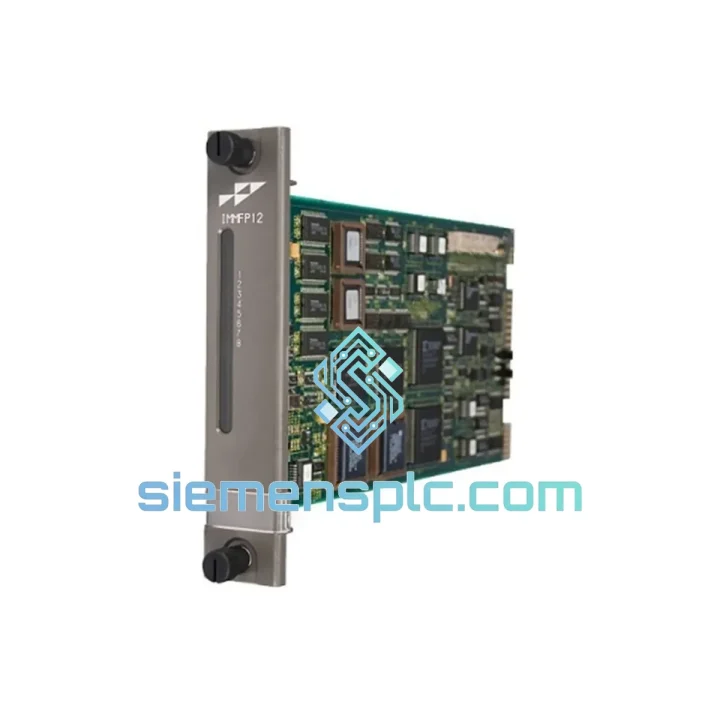
ABB IMMFP12 DCS Processor Module – INFI 90 Harmony
Request verified availability, condition, replacement risk review, packing options and courier lead time for IMMFP12.
BrandABB
Part NumberIMMFP12
ConditionAvailability Check
Lead TimeRFQ Confirmation
DocumentsDatasheet / photos by RFQ
ShippingExport packing available
Auto-filled RFQ
IMMFP12
Click Request Quote and the part number is inserted into the inquiry form automatically.
- Reply by email: [email protected]
- WhatsApp / Tel: +86 18359268345
- Mon-Sat 9:00-18:00 GMT+8
Procurement Data
Key Product Information
Core fields for model confirmation and RFQ routing. Detailed product narrative remains below.
- Brand
- ABB
- Primary Part Number
- IMMFP12
- Product Type
- DCS Processor Module
- Series / Family
- INFI 90
- Manufacturer
- ABB
- Country of Origin
- SE
- Catalog Category
- DCS & Safety Modules
- Operating Temp.
- 0 °C to +60 °C
- Warranty
- 12 months from dispatch date
Model confirmed for inquiry
IMMFP12
Send quantity, destination and urgency. The RFQ form keeps this part number attached.
Request Quote
Product Overview
ABB IMMFP12: Deterministic Control Execution at the Heart of INFI 90 / Harmony DCS Nodes
Within the INFI 90 and Harmony distributed control architecture, the IMMFP12 Multifunction Processor Module functions as the primary algorithmic execution unit for a process node. Its position in the control hierarchy sits between the field I/O layer — where raw 4–20 mA signals and discrete contact states are digitized — and the supervisory communication layer managed by the node’s Communication Processor. The IMMFP12 is where process data becomes control action: it evaluates configured algorithm blocks, computes output values, and writes actuator commands back to the I/O modules at fixed, deterministic scan intervals.
This architectural role distinguishes the IMMFP12 from passive I/O modules. A digital input module converts a contact closure to a logic state; the IMMFP12 decides what that logic state means for the process and what corrective action follows. In a boiler control application, for example, the IMMFP12 simultaneously manages drum level via a three-element feedwater control strategy, regulates combustion air/fuel ratio through ratio control blocks, and enforces burner management interlocks through Boolean logic sequences — all within a single backplane slot, all executing at the same deterministic scan rate.
The module’s design reflects a fundamental engineering constraint in process control: control loop performance is bounded by the worst-case execution time of the processor, not its average-case throughput. ABB addressed this by partitioning the IMMFP12’s internal resources so that control algorithm execution and Modulebus communication handling operate on separate logical paths. The scan cycle completes within its allocated window regardless of bus traffic conditions, ensuring that loop timing jitter remains below the threshold that would introduce measurable degradation in closed-loop performance.
For facilities operating legacy INFI 90 infrastructure, the IMMFP12 represents a maintenance-critical component. Its single-slot form factor, Modulebus interface, and COMPOSER-compatible configuration database make it a direct replacement for earlier processor modules of the same slot class. No backplane rewiring, no I/O module reconfiguration, and no DCS database restructuring are required — only a configuration download to the replacement unit. This drop-in compatibility compresses planned maintenance windows and eliminates the risk of wiring errors that accompany more invasive hardware replacements.
📦 Real-time Stock & RFQ: [email protected] | WhatsApp: +86 18359268345
Technical Parameters
| Manufacturer | ABB |
| Part Number | IMMFP12 |
| Module Function | Multifunction Processor – closed-loop control algorithm execution |
| Compatible Platform | ABB INFI 90 / Harmony DCS |
| Backplane Interface | Modulebus (INFI-NET node backplane) |
| Form Factor | Single-slot plug-in module |
| Supported Algorithm Types | PID, cascade, ratio, feedforward, Boolean logic, analog computation, lead-lag |
| Supply Voltage | 24 VDC nominal, backplane-sourced |
| Operating Temperature | 0 °C to +60 °C |
| Storage Temperature | −40 °C to +85 °C |
| Relative Humidity | 5 % to 95 % RH, non-condensing |
| Configuration Tool | ABB COMPOSER / Control Builder |
| Configuration Storage | Non-volatile onboard memory; autonomous cold-start without server re-download |
| Approx. Weight | 300 g |
| Certifications | CE; UL (confirm revision-specific listing with ABB documentation) |
| Warranty | 12 months from dispatch date |
Hardware Logical Analysis
The IMMFP12’s internal design addresses three engineering problems that are endemic to embedded process controllers: execution determinism under variable bus load, electromagnetic susceptibility in high-noise plant environments, and configuration persistence across unplanned power interruptions.
Partitioned Execution Architecture: The processor’s internal resource allocation separates control algorithm execution from Modulebus communication handling at the hardware scheduling level. This is not a software priority scheme — it is a structural partition that prevents communication interrupt service routines from consuming CPU cycles allocated to the control scan. The practical consequence is that scan cycle completion time is bounded by algorithm complexity alone, not by bus traffic volume. In a heavily loaded DCS node where multiple modules are simultaneously reporting diagnostic data, the IMMFP12’s loop timing remains stable.
EMC Design Discipline: The module’s PCB layout applies established EMC mitigation techniques: power and ground planes are interleaved to minimize loop inductance in the power distribution network; high-frequency digital switching nodes are physically separated from analog signal paths; and backplane connector pin assignments interleave power, ground, and signal pins to reduce inductive coupling between adjacent conductors. When seated in a grounded backplane chassis, the module benefits from the chassis’s Faraday-cage attenuation of radiated emissions from nearby variable-frequency drives, motor starters, and high-current bus bars — all standard EMI sources in process plant electrical environments.
Non-Volatile Configuration Persistence: Control block configurations are stored in non-volatile memory on the module itself. Following an unplanned power interruption, the IMMFP12 resumes execution from its stored configuration without requiring a re-download from the engineering workstation or DCS server. This autonomous restart behavior is operationally significant in remote installations — offshore platforms, pipeline compression stations, and isolated process units — where network connectivity to the DCS server may be unavailable during the post-outage recovery sequence.
Modulebus Arbitration Participation: The module implements the token-passing arbitration protocol used by the Modulebus to coordinate data transfers among multiple modules on a shared backplane segment. The IMMFP12’s arbitration logic is tuned to balance bus access across high-priority control data and lower-priority diagnostic reporting, preventing either category from starving the other. This balanced arbitration behavior maintains predictable data latency across the node even during periods of elevated diagnostic activity.
Thermal Stability Without Active Cooling: Component placement on the IMMFP12’s PCB positions heat-generating ICs within the convective airflow channel established by the backplane chassis ventilation geometry. No fans or forced-air cooling are required within the rated operating envelope. Eliminating active cooling removes a statistically significant failure mode: fan bearing wear is a leading cause of unplanned downtime in industrial electronics, and its absence from the IMMFP12’s design contributes directly to the module’s field reliability record.
System Integration Benefits
- Multi-Algorithm Consolidation in One Slot: The IMMFP12 hosts PID loops, Boolean logic sequences, ratio control blocks, and analog computation functions concurrently within a single backplane slot. This consolidation reduces the total module count required for a given control strategy, decreasing cabinet space consumption, inter-module wiring density, and the number of discrete failure points in the control node.
- Bounded Loop Timing for Tight Process Control: Fixed-interval scan execution ensures actuator commands are issued at consistent time intervals. Applications with narrow process gain margins — distillation column temperature control, reactor jacket temperature regulation, and boiler drum level control — require this timing consistency to avoid sustained oscillation caused by variable loop execution delays.
- Zero-Rewiring Replacement Compatibility: The IMMFP12 is mechanically and electrically interchangeable with earlier INFI 90 processor modules of the same slot class. Maintenance replacement requires no backplane rewiring, no I/O module reconfiguration, and no DCS database restructuring — only a configuration download. This compatibility profile minimizes planned maintenance window duration and eliminates wiring-error risk.
- Transparent Fault Reporting via Modulebus: The module continuously monitors its own execution health and transmits structured fault codes to the operator workstation through the Modulebus. Maintenance personnel can distinguish between a module hardware fault, a configuration inconsistency, and a field instrument failure from the operator console without opening the cabinet — reducing diagnostic time and unnecessary physical interventions.
- Native Feedforward Disturbance Rejection: Feedforward algorithm blocks allow engineers to implement control strategies that respond to measurable disturbances before they propagate to the controlled variable. In heat exchanger control, for example, a feed temperature change can be measured upstream and used to pre-adjust the heating medium valve position before the outlet temperature deviates — a response that feedback-only control cannot achieve.
- Two-Degree-of-Freedom Cascade Control: Cascade configurations supported by the IMMFP12 allow an outer controller to set the setpoint of an inner controller, providing independent tuning of setpoint tracking and disturbance rejection. This structure is standard in steam pressure control cascaded to fuel flow, and in temperature control cascaded to coolant flow, where inner-loop dynamics are significantly faster than outer-loop dynamics.
- Ratio Control for Combustion and Blending: Ratio control blocks maintain a configured proportion between two process streams without requiring external ratio stations. Combustion air/fuel management, chemical blending, and dilution control applications benefit from this native capability, which eliminates an additional hardware component and its associated failure modes.
- COMPOSER Toolchain Continuity: All configuration, tuning, and online monitoring operations are performed through ABB’s COMPOSER / Control Builder environment. Engineers already qualified on the Harmony DCS toolchain require no additional training to commission or modify IMMFP12-hosted control strategies, preserving existing engineering competency investments.
Quality Assurance & Global Logistics
Each ABB IMMFP12 unit dispatched from our Xiamen, China facility passes through a structured pre-shipment evaluation protocol before it is offered for sale or shipped to a customer site.
Source Verification: Units are procured through documented industrial supply channels with traceable sourcing records. Each module is cross-referenced against ABB’s published part number, revision, and label specifications. Connector pin geometry, PCB marking conventions, and label typography are compared against known-genuine reference units to identify non-authentic product before it enters inventory.
Physical Condition Inspection: Backplane connector pins are examined under magnification for deformation, oxidation, and contamination. PCB surfaces are inspected for evidence of rework activity, thermal stress discoloration, and moisture ingress indicators. Modules presenting any of these conditions are quarantined and excluded from the saleable inventory.
ESD-Compliant Packaging: Each module is individually sealed in an anti-static bag, supported on conductive foam, and enclosed in a rigid double-wall corrugated carton. Desiccant packs are included to control humidity during transit. This packaging protocol meets IEC 61340-5-1 handling requirements for ESD-sensitive electronic assemblies.
12-Month Hardware Warranty: All units carry a 12-month warranty from the date of dispatch, covering hardware defects and dead-on-arrival conditions. Advance replacement is available for qualified accounts to minimize process downtime during warranty claim resolution.
Express Global Shipping from Xiamen: DHL Express, FedEx International Priority, and UPS Worldwide Expedited services connect Xiamen to major industrial hubs worldwide. Typical transit times: Southeast Asia 3–5 business days; Europe 5–7 business days; North America 5–8 business days. Full customs documentation — commercial invoice, packing list, and HS code declaration — is prepared with each shipment to minimize clearance delays. Same-day dispatch is available for orders confirmed before 14:00 CST.
Contact Information
Email: [email protected]
WhatsApp: +86 18359268345
Web: siemensplc.com
Location: Xiamen, China
© 2026 siemensplc.com. All rights reserved.
Ready to quote
[email protected]
Send This Part Number to Sales
RFQ workflow
Quality workflow ->
Confirmation Process
01Model confirmation
We check the full part number, brand, series and visible nameplate information before quotation.
02Availability reply
Sales confirms stock path, condition option, quantity and realistic lead time for export dispatch.
03Packing & courier
DHL, FedEx, UPS or buyer courier arrangements can be reviewed with packing requirements.
Continue sourcing
Browse full catalog ->
Related Automation Parts
Similar brand or category products for fast comparison and multi-item RFQ lists.