ABB
RFQ Ready
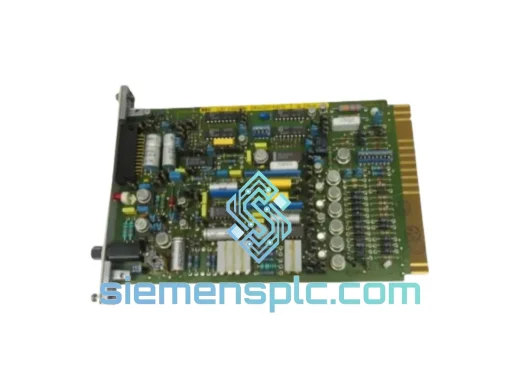
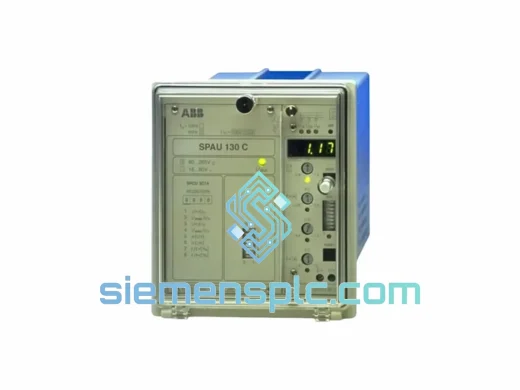
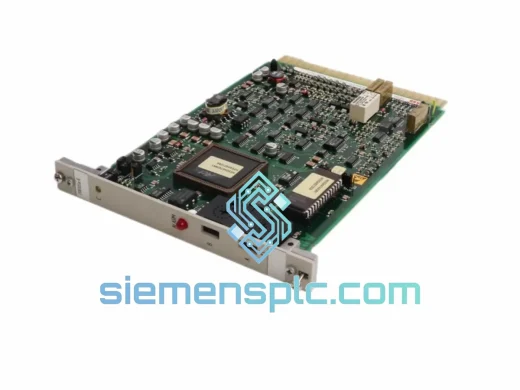
ABB HESG447427R1 Speed Sensor Module – Advant DCS Series
Advant
Origin SE
Speed Sensor Module
Request verified availability, condition, replacement risk review, packing options and courier lead time for INBTM01.
Click Request Quote and the part number is inserted into the inquiry form automatically.
Core fields for model confirmation and RFQ routing. Detailed product narrative remains below.
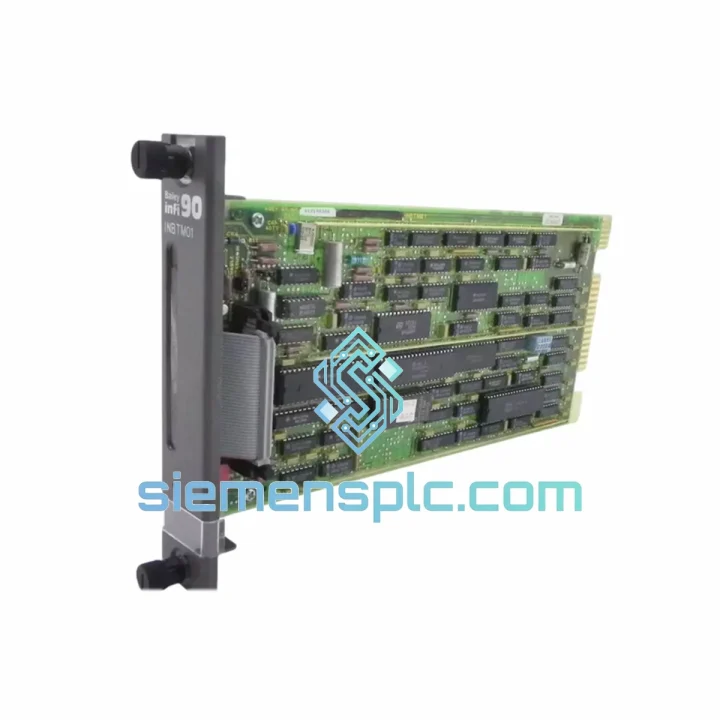
The ABB INBTM01 is a dedicated bus transfer module designed for deployment within the ABB Advant OCS / Master automation platform. Its primary function is to manage automatic and manual switchover between two parallel MASTERBUS 300 or MASTERBUS 300E communication segments, maintaining uninterrupted data exchange between process controllers and distributed I/O subracks. In control architectures where a single communication path failure can cascade into a full process shutdown, the INBTM01 provides the hardware-level arbitration layer that eliminates that single point of failure.
Unlike software-based redundancy schemes that depend on controller cycle time and OS scheduling, the INBTM01 executes bus transfer decisions at the hardware logic level. The switchover event is initiated by discrete fault detection circuitry that monitors bus signal integrity continuously. When a degradation threshold is crossed — whether caused by a cable fault, coupler failure, or electromagnetic interference event — the module asserts the transfer signal within a deterministic window, independent of the controller scan cycle. This behavior is critical for SIL-rated loops where response latency must be bounded and verifiable.
The INBTM01 mounts directly into the ABB S100 I/O subrack backplane, drawing its operating power from the rack’s internal supply rail. No external power supply or dedicated wiring harness is required, which simplifies cabinet layout and reduces potential failure points in the power distribution network. The single-slot form factor preserves rack density in installations where subrack space is constrained by the number of I/O modules required per control loop.
In power generation, oil and gas, chemical processing, and water treatment facilities, the Advant OCS platform remains an active installed base globally. The INBTM01 is a high-demand spare and upgrade component for MRO teams maintaining these systems, as well as for system integrators executing brownfield expansions where the existing communication backbone must be extended without replacing the controller infrastructure.
Real-time Stock & RFQ: [email protected] | WhatsApp: +86 18359268345
| Parameter | Value |
|---|---|
| Part Number | INBTM01 |
| Manufacturer | ABB |
| Series | Advant OCS / Master |
| Module Function | Redundant Bus Transfer / Switchover |
| Compatible Bus | MASTERBUS 300, MASTERBUS 300E |
| Mounting Interface | ABB S100 I/O Subrack backplane slot |
| Power Source | Backplane rail (no external PSU) |
| Operating Temperature | 0 °C to +55 °C |
| Storage Temperature | −40 °C to +70 °C |
| Relative Humidity | 5–95% RH, non-condensing |
| Module Weight | 450 g |
| Form Factor | Single-slot, rack-integrated |
| EMC Immunity | EN 61000-6-2 (Industrial) |
| EMC Emissions | EN 61000-6-4 (Industrial) |
| Safety Standard | IEC 61508 compatible (SIL assessment required per project) |
| PLC Standard | IEC 61131-2 |
| RoHS Compliance | Directive 2011/65/EU |
| Certifications | CE, UL listed (verify revision with ABB) |
| Warranty | 12 months from date of shipment |
The INBTM01 operates as a passive-active arbitration node within the MASTERBUS 300 topology. Under normal operating conditions, one bus segment is designated as the active path; the second segment runs in hot-standby, carrying identical traffic but not driving the downstream I/O subracks. The module continuously samples the differential signal levels on both bus segments using dedicated comparator circuits. These comparators are not polled by the controller — they operate asynchronously, which means fault detection latency is not bounded by the controller’s scan cycle time but by the hardware propagation delay of the comparator chain itself, typically in the microsecond range.
When the active bus signal falls below the defined threshold — caused by impedance mismatch from a damaged cable, a failed bus coupler, or conducted EMI exceeding the EN 61000-6-2 Class A limits — the comparator output triggers a latch circuit that asserts the transfer control line. The standby bus segment is promoted to active status without any controller intervention. The process data stream is maintained because the standby segment was already synchronized; there is no re-initialization handshake required between the module and the connected I/O subracks.
From an EMC design perspective, the INBTM01’s backplane interface uses differential signaling with common-mode rejection, which suppresses noise induced by high-current motor drives, variable frequency drives, and transformer switching transients common in industrial power environments. The module’s internal logic is isolated from the backplane supply rail by decoupling capacitors and ferrite bead filters, reducing susceptibility to supply-borne noise that could cause spurious transfer events.
The transfer event is logged in the module’s status register, which is readable by the Advant OCS controller via the backplane diagnostic channel. This allows the control program to generate an alarm and initiate a maintenance workflow without requiring a field technician to physically inspect the cabinet. The status register also records the direction of the last transfer (Bus A → Bus B or Bus B → Bus A), which supports root-cause analysis during post-event review.
Every ABB INBTM01 unit supplied by siemensplc.com is sourced through verified industrial channels and subjected to a structured incoming inspection protocol before it enters available inventory. Inspection steps include visual examination of the PCB, connector pins, and module housing for mechanical damage, corrosion, or evidence of prior rework; label and revision verification against ABB documentation to confirm the part number and hardware revision match the order specification; and functional bench testing where test fixtures are available for the module type.
Units are packaged in anti-static bags with humidity indicator cards, placed in rigid foam-lined cartons rated for international air freight handling. Each shipment includes a traceable lot record documenting the inspection date, inspector ID, and test results. Extended documentation packages — including original ABB factory test records where available — can be provided for project-critical procurement on request.
Logistics operations are based in Xiamen, China. Standard international shipments are dispatched within 1–3 business days of order confirmation via DHL Express, FedEx International Priority, or UPS Worldwide Expedited, depending on destination and customer preference. Expedited same-day dispatch is available for urgent MRO requirements confirmed before 14:00 CST. Customs documentation, including commercial invoice, packing list, and HS code declaration (HS 8537.10), is prepared for each shipment to minimize clearance delays at destination ports. Customers in the EU, North America, Southeast Asia, and the Middle East are regularly served from this location.
Email: [email protected]
WhatsApp: +86 18359268345
Web: siemensplc.com
Location: Xiamen, China
© 2026 siemensplc.com. All rights reserved.
We check the full part number, brand, series and visible nameplate information before quotation.
Sales confirms stock path, condition option, quantity and realistic lead time for export dispatch.
DHL, FedEx, UPS or buyer courier arrangements can be reviewed with packing requirements.
Similar brand or category products for fast comparison and multi-item RFQ lists.