
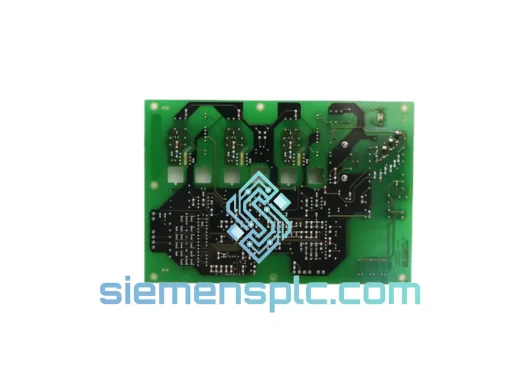
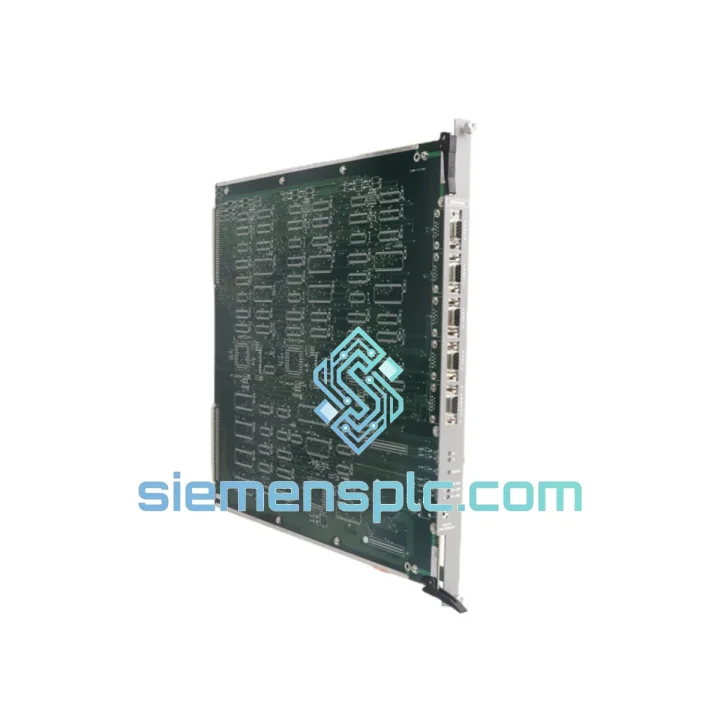
ABB
In Stock OK
ABB MSR04XI Serial Communications Module – S800 I/O
Request verified availability, condition, replacement risk review, packing options and courier lead time for MSR04XI.
BrandABB
Part NumberMSR04XI
ConditionAvailability Check
Lead TimeRFQ Confirmation
DocumentsDatasheet / photos by RFQ
ShippingExport packing available
Auto-filled RFQ
MSR04XI
Click Request Quote and the part number is inserted into the inquiry form automatically.
- Reply by email: [email protected]
- WhatsApp / Tel: +86 18359268345
- Mon-Sat 9:00-18:00 GMT+8
Procurement Data
Key Product Information
Core fields for model confirmation and RFQ routing. Detailed product narrative remains below.
- Brand
- ABB
- Primary Part Number
- MSR04XI
- Product Type
- Serial Communications Module
- Series / Family
- S800
- Manufacturer
- ABB Ltd.
- Country of Origin
- SE
- Catalog Category
- Communication
- Operating Temp.
- 0 °C to +55 °C (IEC 60068-2-1 / -2-2)
Model confirmed for inquiry
MSR04XI
Send quantity, destination and urgency. The RFQ form keeps this part number attached.
Request Quote
Product Overview
ABB MSR04XI: Asynchronous Serial Gateway with Deterministic ModuleBus Data Delivery for S800 Distributed I/O
Within an S800 distributed I/O station, the MSR04XI fulfils a role that is architecturally distinct from conventional analog or digital I/O modules: it manages the temporal boundary between an asynchronous serial field network and the synchronous, scan-cycle-driven ModuleBus backplane. Field instruments communicating over RS-232 or RS-485 — Modbus RTU flow computers, variable-speed drives with serial interfaces, gas analysers, and weighing systems — transmit data on schedules governed by their own internal polling timers and baud-rate constraints. The AC800M or AC800F controller, executing its application program against a fixed deterministic scan cycle, cannot tolerate indeterminate wait states for serial data without degrading closed-loop control performance. The MSR04XI resolves this conflict by maintaining a continuously refreshed local register image. At each ModuleBus scan interval, the controller reads a coherent, age-bounded snapshot of serial instrument data without stalling its application task. The serial polling engine operates concurrently and independently, managing all Modbus RTU framing, CRC verification, retry sequencing, and buffer arbitration without consuming any AC800M CPU cycles.
This offload architecture has measurable consequences in high-channel-count DCS installations where CPU loading is a design constraint. A controller managing 2,000 I/O points across multiple S800 racks, with 40 serial instruments distributed across several MSR04XI modules, carries no serial protocol overhead in its application processor. The serial communications workload is fully distributed to the module layer. The maximum data age presented to the controller is bounded to one ModuleBus scan period plus one serial poll cycle — both values are deterministic and calculable at design time, allowing serial instruments to be incorporated into PID control loops with predictable derivative filter requirements rather than being restricted to supervisory monitoring roles.
Mechanically, the MSR04XI integrates into the S800 rack without any additional infrastructure. It seats into a standard S800 base unit, draws operating power from the base unit’s internal bus, and communicates with the controller over the optical ModuleBus. No external 24 V DC supply circuit, no separate gateway enclosure, and no additional DIN-rail footprint are required. The serial field interface — DB9 or terminal block depending on variant — is the only external connection. This mechanical simplicity reduces panel engineering time, lowers long-term maintenance complexity, and eliminates one auxiliary supply circuit as a potential failure point in the serial communications path.
Real-time Stock & RFQ: [email protected] | WhatsApp: +86 18359268345
Technical Parameters
| Parameter | Specification |
|---|---|
| Manufacturer | ABB Ltd. |
| Part Number / SKU | MSR04XI |
| Product Platform | S800 I/O Distributed I/O System |
| Module Function | Serial Communications Interface — RS-232 / RS-485 to ModuleBus |
| Supported Protocols | Modbus RTU, Modbus ASCII, configurable generic serial framing |
| Serial Standards | RS-232 (point-to-point, ≤ 15 m) / RS-485 (half-duplex multi-drop, ≤ 1,200 m at 9,600 bps) |
| Baud Rate Range | 300 bps – 115,200 bps, software-selectable |
| RS-485 Bus Load | Up to 32 unit loads per segment; up to 247 Modbus slave addresses |
| Galvanic Isolation | Serial port ↔ ModuleBus backplane; optocoupler arrays + isolated DC-DC converter |
| Isolation Withstand | ≥ 1 kV (IEC 61000-4-5 surge level, signal lines) |
| Backplane Interface | S800 ModuleBus (optical, proprietary ABB) |
| Module Power Source | S800 base unit internal bus — no external supply required |
| Power Consumption | ≤ 1.5 W typical; ≤ 2.0 W maximum |
| Operating Temperature | 0 °C to +55 °C (IEC 60068-2-1 / -2-2) |
| Storage Temperature | −40 °C to +70 °C |
| Relative Humidity | 5 % – 95 % RH, non-condensing (IEC 60068-2-78) |
| Vibration Resistance | IEC 60068-2-6: 2 g, 10–150 Hz |
| Shock Resistance | IEC 60068-2-27: 15 g, 11 ms half-sine |
| EMC Immunity — EFT/Burst | IEC 61000-4-4: 2 kV |
| EMC Immunity — Surge | IEC 61000-4-5: 1 kV (signal lines) |
| EMC Immunity — Radiated RF | IEC 61000-4-3: 10 V/m, 80 MHz – 1 GHz |
| Degree of Protection | IP20 (IEC 60529) |
| Mounting | S800 ModuleBus base unit / DIN-rail carrier |
| Approx. Dimensions (W × H × D) | 30 × 130 × 100 mm |
| Approx. Weight | ~200 g |
| Regulatory Compliance | CE; RoHS 2011/65/EU; IEC 61131-2 |
| Country of Origin | Sweden |
| Seller Warranty | 12 months from dispatch; 30-day DOA replacement guarantee |
Hardware Logical Analysis
RS-485 Hardware Direction Control
Half-duplex RS-485 Modbus RTU requires the master transmitter to tri-state its line driver within 3.5 character times of the last transmitted stop bit. At 115,200 bps, one character time is approximately 87 µs; the required tri-state window is therefore approximately 305 µs. Software-managed RTS direction control, dependent on OS task scheduling, introduces jitter of 1–10 ms — an interval spanning 11 to 115 character times at this baud rate, sufficient to corrupt every slave response frame. The MSR04XI implements hardware-automatic direction control: the RS-485 driver tri-states within one character time of the last stop bit, independent of any software scheduling path. This is a prerequisite for reliable high-baud-rate Modbus RTU operation, not an optional enhancement.
Dual-Port RAM with Hardware Semaphore Arbitration
The module maintains a dual-port RAM structure partitioned into two independently accessible banks. The serial protocol engine writes incoming Modbus register data to the write bank continuously. The ModuleBus interface reads from the read bank at each controller scan interval. A hardware semaphore arbitrates bank switching: the ModuleBus read always captures a complete, internally consistent Modbus response frame. This eliminates the data coherency hazard that arises when a controller reads a multi-register process variable — for example, a 32-bit IEEE 754 floating-point value spanning two consecutive Modbus holding registers — while the serial engine is mid-write. Without this arbitration, the controller could read the high word of one poll cycle and the low word of the next, producing a corrupted floating-point value with no detectable error flag.
Galvanic Isolation Barrier Design
Optocoupler arrays on both the RX and TX signal paths, combined with a dedicated isolated DC-DC converter supplying the serial-side power domain, form a complete galvanic barrier between the field instrument network and the S800 backplane. Ground potential differences between field instruments and the control room cabinet — typically 1–5 V in well-bonded installations, potentially 20–50 V in older facilities with degraded earthing — are absorbed within the isolation barrier and do not appear as common-mode noise on the ModuleBus. This protects the entire S800 rack from field-side transient injection, not only the MSR04XI itself.
Chassis Bonding and EMC Ground Plane
The module housing makes direct low-impedance electrical contact with the S800 base unit chassis ground through the module connector body. This forms a continuous ground plane across the rack assembly, providing a defined return path for high-frequency interference currents induced by nearby variable-speed drives, contactors, or switching power supplies. The construction meets IEC 61000-4-4 (2 kV EFT/burst) and IEC 61000-4-3 (10 V/m radiated field) immunity levels applicable to process control equipment in Zone 2 industrial environments.
System Integration Benefits
- Zero CPU overhead for serial protocol management: All Modbus RTU framing, CRC calculation, retry logic, and timeout handling execute within the MSR04XI’s onboard processor. The AC800M application CPU is not involved in serial communications at any point in the scan cycle. In installations with 30–50 serial instruments, this offload represents a measurable reduction in controller CPU utilisation.
- Calculable data latency for control loop design: Maximum serial data age equals one ModuleBus scan period plus one serial poll cycle. Both values are fixed at configuration time. This bounded, predictable latency allows serial instruments to be assigned to PID control loops with defined derivative filter constants, rather than being restricted to open-loop supervisory roles.
- Unified diagnostic access via standard S800 tools: Serial link health metrics — framing error rate, parity error count, timeout frequency, CRC failure count, and module communication status — are exposed through the standard S800 diagnostic object model. Maintenance engineers access this data from the DCS operator station using the same diagnostic interface used for all other S800 I/O modules. No separate serial network analyser or protocol sniffer is required for first-level fault isolation.
- RS-485 multi-drop reduces rack slot consumption: A single MSR04XI can address up to 247 Modbus slave devices on one RS-485 segment within the 32 unit load electrical constraint. Consolidating multiple serial instruments onto one module reduces rack slot consumption and simplifies cable routing compared to one-module-per-instrument architectures.
- Hot-swap support on compatible base units: On S800 base units with hot-swap capability, the MSR04XI can be removed and reinserted under power. The controller detects module absence via the ModuleBus diagnostic channel, holds last-valid data values in the I/O database, and automatically re-initialises the serial link upon reinsertion. Planned maintenance on the serial interface does not require a controller shutdown.
- Rack-integrated power eliminates auxiliary supply circuit: Operating power is drawn from the S800 base unit internal bus. A standalone serial gateway would require a dedicated 24 V DC supply circuit, terminal block, and panel wiring. Eliminating this auxiliary supply removes one failure point from the serial communications path and simplifies panel power budget calculations.
- Software-reconfigurable for heterogeneous instrument populations: Baud rate, data format, protocol variant, and Modbus address mapping are all software parameters configured in ABB Control Builder. A single MSR04XI spare module can be reconfigured to serve any serial device type in the installation — flow computer, variable-speed drive, gas analyser, or weighing system — without hardware modification, reducing the spare parts inventory required to maintain serial communications across a diverse instrument population.
- Long-term platform lifecycle alignment: The S800 I/O platform carries ABB’s extended product lifecycle commitment, with documented spare parts availability and firmware support planned for installations with 15–20 year operational horizons. Securing MSR04XI inventory through a verified distributor now provides a reliable supply buffer against future allocation constraints as the platform matures toward end-of-active-production status.
Quality Assurance & Global Logistics
Every ABB MSR04XI unit dispatched from our Xiamen, China operations centre is a genuine ABB OEM product sourced through verified industrial distribution channels. Pre-dispatch inspection covers label and serial number authenticity verification, connector and housing mechanical integrity assessment, and functional power-on verification where test equipment permits. No refurbished, remanufactured, or non-OEM substitute units are stocked or supplied. Sourcing documentation — including distributor certificates and batch traceability records — is available on written request for quality-critical or regulated procurement processes.
Domestic China orders are dispatched via SF Express or JD Logistics with 1–3 business day delivery windows to major industrial centres including Shanghai, Shenzhen, Chengdu, and Wuhan. International orders are shipped via DHL Express or FedEx International Priority: typical transit times are 3–5 business days to Europe and North America, 2–4 business days to Southeast Asia, and 4–7 business days to the Middle East and South America. Every international shipment includes a complete export documentation set — commercial invoice, packing list, and certificate of origin. HS code classification guidance is provided on request to support import customs clearance. All orders are covered by a 12-month seller warranty against manufacturing defects, with a 30-day dead-on-arrival replacement guarantee for units confirmed defective upon receipt.
Contact Information
Email: [email protected]
WhatsApp: +86 18359268345
Web: siemensplc.com
Location: Xiamen, China
© 2026
Ready to quote
[email protected]
Send This Part Number to Sales
RFQ workflow
Quality workflow ->
Confirmation Process
01Model confirmation
We check the full part number, brand, series and visible nameplate information before quotation.
02Availability reply
Sales confirms stock path, condition option, quantity and realistic lead time for export dispatch.
03Packing & courier
DHL, FedEx, UPS or buyer courier arrangements can be reviewed with packing requirements.
Continue sourcing
Browse full catalog ->
Related Automation Parts
Similar brand or category products for fast comparison and multi-item RFQ lists.
ABB
RFQ Ready
ABB SEDG-01 EtherNet/IP DeviceNet Gateway – SDCS Communication
3AAA0000051448
Origin SE
Industrial Communication Gateway
ABB
RFQ Ready
ABB 3HAC034865-003 Industrial Communication Module
IRC5
Origin SE
Industrial Communication Module
ABB
RFQ Ready
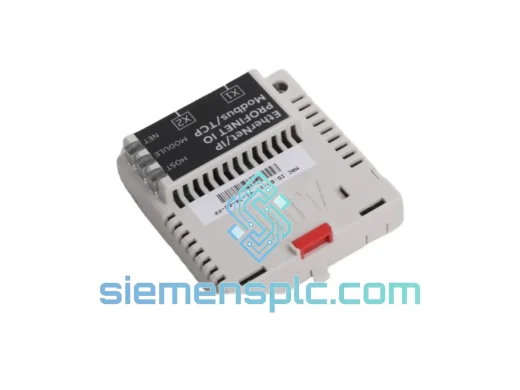
ABB FENA-21 3AUA0000089108 Ethernet Adapter Module
ACS880
Origin SE
Ethernet Fieldbus Adapter