ABB
RFQ Ready
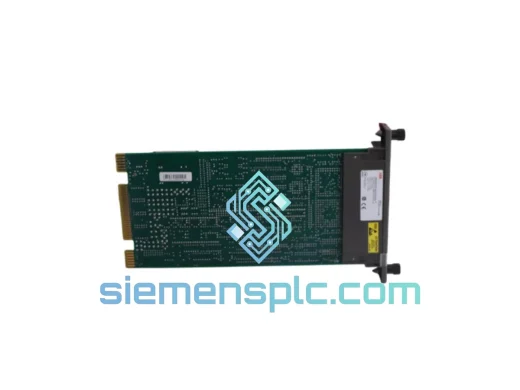
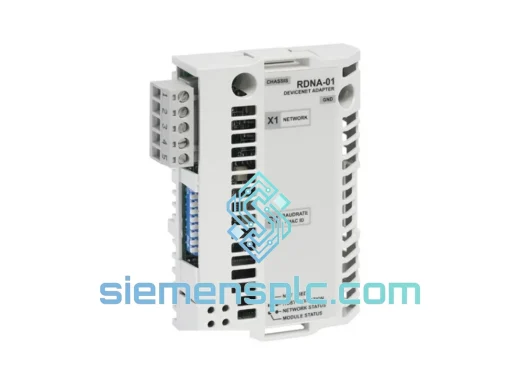
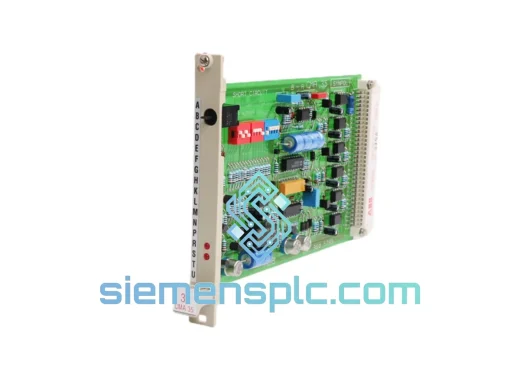
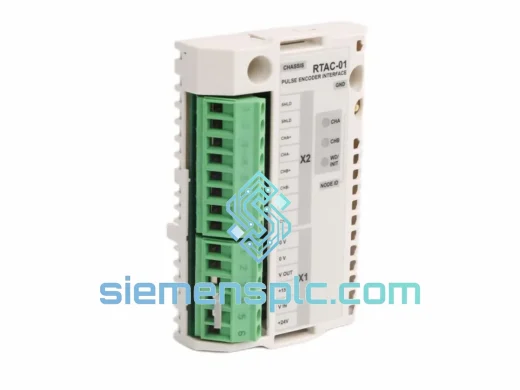
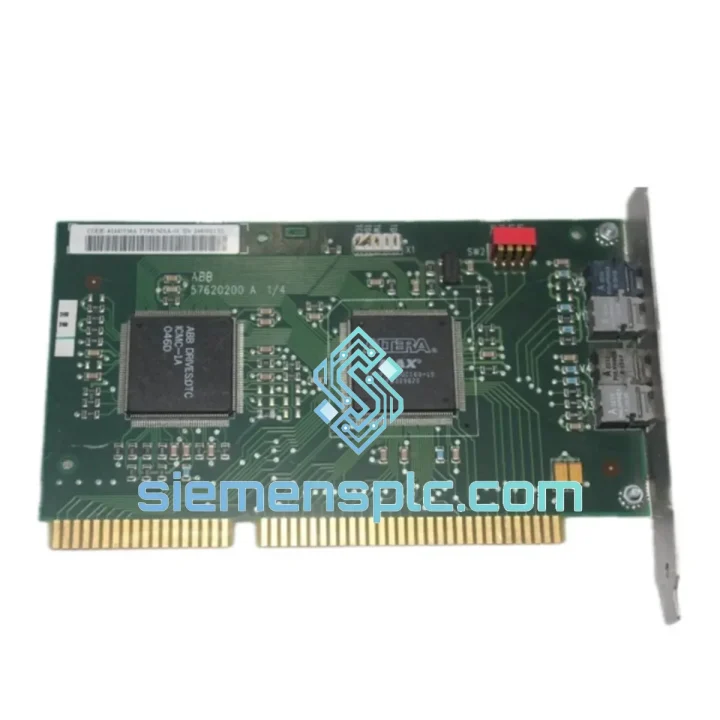
ABB ABBRTAC-01 PLC Interface Module – AC500 Series
AC500
Origin SE
PLC Interface Module
Request verified availability, condition, replacement risk review, packing options and courier lead time for NISA-03.
Click Request Quote and the part number is inserted into the inquiry form automatically.
Core fields for model confirmation and RFQ routing. Detailed product narrative remains below.
The ABB NISA-03 is a hardware interface module that establishes a deterministic, noise-immune communication path between ABB’s DDCS (Distributed Drive Control System) fiber-optic network and an ISA-bus host controller. In multi-drive installations — rolling mills, winder/unwinder lines, marine propulsion systems, and coordinated conveyor networks — the integrity of the inter-drive communication bus is as operationally critical as the drives themselves. A degraded or broken DDCS link does not merely reduce throughput; it collapses the entire coordinated control loop, forcing emergency stops and manual intervention across the affected drive chain.
The NISA-03 addresses this architectural requirement with a purpose-built hardware design. It does not rely on software emulation or protocol translation layers that introduce latency jitter. Instead, it provides a direct, hardware-level optical-to-electrical conversion and bus arbitration path, maintaining the sub-millisecond cycle times that ABB’s DDCS protocol demands for torque-coordinated multi-drive operation. This module is a standard component within ABB’s ACS and AC500 drive communication ecosystem, and its continued availability is essential for maintaining installed bases of ABB drive systems in service globally.
Real-time Stock & RFQ: [email protected] | WhatsApp: +86 18359268345
| Parameter | Value |
|---|---|
| Part Number | NISA-03 |
| Manufacturer | ABB |
| Module Category | DDCS/ISA Communication Adaptor Kit |
| Communication Protocol | DDCS (Distributed Drive Control System), fiber-optic |
| Host Bus Interface | ISA (Industry Standard Architecture, 16-bit) |
| Optical Medium | Plastic or glass fiber-optic (DDCS standard) |
| DDCS Ring Topology | Supports master/follower ring configuration |
| Compatible Drive Series | ABB ACS550, ACS800, ACS880; AC500 PM5xx family |
| Compatible Option Boards | RDCO-01, RDCO-02, RDCO-03 (drive-side DDCS boards) |
| Supply Voltage | Derived from ISA bus (+5 VDC, +12 VDC) |
| Operating Temperature | 0 °C to +55 °C (storage: −40 °C to +70 °C) |
| Relative Humidity | 5–95%, non-condensing |
| Module Weight | Approx. 100 g |
| Form Factor | ISA half-length card with fiber-optic port bracket |
| Warranty | 12 months from date of shipment |
The NISA-03’s core function is optical-to-electrical signal conversion combined with ISA bus arbitration. On the fiber-optic side, the module incorporates an optical transceiver pair — a photodiode receiver and an LED or VCSEL transmitter — operating at the DDCS standard wavelength. The receiver converts incoming optical pulses into TTL-level digital signals, which are then processed by an onboard ASIC or FPGA-based logic block responsible for DDCS frame decoding, CRC validation, and ring-topology address management.
The ISA bus interface side implements a 16-bit data path with hardware-decoded I/O port addressing, allowing the host PC or embedded ISA controller to read and write DDCS telegram data through memory-mapped or port-mapped I/O cycles. The bus arbitration logic handles ISA bus timing constraints — including IOCHRDY stretching for slower host systems — ensuring data coherence without requiring DMA transfers for standard polling-based communication cycles.
From an EMC standpoint, the fiber-optic medium provides galvanic isolation between the drive network and the host controller. This is not a passive benefit — in drive cabinets where common-mode noise on ground conductors can reach several hundred volts during switching transients, the absence of any conductive signal path between the drive bus and the ISA host eliminates an entire class of ground-loop and conducted-emission failure modes. The NISA-03’s optical isolation barrier is therefore a structural EMC design element, not an incidental feature.
The DDCS ring topology managed by the NISA-03 supports a master node (typically the host controller via the NISA-03) and multiple follower nodes (individual drives via RDCO option boards). The ring arbitration logic in the NISA-03 handles token passing and node addressing, enabling deterministic cycle times across the entire drive chain. This determinism is the architectural prerequisite for torque-coordinated multi-drive control — without it, speed and torque references arrive at individual drives with variable latency, producing synchronization errors that manifest as mechanical stress in coupled drive trains.
Every ABB NISA-03 unit supplied by siemensplc.com is sourced through verified supply channels and subjected to a structured pre-shipment verification process. Physical inspection covers PCB condition, connector integrity, optical port cleanliness, and label authenticity — including ABB part number markings, date codes, and revision identifiers cross-referenced against known genuine references. Functional verification confirms optical transceiver activity and ISA bus interface continuity where test infrastructure permits.
Units are packaged in anti-static ESD bags with desiccant inserts, placed in rigid foam-lined cartons rated for international air freight handling. Export documentation — commercial invoice, packing list, and certificate of conformity — is prepared for each shipment to facilitate customs clearance in destination countries. Shipments originate from Xiamen, China, via DHL Express, FedEx International Priority, or UPS Worldwide Expedited, with full tracking provided at dispatch. Transit times to major industrial hubs in Europe, the Middle East, Southeast Asia, and the Americas typically range from 3 to 7 business days. For time-critical MRO requirements, same-day dispatch is available for in-stock units ordered before 14:00 CST. All units carry a 12-month warranty from the date of shipment.
Email: [email protected]
WhatsApp: +86 18359268345
Web: siemensplc.com
Location: Xiamen, China
© 2026 siemensplc.com. All rights reserved.
We check the full part number, brand, series and visible nameplate information before quotation.
Sales confirms stock path, condition option, quantity and realistic lead time for export dispatch.
DHL, FedEx, UPS or buyer courier arrangements can be reviewed with packing requirements.
Similar brand or category products for fast comparison and multi-item RFQ lists.