
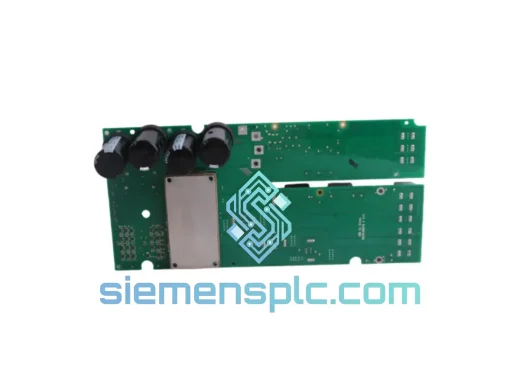
ABB
In Stock OK
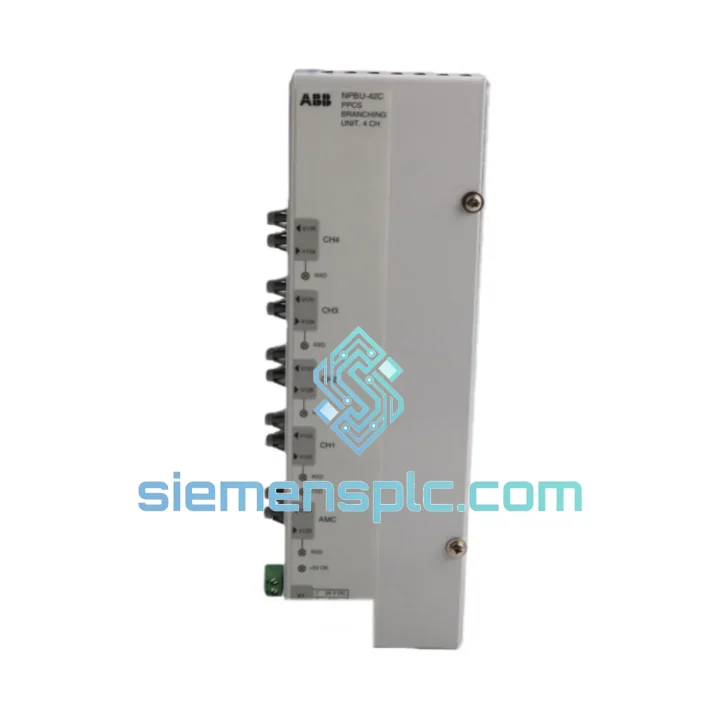
ABB NPBU-42C 64011821D Branching Unit – PPCS Series
Request verified availability, condition, replacement risk review, packing options and courier lead time for NPBU-42C.
BrandABB
Part NumberNPBU-42C
ConditionAvailability Check
Lead TimeRFQ Confirmation
DocumentsDatasheet / photos by RFQ
ShippingExport packing available
Auto-filled RFQ
NPBU-42C
Click Request Quote and the part number is inserted into the inquiry form automatically.
- Reply by email: [email protected]
- WhatsApp / Tel: +86 18359268345
- Mon-Sat 9:00-18:00 GMT+8
Procurement Data
Key Product Information
Core fields for model confirmation and RFQ routing. Detailed product narrative remains below.
- Brand
- ABB
- Primary Part Number
- NPBU-42C
- Product Type
- Communication Module
- Product Family
- Other series
- Manufacturer
- ABB Ltd. (Germany / Finland)
- Country of Origin
- SE
- Catalog Category
- Motor Drives
- Operating Temp.
- 0°C to +55°C
- Warranty
- 12 months from date of shipment
Model confirmed for inquiry
NPBU-42C
Send quantity, destination and urgency. The RFQ form keeps this part number attached.
Request Quote
Product Overview
ABB NPBU-42C 64011821D — Fiber-Optic Branching Node for PPCS Drive Networks
Within ABB’s Power and Productivity Communication System (PPCS), the branching unit occupies a structurally non-negotiable position: it is the physical junction at which a single master fiber channel fans out to multiple subordinate drive nodes. The NPBU-42C, catalogued under ABB part number 64011821D, performs this function with a deterministic latency profile that sustains the microsecond-level synchronization demanded by multi-axis motion control and coordinated drive systems in heavy industry.
PPCS is a proprietary ABB fiber-optic ring protocol operating at 10 Mbit/s over plastic optical fiber (POF) or glass fiber, depending on the interface board variant. The protocol uses a master-slave token-passing scheme where the master controller — typically an NAMC or RMIO board — issues cyclic data frames to each drive node in sequence. The NPBU-42C acts as a passive optical splitter and active signal regenerator simultaneously: it receives the incoming PPCS frame, regenerates the optical signal to compensate for attenuation, and distributes it to up to four downstream branches without introducing measurable jitter into the ring timing budget. This signal regeneration capability is what distinguishes the NPBU-42C from a simple passive coupler and makes it suitable for installations where cable runs exceed 10 meters between nodes.
The module is mechanically designed for DIN-rail or panel mounting within drive cabinets. Its compact form factor — approximately 100 × 60 × 25 mm — allows integration into existing ACS800, ACS880, and DCS800 cabinet layouts without requiring additional enclosure space. The fiber connectors use the HFBR-style bayonet interface standard across the PPCS ecosystem, ensuring tool-free field replacement and zero-alignment fiber termination.
In terms of electrical architecture, the NPBU-42C draws its operating power directly from the PPCS bus supply rail, typically 5 VDC sourced from the master control board. This eliminates the need for a separate power feed to the branching unit, simplifying cabinet wiring and reducing the number of potential failure points in the power distribution chain. The internal transceiver circuitry is rated for continuous operation across an ambient temperature range of 0°C to +55°C, with storage tolerance extending to −40°C, consistent with ABB’s standard industrial module specifications.
From a system topology perspective, the NPBU-42C enables the transition from a pure ring topology — where all drives are daisy-chained in sequence — to a star-from-ring or hybrid topology. In a pure ring, a single fiber break anywhere in the chain can isolate all downstream drives from the master. By inserting NPBU-42C branching units at strategic points, system designers can segment the network so that a fiber fault affects only the branch containing the damaged segment, while all other branches continue operating normally. This fault containment architecture is particularly valuable in applications such as rolling mill section drives or marine propulsion systems, where partial operation is preferable to a complete system shutdown.
The NPBU-42C 64011821D is stocked and dispatched from Xiamen, China, with same-day processing available for in-stock units. All units are verified against ABB’s original part number documentation prior to shipment, and each module is packaged in ESD-protective anti-static enclosures with foam-lined outer cartons rated for international air freight handling. A 12-month warranty is included as standard.
Real-time Stock & RFQ: [email protected] | WhatsApp: +86 18359268345
Technical Parameters
| Parameter | Value |
|---|---|
| ABB Type Designation | NPBU-42C |
| ABB Catalog Number | 64011821D |
| Communication Protocol | PPCS (ABB proprietary fiber-optic, 10 Mbit/s) |
| Module Function | Fiber-optic branching unit with signal regeneration |
| Topology Support | Ring, Star-from-Ring, Hybrid |
| Max. Downstream Branches | 4 per unit |
| Fiber Interface | HFBR bayonet (plastic or glass optical fiber) |
| Supply Voltage | 5 VDC (sourced from PPCS bus rail) |
| Operating Temperature | 0°C to +55°C |
| Storage Temperature | −40°C to +70°C |
| Mounting | DIN-rail / panel mount |
| Weight | 967 g (with packaging) |
| Compatible Drive Series | ACS800, ACS880, DCS800 |
| Compatible Control Boards | NAMC-11, NAMC-51, RMIO, RDCO-03 |
| Manufacturer | ABB Ltd. (Germany / Finland) |
| Warranty | 12 months from date of shipment |
| Condition | New / Surplus New (specify at inquiry) |
Hardware Logical Analysis
The NPBU-42C’s internal architecture centers on a dual-stage optical transceiver design. The receive stage converts the incoming optical PPCS frame to an electrical TTL-level signal, which is then passed through a clock recovery and data retiming circuit. This retiming stage is the functional core of the module: it strips accumulated jitter from the upstream fiber run and reconstructs a clean, edge-aligned data stream before re-encoding it for optical transmission to each downstream branch. Without this retiming function, cascaded passive splitters would accumulate jitter with each hop, eventually exceeding the PPCS receiver’s timing margin and causing frame errors.
The transmit stage drives up to four independent HFBR-series LED or VCSEL transmitters simultaneously. Each transmitter output is independently buffered, meaning that an open-circuit or short-circuit condition on one branch fiber — such as a disconnected connector or a broken cable — does not load or degrade the signal quality on the remaining three branches. This electrical isolation between output channels is implemented through individual driver ICs per channel rather than a shared output stage, which adds component count but eliminates the cross-branch interference that would otherwise occur in a shared-driver topology.
From an EMC standpoint, the NPBU-42C benefits inherently from the galvanic isolation provided by the optical interface. There is no electrical continuity between the upstream PPCS master and the downstream drive nodes through the branching unit — only photons cross the boundary. This means that ground potential differences between cabinet sections, which are common in large industrial installations with distributed earthing, cannot induce common-mode noise currents into the PPCS data path. The module’s internal power supply filtering is designed to reject conducted interference on the 5 VDC supply rail up to the levels specified in IEC 61000-4-4 (electrical fast transient) and IEC 61000-4-5 (surge), consistent with ABB’s standard drive accessory EMC compliance requirements.
The mechanical housing uses a thermally conductive polymer compound that passively dissipates the modest heat generated by the transceiver circuitry — typically under 1.5 W total — without requiring forced airflow. This passive thermal design is deliberate: it eliminates the fan as a potential failure mode in environments where particulate contamination or vibration would shorten fan bearing life.
System Integration Benefits
- Deterministic cycle time preservation: The retiming circuit ensures that PPCS frame timing is reconstructed to within the protocol’s specified jitter budget at each branch output, maintaining the deterministic scan cycle required for coordinated multi-drive motion control.
- Fault domain segmentation: Star-from-ring topology enabled by the NPBU-42C limits the blast radius of a single fiber fault to one branch, allowing the remaining drives to continue operating under master control without a full system restart.
- Galvanic isolation across cabinet sections: The all-optical signal path eliminates ground loop currents between drive cabinets, a common source of intermittent communication faults in installations with long inter-cabinet cable runs.
- Zero-configuration deployment: The NPBU-42C requires no firmware, no address assignment, and no parameter configuration. It is transparent to the PPCS master and all slave drives — insertion into an existing ring requires only fiber reconnection, with no software changes to the drive or controller.
- Scalable network expansion: Multiple NPBU-42C units can be cascaded to extend the PPCS network to larger drive counts without modifying the master controller configuration, provided the total network cycle time remains within the PPCS master’s scan period.
- Reduced cabinet wiring density: Consolidating four downstream fiber runs through a single branching unit reduces the number of individual fiber cables entering the master control section, improving cable management and reducing the probability of accidental fiber disconnection during maintenance.
- Diagnostic transparency: Because the NPBU-42C regenerates rather than terminates the PPCS signal, all drive-level diagnostic data — fault codes, actual values, status words — continues to flow transparently to the master controller. No diagnostic information is lost or filtered at the branching point.
- Compatibility with ABB’s drive parameter backup tools: Since the PPCS data path remains intact through the branching unit, ABB’s DriveWindow and Drive Composer tools can access all connected drives for parameter upload, download, and monitoring without any additional configuration at the branching unit level.
Quality Assurance & Global Logistics
Every NPBU-42C 64011821D unit dispatched from our Xiamen facility is sourced through verified ABB-authorized distribution channels or directly from decommissioned ABB-maintained installations with full traceability documentation. Prior to shipment, each unit undergoes a three-stage inspection protocol: visual examination of the PCB, fiber connectors, and housing for mechanical damage or corrosion; part number and revision code verification against ABB’s published documentation; and a powered functional check confirming optical output on all four transmit channels using a calibrated optical power meter.
Units are packed in anti-static polyethylene bags, placed in foam-lined inner cartons, and shipped in double-wall corrugated outer cartons rated for a 1.2-meter drop test. This packaging specification meets IATA requirements for air freight and ensures the module arrives without transit damage regardless of carrier handling conditions.
Shipment is via DHL Express, FedEx International Priority, or UPS Worldwide Express, with full tracking provided at the time of dispatch. Commercial invoice, packing list, and certificate of origin are included with every international shipment. HS code 8537.10 is applied for customs classification. Typical transit time to Europe is 3–5 business days; to North America, 4–6 business days; to Southeast Asia, 2–3 business days. Urgent same-day dispatch is available for orders confirmed before 14:00 CST.
A 12-month warranty covers manufacturing defects and functional failure under normal operating conditions. Warranty claims are processed within 5 business days of receipt of the returned unit at our Xiamen facility, with replacement or full refund at the customer’s option.
Contact Information
Email: [email protected]
WhatsApp: +86 18359268345
Web: siemensplc.com
Location: Xiamen, China
© 2026 siemensplc.com. All rights reserved.
Ready to quote
[email protected]
Send This Part Number to Sales
RFQ workflow
Quality workflow ->
Confirmation Process
01Model confirmation
We check the full part number, brand, series and visible nameplate information before quotation.
02Availability reply
Sales confirms stock path, condition option, quantity and realistic lead time for export dispatch.
03Packing & courier
DHL, FedEx, UPS or buyer courier arrangements can be reviewed with packing requirements.
Continue sourcing
Browse full catalog ->
Related Automation Parts
Similar brand or category products for fast comparison and multi-item RFQ lists.
ABB
RFQ Ready
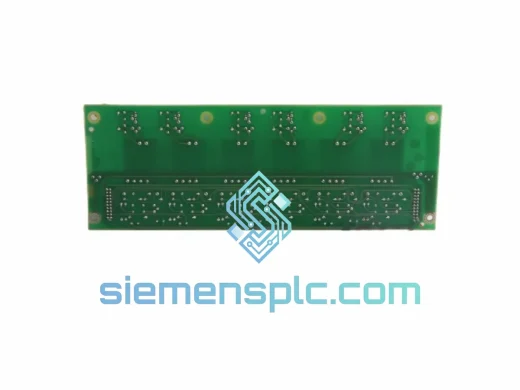
ABB ZINT-592 Fieldbus Interface Board – ZINT Series
ACS Drive
Origin SE
Interface Board
ABB
RFQ Ready
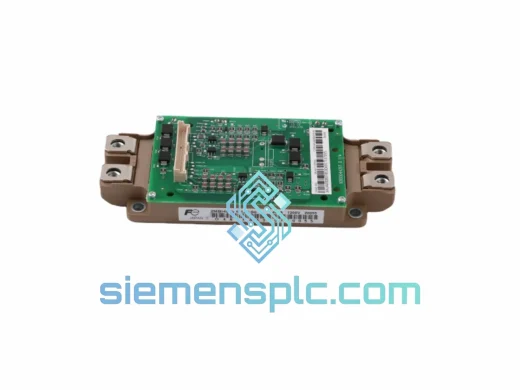
ABB YPK113A 61002774 Drive Control Board
In-Stock Xiamen
Origin SE
Drive Control Board